“The eye must be opened to the true and wondrous life of nature, and the hand must be trained to do the soul’s bidding quickly, easily, and beautifully. This alone can be the aim of instruction in any of the pictorial arts.”
Carl Gustav Carus,Nine Letters on Landscape Painting, Letter VIII.
Johan Christian Dahl’s View from a Window at Quisisana, dated 14 August 1820, is painted in oil on paper laid on cardboard and measures 42.8 × 58.6 cm. It is now in the Rasmus Meyers Collection in Bergen. The view was made at Quisisana, the royal residence above Castellammare di Stabia on the southern side of the Bay of Naples, and looks across the bay towards Vesuvius.
View of Pillnitz Castle, painted in 1823, is an oil on canvas measuring 70 × 45.5 cm. It is now in the Museum Folkwang in Essen. Pillnitz Palace stands beside the River Elbe to the east of Dresden in Saxony and was used as a summer residence by the rulers of Saxony.
These two works belong to a formative period in the career of the Norwegian painter Johan Christian Dahl (1788–1857). Born in Bergen, Dahl entered the Royal Danish Academy of Fine Arts in Copenhagen in 1811, where he received an academic training grounded in the Dutch landscape tradition, particularly the work of Jacob van Ruisdael, Meindert Hobbema and Allaert van Everdingen. In 1818 he settled in Dresden, which remained his home for the rest of his life, and became closely associated with Caspar David Friedrich.
The Quisisana painting belongs to Dahl’s Italian journey of 1820–21, undertaken shortly after his admission to the Dresden Academy, while View of Pillnitz Castle was painted after his return to Saxony. In 1823 Dahl moved into the same house as Friedrich, and the following year he was appointed extraordinary professor at the Dresden Academy. The two paintings thus stand on either side of the Italian journey, at a point when close study of nature, the experience of travel and an increasingly assured artistic identity came together.
Dahl’s artistic development took place at the intersection of different traditions and ways of looking at nature. During his years in Copenhagen, he combined the study of earlier European landscape painting with a practice founded on close observation. Marit Lange has compared him with Constable: although the two painters worked independently, both arrived at a form of rapid oil study made directly from nature and shared an interest in clouds, weather and changing atmospheric effects. Dahl’s art nevertheless retained the compositional discipline and descriptive clarity of the landscape traditions in which he had been trained.
His move to Dresden placed him within a different artistic milieu. Friedrich’s landscapes had already shown how the visible world might answer to contemplation, memory and inward feeling. The open window, in particular, had become a means of joining an enclosed interior to a world extending beyond it, while making the observer’s position part of the image. Dahl’s friendship with Friedrich forms an important part of the context for the two paintings, although his own treatment of landscape remained distinctive.
Carl Gustav Carus gave contemporary expression to some of the ideas circulating within this Dresden culture. A physician, naturalist, painter and writer, Carus composed his Nine Letters on Landscape Painting between 1815 and 1824. He argued that the artist should attend closely to nature rather than merely imitate the work of others, but that observation must also answer to an inward imaginative life. His insistence that the eye remain open to nature while the hand responds to the soul offers an illuminating context for Dahl, whose landscapes are at once exact and personal.
Dahl did not entirely abandon inherited pictorial structures in order to achieve that personal vision. The architecture, terrain and recession of his landscapes can retain a degree of linear precision and topographical order, especially in View of Pillnitz Castle. Even the Quisisana view preserves a firm separation of forms. Yet colour, light and atmosphere soften that underlying structure, while his command of spatial recession allows sharply observed foreground details to remain part of a broad and coherent landscape. The paintings therefore belong neither wholly to an older descriptive tradition nor to an unrestrained art of immediate sensation. Their interest lies in the coexistence of these elements.
View from a Window at Quisisana
Johan Christian Dahl, View from a Window at Quisisana, 14 August 1820. Oil on paper laid on cardboard, 42.8 × 58.6 cm. Rasmus Meyers Collection, Bergen. Image credit: Wikimedia Commons.
Dahl painted View from a Window at Quisisana during his Italian journey, dating it 14 August 1820. The landscape opens across the Bay of Naples towards Vesuvius, seen from Quisisana above Castellammare di Stabia. Although modest in scale, the work encompasses a broad sweep of terrain, water and distant mountain.
The immediate foreground is occupied by the dark structure of the open window. Dahl describes it with close attention to surface and light. A narrow strip of illumination runs along the base of the frame, while a diagonal wedge of light enters at the lower right. The wood has a rough, worn texture, and beneath the sill there is a slight indication of the point at which it gives way to the plastered wall. These details are intensely tangible and make our experience of the painting psychologically compelling, fixing us within a particular interior before the eye moves outward into the landscape.
Beyond the frame, the view passes across the nearer buildings and slopes towards the pale expanse of the bay, with Vesuvius rising on the horizon. Forms remain clearly articulated, but colour and the gradual modification of tone create a convincing sense of atmosphere and distance. Dahl’s precision does not impede recession: the closely observed foreground and middle distance remain integrated within the larger landscape.
The painting was completed over two days, and the landscape was painted before Dahl added the window around it. The finished work therefore does not simply preserve the circumstances of an uninterrupted act of observation. Instead, the carefully rendered wood, light and wall retrospectively establish a credible interior from which the landscape appears to have been seen. The immediacy belongs principally to the view itself, while the position of the observer was more deliberately constructed.
Giuseppe Scavizzi understood Dahl’s freedom not as improvisation alone, but as the mature result of repeated study. Behind the Quisisana painting he discerned a long practice of light drawings and rapidly touched watercolours, progressing from close fidelity to nature towards an increasingly assured and independent handling. Its freshness rests upon disciplined observation, while the later addition of the window transforms the observed landscape into a more consciously shaped and personal image.
View of Pillnitz Castle
Johan Christian Dahl, View of Pillnitz Castle, 1823. Oil on canvas, 70 × 45.5 cm. Museum Folkwang, Essen. Image credit: Wikimedia Commons.
Painted in 1823, View of Pillnitz Castle belongs to the period after Dahl’s return from Italy and his re-establishment in Dresden. The composition is narrower and more vertical than the Quisisana view. A darkened interior occupies much of the foreground, while the landscape opens beyond the window towards the River Elbe and the palace at Pillnitz.
The room is rendered with a strong sense of material presence. The window recess, sill and opened panes establish the depth of the wall, while reflections and small passages of light give substance to the glass and surrounding surfaces. From this close and tangible foreground, the eye moves towards the path, the river and the distant palace before rising into the broad evening sky.
Helmut R. Leppien emphasised the unusual contrast between these two parts of the painting. For him, the work “radiates magic” because the dark, backlit room appears almost tangible, like a trompe-l’œil, while the landscape is “pushed into the distance and shrunk like a small toy”. Although the palace and its surroundings are rendered with considerable sharpness and clarity, their reduction and remoteness make them appear strangely detached, almost like an apparition.
That effect is not produced by vagueness. The architecture, terrain and course of the river are carefully described, and the composition retains a marked topographical clarity. Yet colour and atmosphere alter the character of that precision. The changing tones of the sky and the evening light soften the firmness of the drawing, while the scale of the distant landscape gives its exact forms an unexpected strangeness.
The apparent relationship between room and landscape is itself invented. Pillnitz lies to the east of Dresden, upriver along the Elbe, and could not have been seen from Dahl’s studio window. The painting brings together a credible interior and a view drawn from elsewhere, presenting them as a continuous visual experience. Whereas at Quisisana the window was added around an observed landscape, here the conjunction of interior and exterior is more thoroughly imagined. Arguably, the result can be read not simply as an illusion made persuasive, but as a deliberate conjunction of realism and fantasy.
Together, the two paintings show Dahl moving between close observation and imaginative reconstruction. Their windows do not simply frame the landscape, but alter the terms on which it is seen. In each case, the view remains grounded in place while becoming something more inward, uncertain and invented.
[Producing these essays requires care, time, research, and resources. Contributions to help sustain this exploration would be greatly appreciated.]
Carl Gustav Carus, Nine Letters on Landscape Painting: Written in the Years 1815–1824, with a Letter from Goethe by Way of Introduction, introduction by Oskar Bätschmann, translated by David Britt (Los Angeles: Getty Research Institute, 2002).
Catherine Johnston, Helmut Börsch-Supan, Helmut R. Leppien and Kasper Monrad, Baltic Light: Early Open-Air Painting in Denmark and North Germany (New Haven and London: Yale University Press, 1999).
Jane Munro, ed., Nature’s Way: Romantic Landscapes from Norway: Oil Studies, Watercolours and Drawings by Johan Christian Dahl (1788–1857) and Thomas Fearnley (1802–1842) (Manchester: Whitworth Art Gallery, University of Manchester; Cambridge: Fitzwilliam Museum; Oslo: Nasjonalgalleriet, 1993).
Il paesaggio napoletano nella pittura straniera, exhibition catalogue, Palazzo Reale, Naples, 19 May–22 July 1962 (Naples, 1962).
The drawings considered here converge around Raphael’s decoration of the vault of the Stanza di Eliodoro. Their significance lies not only in the light they cast on the completed frescoes, but also in what they reveal about Raphael’s working practice, his movement between projects, his responsiveness to different visual sources and his adaptation of drawing to the particular demands of ceiling decoration.
A drawing in the Uffizi broadens this enquiry beyond the preparations for Moses before the Burning Bush. Its studies of flying angels appear to be associated with the neighbouring scene of God Appearing to Noah, while it also contains a seated woman derived from an antique relief and a group of architectural sketches connected with St Peter’s. Its importance therefore lies not in completing a simple sequence of preparations for a single fresco, but in revealing the breadth and mobility of Raphael’s practice as a draughtsman. On one sheet, ideas connected with painting, sculpture and architecture coexist and overlap without necessarily belonging to the same commission. Their conjunction nevertheless gives the page a wider coherence, suggesting the primacy of disegno as the means by which Raphael could move between the three disciplines, translating sculptural form, pictorial invention and architectural structure into a shared language of line.
Raphael, Young Woman Seated on a Parapet and Other Studies, Uffizi Galleries:
The two drawings that correspond most closely are the large cartoon fragment in Capodimonte and the Ashmolean study of God the Father Appearing to Moses. They prepare the opposing elements of the same scene. In the Ashmolean sheet, God advances through flames, smoke and attendant angels; in the Capodimonte cartoon, Moses kneels, shielding his eyes from the apparition. One drawing is a highly concentrated study of the divine presence, executed in pen and brown ink, while the other is a full-scale working cartoon in black chalk with white heightening, pricked for transfer to the plaster. Seen together, they recover much of the essential structure of Moses before the Burning Bush: the expansive movement of revelation set against the contracted, defensive response of the human figure.
Raphael (1483–1520), Mosè davanti al roveto ardente (Moses before the Burning Bush), c. 1513–14, black chalk with white heightening, 138 × 140 cm, Museo e Real Bosco di Capodimonte, Naples. Image credit: Mentnafunangann, Wikimedia Commons.Raphael (1483–1520), Study for God Appearing to Moses (recto), c. 1513–14, Ashmolean Museum, Oxford (WA1846.138). Image credit: Wikimedia Commons.
The cartoon’s present appearance also reflects a complex modern conservation history. It came down to Capodimonte mounted on canvas and supplemented by two triangular additions of paper. In 1839 Camillo Checcacci subjected it to extensive repainting, which was removed during a later conservation campaign to prevent further damage to the original paper support.
Despite their differences of medium, scale and purpose, the Ashmolean study and the Capodimonte cartoon share an unusually firm and concentrated manner of drawing. In the Ashmolean sheet, Raphael defines the figures through decisive contours, close hatching and long directional lines that run through wings, drapery, flame and smoke.
In the much larger cartoon, black chalk and white heightening produce a comparable organisation of the figure: the outline remains emphatic, areas of untouched paper serve as highlights, and dense shadows are gathered into clearly bounded passages. Long chalk strokes follow the direction of Moses’s drapery and bodily movement, while rubbed chalk establishes broader areas of tone.
These qualities were especially appropriate to the intended setting of the designs. The restrained colour and distant position of the ceiling compartments placed greater emphasis on contour, silhouette and broad divisions of light and shadow than was necessary in the more painterly wall frescoes, where colour, atmospheric depth and gradual tonal transitions could do more to distinguish forms and organise space. Yet the manner cannot be explained by function alone. Joannides sees the Capodimonte cartoon as an example of a darker, polished style with which Raphael was experimenting at this period, while the elaboration of the Ashmolean sheet suggests that its disciplined linear technique could itself become an object of admiration.
Raphael (1483–1520), Vault of the Stanza di Eliodoro, c. 1512–14, fresco, Stanza di Eliodoro, Apostolic Palace, Vatican City. Image credit: Wikimedia Commons.
Dürer provided one important stimulus for this graphic language, particularly in the treatment of smoke and cloud as curling, ribbon-like forms. In the Ashmolean drawing, the angels appear to draw these forms aside, while wings, drapery and vapour are organised through similar currents of line. Raphael did not simply imitate a northern print. He absorbed its graphic energy into a design that was both suited to the demands of ceiling decoration and sufficiently elaborate to be appreciated as a drawing in its own right.
Albrecht Dürer (1471–1528), The Whore of Babylon (detail), from the Apocalypse, 1497–98, woodcut. Image credit: Wikimedia Commons.
In the completed fresco, these separate acts of invention are brought into a single encounter. God and the angels descend amid fire, smoke and cloud, while Moses contracts below, shielding himself from a presence he cannot directly confront. The drawings reveal how differently Raphael approached the two halves of that encounter: the apparition was developed through the concentrated movement of the pen, while the human response was enlarged and stabilised in the full-scale cartoon. They illuminate the finished image, but they also preserve stages of thought whose graphic character cannot be entirely absorbed into the fresco.
[Producing these essays requires care, time, research, and resources. Contributions to help sustain this exploration would be greatly appreciated.]
Joannides, Paul. The Drawings of Raphael: With a Complete Catalogue. Berkeley and Los Angeles: University of California Press; Oxford: Phaidon, 1983. See plate 34, God the Father Appearing to Moses, pp. 100–101; catalogue nos. 343r–v and 344, p. 219.
Whistler, Catherine, and Ben Thomas, with Achim Gnann and Angelamaria Aceto. Raphael: The Drawings. Oxford: Ashmolean Museum, 2017. See catalogue nos. 94 and 95, pp. 204–207.
Museo e Real Bosco di Capodimonte. “Raffaello e la sua bottega: indagini diagnostiche per una nuova mostra.” 22 April 2021. Accessed 15 July 2026.
Syremont. “Napoli, Gallerie Nazionali di Capodimonte: Raffaello, i ‘Cartoni Farnesiani’. Indagini e pulitura della superficie.” Conservation report, sheet 0416.
Uffizi Galleries. “Young Woman Seated on the Parapet of a Window and Other Studies.” Online collection entry. Accessed 15 July 2026.
A group of three related Annunciations by Giovanni Lanfranco seems to trace the reworking of a successful invention: the small copper now in the Hermitage, the large canvas in Notre-Dame-de-Bonne-Nouvelle in Paris, and the later altarpiece in the Costaguti Chapel of Santi Biagio e Carlo ai Catinari in Rome. The precise dating of the Hermitage work has been debated, but recent scholarship places it before the Paris canvas and the Roman altarpiece. Taken together, the three paintings offer a compact view of Lanfranco’s development of a composition as it moved from a work intended for private devotion to large altarpieces for public church settings.
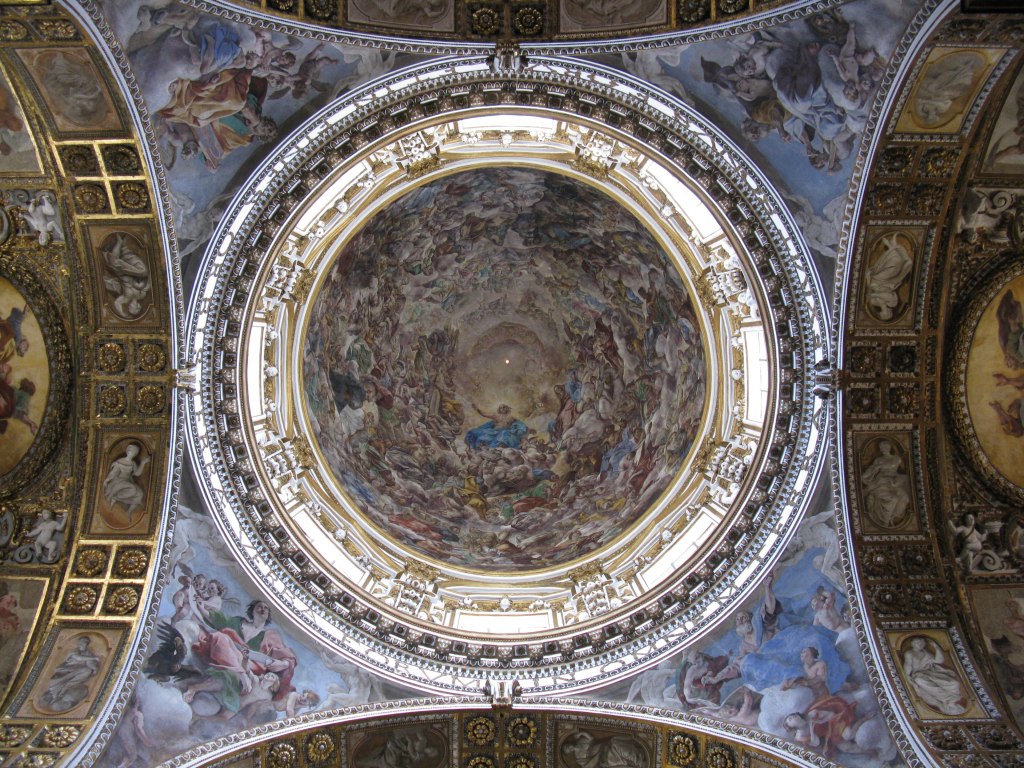
Giovanni Lanfranco (1582–1647) emerged from the Carracci circle in Rome to become one of the leading painters of the early Baroque. Trained first by Agostino Carracci and later working with Annibale Carracci, he renewed his engagement with Correggio during a return to Parma before developing an increasingly personal style that combined dramatic lighting, fluid movement and expansive spatial invention. During the 1620s his Roman career culminated in major fresco commissions, above all the dome of Sant’Andrea della Valle. He moved to Naples in 1634, where his freer handling, luminous colour and illusionistic ceiling painting had a strong influence on local artists, before returning to Rome in the final years of his life. The three Annunciations discussed here belong to the years between about 1615 and 1625, when Lanfranco’s mature Roman language was taking shape.
The small Annunciation in the Hermitage provides the starting point. Painted on copper, probably around 1615–16, it belonged to the world of private devotion, refined collecting and aristocratic patronage. Its domestic setting is rendered with exquisite attention: the bed and its rumpled sheets, the tiled floor and the architectural setting all invite close inspection. To the left, the room opens onto a landscape, extending the composition beyond the immediate encounter and adding a further sense of pictorial depth. Gabriel enters along a controlled diagonal, while the Virgin raises her head towards him. Paradoxically, the smallest of the three works combines the greatest concentration of fine detail with, arguably, the most expansive sense of space. Descending light, Gabriel’s airborne movement and the attendant putti animate the scene, but the small format keeps the drama contained.
Giovanni Lanfranco, Annunciation, c. 1615–16. Oil on copper, 74 × 54.5 cm. State Hermitage Museum, St Petersburg. Credit: Wikimedia Commons.
Its early history links it with Cardinal Alessandro Peretti Montalto, and its subsequent passage through major collections suggests that it was valued as more than a minor cabinet picture. It entered the collection of Cardinal Silvio Valenti Gonzaga, appeared in Panini’s painted view of his gallery, passed through François Tronchin’s collection in Geneva, and entered the Hermitage in 1770.
In her entry in Museo Statale Ermitage: La pittura italiana del Seicento, Svetlana Vsevolozskaja notes that the Hermitage Annunciation was known through copies and engravings, including prints by Cornelis Bloemaert and Nicolas Bazin. This wider circulation suggests that, before Lanfranco reworked the subject on a monumental scale, the composition already had a clarity and devotional appeal that made it repeatable.
The dating of the Hermitage copper has nevertheless remained unsettled. Blunt and Cooke associated it with a drawing in the Royal Collection at Windsor, now catalogued as Studies for the Virgin Annunciate (RCIN 905709), and linked both sheet and painting with Lanfranco’s Neapolitan period.
The related Windsor drawing (RCIN 905709) can be viewed here:
Other scholars placed the work much earlier. Schleier initially dated it to around 1607–08, but later revised his view and assigned the painting instead to about 1615–16. The Windsor sheet contains three exploratory studies of the Virgin, adjusting the upward inclination of her head and the placement of her hands. Its connection with the Hermitage painting is therefore useful, although it does not by itself settle the work’s date.
The Paris Annunciation, now in the choir of Notre-Dame-de-Bonne-Nouvelle, appears to be the first monumental treatment of the invention developed in the Hermitage copper. Painted on canvas and measuring 242 × 169 cm, it is generally dated to about 1617–19. The domestic detail of the copper has largely disappeared. The bed, landscape and sharply defined architectural setting give way to a less terrestrial conception, in which the Virgin is surrounded by a celestial apparition described through cloud, diffused light and softened contours. Figures and atmosphere seem to merge, dissolving the clear distinction between earthly interior and heavenly vision.
Giovanni Lanfranco, Annunciation, c. 1617–19. Oil on canvas, 242 × 169 cm. Notre-Dame-de-Bonne-Nouvelle, Paris. Credit: Giovanni Lanfranco: un pittore barocco tra Parma, Roma e Napoli (Milan: Electa, 2001), cat. 45.
The basic relationship between Gabriel and the Virgin remains recognisable, but the emotional tone has changed. The Virgin lowers her head, responding with a quieter and more inward humility than in the Hermitage painting. Above her, God the Father appears among angels, while the heavenly light spreads through the upper part of the canvas in a soft, smoky diffusion. The effect is more ethereal than in the copper, and less dependent on the precise description of surfaces and objects.
The painting’s modern history is unusually eventful. It was placed in the apse of Notre-Dame-de-Bonne-Nouvelle in 1829–30, after the rebuilding of the church, and modified to fit the curved setting through the addition of shaped panels around the original canvas. Later changes to the interior left it hidden behind the organ, where it remained until its rediscovery in 1970. Pierre Rosenberg drew attention to it in 1976, and Arnauld Brejon de Lavergnée published it as a work by Lanfranco the following year. Its recovery altered the chronology of the related Annunciations, since it revealed that the Costaguti altarpiece in Rome was not Lanfranco’s first monumental treatment of the composition.
A preparatory drawing of Gabriel at Capodimonte, catalogued in the Gabinetto Disegni e Stampe as inv. Mosca 515 recto and executed in black and white chalk, relates to the angel in the Paris painting rather than to the later Roman version. The folds of Gabriel’s yellow garment correspond in many details to those in the finished Paris canvas, although his right arm remains bare and his head is only lightly sketched in the drawing. The sheet therefore provides further evidence for the separate preparation of the Paris altarpiece.
The Roman Annunciation, now in the Costaguti Chapel in Santi Biagio e Carlo ai Catinari, represents a further reworking of the composition rather than a simple enlargement of the Paris altarpiece. Executed on canvas and measuring 296 × 183 cm, it is generally dated to about 1624–25. The principal figures are brought forward and given greater physical weight, while the smoky diffusion of the Paris canvas gives way to a more clearly articulated setting. A broad hanging in subdued red-brown and muted vermilion tones reintroduces a terrestrial, domestic element, though without recovering the detailed bedchamber and landscape of the Hermitage copper. The encounter is now organised with greater clarity for viewing at a distance.
Giovanni Lanfranco, Annunciation, c. 1624–25. Oil on canvas, 296 × 183 cm. Costaguti Chapel, Santi Biagio e Carlo ai Catinari, Rome. Credit: Wikimedia Commons.
Gabriel kneels at the left, his body turned firmly towards the Virgin, while she raises her head in response. The exchange between them is more direct than in the Paris painting, where her lowered gaze gives the scene a more inward character. Lanfranco also reorders the heavenly zone. God the Father disappears, and the celestial company is reduced to three putti around the descending dove. Fewer in number than in the earlier versions, they are also more fully modelled, with a greater sense of bodily weight and a more recognisably human presence. Beneath the celestial group, the centre and left of the composition are held in shadow, while the large hanging occupies the right-hand side, helping to define the interior without restoring the detailed domestic setting of the Hermitage copper.
The Roman version also introduces a more emphatic group of devotional and domestic objects. The lectern and open book, the lily and what Schleier identifies as a small basket containing wool (Giovanni Lanfranco: un pittore barocco tra Parma, Roma e Napoli, 2001, cat. 62) establish the Virgin’s room without recreating the extensive bedchamber, landscape and architecture of the Hermitage copper. The objects are larger and more isolated, serving as clearly readable signs within an altarpiece rather than as details intended principally for close inspection. The composition is adjusted to the scale and devotional function of a chapel interior, where clarity takes precedence over descriptive detail.
The date of the altarpiece was long uncertain. Earlier scholars placed it around 1615 or 1620, before the chronology of Lanfranco’s related works had been fully clarified. The rediscovery of the Paris canvas helped to establish that the Costaguti painting was the later version. A date around 1624–25 also places it close to Lanfranco’s work for the Costaguti family in their Roman palace, including the fresco of Justice and Peace.
The circumstances of the commission remain less clear than its approximate date. The final arrangement of the Costaguti Chapel belongs to the later seventeenth century, when Giovanni Battista Costaguti junior acquired and refashioned the first chapel on the right. The altarpiece itself, however, must have been painted much earlier, probably for an earlier member of the family, perhaps Giovanni Battista Costaguti senior or Prospero Costaguti. Its original destination may therefore have preceded the chapel setting in which it was eventually installed.
Seen after the Hermitage and Paris versions, the Roman altarpiece shows Lanfranco preserving the basic relationship between Gabriel, the Virgin and the descending light while revising almost everything around it. The intimate description of the copper and the atmospheric softness of the Paris canvas give way to firmer contours, more monumental figures and a composition designed to remain clear within a public devotional setting.
[Producing these essays requires care, time, research, and resources. Contributions to help sustain this exploration would be greatly appreciated.]
Blunt, Anthony, and Hereward Lester Cooke. The Roman Drawings of the XVII and XVIII Centuries in the Collection of Her Majesty the Queen at Windsor Castle. London: Phaidon, 1960.
Schleier, Erich. Disegni di Giovanni Lanfranco. Florence: Leo S. Olschki, 1983.
Schleier, Erich, ed. Giovanni Lanfranco: un pittore barocco tra Parma, Roma e Napoli. Exhibition catalogue, Colorno, Naples and Rome. Milan: Electa, 2001. See cat. 45, Annunciazione alla Vergine, Notre-Dame-de-Bonne-Nouvelle, Paris, pp. 192–93; and cat. 62, Annunciazione, Santi Biagio e Carlo ai Catinari, Rome, pp. 232–33.
Schleier, Erich. “Lanfranco, Giovanni.” Dizionario Biografico degli Italiani. Rome: Istituto della Enciclopedia Italiana.
Vsevolozskaja, Svetlana. Entry on Giovanni Lanfranco’s Annunciazione. In Museo Statale Ermitage: La pittura italiana del Seicento. Catalogo della collezione. Milan: Skira, 2010.
Online resource
Royal Collection Trust. Giovanni Lanfranco, Recto: Studies for the Virgin Annunciate; verso: Studies of an Arm and Drapery, RCIN 905709.
Giuseppe Casciaro’s association with Paris appears to have developed earlier than has often been assumed. Vito Carbonara notes that, in 1889, Pio Enea Cugeno referred to works by the young painter as already exhibited, or intended for exhibition, in the French capital. A further indication appears in April 1891, when the Gazzetta delle Puglie reported that two English visitors to Casciaro’s Naples studio were unable to buy a work because those then available had already been consigned to the Paris market. Taken together, these references suggest that Casciaro had established some degree of artistic and commercial connection with the city before his documented appearance at the Paris Salon in 1892 and his gold medal there in 1893. Subsequent exhibitions, awards and repeated use of Parisian addresses reveal an increasingly sustained engagement with the city’s artistic and commercial networks. This relationship became especially visible in 1896, when he held an important solo exhibition at the Galerie des Champs-Élysées, confirming that he had become a recognised presence within the Parisian art world while remaining devoted to the landscapes of southern Italy.
From 1893, 7, or 7 bis, Rue Scribe recurs among the Paris addresses associated with Casciaro, offering one clear point of entry into his professional connections in the city. The precise function of the premises remains uncertain: they may have served as a gallery, a point for correspondence and sales, a temporary base during visits, or some combination of these. Whatever their practical use, Casciaro’s repeated association with the address indicates a sustained connection with this part of the Parisian art market.
Rue Scribe was also associated with the dealer or intermediary Del Frate, and the formula chez M. Del Frate appears in Paris exhibition catalogues in connection with a number of artists from Italy. Beyond this administrative association, Del Frate is documented as having purchased works by Casciaro at Angers in 1895 and at Monaco in 1896, while correspondence indicates that Casciaro remained connected with the gallery in 1902. Although the precise terms of the arrangement are unknown, the evidence suggests that the address formed part of a continuing commercial relationship.
The location appears to have served as a point of convergence for a succession of Italian artists, a number of them associated with Rome and with central or southern Italy. This suggests a comparatively modest but active channel through which works, correspondence and commercial opportunities entered the Parisian exhibition system. Del Frate’s activity is now difficult to reconstruct, but the recurrence of the address offers a promising avenue for further research into the networks that enabled artists such as Casciaro to circulate beyond Italy.
A number of other Italian artists are associated with the Rue Scribe address. For the purposes of this brief study, a small selection may serve to give the network some definition. Pietro Gabrini (1856–1926), a Roman painter of landscapes and genre scenes, appears alongside Casciaro at Rue Scribe in 1894. Giuseppe Aureli (1858–1929), also Roman and a pupil of Gabrini, used the Del Frate address in the following year, suggesting that access to the dealer may sometimes have followed existing artistic and professional relationships. Fabio Cipolla (1852–1935), another Roman painter, was associated with the address in 1898. These connections do not amount to a coherent Del Frate school, but they do reveal a commercial and administrative point through which painters of differing backgrounds and interests could enter the Parisian art market.
Pietro Gabrini (1856–1926), A Fishing Boat in the Bay of Naples, with Vesuvius Beyond, 1885, oil on canvas, 100.3 × 161.3 cm, private collection. Credit: Wikimedia Commons.Giuseppe Aureli (1858–1929), The Water Carrier (La portatrice d’acqua), date unknown, oil on canvas. Credit: Wikimedia Commons.Fabio Cipolla (1852–1935), Donna in poltrona (Woman in an Armchair), 1911, oil on canvas. Credit: Wikimedia Commons.
Casciaro’s attachment to place was neither narrow nor repetitive. In Campania, including Naples, the Vomero, Capri and the Vesuvian terrain, he returned to landscapes already familiar through a long tradition of representation, but often chose viewpoints and fragments that lay outside the most recognisable motifs. His modernity lies partly in this ability to look again at celebrated places while attending to transient atmospheric effects and to portions of the landscape that might otherwise pass unnoticed. Casciaro also gave sustained and affectionate attention to other places of more personal significance, including Ortelle in Salento and Nusco in Irpinia. His work therefore moves between sites already embedded in the European imagination and landscapes made intimate through prolonged familiarity.
Rue Scribe shows that this deep local attachment did not entail isolation. Casciaro’s work circulated within the Parisian art world while offering an individual and closely observed vision of southern Italy. As Vito Carbonara has shown, his connection with French culture extended beyond exhibitions and sales. He illustrated the cover of the Neapolitan edition of the Goncourts’ Sœur Philomène, received a number of books from Guy de Maupassant, and later named his youngest child Guido in tribute to the writer. He was also present at a banquet held in Zola’s honour during the writer’s visit to Naples in 1894 and was associated with figures such as Vittorio Pica and Matilde Serao. Such connections place him within a Franco-Neapolitan intellectual culture that cannot be reduced to the art market alone.
Casciaro’s enduring attachment to the landscapes closest to him placed no limit on his success in Paris. On the contrary, it gave his work much of its distinctive character. What Rue Scribe reveals is one of the lesser-known networks through which a vision of southern Italy, rooted in both celebrated landscapes and places of personal significance, entered the leading artistic and commercial centre of the late nineteenth century.
Giuseppe Casciaro (1861–1941), Capri, 1915, oil on panel, 15.5 × 33.5 cm, private collection. Credit: Wikimedia Commons.Giuseppe Casciaro (1861–1941), Mediterranean Coast at Dusk, before 1941, oil on panel, 57 × 77 cm, private collection. Credit: Wikimedia Commons.Giuseppe Casciaro (1861–1941), Cliffs, Ischia, pastel on board, 46 × 53 cm, private collection. Credit: Wikimedia Commons.Giuseppe Casciaro (1861–1941), Monte Solaro, Capri, 1901, 35.8 × 36.5 cm, Neue Pinakothek, Bavarian State Painting Collections, Munich, inv. 8399. Credit: Wikimedia Commons.Giuseppe Casciaro (1861–1941), Overcast Day (Trübe Stimmung), 1902, 35.6 × 37.2 cm, Neue Pinakothek, Bavarian State Painting Collections, Munich, inv. 8400. Credit: Wikimedia Commons.Giuseppe Casciaro (1861–1941), The Coast of Sorrento, 1915, oil on panel, 31.5 × 45 cm, private collection. Credit: Wikimedia Commons.Giuseppe Casciaro (1861–1941), Tra il verde (In the Open Air), 1890, pastel on paper, 44 × 67 cm, MUST – Museo Storico della Città di Lecce. Credit: Wikimedia Commons.
[Producing these essays requires care, time, research, and resources. Contributions to help sustain this exploration would be greatly appreciated.]
A young woman sits absorbed in a small book, her head inclined towards its pages in quiet concentration. Corot has reduced the setting to little more than a subdued arrangement of warm browns and ochres, relieved by the white of her blouse and the open pages before her, while the deep red of her jacket and the ribbon in her hair provide the composition’s most vivid accents. Behind her, the surroundings remain only loosely defined, with hints of the studio rather than a fully described interior. The resulting stillness seems to place her at a slight remove from both the painter and the viewer.
Painted around 1845–50, A Girl Reading belongs to the period following Corot’s third journey to Italy and is among the earliest examples of a subject to which he would return throughout his career. As Margaret Denton Smith observes, the red jacket, edged with gold at the cuffs, and the ribbon in the sitter’s hair form part of an Italianate costume that reappears in several of his later figure paintings. Yet the work resists any straightforward reading as either a portrait or a picturesque costume study. The sitter possesses a tangible individual presence, while Corot also holds her at a distance, supplying none of the details that would define her identity and allowing costume and inward absorption to transform her into a more elusive poetic figure.
Working from the model was not merely an adjunct to Corot’s better-known landscape practice, but one of his particular pleasures. His biographer Étienne Moreau-Nélaton described the weeks devoted to it as the artist’s “favourite form of relaxation”, suggesting a freedom quite different from the demands of the Salon or the expectations of patrons. Corot also brought to these paintings the tonal harmony he had developed in his landscapes, allowing the figure and her surroundings to be held together less by narrative than by carefully balanced colour. He generally kept these works to himself, and many became publicly known only after his death. Within the privacy of the studio, the model offered him a space in which observation, memory and pictorial invention could meet without resolving themselves into a finished narrative or an easily defined genre.
The models belonged to the fluid professional world of artistic Paris. Moreau-Nélaton recalled Corot alternating “Italian women from the rue Mouffetard” with working girls from Montmartre, while Delacroix recorded addresses supplied by Corot, whose knowledge of models was evidently valued by other painters. Emma Dobigny, who later sat for him, also posed for Degas and Puvis de Chavannes. Corot nevertheless resisted over-directing the women who worked for him, even defending the restlessness of one sitter with the remark that he needed “a model who moves”. The encounter remained open and immediate, even as the woman before him was transformed in Corot’s imagination.
Allard places these works at an unusual meeting point between inherited artistic tradition and modern painting. Corot repeatedly drew upon familiar types: women reading, drawing water or playing musical instruments, motifs established by painters such as Poussin, Vermeer, Valentin de Boulogne and Fragonard. Italian costume and recollections of his journeys introduced a further distance from the immediate studio encounter. Yet these references do not produce conventional history paintings or clearly defined narratives. The book, costume and pose remain elements within a pictorial vocabulary whose precise meanings are left uncertain.
The girl reading is neither simply the living model who sat before Corot nor an ideal type. She remains suspended between presence and distance.
Jean-Baptiste-Camille Corot, A Girl Reading, c. 1845–50, oil on canvas, 45.7 × 35.4 cm, Foundation E. G. Bührle Collection, Zürich. Image credit: Wikimedia Commons.
[Producing these essays requires care, time, research, and resources. Contributions to help sustain this exploration would be greatly appreciated.]
Allard, Sébastien. “Corot: From Model to Figure.” In Corot: Women, by Mary Morton, David Ogawa, Sébastien Allard and Heather McPherson, 39–53. Exhibition catalogue, National Gallery of Art, Washington. New Haven and London, 2018.
Denton Smith, Margaret. “A Girl Reading, c. 1845–1850,” cat. 13. In The Passionate Eye: Impressionist and Other Master Paintings from the E. G. Bührle Collection. Zurich and Munich, 1990.
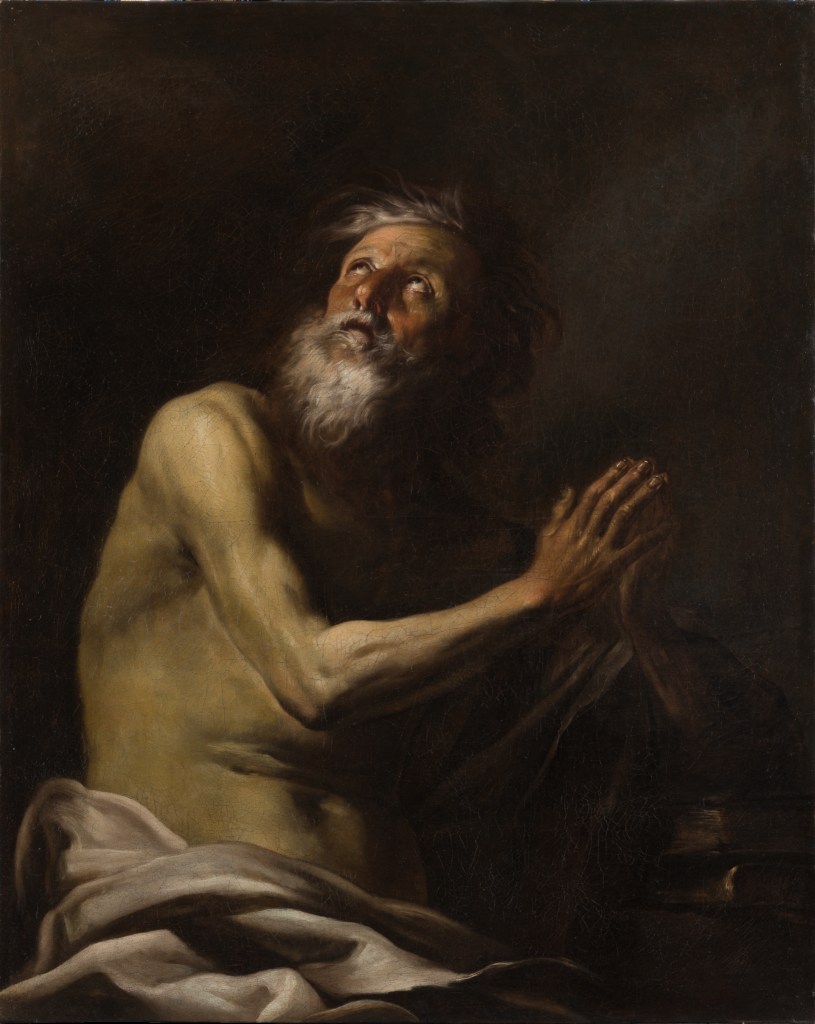
Luca Giordano was born in Naples on 18 October 1634, the son of Antonio Giordano and Isabella Imparato. According to Maria Giovanna Sarti, his father was a picture dealer of Puglian origin and also a modest painter, and seems to have introduced him early to the practical world of painting. Although the sources report an early journey to Rome around 1650, Sarti stresses that Giordano’s formation was essentially Neapolitan. He grew up in a city still profoundly marked by Caravaggio’s two Neapolitan stays and by the powerful example of Jusepe de Ribera. His earliest works, from the beginning of the 1650s, show both a Caravaggesque inheritance and a close study of Ribera, especially in the philosopher types and in the strongly naturalistic treatment of figures.
From the beginning, however, Giordano’s art was not confined to a single model. The presence of Mattia Preti in Naples from 1653 gave him an important stimulus at the moment when he was beginning to move beyond the severe naturalism of Ribera. Preti brought with him a broader Baroque experience shaped by Rome, by a more theatrical handling of light and by the wider movement of mid-century painting. His example helped Giordano imagine how Neapolitan naturalism might be opened towards movement, colour and theatrical breadth. At the same time, Lanfranco’s major fresco cycles were directly visible in Naples, especially at the Gesù Nuovo and in the Cappella del Tesoro di San Gennaro, while Cortona’s language could be absorbed through works, prints and Giordano’s own Roman experience. The change can already be felt in works of the later 1650s, where the darker Riberesque inheritance begins to give way to a more expansive Baroque idiom.
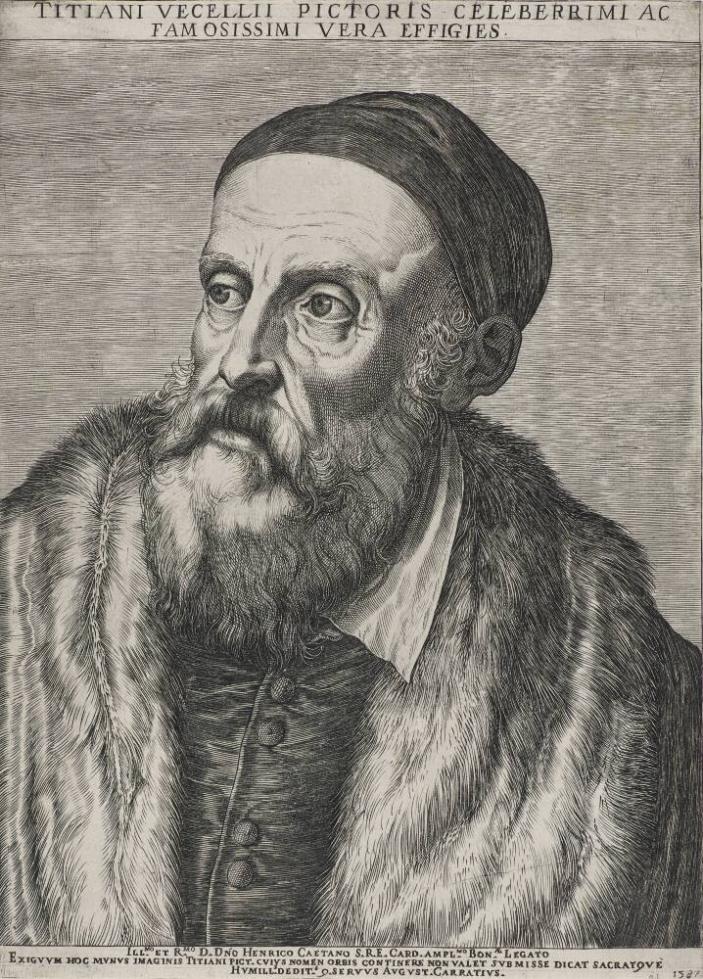
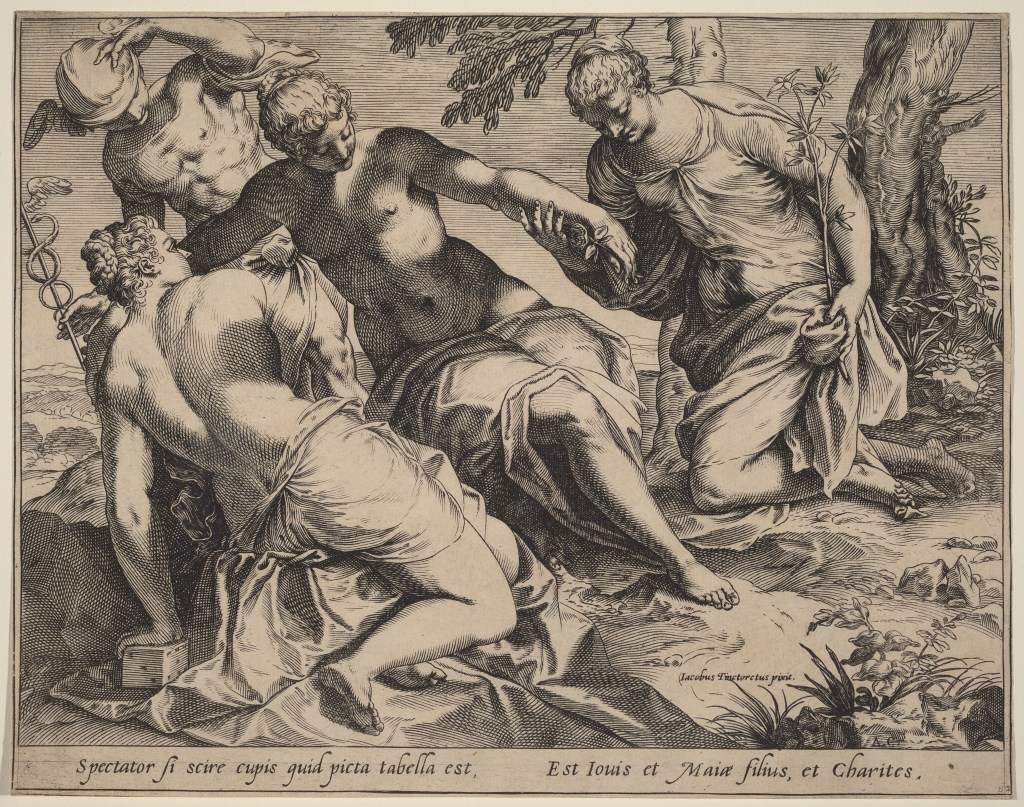
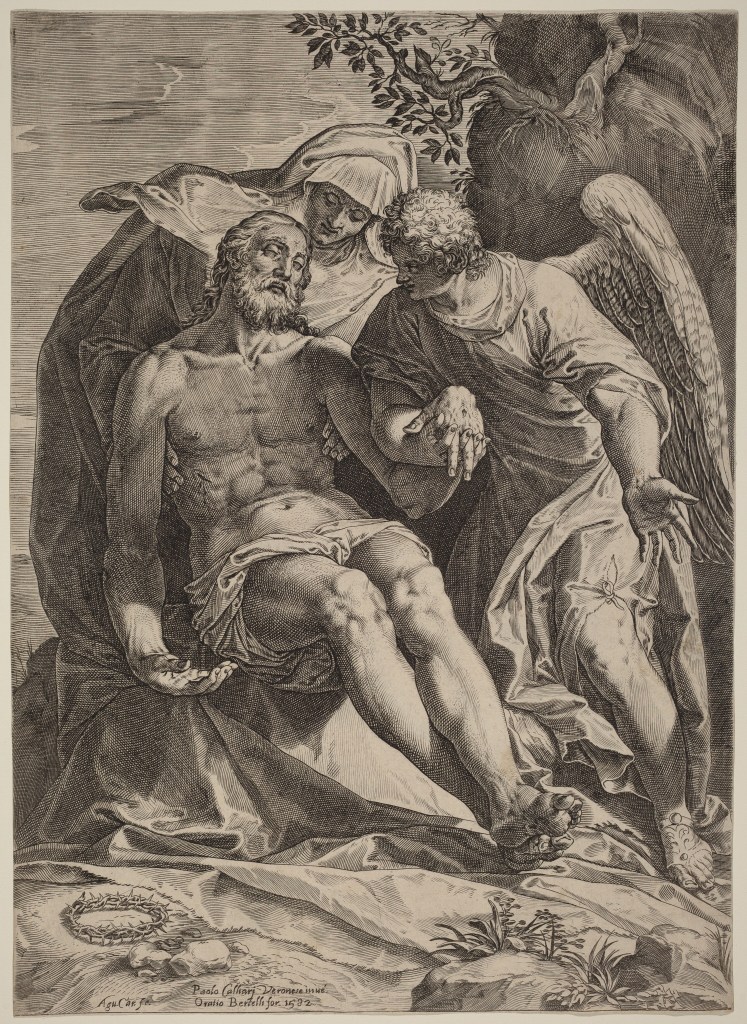
In the 1660s and 1670s Giordano became one of the dominant painters in Naples, working for ecclesiastical patrons, viceroys, private collectors and a widening international market. His links with Spanish viceregal circles were already important before he went to Spain, and Sarti notes that many works were made for Spanish patrons in Naples. His contact with Venice, probably in 1665, also mattered: there he could confront the painting of Tintoretto, Veronese and Titian directly. These experiences enlarged his colour, loosened his handling, and strengthened the Venetian strand that would remain crucial in his mature art.
By the later 1670s and 1680s Giordano’s reputation extended well beyond Naples. In Florence he worked for important Medici and private patrons, most notably in the Corsini Chapel in Santa Maria del Carmine and in the Galleria Riccardiana of the Palazzo Medici Riccardi. These Florentine projects were decisive because they showed that he could command large decorative programmes in fresco, not merely altarpieces and easel paintings. In the Riccardi Gallery, Sarti emphasises his use of a light palette, abundant natural illumination, and a continuous allegorical structure without rigid compartmentalisation, qualities that help explain why he later became so attractive to the Spanish court.
Giordano left for Spain on 22 April 1692 and reached Madrid on 3 July. Sarti explains his summons as part of a long Spanish tradition of employing Italian artists for royal decoration, but also as a particularly natural choice at that moment. Spanish taste was deeply marked by Neapolitan painting, while Giordano’s Florentine frescoes had already shown that he could manage complex decorative programmes on a monumental scale. His first great Spanish commission was at the Royal Monastery of San Lorenzo de El Escorial, where he painted the Imperial Staircase and then a series of vaults in the basilica. The work was carried out with extraordinary speed, but also with careful attention to the ideological and devotional traditions of the Habsburg foundation.
During the following decade Giordano became the chief painter of large-scale royal fresco decoration in Spain. His Spanish projects included the Casón del Buen Retiro, the sacristy of Toledo Cathedral, the royal chapel of the Alcázar in Madrid, the Basilica of Atocha, and San Antonio de los Alemanes. Alongside these frescoes he continued to produce a large number of easel paintings. In Spain, therefore, he was not simply repeating his Neapolitan manner abroad. He adapted his Neapolitan, Roman, Venetian and Florentine experience to the ceremonial needs of the Spanish monarchy, creating schemes in which religious history, dynastic allegory and spectacular pictorial invention could be made to serve a courtly programme.
After the death of Charles II in 1700, Giordano’s relationship with Philip V continued only briefly. He left Madrid for Naples on 8 February 1702. Even in old age he remained capable of large-scale work, notably in Donnaregina Nuova and in the Trionfo di Giuditta, or Triumph of Judith, in the Cappella del Tesoro Nuovo at San Martino. Sarti makes an important final point about his famous speed: the rapidity of Giordano’s touch did not mean that invention itself was casual or instantaneous. His final works, like earlier ones, were often prepared through drawings and bozzetti. He died in Naples on 3 January 1705 and was buried in Santa Brigida, the church where his early Miracolo di San Nicola di Bari had announced his ambitions half a century earlier, and where the unfinished frescoes of the sacristy would be completed after his death by his pupils from his sketches.
A Painter’s Speed and Invention
The nickname Luca fa presto belongs to Giordano’s legend, but it is also a trap. His rapidity was real, and it astonished contemporaries, but the anecdote can make the paintings look easier than they are. In “Dalla natura alla pittura. Una lettura di Luca Giordano (1634–1705)”, published in the catalogue Luca Giordano. Dalla natura alla pittura in 2020, Stefano Causa asks for a slower encounter with the painter of speed. The point is not to deny Giordano’s facility, but to look through it: to see the memory, practice and concealed labour that allowed the surface to appear so free. Patrice Marandel makes a related argument in his introduction to the exhibition catalogue Luca Giordano, 1634–1705, published by Electa Napoli in 2001. Too much emphasis on fa presto reduces Giordano to a merely facile painter, when speed was only the most visible sign of a deeper command.
Giuseppe Scavizzi, in Luca Giordano. La vita e le opere (Naples: Arte’m, 2017), gives this account of speed as disciplined practice a firm historical basis. Giordano’s early formation was not narrow, passive or improvised. His father Antonio, ambitious, controlling and commercially minded, pushed him towards churches, galleries, collections and Rome itself. Scavizzi describes Giordano as essentially self-formed, but not untaught: his real master was the art of the past. In Rome, in the early 1650s, he copied ancient sculpture, Raphael, Giulio Romano, Polidoro da Caravaggio, Guglielmo della Porta, the Carracci, Domenichino and Pietro da Cortona. These copies were exercises in skill and memory, but they also belonged to a practical market for drawn recollections of famous works. De Dominici’s account of Giordano preparing paper with powdered gesso, drawing in black chalk and heightening with white gives a material basis for the speed: the hand was being trained to seize form, shadow and light rapidly, but not carelessly.
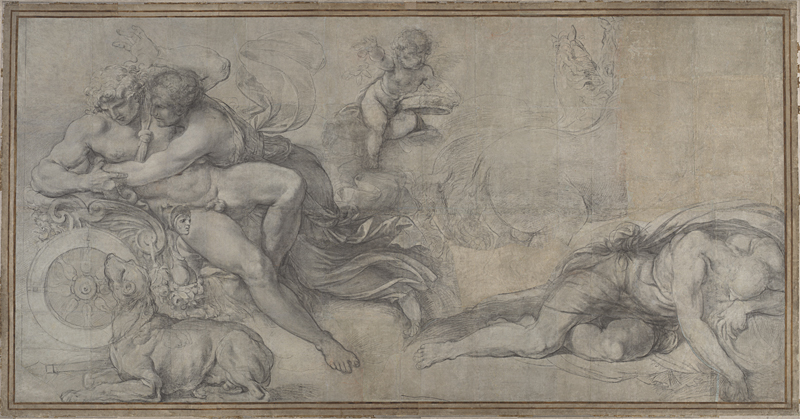
Copying was therefore not a marginal or accidental part of Giordano’s formation. It was one of the conditions from which his art emerged, and also one of the sources of later suspicion. Scavizzi does not present the young Giordano as a simple plagiarist, but he does make clear that imitation had a practical, even pressured, dimension. Under Antonio’s direction, copies and works in the manner of older masters could serve the market as well as education. They trained the young painter’s eye and hand, but they could also be sold to collectors who wanted the aura of Raphael, Dürer, Bassano, Titian, Veronese or Tintoretto. Some works came close enough to older models, or bore initials ambiguous enough, to create later accusations of deceit, false attribution or plagiarism.
That charge cannot simply be dismissed, because it belongs to the reality of Giordano’s early practice. But it also needs to be understood historically. In the seventeenth century, copying was a form of training, a commercial resource, a display of skill and a way of entering into rivalry with the past. Giordano’s particular gift was that he did not remain imprisoned by the copy. What began under paternal pressure and market demand became one of the foundations of his art: the ability to enter another painter’s language, grasp its procedures, and then bend it towards his own purposes. The accusation of copying therefore points to something real, but it also helps explain the later power of his invention. His freedom was built out of imitation, not opposed to it.
This early discipline was unusually wide. Giordano did not form himself through Ribera alone, nor through a simple sequence of Caravaggio, Ribera and Preti. Scavizzi gives real weight to the young painter’s experiments with historical styles: small works after or in the spirit of Dürer, Lucas van Leyden and northern Passion prints; neo-Raphaelesque Holy Families and Baptisms; Venetianising pictures in the manner of Bassano, Titian, Veronese and Tintoretto; and early attempts at large historical composition through Giulio Romano. Some of these works were awkward, some commercially opportunistic, and some close enough to old models to cause later confusion. But they were not merely youthful oddities. They trained Giordano to inhabit different pictorial languages, to repeat and vary compositions, and to treat earlier art as a repertoire of forms, gestures, colours, devotions and dramatic situations.
This helps explain why Giordano’s speed was inseparable from memory. Causa’s distinction between copying and emulation is useful here. Giordano could imitate with dazzling skill, but imitation was not the end of the process. A gesture might recall Caravaggio; a body might carry the weight of Ribera; a figure might derive from Raphael, Polidoro or a northern print; a colour or spatial arrangement might come from Venice, Lanfranco, Cortona or Rubens. But once such material entered Giordano’s painting, it rarely remained in its first state. It was absorbed, tested, recomposed and returned with a new pictorial behaviour. The source could still be perceptible, but it had begun to move according to Giordano’s own logic.
The relation to Ribera is therefore best understood as contact and confrontation, not simple apprenticeship. Giordano may not have been Ribera’s formal pupil, but he studied Ribera’s works intensely and repeatedly. Ribera gave him density, physical presence and a Neapolitan reworking of Caravaggesque naturalism. Yet Giordano did not merely continue that inheritance. He took it apart and redirected it. In works such as the Miracolo di san Nicola for Santa Brigida, the force of Ribera’s matter is still present, but it is loosened into a broader, more luminous and more mobile Baroque language. The painting made Giordano’s new manner publicly visible in Naples. It also provoked resistance from painters attached to the older claims of disegno, decorum and controlled devotional clarity. Francesco De Maria and Andrea Vaccaro could see in Giordano’s colouristic freedom a threat to drawing, truth and propriety. The controversy is revealing: Giordano’s speed was not just facility, but part of a deliberate and contentious painterly position.
Luca Giordano, Miracolo di san Nicola di Bari, 1655, oil on canvas, 260 × 180 cm, church of Santa Brigida, Naples. Image: Wikimedia Commons.
Preti occupies an important but more specific place in this development. He did not simply teach Giordano scale. Scavizzi’s account is more precise. In the later 1650s Giordano was measuring himself against Preti’s dramatic compositions, forceful chiaroscuro, half-length groupings, narrative action and pathos. Works such as the Martirio di santa Lucia and Santa Lucia condotta al martirio show him absorbing Pretian structure while pushing it towards warmer colour and more fluid painterly beauty. Preti helped open Neapolitan naturalism towards theatrical breadth; Giordano made that breadth more chromatic, supple and various.
Luca Giordano, Martirio di santa Lucia, 1659, oil on canvas, 168 × 218 cm, Museo e Real Bosco di Capodimonte, Naples. Image: Wikimedia Commons.Luca Giordano, Santa Lucia condotta al martirio, 1659, oil on canvas, 143 × 193 cm, Museo e Real Bosco di Capodimonte, Naples. Image: Wikimedia Commons.
At the same time, Causa insists on the importance of Giovanni Lanfranco. Lanfranco offered something different from Preti: not simply drama or larger narrative, but a way of organising vision across a continuous Baroque field. In the Cappella del Tesoro di San Gennaro, Giordano could study Lanfranco’s cupola, Domenichino’s frescoes and Ribera’s San Gennaro che esce illeso dalla fornace. The chapel presented a dense school of competing possibilities: naturalist force, classicising order, illusionistic space and decorative continuity. Lanfranco’s example helped Giordano imagine painting beyond the fixed viewpoint and the concentrated episode, as a mobile system of light, movement and distributed attention. Causa also notes that the chapel’s bronzes by Giuliano Finelli, with their relation to Bernini’s inventions, contributed to this formation. Giordano’s Baroque language did not develop from painting alone. It emerged from an environment in which fresco, sculpture, stucco, architecture and theatrical movement were already working together to animate sacred space.
Rubens then became decisive in a different way. For Scavizzi, the years after the plague of 1656 mark Giordano’s passage into a fuller Baroque language. Naples had lost or seen removed many leading painters of the previous generation, and the field of major ecclesiastical commissions opened to a young artist of extraordinary energy. In works of 1657 and after, Giordano’s painting becomes larger in ambition, more luminous in colour and more openly dramatic. Rubens supplied not only models of colour and movement, but a repertory of bodily action, religious intensity, mythological violence, allegory and public meaning. Through engravings after Rubens, Giordano studied and reworked compositions such as the Education of the Virgin, the Fall of the Rebel Angels, Samson and Delilah, the Massacre of the Innocents and the Roman Charity. These were not passive borrowings. Giordano reversed, condensed, enlarged and recomposed Rubensian inventions until they served his own theatrical and colouristic purposes.
The Rubensian example also helped Giordano think about the social role of painting. In Rubens Painting the Allegory of Peace, he honours Rubens not only as a painter of movement and colour, but as a courtly and diplomatic figure, an artist whose work could serve peace, monarchy, public celebration and political hope. This is directly relevant to the later Spanish works. Giordano was learning how myth, allegory and spectacle could carry meanings that were public as well as pictorial. Around 1660, in paintings such as Perseo e Fineo, Gezabele divorata dai cani and the Städel Youth Tempted by the Vices, he began to handle ancient story, violent action, moral emblem and political allusion with increasing ambition. The iconography could be dense, sometimes even difficult, but the visual method was clear: earlier images, prints, myths and dramatic situations became material for large, animated compositions in which narrative, allegory and political suggestion were carried by colour, movement and display.
Luca Giordano, Rubens Painting the Allegory of Peace, c. 1660, oil on canvas, 337 × 414 cm, Museo Nacional del Prado, Madrid. Image: Wikimedia Commons.Luca Giordano, Perseus turning Phineus and his Followers to Stone, c. 1660, oil on canvas, 285 × 366 cm, National Gallery, London. Image: Wikimedia Commons.Luca Giordano or follower, Dogs Devouring Queen Jezebel, 17th century, oil on canvas, 134 × 204.5 cm, Museum of Fine Arts, Ghent. Image: Wikimedia Commons.Luca Giordano, Youth Tempted by the Vices, 1664, oil on canvas, 265.9 × 289.9 cm, Städel Museum, Frankfurt am Main. Image: Wikimedia Commons.
This helps explain why Causa’s phrase “from nature to painting” is not a retreat into artifice. Giordano does not abandon the visible world, but he changes the status of what he takes from it. Nature, bodies, gestures, prints, sculptures and earlier paintings all pass through the same pictorial intelligence. A Caravaggesque motif may lose its original gravity and become part of a broader Baroque motion. A Riberesque body may be lifted into warmer light. Venetian colour may become an instrument for freeing the surface. Rubensian action may be transformed into Neapolitan religious theatre or courtly allegory. Giordano’s art is not simply a sequence of influences. It is a process of conversion.
Drawing remains one of the instruments of that conversion, but Scavizzi’s account prevents us from thinking of Giordano’s preparation only in terms of drawings made before a painting. Giordano drew, copied and studied intensely; yet he also seems to have tested many ideas through painting itself. He worked rapidly, often alla prima, and when dissatisfied with a composition he could repeat it in another painting rather than resolve everything through preparatory study. His labour therefore did not always look like the slow correction of a single work. It could take the form of serial invention: returning to a subject, adjusting a grouping, altering a light, recomposing a borrowed model, and trying again. The apparent spontaneity of the surface should be seen against this larger practice of repetition and stored solutions.
This is why the legend of virtuosity remains both useful and dangerous. De Dominici’s stories of miraculous execution, manual tricks and paintings made almost without brushes belong to the mythology of Luca fa presto. But the better response is not to deny the bravura. It is to ask what the bravura serves. At his best, Giordano uses rapid handling to keep invention alive across large surfaces. Details that look loose or hurried at close range can gain their force within the larger ensemble. Causa is right to warn that Giordano suffers in reproduction: his great works depend on scale, colour, distance, architectural setting and the movement of the spectator. They were conceived not as isolated passages to be inspected in reproduction, but as works whose meaning emerges across the whole painted field.
The later stages of Giordano’s career confirm this mural intelligence. Florence allowed him to reactivate the lessons of Lanfranco and Cortona in a different artistic environment, especially in the Corsini cupola at Santa Maria del Carmine and the Medici Riccardi gallery. Cortona gave him a mobile, courtly and theatrical Baroque language capable of travelling beyond local schools; Bernini sharpened his sense of the relation between image, architecture and spectator; Venetian colour remained a means of lightening and expanding the surface. By the time Giordano worked for the Spanish monarchy, he was not simply exporting Neapolitan painting. He was operating in a European Baroque language formed through Naples, Rome, Venice, Florence, Rubens, Cortona, Lanfranco and the practical demands of large decorative settings.
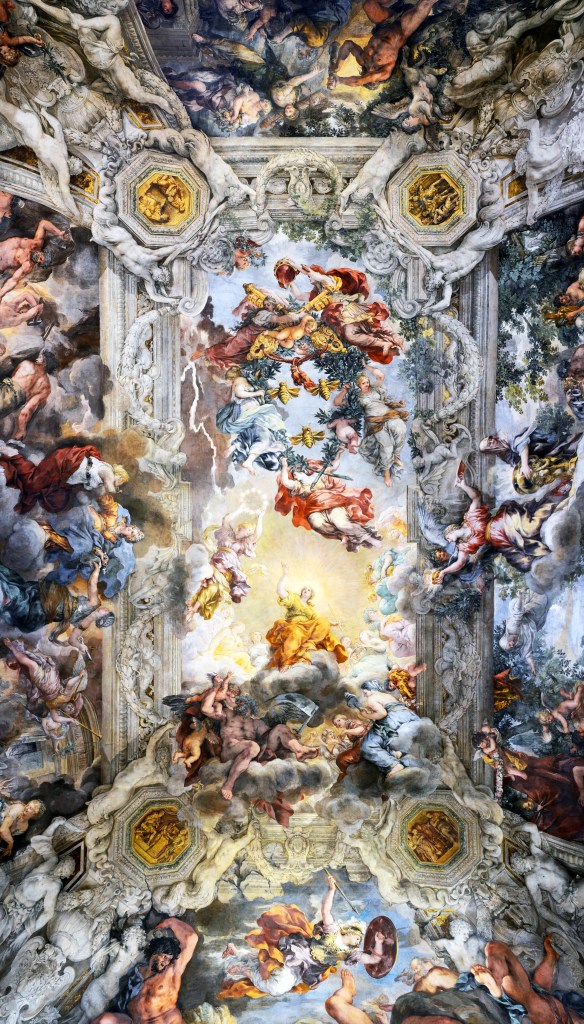
The Casón del Buen Retiro gave these qualities one of their greatest Spanish opportunities. A ceiling such as the Alegoría del Toisón de Oro, or Allegory of the Golden Fleece, required far more than rapid execution. It needed a painter able to convert dynastic argument into visual theatre, and to prevent a dense allegorical structure from hardening into a diagram. Giordano was unusually equipped for that task. He had learned to move between traditions without becoming trapped by any one of them; to turn copying into emulation; to make colour, movement and scale carry narrative, allegory and political suggestion; and to organise a painted surface as a field of mobile attention. The Casón ceiling belongs to that long preparation. It is not merely a feat of speed, but a work in which speed, memory, allegory and decorative command become part of the visual language of monarchy.
Luca Giordano, Allegory of the Spanish Monarchy and related ceiling decoration, c. 1697, fresco, Casón del Buen Retiro, Madrid. Image: Wikimedia Commons.
The Casón and the Last Habsburg Court
The Casón del Buen Retiro belonged to the palace complex created under Philip IV on the eastern edge of Madrid. Built in 1637 as the palace ballroom, it later acquired a more formal ceremonial role under Charles II. Palomino described it as the most celebrated hall of the monarchy, used for royal functions, embassies and similar occasions. After the death of Charles II, the same room would be used for the reception of Philip V and for his installation as Grand Master of the Order of the Golden Fleece. The Casón was therefore not only a pleasure-palace room. It was a place where monarchy was staged through ceremony, diplomacy and dynastic display.
Giordano’s frescoes were probably made around 1697, at one of the most difficult moments in the history of the Spanish Habsburg court. Charles II had no direct heir, and the extinction of the dynasty was no longer a distant possibility. The succession was disputed by rival European interests and by factions within the court itself. At the same time, Spain had suffered military humiliation in Catalonia, including the fall of Barcelona in 1697. The monarchy still needed to present itself as continuous, sovereign and universal, but the immediate political situation made that claim increasingly hard to sustain through direct images of the king or of contemporary victory.
This helps explain the retrospective character of the Casón programme. The ceiling does not derive its authority from the achievements of Charles II himself. Instead, it returns to older and more durable foundations: Hercules, the Golden Fleece, Burgundian inheritance, Habsburg lineage, the defence of the faith, and the apotheosis of Spain as a world monarchy. Rosa López Torrijos reads the decoration as perfectly suited to the final phase of Charles II’s reign: an exuberant Baroque display that seeks to persuade the spectator of the magnificence of a lineage whose living representative and contemporary fortunes suggested weakness rather than strength.
The comparison with the Salón de Reinos sharpens the point. This earlier ceremonial hall, also part of the Buen Retiro palace complex, had been created under Philip IV in the 1630s as one of the great spaces of royal representation. Its decoration, organised under the Count-Duke of Olivares, combined dynastic portraits by Velázquez, battle paintings by several artists, royal arms and Zurbarán’s Labours of Hercules. It celebrated the monarchy through recent victories, dynastic presence and heroic ancestry. By the 1690s such a language could not simply be repeated. Recent war could not be turned easily into triumph, and any direct emphasis on Charles II himself, or on the unresolved question of succession, would only have exposed the fragility of the dynasty. The Casón therefore recovered some of the older signs of royal representation, but altered their tone. Hercules remained, the arms of the monarchy remained, and military power would reappear through Ferdinand the Catholic, but the central language became more allegorical, mythological and ceremonial.
Dawson Carr approaches the same problem through the ceiling’s dynastic retrospect. The decoration looks past the weakness of the living dynasty towards an image of monarchy grounded in origin, memory and institution. That does not make the Casón a simple lament for decline. It is an act of courtly assertion, made at a moment when assertion had become especially necessary. Giordano’s task was to give that assertion persuasive visual form: not as a heraldic lesson, but as a painted theatre in which myth, ceremony and monarchy could appear to belong to the same order.
The Surviving Ceiling
The fresco still visible in situ in the Casón is the ceiling of the central hall, the room also known as the Salón de Baile, or Ballroom, and later as the Salón de Embajadores, or Hall of Ambassadors. It was once part of a much larger decoration. Giordano also painted the spaces below the cornice and the adjoining rooms, but those parts have been lost or survive only through drawings, engravings, copies and written descriptions. What remains in place is the main ceiling of the central hall: the only substantial part of Giordano’s fresco decoration still visible in the building.
The ceiling has suffered damage, repainting and restoration, and it should not be imagined as an untouched seventeenth-century surface. Even so, its structure can still be read. The vault is long and rectangular, with five lunette windows on each of its long sides. At the level of these lunettes Giordano painted an illusionistic balustrade, marking the threshold between the lower zone of the ceiling and the mythological sky above.
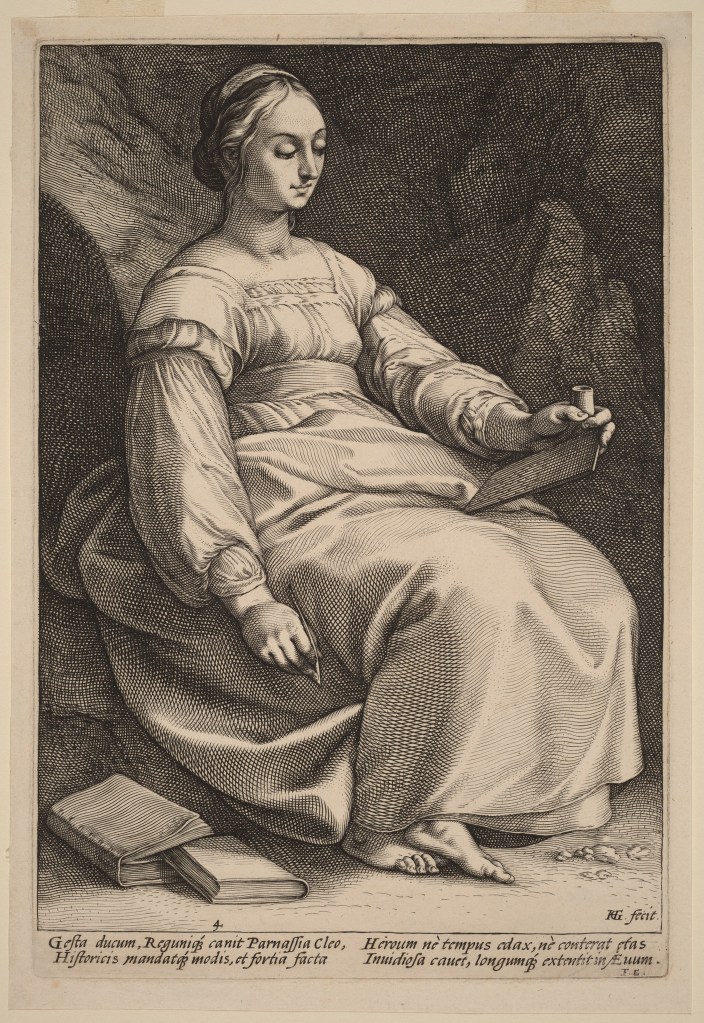
Below this painted balustrade, between and around the lunettes, Giordano placed the Muses and pairs of ancient philosophers or sages, some painted to imitate sculpture. These figures form a lower intellectual and poetic register. The Muses, daughters of Memory, introduce the ceiling as a work of commemoration: a painted song of origins, heroic deeds and dynastic glory.
Luca Giordano, Urania, detail from the ceiling frescoes of the Casón del Buen Retiro, c. 1697, fresco, Madrid. Image source: Turismo Matemático.Luca Giordano, grisaille figures of learned men, detail from the lower zone of the ceiling frescoes of the Casón del Buen Retiro, c. 1697, fresco, Madrid. Image source: Turismo Matemático.
Above this lower register, the ceiling opens out. Giordano does not organise the vault around a single central image. Instead, the two principal scenes are placed at the short ends of the rectangle. At the eastern end, Hercules presents the Golden Fleece to Philip the Good, Duke of Burgundy, the founder of the Order of the Golden Fleece. At the western end, Spain appears as an enthroned female personification of monarchy, seated above the globe and surrounded by signs of dominion, victory and submission.
The position of these scenes was not only compositional. Placed at the two short ends of the hall, they would have confronted those entering from either side, whether from the garden or from the palace. The arrangement also allowed the ceiling to work with ceremonial movement through the room, although the exact use of the hall in ambassadorial receptions is not securely documented.
Between the two ends, the vault is filled with gods, personifications, mythological combats, the Four Ages of Humanity, the celestial sphere and signs of cosmic order. The painted balustrade helps to hold this complexity together. It gives the viewer a stable architectural threshold, while the upper vault opens into sky, allegory and motion.
The ceiling therefore needs to be approached both as an argument and as a spatial experience. Its meanings depend on heraldry, myth and political allegory, but the long shape of the vault, the opposition between the two short ends, the rhythm of the lunettes, and the opening into painted sky all make the decoration something to be encountered across the room, not simply decoded from below.
The Programme of the Ceiling
The iconography of the Casón ceiling is elaborate, but its main structure is clear. Giordano turns the vault into a painted argument about memory, dynastic origin and Spanish monarchy. The title often attached to the fresco, Alegoría del Toisón de Oro, or Allegory of the Golden Fleece, identifies one of its central themes, but it narrows the programme too much. The Golden Fleece is the point of departure. The larger subject, as Úbeda de los Cobos argues, is better understood as the apotheosis of the Spanish monarchy.
The lower zone establishes the terms in which the ceiling is to be read. The Muses and ancient sages belong to the world of poetry, history, wisdom and memory. They prepare the spectator for a painted commemoration rather than a single narrative episode. The deeds represented above them are to be remembered, sung and interpreted. In this sense, the vault is not only an allegory of power. It is also a theatre of historical memory, in which myth, dynasty and ceremony are brought into the same space.
At the eastern end of the vault, Giordano places the foundation scene of the Order of the Golden Fleece. Philip the Good, Duke of Burgundy and founder of the Order, receives the fleece from Hercules. The choice is striking, because in the classical story the fleece belongs to Jason’s quest, not to Hercules. Jason, however, was a morally ambivalent figure and an awkward model for royal virtue. Hercules offered a more suitable alternative: a figure of heroic labour, princely virtue and Spanish dynastic ancestry.
The scene joins different kinds of time. Philip the Good belongs to Burgundian history; Hercules belongs to myth; the Golden Fleece belongs both to ancient legend and to chivalric institution. In Giordano’s fresco these layers are made to meet at the origin of Habsburg greatness. Burgundy gives the Order its historical foundation, Hercules gives it heroic ancestry, and the Spanish monarchy inherits both through the House of Austria. The Golden Fleece therefore carries a double identity: it is the legendary object won in antiquity and the Burgundian Order founded in the fifteenth century. Giordano uses that double meaning to bring myth, faith, lineage and monarchy into a single dynastic image.
Around this foundation scene, Hercules appears again as a defender of cosmic and moral order. In the Gigantomachy he assists the gods against the Giants; in the combat with Antaeus he overcomes another figure of disorder. These episodes extend the meaning of the Golden Fleece scene. Hercules is not only associated with the origin of the Order. He is the heroic force through whom rebellion, violence and evil are subdued. The lost wall cycle of the Trabajos de Hércules, or Labours of Hercules, would once have strengthened this role, but the surviving vault already makes him central to the programme.
Above the foundation scene appears the dynastic ensemble of the House of Austria. The kingdoms and possessions associated with the Spanish Habsburg inheritance are gathered beneath the royal crown, while the collar of the Golden Fleece is offered to them. The political meaning is then carried upward into the sun, the celestial sphere, Parnassus and Olympus. The monarchy is not shown merely as a territorial power. It is placed within an imagined order of heaven, history, heroic descent and divine favour.
The celestial field should be handled with some restraint. Its presence gives the ceiling a cosmic dimension, but de los Cobos cautions against making every constellation serve the Golden Fleece directly. Earlier interpretations, following Palomino, assumed that Aries, the Ram, occupied the centre of the vault and so echoed the fleece itself. De los Cobos argues instead that Giordano followed astronomical prints by Jan Hevelius and Johannes van Keulen closely, both in the general disposition of the heavens and in the individual constellation figures. The central constellation is not Aries but Canis Minor. The evidence considered here does not explain whether Canis Minor had a symbolic function of its own. What it seems to show is that, in this part of the ceiling, Giordano’s appeal to recognised cosmographical sources was more important than rearranging the sky around a dynastic emblem. The heavens still enlarge the programme, but they do so as an image of cosmic order, not simply as an extension of the Golden Fleece.
At the western end, the programme reaches its answer: the personification of Spain. She appears as an enthroned female figure, seated above the globe and holding the sceptres of her realms. Around her are signs of dominion and victory: peoples subject to Spanish rule, defeated heresy, temporal power, riches, trophies and allegorical figures of peace and good government. The motto “OMNIBUS UNUS” sharpens the claim. The monarchy is presented as one power over many peoples and territories, a single centre holding together a vast composite world.
The two ends of the ceiling therefore speak to one another. At one end is origin: Hercules, Burgundy and the Golden Fleece. At the other is dominion: Spain enthroned over the globe. The movement from one to the other is the movement from foundation to fulfilment, from inherited myth and institution to the universal image of monarchy. This is why the fresco cannot be reduced to an allegory of the Order of the Golden Fleece. The Order begins the argument, but the final claim is made on behalf of Spain.
The programme also belongs to the wider literary and emblematic culture of allegory. Ovid’s account of the Four Ages in the Metamorphoses lies behind the movement from gold to iron, while Cesare Ripa’s Iconologia belongs to the repertory through which virtues, vices, powers, seasons and abstract qualities could be given visible form. In the Casón, however, such material is combined with dynastic history, court ceremony, printed sources and Giordano’s own pictorial memory.
The Four Ages of Humanity give the programme a further temporal structure. The Golden and Silver Ages belong to the more benign side of the ceiling, where peace, abundance, spring, agriculture and seasonal order surround the foundation of the Order. The Bronze and Iron Ages belong to the more troubled side, where war, terror, anger and violence gather near the enthroned figure of Spain. The passage through the Ages allows the vault to become a history of the world as well as a history of dynastic legitimacy. Human time moves from ideal beginning towards conflict and decline, but Spain is still presented as the ordering power within that fallen world.
The programme is therefore ambitious in scope, but its logic can be summarised simply. The Muses and sages establish memory and interpretation. Hercules supplies heroic ancestry and moral force. The Golden Fleece gives the monarchy a prestigious Burgundian and Habsburg institution. The crown, sun, celestial sphere and gods place that inheritance within a larger order of heaven and history. At the far end, Spain receives the whole structure as an image of universal monarchy. Giordano’s task was to make this dense argument visible across a ceiling: not as a flat political emblem, but as a moving Baroque fiction in which myth, history and monarchy appear to belong to the same order.
Space, Sources and Painterly Invention
The Casón ceiling belongs to the mature phase of Giordano’s Spanish work. By the time he painted it, probably around 1697, he had already completed the great fresco campaigns at the Escorial and the decoration of Charles II’s private office at Aranjuez. Úbeda de los Cobos sees this Spanish phase as marked by a lighter, more golden palette, looser handling, less sharply defined contours, and a deliberate crossing between the effects of oil painting and fresco. The Casón should be seen within that late manner. Its achievement lies not only in the complexity of the programme, but in the way Giordano makes that programme operate as painted space.
Carr gives the broader setting. Fresco had long been used by the Spanish Habsburgs, but in the mid-seventeenth century the dominant decorative language at Madrid was still largely that of quadratura: feigned architecture, perspectival extension and controlled illusion. Philip IV had wanted Pietro da Cortona for the Alcázar, but Cortona never came to Spain. Instead, the Bolognese painters Agostino Mitelli (1609–1660) and Angelo Michele Colonna (1604–1687) brought a different kind of illusionism to Madrid: Mitelli specialised in fictive architectural settings, while Colonna supplied much of the figural painting. Their work was influential, but it remained distinct from the more open Roman Baroque ceiling, in which architecture, cloud-borne figures, divine action and allegory could be drawn into a single expansive field. Giordano’s arrival changed that situation. He brought to the Spanish court a freer and more mobile kind of ceiling painting, in which dynastic signs, personifications, celestial figures and painted architecture could be made to serve one continuous visual theatre.
Giovanni Battista Morelli, stucco decoration, c. 1664, and Luca Giordano, frescoes, c. 1696, ceiling of Charles II’s despacho, Palacio Real de Aranjuez. Image: Wikimedia Commons.Luca Giordano, Apotheosis of the House of Austria, vault of the main staircase, c. 1692–93, fresco, Real Monasterio de San Lorenzo de El Escorial. Image: Wikimedia Commons.
The comparison with the Escorial staircase is useful here. There, Carr describes Giordano as breaking open the vault into a heavenly vision. A feigned balustrade appears through the clouds, as if an upper walkway encircled the stairwell. The ceiling is not conceived as an image seen from one fixed point only; it responds to movement on the staircase. In the Casón, Giordano adapts a related device to a long ceremonial hall. The principal scenes are placed at the short ends, while the balustrade, lunettes and lower figures help mediate between the architecture of the room and the mythological and dynastic field above.
This spatial intelligence is discussed by de los Cobos. He suggests that the ceiling may have been designed to be read along an east-west route, connected with the ceremonial use of the hall. On this interpretation, ambassadors entering from the eastern side, towards the gardens, would first have encountered the foundation scene of the Golden Fleece, while the opposite side, linked to the palace, formed the royal pole of the room beneath the enthroned personification of Spain. The evidence does not allow the ceremonial choreography to be reconstructed with certainty, but the hypothesis helps explain the ceiling’s organisation. The long axis of the hall turns the programme into a movement from origin to fulfilment: from Hercules, Burgundy and the Golden Fleece towards the image of Spain enthroned above the globe.
The painted balustrade is crucial to that effect. De los Cobos calls it a skilful rhetorical device, and the phrase is justified. It marks a boundary between the hall and the visionary field above, but it also allows the two worlds to meet. At the height of the lunettes, pairs of philosophers appear in grisaille, closer to sculpture and architecture than to the coloured mythological figures above. At the base of the vault are the Muses: History, Tragedy, Rhetoric, Poetry, Astronomy, Comedy, Music, Dance and the now-lost Love. Apollo once accompanied them, although he was later replaced by the faun now visible. Small figures lean over the balustrade in astonishment at the spectacle above them. The lower register therefore does more than frame the ceiling. It stages the act of looking.
The eastern end is built in layers. At the base of the principal scene, Hercules delivers the Golden Fleece to Philip the Good. Behind them appears the prow of the Argo, recalling Jason and the Argonauts; beyond that is the sea, with Neptune, Amphitrite and nymphs. Above the central group comes the shield of territories subject to the House of Austria, sheltered by the royal crown, which contains the sun. The movement continues upwards into the celestial vault, the constellations, Parnassus and Olympus, with Jupiter and his eagle. Giordano’s solution is not to isolate these elements as a sequence of emblems. He builds an ascent from heroic action to dynastic heraldry and then to cosmic order.
At the opposite end, the figure of Spain is equally complex. She is not a static personification placed in isolation, but the centre of a dense arrangement of bodies, animals, trophies and attributes. She holds the four sceptres of her realms; around her appear subjected peoples, Heresy as a dragon, Temporal Power as a lion with a sceptre, conquered kingdoms, coins, jewels and objects of gold and silver. The motto “OMNIBUS UNUS” gives the group its verbal key. Yet the fresco is not merely an enlarged emblem. Draperies, diagonals, cloud forms and figures in attitudes of homage create movement around the enthroned figure without weakening her authority.
This movement beyond emblem can be seen most clearly in Giordano’s use of Tommaso Campanella’s De Monarchia Hispanica. De los Cobos shows that the title-page engraving of the Amsterdam edition of 1653 supplied the basic formula for the Majesty of Spain: the sceptres, the motto, the defeated peoples, trophies, lion, hydra, crowns and jewels. But the difference between engraving and fresco lies in the conception of space. Giordano takes a linear printed image and gives it physical scale, colour and aerial expansion. The figure of Spain herself also belongs to Giordano’s own earlier repertory of majestic female personifications. De los Cobos relates her to the figure of Divine Wisdom in the Biblioteca Riccardiana, in the Palazzo Medici Riccardi in Florence, and to Royal Majesty on the staircase of the Escorial. Campanella supplies the political image; Giordano supplies the painted apparition.
Title-page engraving of Tommaso Campanella’s De Monarchia Hispanica, Amsterdam, Ludovicus Elzevirius, 1653, a source for Giordano’s figure of the Majesty of Spain in the Casón del Buen Retiro. Image source: MeisterDrucke.Luca Giordano, Allegory of Divine Wisdom, 1685, fresco, Biblioteca Riccardiana, Palazzo Medici Riccardi, Florence. Image source: Web Gallery of Art.
Related work: Luca Giordano’s modello for the Allegory of Divine Wisdom in the National Gallery, London.
The celestial vault shows a different procedure. Whereas the personification of Spain is transformed from an emblematic print into a Baroque apparition, the constellations depend on their recognisability as a celestial map. De los Cobos’s identification of Hevelius and Van Keulen therefore points to another kind of source-use: in one area Giordano converts a printed political emblem; in another he incorporates learned cosmographical authority.
The Four Ages of Humanity give the ceiling another kind of movement. They are not just corner allegories, but changes in pictorial climate. The Golden Age is spring-like and abundant: a woman in a golden mantle is sheltered by an oak, while Zephyr, Flora, birds, winged children, fruit and corn create an atmosphere of softness and natural increase. The Silver Age introduces labour and measured time: the matron with ears of corn and a plough marks the end of spontaneous abundance, while the Four Seasons and Time govern the new cycle. The Bronze Age brings arms, but not yet complete depravity. Here Minerva appears as a figure of prudent war, accompanied by the crow and the owl, while Mars, Terror and Anger show war’s destructive aspect. The Iron Age is harsher: a rusty figure with wolf-headed helmet, scythe and shield carries the image of Fraud, a human form with a serpent’s tail.
This sequence lets Giordano vary the visual temperature of the vault as the programme moves from origin towards the troubled present. The Golden Age is carried by wind, spring and abundance; the Silver Age by agriculture and time; the Bronze and Iron Ages by armour, flame, predation and deceit. The route from east to west is therefore also a passage through human history. It begins with mythic foundation and ends near the enthroned Spain of the Iron Age, where monarchy appears as the ordering power in a fallen world.
Giordano also brings his own earlier inventions into this structure. The clearest example is Céfiro, or Zephyr, a painting of 1687–89, formerly in the Santisteban collection and now in a private collection. De los Cobos identifies it as the source for the Zephyr group in the Golden Age: Zephyr himself, the feathered animals, the child receiving wings, and the child with the little windmill (illustrated in Andrés Úbeda de los Cobos, Luca Giordano y el Casón del Buen Retiro, pp. 122–23). In the earlier painting these elements form a self-contained mythological scene. In the Casón they are dispersed into the vault, lifted into cloud and made to serve the temporal poetry of the Golden Age.
The figure of Spring involves a related but separate process of adaptation. Placed opposite Zephyr in the ceiling, she is connected by de los Cobos with another Italian painting known at the Spanish court. That painting, now severely mutilated in the Palacio Real, Madrid, is identified through Pérez Sánchez’s catalogue entry in Luca Giordano y España. Giordano isolates Spring from the cycle of the seasons and gives her special prominence as the moment of renewal. Around her are figures marked with the zodiacal signs of the spring months. The passage extends the ceiling’s concern with time, fertility and dynastic continuity.
Pietro da Cortona enters the Casón in still another way. The relation is not merely a vague Cortonesque flavour. De los Cobos identifies specific borrowings from the Trionfo della Divina Provvidenza, or Triumph of Divine Providence, in the Palazzo Barberini: the Gigantomachy presided over by victorious Minerva, though reversed; the harpies taken from Cortona’s group of Hercules, Authority and Abundance; Furor, copied in reverse; the woman holding chains, repositioned as Meekness; Fame above the group; and Public Felicity paired with Abundance. Cortona’s Four Ages in the Sala della Stufa at the Palazzo Pitti also offered a precedent for giving the Ages of Man political significance. Giordano’s borrowing is direct, but not complacent. He uses Cortona as a repertory of figures, types and compositional devices, then redirects them towards the Spanish monarchy and the particular shape of the Casón.
Pietro da Cortona, Il Trionfo della Divina Provvidenza, 1632–39, fresco, Salone Grande, Palazzo Barberini, Rome. Image source: Web Gallery of Art.Pietro da Cortona, Minerva che abbatte i Giganti / Minerva Overthrowing the Giants, detail from Il Trionfo della Divina Provvidenza, 1632–39, fresco, Salone Grande, Palazzo Barberini, Rome. Image source: Web Gallery of Art.Pietro da Cortona, Ercole con Autorità e Abbondanza / Hercules with Authority and Abundance, detail from Il Trionfo della Divina Provvidenza, 1632–39, fresco, Salone Grande, Palazzo Barberini, Rome. Image source: Web Gallery of Art.Pietro da Cortona, view of the Sala della Stufa, with frescoes of the Four Ages of Man, 1637–44, fresco, Palazzo Pitti, Florence. Image source: Web Gallery of Art.
The preparatory material confirms that the ceiling was not the product of unmediated improvisation. De los Cobos notes that no contemporary document explains Giordano’s procedure, advisers or exact chronology, so the evidence has to be reconstructed from the works, from comparison with other mural cycles, and from drawings, bozzetti, prints and books. Ten surviving drawings are connected with the extant vault, including sheets for Bacchus among Nymphs, The Four Parts of the World with the Four Seasons and Time, Minerva with Mars, Terror and Anger, The Iron Age, Cybele, Polyhymnia, Thalia and three pairs of philosophers. Three further drawings belong to the destroyed western antechamber, bringing the known Casón drawings to thirteen.
These drawings reveal different levels of preparation. The Uffizi drawing for Minerva, Mars, Terror and Anger is rapid, crowded and labelled with the names of the figures. The inscriptions suggest that the sheets may have been used to inform or seek approval from the intellectual advisers responsible for the programme. The drawings of Polyhymnia and Thalia fix seated poses, attributes and draperies before the figures are translated into colour on the vault. The drawings for the pairs of philosophers show them already conceived as balancing seated groups, anchoring the balustrade like sculptural weights. The drawings are not decorative afterthoughts. They show Giordano planning how bodies would occupy curved, cloud-filled and architecturally edged space.
The oil sketches add another dimension. Twelve autograph bozzetti are known, most of them for the lost Trabajos de Hércules, or Labours of Hercules, in the central hall. Some show a distinctively Spanish type of preparation: a dark, almost black imprimatura laid over a reddish ground, with thick strokes marking light and volume with great economy. De los Cobos describes these as “manchas”, tonal notations able to anticipate the effect of the final painting with extraordinary speed. They help explain how fa presto could coexist with planning. Giordano’s rapidity did not replace preparation; it changed its form. At a certain stage, the painted sketch could do the work that a more finished drawing might once have done.
The lost Hercules cycle also reminds us that the surviving vault is only part of the original pictorial environment. Below the cornice of the Salón Central, Giordano painted sixteen scenes from the Trabajos de Hércules, placed between the windows and arranged like fictive tapestries. Although the frescoes themselves have disappeared, the surviving oil sketches suggest that this lower register may have had a darker and more concentrated character than the airy ceiling above. In subjects such as Hércules y el toro de Creta, Hércules alcanza al ciervo de los pies de bronce y astas de oro and Hércules arrastrando a los Cércopes, heroic action is compressed into powerful bodies, dense shadows and a more muscular handling of paint. This contrast gives the room its larger visual rhythm: above, Giordano opened the hall into a mythological and dynastic sky; below, the labours of Hercules gave that vision a darker ground of physical action.
What emerges from all this is not a simple opposition between learned programme and painterly execution. The Casón was almost certainly the result of collaboration. De los Cobos doubts that Giordano devised the whole programme unaided, and suggests that one or more advisers supplied its principal doctrinal lines. But the painting is not reducible to those instructions. Giordano had to negotiate between politically prescribed images, printed sources, astronomical maps, mythographical repertories, his own earlier inventions, Cortona’s fresco language and the physical demands of the hall itself.
That is the real measure of his handling. He makes the ceiling work as a ceremonial route, a dynastic fiction, a history of humanity, a transformation of sources and a prepared act of painterly speed. The programme remains dense, but it does not remain inert. It moves from wall to vault, from balustrade to sky, from print to body, from drawing to colour, from mythic origin to the image of Spain enthroned over the globe. Giordano’s achievement is to hold those transitions in one painted system, so that the Casón becomes not only an allegory to be interpreted, but a room in which monarchy is made visible as movement, memory and spectacle.
The Surviving Battle Canvases
The Casón decoration was not confined to the ceiling. The surviving fresco belonged to a larger ensemble, much of which has disappeared. One important fragment of that wider programme is a group of oil canvases connected with Ferdinand the Catholic and the War of Granada. These were painted for the western vestibule or antechamber, the side of the Casón that communicated with the palace. Four such canvases originally formed part of the decoration. Three survive: two paintings now at the Palacio Real de Aranjuez, both known as Batalla de Fernando el Católico, or Battle of Ferdinand the Catholic, and the Prado’s Toma de una plaza fuerte, or Capture of a Stronghold. A fourth canvas is lost.
Luca Giordano, Toma de una plaza fuerte, c. 1697, oil on canvas, 235 × 343 cm, Museo Nacional del Prado, Madrid. Image: Wikimedia Commons.
These works should not be treated as a separate appendix to the ceiling, as if they had only a loose connection with the programme above. They extend the Casón’s argument into Spanish history. The vault moves through Hercules, the Golden Fleece, Burgundian inheritance and the apotheosis of the Spanish monarchy. The western antechamber turns to Ferdinand the Catholic and the conquest of Granada. The effect is to join mythic and dynastic origin to a historical model of Spanish military triumph.
That choice was not neutral. De los Cobos argues that the Casón had to recover some of the functions once served by the Salón de Reinos, but in a changed political world. The older hall had celebrated recent victories under Philip IV through a series of battle paintings. By the 1690s, such a procedure was no longer available in the same way. Charles II’s reign had no comparable victories to display, and the disasters in Catalonia made contemporary battle imagery politically dangerous. A direct celebration of recent war could have recalled failure rather than power, and might also have been read through the factional struggles of the court.
Ferdinand the Catholic offered a solution. He could stand as an exemplary ruler rather than as a controversial contemporary reference. The Granada campaign allowed Spanish military power to be shown through conquest, Christian kingship and the memory of a more secure monarchy. More broadly, Ferdinand’s image also carried the victories and political authority of an earlier age. Against the centrifugal pressures of Catalonia, he recalled the union of Castile and Aragon; against defeat by France, he recalled earlier triumphs over French monarchs; against the weakness of Charles II, he offered the image of a prudent and victorious predecessor.
The paintings themselves support this exemplary function. The Prado’s Toma de una plaza fuerte is not presented as a precise reconstruction of a single historical event. Its inventories associated it generally with the “enterprises” of Ferdinand the Catholic, and the Prado notes that the three surviving canvases share a similar structure: a principal mounted figure is set apart from the surrounding turmoil. In the Prado painting, the clearest narrative cue is the kneeling defeated figure, who points towards the fortress in the distance as if acknowledging surrender. His appearance has been described as more Turkish or Ottoman than specifically Nasrid, which suggests some distance from a precise reconstruction of the conquest of Granada. The work turns conquest into a broad image of command, victory and submission.
The two Aranjuez paintings, both called Batalla de Fernando el Católico, appear to have functioned in the same way. Their titles do not securely identify individual episodes of the Granada campaign. They belong instead to a heroic military cycle. Giordano gives the viewer mounted leaders, rearing horses, fallen bodies and the confusion of battle. The subject is historical, but the treatment is not documentary. It is an image of royal military power displaced into the safer and more venerable past of Ferdinand.
The battle canvases belonged to the decoration of the Casón’s western antechamber, a space adjoining the main hall but distinct from the surviving ceiling. They formed part of a larger ensemble. Above them were further decorations, now lost: frescoed scenes and allegories connected with the same broad theme. The surviving evidence suggests two half-lunette battle scenes from the War of Granada and pendentive allegories, known partly through later prints and drawings. The antechamber therefore deepened the historical side of the Casón programme. The ceiling supplied the cosmic and dynastic fiction of monarchy; the antechamber supplied a Spanish historical exemplar.
The surviving canvases are consequently important even though they no longer occupy their original setting. They show how carefully the Casón avoided the immediate present while still asserting Spanish power. Giordano and the programme’s authors did not abandon military imagery; they moved it into exemplary history. Ferdinand’s victories could stand for conquest, unity and Christian kingship without forcing the decoration to confront the humiliations and uncertainties of Charles II’s own reign.
Conclusion: Giordano in Spain
The Casón del Buen Retiro shows Giordano at a late but still intensely inventive point in his career. He arrived in Spain not simply as the painter of Luca fa presto, but as an artist whose speed depended on an extraordinary store of remembered forms: Neapolitan naturalism, Roman and Emilian ceiling painting, Rubensian allegory, Venetian colour, and a lifelong practice of copying and transformation. In Madrid, that pictorial memory was placed at the service of a monarchy whose need for images had become urgent. Charles II’s court could not easily celebrate the present, yet it still needed to affirm continuity, legitimacy and command.
The Casón answered that difficulty by shifting attention away from Charles II himself and towards a larger fiction of monarchy. The Golden Fleece provided one of the programme’s central threads, but the ceiling’s claim is broader. Myth, genealogy, celestial order and Spanish historical memory are drawn together to present monarchy as something older, more durable and more coherent than the political circumstances of the 1690s could easily sustain.
Giordano’s achievement was to make this dense official language behave as painting. He did not merely transfer an iconographical programme onto a vault; he turned inherited material into colour, movement, spatial theatre and ceremonial display. The surviving battle canvases remind us that the ceiling once belonged to a wider decoration, linking dynastic myth with Spanish conquest. But the force of the Casón lies above all in the ceiling itself: a work in which late Baroque painting gathers the fragments of power into a persuasive image of order, even as the monarchy beneath it was approaching its end.
[Producing these essays requires care, time, research, and resources. Contributions to help sustain this exploration would be greatly appreciated.]
I have consulted the following sources. Any errors are mine alone.
Aguilar, Juan, Bárbara Hasbach and Santiago Ferrete. ‘La técnica pictórica de Luca Giordano en la bóveda del Casón del Buen Retiro.’ In Luca Giordano. Técnica. Pintura mural. Actas del Congreso internacional, Madrid, Museo Nacional del Prado, 2008, 85–92. Madrid: Museo Nacional del Prado, 2010.
Alcolea Blanch, Santiago. ‘Ocho bocetos de Luca Giordano para frescos perdidos del Casón del Buen Retiro de Madrid.’ Napoli Nobilissima 21 (1982): 101–110.
Carr, Dawson W. ‘The Fresco Decorations of Luca Giordano in Spain.’ Record of the Art Museum, Princeton University 41, no. 2 (1982): 42–55.
Causa, Stefano. ‘Dalla natura alla pittura. Una lettura di Luca Giordano (1634–1705).’ In Luca Giordano. Dalla natura alla pittura, edited by Stefano Causa and Patrizia Piscitello, 15–138. Milan: Electa, 2020.
De Dominici, Bernardo. Vite de’ pittori, scultori ed architetti napoletani. Naples, 1742–43. Modern edition: Naples: Paparo, 2008.
Ferrari, Oreste, and Giuseppe Scavizzi. Luca Giordano. L’opera completa. 2 vols. Naples: Electa Napoli, 1992.
Ferrari, Oreste, and Giuseppe Scavizzi. Luca Giordano. Nuove ricerche e inediti. Naples: Electa Napoli, 2003.
González Mozo, Ana. ‘Luca Giordano: los segundos planos.’ In Luca Giordano. Técnica. Pintura mural. Actas del Congreso internacional, Madrid, Museo Nacional del Prado, 2008, 115–118. Madrid: Museo Nacional del Prado, 2010.
López Torrijos, Rosa. Lucas Jordán en el Casón del Buen Retiro: La alegoría del Toisón de Oro. Madrid: Ministerio de Cultura, 1985.
Marandel, J. Patrice. ‘Introduction.’ In Luca Giordano, 1634–1705, edited by Nicola Spinosa. Exhibition catalogue, Naples, Vienna and Los Angeles, 2001–02. Naples: Electa Napoli, 2001.
Museo Nacional del Prado. ‘Bóveda con la Apoteosis de la Monarquía Española.’ Collection entry, Museo Nacional del Prado. Accessed 8 July 2026.
Ovid. Metamorphoses. Translated by A. D. Melville, with an introduction and notes by E. J. Kenney. Oxford: Oxford University Press, 1986.
Palomino de Castro y Velasco, Antonio. El Museo pictórico y escala óptica. Vol. III, El Parnaso español pintoresco laureado. Madrid: Aguilar, 1988.
Pérez Sánchez, Alfonso E. “La huella de Luca Giordano en la pintura española.” In Luca Giordano y España, exhibition catalogue, Madrid, Palacio Real, 7 March–2 June 2002, 56–71. Madrid: Patrimonio Nacional, 2002.
Sarti, Maria Giovanna. ‘Giordano, Luca.’ Dizionario Biografico degli Italiani, vol. 55. Rome: Istituto della Enciclopedia Italiana, 2001.
Scavizzi, Giuseppe. ‘Giordano’s Preparatory Drawings for Frescoes.’ In Luca Giordano. Técnica. Pintura mural. Actas del Congreso internacional, Madrid, Museo Nacional del Prado, 2008, 41–52. Madrid: Museo Nacional del Prado, 2010.
Scavizzi, Giuseppe. Luca Giordano. La vita e le opere. Naples: Arte’m, 2017.
Spinosa, Nicola. Pittura del Seicento a Napoli. II: Da Mattia Preti a Luca Giordano. Naples: Arte’m, 2010.
Spinosa, Nicola, ed. Luca Giordano, 1634–1705. Exhibition catalogue, Naples, Vienna and Los Angeles, 2001–02. Naples: Electa Napoli, 2001.
Úbeda de los Cobos, Andrés. Luca Giordano y el Casón del Buen Retiro. Madrid: Museo Nacional del Prado, 2008.
Úbeda de los Cobos, Andrés. ‘Los frescos de Giordano en España.’ In Luca Giordano. Técnica. Pintura mural. Actas del Congreso internacional, Madrid, Museo Nacional del Prado, 2008, 11–20. Madrid: Museo Nacional del Prado, 2010.
Úbeda de los Cobos, Andrés. Luca Giordano en el Museo Nacional del Prado: catálogo razonado. Madrid: Museo Nacional del Prado, 2017.
Video: Andrés Úbeda de los Cobos on the 2008 Prado exhibition Luca Giordano en el Casón del Buen Retiro:
Meiffren Conte, also found as Comte, Le Conte or Lecointe, was born in Marseille around 1630 and died there in 1705. He belongs to a later seventeenth-century world in which still life was no longer confined to modest arrangements of fruit, flowers or household objects. In his hands, the genre became more sumptuous: silver vessels, gold cups, rich draperies, carpets, fruit, shells and precious objects are brought together as signs of abundance, refinement and aristocratic taste.
Conte had spent time in Rome by the early 1650s and was probably formed in the circle of Francesco Noletti, called il Maltese (c. 1611–1654) and long known as Francesco Fieravino, a specialist in elaborate still lifes with carpets, armour and precious metalwork. This background helps explain the character of Conte’s own paintings. They are not merely displays of possessions, but exercises in surfaces: the sheen of metal, the softness of fabric, the bloom of fruit, the depth of mother-of-pearl and the way light moves across objects of very different textures.
Meiffren Conte, Nature morte, seventeenth century, oil on canvas, 92 × 134 cm, Musée d’art et d’histoire de Narbonne, inv. 878.4.1. Photograph: Didier Descouens, via Wikimedia Commons.
A related still life in the Musée Granet, Aix-en-Provence, shows the kind of repertoire for which Conte became known. The painting brings together pieces of goldsmiths’ work, drapery, flowers, shells, a citron and a parrot on a stone ledge. The museum’s description rightly stresses the central importance of the silver vessels, which became something like the painter’s signature. These silver forms evoke princely tableware and the ornamental engravings of Jean Le Pautre (1618–1682), a Parisian designer and printmaker whose plates circulated models for Baroque decoration. The central ewer, with its elaborate relief ornament, points more specifically to Genoese silverwork and to older Mannerist forms. The painting belongs, too, to a culture of collecting, in which shells, exotic birds, flowers and precious vessels were objects of curiosity as much as of luxury.
Meiffren Comte, Aiguières, fleurs, coquillages et perroquet sur un fond de paysage, c. 1700, oil on canvas, Musée Granet, Aix-en-Provence. Photograph: Tylwyth Eldar, via Wikimedia Commons.
The Musée Granet entry makes another useful point: these are not primarily moral or allegorical still lifes. Their appeal lies instead in baroque accumulation, decorative splendour and painterly handling. Conte’s surfaces are broad, rich and sensuous, with creamy and rosy impasto used to suggest the brilliance of silver and the depth of nacre. It was this kind of sumptuous composition that appealed to his prosperous clientele, especially among the parliamentary circles of Aix, who could surround themselves with painted images of luxury even when the objects themselves were beyond reach.
His success was considerable. Conte worked for collectors in Marseille, Aix-en-Provence and Paris, and in the 1670s was employed by Louis XIV to paint the silver and gold treasures of the royal collection. That royal connection gives a useful frame for works such as this still life in Narbonne. Even when the arrangement is relatively compact, the mood is one of controlled magnificence. The fruit anchors the painting in the traditional language of still life, but the precious vessels and dark drapery move it towards a more courtly and theatrical register.
What is attractive in Conte is the balance between richness and restraint. The objects are splendid, but the painting avoids mere ostentation. Much of its pleasure lies in the variety of textures and surfaces, from polished metal and folded cloth to ripened fruit, each given its own weight and presence.
[Producing these essays requires care, time, research, and resources. Contributions to help sustain this exploration would be greatly appreciated.]
Keith Sciberras, “Three Paintings by Francesco Noletti at the Bilbao Fine Arts Museum”, available online via Academia.edu. Accessed 8 July 2026.
Spike, John T. The Sense of Pleasure: A Collection of Still-life Paintings. With an essay by Maurizio Fagiolo dell’Arco. Milan: Skira, 2002.
Ministère de la Culture, POP / Joconde. “Aiguières, fleurs, coquillages et perroquet sur un fond de paysage (titre factice),” Meiffren Comte, Musée Granet, Aix-en-Provence, inv. 2014.3.1, notice 08940012299. Accessed 7 July 2026.
Giovanni Andrea Donducci, called il Mastelletta, was born in Bologna in 1575 and died there in 1655. His career belongs to one of the most crowded and difficult moments in Bolognese painting: the period after the Carracci reform, when the city’s painters were working under the shadow of Ludovico, Agostino and Annibale Carracci, while also responding to older Emilian traditions, Venetian colour, Roman collecting, and the new market for pictures made for private rooms. Mastelletta was never an obscure painter, but he has often been difficult to place. He was remembered by Carlo Cesare Malvasia in the Felsina pittrice of 1678, admired by collectors, and later recovered by modern critics as one of the most original outsiders of post-Carracci Bologna. Yet much of his reputation has been shaped by the problem of “bizzarria”: the sense that both his art and his life were eccentric, irregular, and hard to reconcile with the dominant classicising line of Bolognese painting. Daniele Benati’s starting point is that Malvasia remains indispensable, but must be read critically, since Malvasia tends to interpret the character of the paintings as a direct reflection of the character of the man.
This is the first caution needed in approaching Mastelletta. Malvasia’s account gives a vivid image of the painter, but it also constructs him as a type. In the Felsina, Mastelletta becomes the post-Carracci equivalent of Amico Aspertini: the irregular Bolognese artist, gifted but strange, set against the more authoritative current of local classicism. Later writers often inherited that image. In the nineteenth century Bolognini Amorini repeated aspects of it, while in the early twentieth century Matteo Marangoni turned Mastelletta into a more attractive modern figure, a painter praised for rebellion against academic rule and for the freedom of his pictorial invention. The correction introduced by later criticism has not been to deny the eccentricity of the works, but to detach that eccentricity from simple anecdote. Mastelletta’s unusual art was not just the product of temperament. It was formed within a very particular historical and artistic field.
That field was Bologna around 1600. Mastelletta’s relation to the Carracci is one of the central problems of his biography. Malvasia’s preparatory material, drawing on testimony from Alessandro Tiarini, had even suggested that Mastelletta “never knew the Carracci”, though the printed Felsina is more cautious. Modern discussion has tended to shift the emphasis away from a simple question of direct pupilship. For Benati, the crucial point is Mastelletta’s closeness, around the middle of the first decade of the seventeenth century, to Ludovico Carracci. Without knowledge of Ludovico’s works of that period, including paintings such as the Cristo nutrito dagli angeli, Mastelletta’s mature activity becomes difficult to understand. At the same time, his birth date complicates any straightforward narrative of formation. If Donducci was born in 1575, he was already about thirty by the time he came close to Ludovico in the first decade of the century. This means that an earlier phase has to be allowed for: one in which he was still tied to Mannerist tradition and especially to Parmigianino, rather than already absorbed into the Carracci reform.
Ludovico Carracci, Cristo nutrito dagli angeli nel deserto, c. 1608–10, oil on canvas, 157.2 × 225.3 cm, Berlin, Gemäldegalerie. Image source: Wikimedia Commons.
The early works proposed by Benati for this pre-Ludovico phase include a private Ritrovamento di Mosè, the Sacra famiglia at Dijon, and a Fuga in Egitto connected with the Quistelli altarpiece, formerly in San Francesco and now in the Museo Comunale at Mirandola, which was in progress in 1603. This is important because it gives Mastelletta a longer and more complex development than the old image of the eccentric late-Carracci painter would suggest. His early formation looks back to Parmigianino and to a refined, artificial, consciously retrospective figure style. The Carracci world, and Ludovico in particular, then become part of his development, but they do not entirely define it.
The other decisive biographical question is his stay in Rome. Malvasia’s account mentions Annibale Carracci’s appreciation of Mastelletta, though Benati is sceptical of this detail, since Annibale died in 1609. Malvasia also refers to Mastelletta’s contact with Agostino Tassi, who arrived in Rome in 1611. On this basis Benati places Mastelletta’s Roman stay between the first and second decades of the seventeenth century, rather than around 1600, as Coliva had at one point suggested. The chronology is not a small matter, because the Roman experience helps explain the early presence of Mastelletta’s works in major collections, including those of the Spada, Barberini, Giustiniani and Santacroce families. It also helps explain why his art developed apart from that of other Bolognese painters in Rome. Domenichino, Albani and Viola were all working through variants of Annibale Carracci’s classical landscape. Mastelletta, by contrast, pursued a more artificial, playful and cultivated kind of painting, in which landscape could dominate the scene and the figures could be reduced to small, elegant presences.
This Roman success links Mastelletta to a broader change in the market for painting. Benati places him among the artists who helped define pittura da stanza in Bologna: pictures made for rooms, domestic interiors and private collecting rather than for altars or large public cycles. This type of painting was not confined to aristocratic houses. At the beginning of the seventeenth century, it increasingly entered the homes of the upper and middle bourgeoisie, including families connected with trade and enterprise. Vincenzo Giustiniani had already observed, around 1610, that in Rome, Venice, elsewhere in Italy, and beyond Italy too, it had become fashionable to furnish palaces with paintings rather than with the costly hangings formerly used. Mastelletta’s art belonged to this new world of portable, collectible, visually engaging pictures. His subjects include biblical histories, landscapes, outdoor banquets, riders passing through woods, literary themes and scenes that approach everyday genre. They offered pleasure, display, invention and cultivated amusement, not only devotional instruction.
This helps explain both his success and the unevenness of his later reputation. Mastelletta was capable of large public religious painting, but Benati sees him above all as a painter da stanza. The great exception is the pair of enormous canvases for the Cappella dell’Arca in San Domenico, Bologna: the Miracolo dei quaranta annegati and the Risanamento di Napoleone Orsini. The two canvases belong to the documented San Domenico campaign of 1613–15; the Miracolo itself is dated 1613. They also became the subject of an important modern clarification. Malvasia’s reference to a later rifacimento by Mastelletta had encouraged the idea that the canvases, as they now appear, might belong substantially to a later phase, even to the 1630s. Coliva and Benati reject this. The restoration by Maricetta Parlatore showed that the later intervention was not a radical reconception, but an extensive reprise or retouching of the original paint surface, which had suffered from cohesion and darkening problems within only a few years. The conception of the paintings therefore belongs to the documented years 1613–15.
The San Domenico commission may have been encouraged by Cardinal Benedetto Giustiniani, who had admired Mastelletta in Rome and was papal legate in Bologna from 1606 to 1611. It nevertheless placed the painter in a demanding public context. Benati is severe about the result, arguing that Mastelletta seems visibly uncomfortable with such vast church surfaces. Whether one accepts that judgement fully or not, the commission marks an essential point in his career: it shows the painter of private, capricious, landscape-rich invention attempting a monumental sacred scale, with dramatic results that remained central to his historiography.
After this phase, Mastelletta continued to develop the landscape component of his art. Toward the end of the second decade, Benati places a group of large landscape canvases, including works from the Ospedali di Faenza and the Paesaggio con Cristo e la Samaritana. These works are marked by strange, sharp, mountainous backgrounds and by a more expansive treatment of space. Malvasia associated some of these formations with the cliffs and ravines of Sasso, near Bologna, where Mastelletta was said to have withdrawn into solitude. As often with Malvasia, the anecdote is suggestive, but should not be made to carry too much weight. More securely, this period shows Mastelletta extending the landscape mode that had already brought him success in Rome and Bologna.
In the 1630s, according to Benati, Mastelletta underwent a significant change. Malvasia called this his second manner, “aperta e chiara”, and connected it with a lighter, clearer mode shaped by the growing authority of Guido Reni. Malvasia judged this later phase harshly, especially in the sacred works, but Benati is more balanced. He notes that even in this period there are paintings da stanza of considerable fascination, including the two versions of Mosè con le tavole della Legge, the Predica del Battista, and the large Ritorno del figliol prodigo, once in the Bonfiglioli collection in Strada Maggiore. The colour becomes lighter and more delicate, the figures more monumental, and the narrative accent more serious. Yet Mastelletta does not become simply solemn. Benati notes that even in serious subjects he allows room for secondary incidents and amused digressions, a feature that looks ahead, in some respects, to Giuseppe Maria Crespi.
Malvasia’s account of Mastelletta’s final years returns to the theme of withdrawal. He describes the painter living in Via delle Moline, apart from ordinary society, producing small copper paintings and little canvases, carrying them under his arm to barbers’ shops and other places, and selling them cheaply. Benati again treats this as a mixture of fact and literary shaping. It continues Malvasia’s larger habit of making the painter’s life and art mirror one another. Yet even here the anecdote has historical value. It suggests that Mastelletta had moved into a different kind of artistic economy, no longer working only for named patrons or fixed commissions, but producing pictures according to his own taste and offering them to occasional buyers. In that sense, the eccentric old painter of Malvasia’s biography also belongs to the history of a changing art market.
A biographical account of Mastelletta therefore has to hold two things together. On one hand, he was a Bolognese painter of the Carracci age, shaped by Ludovico, by the survival of Mannerist figure style, by Rome, by private collecting, and by the new demand for pictures made for rooms. On the other, he remained difficult to assimilate to the main narratives of Bolognese classicism. His career moves between public altarpieces and private landscapes, between sacred narrative and cultivated diversion, between large church commissions and small market pictures. The old language of “bizzarria” should not be discarded entirely, since it records something genuinely distinctive in his art. But it needs to be converted from anecdote into history: Mastelletta’s strangeness was not merely a personal oddity, but a pictorial position formed within the artistic, social and commercial conditions of early seventeenth-century Bologna.
Stylistic overview
Mastelletta’s style is best understood not as a simple rebellion against the Carracci, but as an eccentric route through the same Bolognese inheritance. Bologna around 1600 was not a city in which the sixteenth century had simply been discarded. The Carracci reform itself had grown out of a renewed engagement with earlier painting: Correggio, Parmigianino, Titian, Veronese, Raphael, the Ferrarese tradition, and the local Bolognese past. Coliva’s account is useful because it places Mastelletta within that broad field rather than outside it. His art is certainly separate, sometimes wilfully so, but it is not provincial, uninformed or merely capricious. It is the work of a painter who knew the available traditions and chose the more unstable possibilities within them.
That distinction is important. If the Carracci gave Bologna a new language of reform, Mastelletta turned repeatedly to those elements that resisted reforming equilibrium. He was drawn to what was nervous, luminous, anti-classical, theatrical or archaic in the pictorial past. His work does not reject the Carracci world from outside. It moves at an angle to it. Ludovico Carracci remains especially important, not least for Mastelletta’s simplified bodies, inflated forms and strange sacred drama. But Mastelletta’s paintings rarely settle into Ludovico’s gravity or Annibale’s classical balance. They keep returning to older and more oblique sources: Parmigianino, Nicolò dell’Abate, Tintoretto, Bassano, and, through the Roman landscape world, northern painters such as Paul Bril.
Parmigianino, La Madonna col Bambino e i santi Giovanni Battista e Girolamo (La visione di san Girolamo), 1526–27, oil on wood, 342.9 × 148.6 cm, London, National Gallery. Image source: Wikimedia Commons.Parmigianino, Madonna col Bambino, san Giovannino, santa Maria Maddalena e san Zaccaria, 1531–33, oil on panel, 73 × 60 cm, Florence, Gallerie degli Uffizi. Image source: Wikimedia Commons.Nicolò dell’Abate, Il ratto di Proserpina, c. 1570, oil on canvas, 196 × 220 cm, Paris, Musée du Louvre. Image source: Wikipedia.Paul Bril, Mountainous Landscape with Saint Jerome, 1592, oil on copper, 25.7 × 32.8 cm, The Hague, Mauritshuis. Image source: Wikipedia.Jacopo Bassano, Adorazione dei pastori, c. 1546, oil on canvas, 139.1 × 218.5 cm, Royal Collection. Image source: Wikimedia Commons.Jacopo Bassano, L’orazione nell’orto, c. 1575, oil on canvas, 127 × 110.5 cm, Burghley House, Stamford, Lincolnshire. Image source: Burghley House.Jacopo Tintoretto, L’ultima cena, 1592–94, oil on canvas, 365 × 568 cm, Venice, Basilica di San Giorgio Maggiore. Image source: Wikipedia.
Parmigianino gives one of the keys to Mastelletta’s figure style. This is not a straightforward revival of elegant Parmese grace. Coliva argues that Mastelletta responds instead to the anti-classical centre of Parmigianino: the elongated body, the unstable contour, the spiritual unease hidden inside refinement. In Mastelletta, line is rarely a secure boundary. It trembles, thins, disperses, or is interrupted by light. Hands become especially expressive: long, nervous, sometimes almost boneless, sometimes no more than luminous signs at the ends of bodies. The figure may retain a memory of Mannerist elegance, but it has lost the calm confidence of decorative artifice. It is often stretched towards apparition.
This explains why Mastelletta’s figures can appear both graceful and awkward. Their strangeness is not merely a failure of anatomy. It belongs to the way the figure is conceived. Bodies are not built first and then coloured; they are often evoked through strokes, highlights, tonal fragments and flashes of pigment. Coliva’s reading of Mastelletta’s response to Parmigianino’s Visione di San Girolamo is suggestive here. Mastelletta is drawn not to the most obviously beautiful figures, but to the sleeping Saint Jerome, a body already open to visionary transformation. In his own Sogno di San Giuseppe, the borrowed figure loses density and becomes more diaphanous, as if physical form were being thinned out by the visionary state itself.
Giovanni Andrea Donducci, detto il Mastelletta, Sogno di San Giuseppe, c. 1620, oil on canvas, Bologna. Image source: Anna Coliva, Il Mastelletta. Giovanni Andrea Donducci 1575–1655, Rome, 1980.
Venetian painting offered Mastelletta another way to unsettle form. The Carracci had already made Venetian colour central to their reform, but their Venetian canon tended towards Titian and Veronese, brought into relation with Raphael and with a renewed discipline of drawing. Mastelletta chose a more difficult line. Coliva stresses his attraction to late Titian, Tintoretto and Bassano, precisely the Venetian painters whose colour, light and movement were harder to reconcile with academic order. Calvesi’s hypothesis of a Venetian journey around 1612 or early 1613 remains attractive because Mastelletta’s handling of Tintoretto and Bassano often seems too direct to have been acquired only at second hand.
Tintoretto is crucial above all for light. Mastelletta does not simply borrow Tintoretto’s dramatic diagonals or crowded theatrical settings. He responds to the way light can alter form, disturb space and turn figures into events of illumination. In the Miracolo dei quaranta annegati, this becomes one of the central forces of the painting. The heavenly apparition, displaced to one side, activates the scene through rays and luminous shocks. But the result is not a clear progression through space. Light produces vibration, agitation and spatial arbitrariness. It breaks the surface into flashes and accents. It makes the scene less stable, not more legible.
This is one of the points at which Mastelletta’s art becomes most distinctive. In many seventeenth-century religious paintings, light helps organise meaning. In Mastelletta, it often does the opposite as well: it reveals, but it also unsettles. It runs across bodies and foliage, breaks up contour, confuses air and substance, and makes the surface restless. Coliva describes his execution as a kind of painting of touch, mobile and responsive to light, sometimes almost identified with light itself. That observation is particularly useful because it shifts attention away from drawing as the foundation of his art. Mastelletta’s figures and landscapes often seem to be brought into being by the brush as it touches, flickers, drags or sparks across the canvas.
Bassano supplied a different set of resources. From the Bassano family, Mastelletta could take crowded narrative fields, animals, tables, buckets, foreground objects, bent figures and a dense inventory of daily things. These elements do not always make his paintings more naturalistic. On the contrary, they often increase their oddity. A bucket, a laid table, a donkey or a figure bending with an amphora can become almost theatrical in its insistence. Bassano’s sacred narratives place biblical events within the visual density of rural life. Mastelletta absorbs that example, but alters its tone. The descriptive detail becomes capricious, sometimes comic, sometimes dreamlike. It gives his histories the character of a staged world full of small incidents, rather than a single action clarified for devotional reading.
Bassano also helps explain Mastelletta’s use of dark grounds and sudden chromatic emergence. Coliva distinguishes in his work a maniera scura, in which forms seem to arise out of blackness through flashes of colour and light. This black is not merely an expedient for hiding weak drawing, as Malvasia had suggested. It has compositional force. It divides space, absorbs bodies, and allows selected details to appear with heightened intensity. Figures are not always firmly described. They are reconstructed through luminous fragments: a sleeve, a hand, a face, a patch of cloth, a glancing highlight. This gives some of Mastelletta’s pictures their smoky, darting, half-apparitional quality.
The opposite procedure is the maniera chiara, in which forms are weakened not by darkness but by whiteness and pale diffusion. In the light-manner pictures connected with the Storie di Mosè, colours do not flare against black; they fade into pinks, greys, pale blues and greenish tones.
Giovanni Andrea Donducci, detto il Mastelletta, Passaggio del Mar Rosso, oil on canvas, Rome, Palazzo Spada / Galleria Spada. Image source: Catalogo generale dei Beni Culturali.
The figure may remain drawn, but its plastic substance is reduced. Forms become elementary, frayed or almost spectral. Coliva’s point is that the maniera scura and maniera chiara are not unrelated phases or accidents. They are two ways of treating colour against a dominant field: black in one case, white in the other. In both, Mastelletta challenges academic balance by allowing colour and light to determine the structure of the image.
Landscape is perhaps the richest and most characteristic area of his art. Malvasia remembered him as a painter of paesi with elegant and spirited little figures, and Benati too insists that his contribution to landscape painting should not be treated as marginal. Yet he is not a landscape painter in the Roman sense that was forming around Annibale Carracci, Paul Bril, Adam Elsheimer and their followers. In Mastelletta, landscape is rarely a neutral setting, and it is not simply an independent field of natural observation. The story and the setting belong to one another. At the same time, landscape often becomes so dominant that it nearly overtakes the narrative. This is why his best paintings can seem to hover between biblical history, pastoral fantasy, genre, and visionary landscape.
Giovanni Andrea Donducci, detto il Mastelletta, Adorazione dei pastori con processione dei Re Magi, c. 1613, oil on canvas, 64 × 47 cm, Parma, Galleria Nazionale di Parma, Palazzo della Pilotta. Image source: Catalogo generale dei Beni Culturali.
Against Annibale’s classical landscape, Mastelletta’s landscape remains anti-classical. Annibale’s landscapes tend towards balance: selected nature, measured recession, figures and setting held in calm relation. Mastelletta’s landscapes are more brittle and unsettled. Trees become screens or dark masses pierced by points of light. Cities in the distance become shadowy or fabulous. Hills, promontories, rocky outcrops and architectural fragments appear less as observed topography than as parts of an invented geography. Nature is not a stable order into which human action is harmoniously placed. It is affected by the same spiritual and pictorial disturbance that shapes the figures.
Nicolò dell’Abate is one of the important precedents here. From Nicolò, Mastelletta could take the idea of a broad landscape field in which the human episode is reduced in scale and dispersed across a larger setting. But he removes much of Nicolò’s courtly poise. The older world of fable becomes more anxious, less gracefully suspended. The recession of space is often chromatic rather than strictly perspectival: dark bands, pale distances, sudden luminous passages, cold greens and acid yellows, with figures and episodes staged across the surface. Coliva’s comparison with Nicolò helps clarify the paradox of Mastelletta’s landscape art: it looks back to sixteenth-century sources, but it uses them to produce a mood that feels peculiarly estranged.
This helps explain the variety of Mastelletta’s subjects. He paints major religious commissions, altarpieces, biblical landscapes, literary scenes, outdoor banquets, riders in wooded settings, and pictures that approach everyday genre. The large church paintings push his visionary and theatrical instincts onto a monumental scale, sometimes with awkward or overwhelming results. The smaller or medium-sized works made for private rooms often show him at his most natural. In these, biblical or literary subjects can become cultivated entertainments, full of elegant figures, secondary incidents, landscape invention and brilliant, smoky brushwork. Benati’s emphasis on pittura da stanza is therefore not merely social history. It helps identify the scale and function for which Mastelletta’s art was most naturally suited.
This does not mean that the private pictures are slight. On the contrary, their apparent lightness often carries the most original part of his invention. A subject from Moses, a pastoral rest, a banquet, a wooded journey or a Samaritan episode becomes an opportunity to test relations between figures and setting, colour and ground, narrative and digression. The action may be small, even marginal, but the painting is not empty. It depends on the pleasure of looking across a surface that continually offers incidents: figures bending, animals waiting, water glinting, trees opening or closing the scene, cities or obelisks appearing in the distance, clouds thickening into weather.
In the later phase, the approach changes. Under the growing authority of Guido Reni, Mastelletta’s colour becomes lighter and more open, and his figures often gain a larger, more solemn presence. Malvasia judged this second manner harshly, but Benati is right to treat it more carefully. It is not simply decline. The later paintings may lose some of the nervous brilliance of the earlier landscapes and dark-manner works, but they retain Mastelletta’s habit of digression and pictorial aside. Even serious subjects can contain odd secondary details, descriptive pleasures, or shifts of tone that prevent the image from becoming wholly regular.
Mastelletta’s style, then, cannot be reduced to “bizzarria”, though the word still points to something real. His paintings are strange because they bring together elements that do not fully settle: Bolognese reform and Mannerist memory, Ludovico and Parmigianino, Tintoretto’s spiritual light and Bassano’s descriptive abundance, private-room pleasure and sacred unease, landscape breadth and narrative fragmentation. He is not a painter of classical resolution. He is a painter of disturbed inheritance, recovering older pictorial languages and making them act in unexpected ways within the early Seicento. That is why his works can appear old-fashioned and original at the same time.
A selection of five works
The following five works do not attempt to represent Mastelletta’s career comprehensively. They offer instead a route into several of its most characteristic aspects: the ambitious but difficult scale of public sacred painting, the persistence of Carracci models, the painter’s highly personal treatment of biblical landscape, and the increasingly expansive relation between small figures and imaginative settings. Together they show why Donducci cannot be reduced either to a minor follower of the Carracci or to a picturesque eccentric. His art belongs to the same Bolognese world as Ludovico, Annibale, Spada and Tiarini, but it repeatedly moves towards a more unstable pictorial language: lighter and darker manners, uncertain spaces, elongated figures, theatrical incident and landscapes that are never merely background.
The selection begins with the vast Miracolo dei quaranta annegati in San Domenico, one of the major documented anchors of Mastelletta’s career. It then turns to the Resurrezione in San Salvatore, where an Annibale Carracci model is reworked through Donducci’s own spatial and landscape interests. The remaining three works move towards the more private and collectible forms of painting in which Mastelletta was often most at ease: the Ritrovamento di Mosè in Modena, the Raccolta della manna, and the Buon Samaritano. These works are especially useful for thinking about his landscape imagination. In them, narrative remains present, but the landscape begins to take on an autonomy of mood, rhythm and pictorial invention.
Miracolo dei quaranta annegati
Giovanni Andrea Donducci, detto il Mastelletta, Miracolo dei quaranta annegati, 1613, oil on canvas, 640 × 640 cm, Bologna, San Domenico. Image source: Storiarte / Progetto Storia dell’Arte.
The Miracolo dei quaranta annegati is the first of Mastelletta’s two great canvases for the chapel of Saint Dominic in San Domenico, Bologna. The cycle is one of the few secure documentary points in his career, and the restoration discussed by Coliva and Benati has clarified that the paintings should be understood essentially in relation to the documented years 1613–15, not as substantially later works of the 1630s. Malvasia’s reference to a later rifacimento had encouraged the idea of a later reconception, but the restoration showed instead an extensive reprise or retouching of an original paint surface that had already suffered from problems of cohesion and darkening.
The painting has always held a central place in writing on Mastelletta. Malvasia singled out the terrifying effect of the two San Domenico canvases, saying that they were painted with such fury and bizarreness that they inspired horror when seen close at hand. Later critics continued to return to them as examples of the painter’s most extreme invention. Marangoni saw in them an eccentric and rapid visualisation of uncontrollable fantasy, while Calvesi detected, in their unusual chromatic richness, a deep study of Venetian painting and proposed a possible journey to Venice around 1612 or early 1613.
The subject itself is treated less as an ordered miracle narrative than as a disturbance passing through the whole field of the painting. The heavenly group is displaced to the left, gathered in a mass of cloud and angels around the Virgin, and becomes the mobile centre from which the rest of the scene is activated. Light does not simply clarify the action. It scatters the composition into shocks, glimmers and agitated passages. The background includes elements that recall Roman favolismo, especially the illuminated landscape on the promontory, but these are drawn into a much less stable pictorial system.
The most striking effect is the collapse of natural distinctions in the lower part of the canvas. Water, land, wave, body and cloth become difficult to separate. What might have been a clear account of rescue and danger is transformed into a confused visionary field, where the figures seem to be composed of reflections, soft gradations and luminous fragments. The bilateral tree screens still provide a kind of scenic structure, but that structure is continually disturbed by the storm, the flickering foliage, and the splintered effect of the dry trunk, drapery and clinging figure at the right. For Coliva, this is where Mastelletta grasps the implications of Tintoretto’s light most fully: not as an accessory to form, but as something that changes the structure of the image itself.
Resurrezione
Giovanni Andrea Donducci, detto il Mastelletta, Resurrezione, oil on canvas, 520 × 280 cm, Bologna, San Salvatore. Image source: Wikimedia Commons.Annibale Carracci, La resurrezione di Cristo, 1593, oil on canvas, 216 × 160 cm, Paris, Musée du Louvre. Image source: Wikipedia.
The Resurrezione in San Salvatore is important because it shows Mastelletta working in direct relation to Annibale Carracci. The painting derives from Annibale’s Resurrection, now in the Louvre, and therefore brings Donducci into contact with one of the central models of Bolognese reform. Yet the interest of the work lies not simply in its dependence on Annibale, but in the way Mastelletta alters the inherited structure.
The catalogue entry draws attention especially to the landscape insertion on the right-hand side, beneath the inverted triangle formed by the angels and the resurrection standard. This is a small but revealing detail. In Annibale, the structure of the image is governed by a more disciplined relation between figure, action and sacred drama. In Mastelletta, the borrowed model is opened to another concern: the desire for bare, spacious backgrounds and for an invented landscape-space that does not simply support the narrative but begins to draw attention to itself.
This makes the Resurrezione useful within this selection, even without a secure date. It does not have the overwhelming visionary disorder of the Miracolo dei quaranta annegati, nor the landscape breadth of the later biblical canvases. Instead, it shows him negotiating between a prestigious Carracci model and his own instincts. The bodies and gestures still belong to a sacred action, but the space around them is not neutral. The right-hand landscape becomes a sign of the painter’s developing interest in open, bare, somewhat estranged settings. The catalogue connects this concern with the large lateral canvases in the sacristy of the Servi in Bologna, where the spacious background would be more fully developed.
The painting can therefore be read as one of Mastelletta’s attempts to work within the language of monumental sacred art without becoming fully absorbed by it. Annibale provides the point of departure, but Donducci’s own pictorial temperament appears in the areas where the model loosens: in the treatment of space, in the relation between the miraculous event and the surrounding emptiness, and in the refusal to let the composition resolve itself into purely classical order.
Il ritrovamento di Mosè
Giovanni Andrea Donducci, detto il Mastelletta, Il ritrovamento di Mosè, late 1610s, oil on canvas, 91 × 126 cm, Modena, Galleria Estense. Image source: Wikimedia Commons.
The Ritrovamento di Mosè in the Galleria Estense is one of Mastelletta’s best-known and most admired paintings. The catalogue describes it as a work that has attracted broad critical approval, and Ghidiglia Quintavalle is quoted as seeing the historical subject as almost a pretext for developing chiaroscuro values against a landscape background. She also identifies the structure of the composition as two groups arranged according to an exceptionally refined linear rhythm, drawing on the elegant and pointed inventions of Parmigianino.
The painting belongs to the moment when Mastelletta’s landscape imagination becomes calmer and more spacious after the experience of the San Domenico canvases. Coliva places the Estense and Doria Ritrovamento di Mosè a year or two after the works around 1615–16 in which Mastelletta’s landscapes acquire a new atmospheric breadth. In these later biblical landscapes, the sixteenth-century Ferrarese paradigms of Dosso and Nicolò dell’Abate are not repeated directly, but thinned out, analysed and made stranger. Mastelletta seems to control his fantasy more deliberately, seeking what Coliva calls a new and vaguely disturbing silence.
The picture shows how narrative and landscape are held in a delicate but unequal balance. The finding of Moses remains the nominal subject, but the scene does not press forward as dramatic history. The figures form refined groups within a wider landscape order. Architecture, water, foliage and distant space become essential parts of the painting’s effect. The background is not the dark, oppressive twilight found in some earlier works. It is defined by a clearer, more reflective luminosity, a kind of fabulous geography made from inlets, promontories, ports, boats and buildings.
This is one of the works in which Mastelletta’s debt to Parmigianino and Nicolò dell’Abate is most easily felt without becoming simple imitation. The figures retain a Mannerist elegance, but the painting as a whole is not merely decorative. Its beauty depends on the slight displacement between subject and setting. The event is legible, yet it has become secondary to an atmosphere of luminous suspension. The biblical story is not erased, but it is absorbed into the rhythm of the landscape and the refinement of the pictorial surface.
La raccolta della manna
Giovanni Andrea Donducci, detto il Mastelletta, La raccolta della manna, end of the second decade, c. 1618–20, oil on canvas, 165 × 192 cm, Banca Monte Parma S.p.A. Image source: Fondazione Monte Parma.
La raccolta della manna belongs to the later 1610s and is linked in the entry in the 2007 Fondantico volume on Mastelletta with a group of large biblical landscapes from Donducci’s mature production for private settings. The painting had reappeared on the international market a little more than ten years before that entry was written. Its scale and character suggest that it may have belonged to the same series as the two large biblical canvases with Il trionfo di David and Il ritrovamento di Mosè in the private apartments of Palazzo Doria-Pamphilj in Rome. The entry stresses the similar relation between figures and landscape, the unusually lightened chromatic range, and comparable compositional solutions.
The proposed chronology follows Coliva’s dating of the Doria paintings to the end of the second decade. At the same time, the painting still retains precise reminders of the great San Domenico canvases of 1613–15. The difference is one of tone and occasion. Where the San Domenico pictures are tumultuous and visionary, the Raccolta della manna moves towards an effect of daylight. The same instinct for crowding, incident and scenic distribution remains, but it is translated into a more courtly and luminous mode.
Benati notes the woman with the amphora on her head, whose majestic movement recalls the analogous figure in the large Natività del Battista, painted for the sacristy of the church of the Servi in 1618. This kind of figure is characteristic of Mastelletta’s way of giving individual accents to a larger narrative field. The biblical event is broken into passages, poses and descriptive incidents. The gathering of manna is not reduced to a single dramatic centre. It spreads across the canvas as a landscape event, with groups of figures distributed through space and held together by colour, light and movement.
The painting therefore belongs to the side of Mastelletta that Benati connects with pittura da stanza. Although large in scale, it is not primarily a work of severe public devotion. It is a cultivated biblical landscape, suitable for private viewing, in which the sacred subject becomes an occasion for pictorial pleasure: brightened colour, animated groups, elegant figures and the interplay between narrative and setting.
La parabola del buon Samaritano / Il buon Samaritano
Giovanni Andrea Donducci, detto il Mastelletta, La parabola del buon Samaritano, end of the second decade, c. 1618–20, oil on canvas, 128 × 168 cm / 130 × 169 cm, Bologna, private collection. Image source: Wikimedia Commons.
Il Buon Samaritano is especially valuable because it shows Mastelletta pushing the landscape element towards unusual breadth. Coliva presented it as a previously unknown work which confirmed his movement towards a broader landscape mode, anticipating the Doria landscapes and otherwise only faintly suggested by the two large landscapes from the Ospedali di Faenza, the Fuga in Egitto and the scene of Herod searching for the Christ Child. The painting opens an immense space through expansive nature and enveloping vegetation, punctuated by small figurative episodes, a marine view and an obelisk in an airy clearing. That obelisk was connected by Coliva with Nicolò dell’Abate’s Caccia in the Galleria Spada.
The 2007 Fondantico catalogue entry emphasises the surprising amount of space given to dense woodland. The figures occupy only a limited part of the canvas. This is not simply a matter of reducing narrative to landscape, but of changing the balance between human action and surrounding nature. The parable remains identifiable, yet the scene is dominated by vegetation, sky, weather and depth. The almost palette-knife handling of the sky, used to convey the stormy thickening of the clouds, gives the painting an atmosphere of instability. Elisabetta Sambo praised its cold and pearly tones and connected it stylistically with the two Faenza canvases.
This is the kind of work that makes the label “landscape painter” both useful and insufficient for Mastelletta. Landscape is preponderant, but it is not neutral scenery. Nor is the parable merely an excuse for topographical invention. The smallness of the figures changes the spiritual temperature of the story. The wounded man, the Samaritan and the surrounding episodes are placed within a world that seems larger, colder and less securely ordered than the moral clarity of the parable might suggest.
As a final work in this selection, the Buon Samaritano shows Mastelletta at his most suggestive as a painter of invented landscape. The Carracci ideal landscape had sought balance between humanity and nature. Mastelletta’s landscape is more elusive. It is spacious, poetic and faintly disquieting, with human action embedded in a setting that seems to exceed it. In that sense the painting brings together several of his most distinctive qualities: the memory of sixteenth-century landscape, the reduction of figures to small narrative signs, the taste for atmospheric strangeness, and the refusal to let sacred narrative settle into ordinary clarity.
Conclusion
Mastelletta remains difficult to summarise because his art does not move cleanly towards the forms of order normally associated with early seventeenth-century Bologna. He belongs to the Carracci world, and cannot be understood apart from it, but he repeatedly approaches that world from the side: through Parmigianino, Nicolò dell’Abate, Bassano, Tintoretto, late Venetian colour, and the mixed inheritance of Bolognese and Ferrarese painting. His originality lies less in a clean break with tradition than in the way he reactivates older pictorial languages at a moment when Bolognese art was being reorganised around reform, clarity and decorum. What might at first appear old-fashioned becomes, in his hands, a source of disturbance.
This is why the old language of bizzarria remains useful only if it is handled carefully. Malvasia’s vivid account helped preserve Mastelletta’s name, but it also encouraged the idea that the painter’s strangeness could be explained through temperament or anecdote. Modern criticism, especially Coliva and Benati, makes it possible to see something more precise. Donducci’s eccentricity was not simply a biographical oddity. It was a pictorial choice, formed within the culture of Bologna, sharpened by Rome and by private collecting, and sustained by a serious knowledge of the very traditions he appears to unsettle.
The five works considered here show that range. The Miracolo dei quaranta annegati tests his visionary language on a vast public scale, where miracle, storm, water, bodies and light are drawn into a single unstable field. The Resurrezione shows him working from Annibale Carracci while already allowing landscape and empty space to disturb the inherited model. In the Ritrovamento di Mosè and the Raccolta della manna, biblical history becomes a form of cultivated landscape painting, with figures, architecture and atmosphere held in a more spacious and luminous order. In the Buon Samaritano, the narrative is almost overtaken by woodland, weather and distance, so that the moral episode appears within a world larger and stranger than itself.
Taken together, these paintings suggest why Mastelletta is most convincing when approached not as a failed classicist, nor simply as an eccentric religious painter, but as an artist of unstable relations: between figure and setting, narrative and digression, light and form, sacred history and visual pleasure. His best works do not always clarify their subjects. They suspend them. Biblical events, miracles and parables unfold in spaces that seem at once theatrical, decorative and inwardly unsettled. Landscape in particular becomes more than a background. It is the medium through which sacred or poetic feeling spreads across the whole image.
For that reason, Mastelletta’s importance is not confined to the margins of Bolognese painting. He illuminates one of its less orderly possibilities. Around the Carracci reform there existed not only the path towards classicism, not only the line that leads from Annibale to Domenichino and Albani, or from Ludovico to Reni and Guercino, but also more eccentric routes through the same materials. Donducci belongs to that less regular history. He is a painter of private rooms as much as of churches, of biblical landscapes as much as altarpieces, of luminous fragments as much as composed figures. His art keeps faith with the past, but not peacefully. It turns inherited forms into something nervous, capricious, sometimes beautiful, sometimes awkward, and often unexpectedly haunting.
[Producing these essays requires care, time, research, and resources. Contributions to help sustain this exploration would be greatly appreciated.]
Ettore Cumbo is a painter whose career sits slightly to one side of the usual regional narratives of nineteenth-century Italian art. He was born in Messina in 1833, but Gioacchino Barbera, in his entry for the Dizionario Biografico degli Italiani, describes him as Roman by adoption. He lived in Rome from childhood, studied at the Collegio della Sapienza in Perugia, and initially moved towards mathematics, architecture and engineering. In 1857, however, he abandoned engineering and devoted himself to painting, studying landscape with Alessandro Castelli, a Roman painter formed between academic training, romantic landscape and direct observation of nature.
Cumbo’s later life was shaped by politics as well as art. Barbera records his patriotic sympathies and his activity against the papal government, which led to his exile in Florence in 1859. He settled there permanently, and Florence remained the base of his career until his death in 1899. Yet he does not seem to have become fully absorbed into the artistic arguments of the city. Luigi Giacobbe, in his catalogue entry for Natura morta con uva, notes his friendships with Stefano Ussi, Nicolò Barabino and Vittorio Matteo Corcos, but also stresses the independence of his path. Nadia Marchioni, writing in Carlo Sisi’s La pittura di paesaggio in Italia. L’Ottocento, makes the point still more directly: Cumbo did not show a marked interest in the innovative researches of the Macchiaioli.
This makes him an interestingly displaced figure. He was Sicilian by birth, Roman by upbringing, Florentine by exile and residence. His work later entered private collections in Italy and abroad, especially in England and Germany. The dispersal of his paintings has made his artistic personality difficult to reconstruct. A retrospective exhibition was held in Florence in 1910, but his reputation then receded into the more fragmentary history of private ownership, auction catalogues and scattered references.
From the early 1870s Cumbo established himself as a painter of landscapes and still lifes. He exhibited in London in 1874, at the regional horticultural exhibitions in Palermo in 1886 and 1887, and at the National Exhibition of Palermo in 1891–92. In 1893 he was elected accademico di merito of the Accademia di San Luca. His Paesaggio sull’Appennino, then in the Banco di Sicilia collection, won a silver medal at Palermo in 1891–92. The award is a useful reminder that landscape was an important part of Cumbo’s exhibited work, and that Natura morta con uva belongs within a broader practice of close observation and careful descriptive painting.
Marchioni’s discussion of Paesaggio sull’Appennino helps to clarify Cumbo’s strengths as a landscape painter. She presents it as the work of an artist drawn to an almost excessively realistic interpretation of nature, and singles out the foreground, where the rocky terrain is described with extreme precision. A similar judgement had already been made by the contemporary critic A. Lo Forte Randi, writing about Cumbo’s Paese at the Palermo exhibition. Lo Forte Randi admired the foreground as a “real perfection”, but felt that the more distant planes were less successfully harmonised and became tiring to the eye. The criticism is useful because it identifies both Cumbo’s gift and his limitation: he was especially responsive to close description, precise surfaces and the immediate presence of things, but less assured in organising the full breadth of landscape space.
Ettore Cumbo, Paesaggio montano con pastorelli, oil on canvas, 33 × 51.5 cm, signed lower right. Credit: image reproduced from Invaluable / Benedetto Trionfante Casa d’Aste.
That judgement gives a useful way into Natura morta con uva. If Cumbo’s strength lay in detailed observation, still life offered a genre in which that strength could become central. Grapes, leaves, cloth and table edge do not require the same orchestration of recession and distance as a large landscape. They ask instead for the careful description of surface, colour, weight and condition. In this sense, Cumbo’s still lifes should not be treated as accidental by-products of his landscape practice. They may have been especially well suited to his gifts.
Ettore Cumbo, Natura morta con uva, c.1878, oil on canvas, 55 × 79 cm, private collection. Credit: Galleria Pananti Casa d’Aste s.r.l., Florence. Image reproduced from pananti.com.Ettore Cumbo, Natura morta con uva, c.1878, oil on canvas, 55 × 79 cm, private collection. Credit: Galleria Pananti Casa d’Aste s.r.l., Florence. Image reproduced from pananti.com.
Still life was not especially common in nineteenth-century Sicilian painting. Giacobbe notes exceptions such as Gennaro Pardo and Luigi Lojacono, but presents Cumbo as a distinctive case, particularly after a substantial group of his works appeared on the antiquarian market between 2002 and 2006. These included landscapes, portraits and, above all, still lifes with fruit and flowers, apparently from works preserved by the painter’s heirs in Florence. The genre also belonged naturally to the world in which Cumbo’s paintings survived: private houses, inherited collections, auction catalogues and cultivated domestic taste.
Natura morta con uva, dated to about 1878, is an oil on canvas measuring 55 by 79 cm, signed at the upper left “E. Cumbo”. Giacobbe suggests that it is probably the painting mentioned by Maria Accascina in 1939 under the title Uva, then in Casa Foligno in Florence. He also considers it plausible that the same work appeared in several nineteenth-century exhibition catalogues: at the Esposizione Solenne in Florence in 1878, at the Società di Belle Arti in Florence in 1891–92 and 1896–97, and at the Esposizione degli Amatori e Cultori in Rome in 1889. The identification cannot be absolutely proved, but it gives the painting a plausible exhibition history and supports a date by 1878.
The strongest description of the painting remains Giacobbe’s. He sees a possible recollection of Caravaggio’s Canestra di frutta in the way the leaves and bunches of black, pinkish and white grapes slide beyond the edge of the supporting plane, creating a perspectival effect. The comparison should be understood as compositional rather than dramatic. Cumbo is not reviving Caravaggio’s intensity. He is using the edge of the table or ledge to make the still life project gently towards the viewer.
The rest of the painting depends on small distinctions of colour and condition. Giacobbe notes the torn and dried vine leaves, the flashes of intense green that indicate shoots still full of vigour, and the changing gradations of colour across the grapes, which suggest different degrees of ripeness. The whole arrangement rests on a sober, slightly folded cloth. Nothing here is spectacular. The painting’s appeal lies in refinement: in the relation between fruit, leaves, cloth and edge; in the quiet movement from one kind of colour to another; and in the concentration of attention on a modest domestic subject.
Cumbo should not be inflated into a major forgotten master. Barbera’s judgement is more measured: he presents him as a good draughtsman and capable colourist, calm, diligent and somewhat conventional, but rich in decorative taste. That seems the right scale. Natura morta con uva is valuable not because it transforms the genre, but because it preserves, with unusual clarity, the qualities of a displaced but cultivated painter. Cumbo stood at the edge of several histories: Sicilian by birth, Roman by adoption, Florentine by exile, and with an international afterlife through the later dispersal of his works. His grapes and vine leaves offer a compact survival from that uncertain career, and from a nineteenth-century culture in which careful painting, private collecting and domestic refinement could still meet around the simplest of subjects.
[Producing these essays requires care, time, research, and resources. Contributions to help sustain this exploration would be greatly appreciated.]
The sources used for this essay are as follows. Any errors are mine.
Gioacchino Barbera, “CUMBO, Ettore”, in Dizionario Biografico degli Italiani, vol. 31, Rome, Istituto della Enciclopedia Italiana, 1985.
Luigi Giacobbe, catalogue entry on Ettore Cumbo, Natura morta con uva, in Poliorama pittoresco. Dipinti e disegni dell’Ottocento Siciliano, Agrigento, Fabbriche Chiaramontane, 2007–08.
Nadia Marchioni, “Ettore Cumbo”, in Carlo Sisi, ed., La pittura di paesaggio in Italia. L’Ottocento, Milan, Electa, 2003, p. 166.
Maria Accascina, Ottocento siciliano. Pittura, Palermo, 1939.
Cecco del Caravaggio remains one of the most elusive figures in the immediate wake of Caravaggio. He is usually identified with Francesco Boneri, or Buoneri, probably from Bergamo, and is repeatedly described as a painter unusually close to Caravaggio, perhaps even active around him as a model. The documents remain sparse, and the name itself is part of the problem: “Cecco del Caravaggio” is less a stable civic identity than a nickname attaching the painter to another, far more famous artist. Yet the obscurity is not total. His Resurrection, painted in 1619–20 and now in the Art Institute of Chicago, gives his career a firm documentary centre. It is the only painting by him for which the circumstances of commission and early reception can be reconstructed in detail.
The painting was made for Piero Guicciardini, the Medici representative in Rome, who was arranging the decoration of his family chapel in Santa Felicita in Florence. Guicciardini commissioned altarpieces from a number of Roman painters working in the Caravaggesque orbit: Gherardo delle Notti, Spadarino and Francesco Boneri. From September 1619 Boneri was to receive monthly payments on account of a large painting; the final balance was paid in June 1620. But in October of that year, when the paintings by Spadarino and Gherardo delle Notti were sent to Florence, the third work did not satisfy the patron. A document of 19 October 1620 names the rejected painter as “Francesco del Caravaggio”, evidently referring back to Boneri and providing a documentary link with Cecco. The subject is clarified by a later payment to Antonio Tempesta for a replacement altarpiece showing the Resurrection. On this basis, strengthened by the matching dimensions, Gianni Papi identifies the Resurrection now in Chicago with the painting rejected by Guicciardini.
The rejection is one of the most suggestive facts about the picture. It is tempting to imagine a straightforward failure, but that is not what the painting itself suggests. Papi’s account points instead to excess: an uncompromising naturalism, a bodily and material insistence that may have made the work unsuitable for Guicciardini’s Florentine chapel. The painting seems to have passed rapidly into another kind of life, possibly entering the collection of Scipione Borghese, where a work described as a Resurrection by Cecco del Caravaggio appears in an inventory of the 1620s. Later evidence points towards the Barberini orbit before the painting reached the modern market. The pattern recalls Caravaggio’s own career, in which paintings difficult to assimilate in ecclesiastical settings could become objects of intense collectorly desire.
At more than three metres high, the Resurrection is a large and imposing canvas, and its scale is inseparable from its oddity. Cecco has not given the event a serene or triumphant clarity. The risen Christ appears above the soldiers, almost naked, with a white drapery at his loins, a banner in his left hand and his right hand raised in blessing. Below him, a winged angel in dazzling white supports or gestures beside a great slab from the tomb, points upward and looks outward towards the viewer. Around the angel are the guards, thrown into confusion. Their terror responds to the angel, not to Christ. None of the figures below seems to perceive the risen body above them.
This is one of the painting’s most unsettling inventions. Matthew’s Gospel describes the earthquake, the descent of the angel, the rolling away of the stone, the angel’s shining appearance and the guards’ fear. Cecco draws on that account, but he does not arrange it as a lucid sequence of sacred narrative. The angel has not yet calmly seated himself on the stone. The women have not arrived at the tomb. The soldiers are caught in a moment of fear and bewilderment, yet the central miracle is strangely beyond their awareness. The viewer sees more than the figures in the picture. The event is split between the lower world of bodily reaction and the upper appearance of Christ.
The lower part of the painting is almost congested with things: armour, shield, gauntlet, sword, lantern, stone, fragments of tomb architecture and a carved marble block. These objects press towards the viewer with a hard, bright, almost forensic clarity. In his catalogue entry on the Resurrection, Papi sees Boneri’s hyperrealism pushed to an extreme; in his essay “La cerchia di Caravaggio” he characterises the same tendency as a “formidabile lucidità” and an “esasperato naturalismo”, almost an iperrealismo ante litteram. Fried’s emphasis on the painting’s sharp-focus realism belongs to the same perception. Cecco’s naturalism has little softness. It fixes on surfaces, edges, joints, textures and exposed bodies. Metal, skin, fabric and stone are rendered with a precision that clarifies and estranges at once.
This aspect of Cecco’s style is not simply derived from Caravaggio. Papi’s broader account links Cecco both to Caravaggio and to Savoldo. From Caravaggio come the drastic light, the sacred naturalism, the boldness of iconographic invention and the refusal of graceful idealisation. From Savoldo, Papi sees Cecco absorbing a Lombard taste for detailed surfaces, luminous fabrics, reddish flesh tones, carefully modelled limbs and an archaic or early-sixteenth-century richness of costume. The result is a Caravaggism of unusual hardness: antique, sensual, exact, sometimes pitiless in its exposure of bodies and things.
Giovanni Gerolamo Savoldo, San Matteo e l’angelo, c. 1534, olio su tela, 93.4 × 124.5 cm, Metropolitan Museum of Art, New York.
(Credit: The Metropolitan Museum of Art).
The picture is also full of memories of Caravaggio. Some are local and object-like. Fried points to the lantern in the foreground, which recalls the lantern held by the Caravaggio-like figure in the Taking of Christ. The small mullein plant near the shield recalls a plant in Caravaggio’s Saint John the Baptist with a Ram. The sleeping figure beneath the angel’s wing and the foreground soldier sunk in sleep recall Caravaggio’s lost Agony in the Garden. In this reading, Cecco’s painting is saturated with allusion, but the allusions do not amount to pastiche. They are personal, artistic and retrospective, as if the painting were haunted by Caravaggio’s works and by Cecco’s own relation to them.
The larger compositional references are perhaps more important for the general reader. Papi sees the deepest precedent in Caravaggio’s Martyrdom of Saint Matthew in San Luigi dei Francesi, with its explosive movement and centrifugal energy. Fried accepts the connection and presses it further, seeing Cecco’s risen Christ as recalling not so much the saint as the nearly naked executioner in Caravaggio’s painting. That is a disturbing comparison, but it suits the unease of Cecco’s image. Christ’s body is triumphant, yet its almost exposed physicality pulls it towards the world of violent corporeal action below.
Caravaggio, Martirio di san Matteo, 1599–1600, olio su tela, 323 × 343 cm, Cappella Contarelli, San Luigi dei Francesi, Roma.Caravaggio, Le sette opere di misericordia, 1606–07, olio su tela, 390 × 260 cm, Pio Monte della Misericordia, Napoli.Cecco del Caravaggio, usually identified with Francesco Boneri or Buoneri, Resurrezione, 1619–20, olio su tela, 339.1 × 199.5 cm, Art Institute of Chicago, Chicago.
(Credits: Wikipedia).
Fried also brings in Caravaggio’s Seven Works of Mercy. The relevance is not a direct quotation of a single figure, but a mode of composition: abrupt juxtapositions, crowded actions, and a divine presence above a compressed field of human bodies. Fried then turns to Caravaggio’s lost Neapolitan Resurrection, known only through early descriptions, which suggest a thin, suffering Christ walking out of the tomb among sleeping guards. Cecco may have known or remembered this work, especially in the handling of the foreground soldier and the tomb structure, but the connection cannot be proved. It is better understood as a suggestive possibility than as a source. What can be said more securely is that the Chicago painting looks back to Caravaggio’s Roman breakthrough while seeming to register, at least indirectly, the starker naturalism associated with his Neapolitan works.
One of the strangest details lies in the lower right foreground. Cecco has included a marble block carved with a relief of the Niobids. Fried identifies the source as a Roman copy after a Greek original, showing the killing of Niobe’s children by Apollo and Artemis. The relief includes a youthful male nude, head down, apparently dead, with a grieving female figure nearby. In a Christian painting of the Resurrection, this is an extraordinary insertion: a pagan image of death and grief, brilliantly visible in the foreground, rendered with the same clarity as the armour, lantern and stones of the tomb.
Roman, The Death of the Niobe’s Children, 1st century BCE, marble relief from the front panel of a sarcophagus, after a Greek original of the 430s BCE, State Hermitage Museum, St Petersburg, inv. ГР-4223 / A.434.
(Credit: Wikimedia Commons).
The Niobid relief does several things at once. It introduces a register of antiquity into Cecco’s image and intensifies the painting’s meditation on death at the moment of Christ’s victory over death. It also places a cold, carved image of grief where the women of the Gospel narrative are absent. Mary Magdalene and the other Mary have not yet arrived; the Virgin is nowhere present; no living feminine grief softens the scene. Fried develops this absence through reference to Hegel’s discussion of Mary and Niobe in the Aesthetics: Niobe’s grief, deprived of living inwardness, turns to stone, while Mary’s grief remains the expression of a living soul. In Cecco’s painting, that distinction is given a disturbing visual form. At the threshold of the Resurrection, grief appears not as compassion, lament or maternal sorrow, but as a fragment of pagan marble.
Fried’s analysis is most compelling when it helps one see how unstable the painting is. The central opposition between address and absorption turns on the angel and the sleeping soldier. The angel looks out at the viewer with almost violent directness. Around him, the other soldiers are all reaction, while the sleeping soldier remains inward and inaccessible. His bare right hand grips the sword as if beginning to draw it from the scabbard, while the removed gauntlet beside him gives the gesture a strange deliberateness. The action makes little narrative sense: the soldier does not see the miracle, does not respond to the angel, and yet his body continues to perform. Fried connects this to the bodily labour of painting itself, understood as a prolonged act in which the painter’s hand works before the finished image is fully detached and seen from outside. Even without pressing the theory too far, the visual effect is powerful. Cecco sets three kinds of vision against one another: a miracle the guards do not see, an angel who looks directly at us, and a sleeper who sees nothing while his body acts.
The painting’s hyperrealism does not clarify the event. It makes it stranger. The soldiers’ expressions are precise, yet difficult to interpret. The tomb architecture is sharply present, yet hard to understand. The stone slab seems to open on nothing. The foreground objects are rendered with almost excessive attention, yet their accumulation complicates rather than settles the narrative. The whole image has what Fried calls a frozen, disjointed quality. It is as if a sacred event has been stopped at an impossible instant, each surface caught in brilliant focus, while the meaning of the whole remains unresolved.
This helps explain Guicciardini’s rejection without reducing it to reserve or bad taste. The painting is not simply violent, nor merely naturalistic. Its difficulty lies elsewhere. It offers a Resurrection without devotional ease: a Christ who rises beyond the comprehension of the witnesses, a foreground crowded with armour, sword, lantern, stone and tomb, and an antique fragment set at the foot of the miracle. Its brilliance is inseparable from its difficulty: Cecco pushes Caravaggio’s naturalism beyond dramatic immediacy into something lucid, brittle and disconcerting.
The Chicago Resurrection therefore stands as more than a documented anchor for Cecco’s career. It shows what Caravaggism could become in the hands of a painter formed in close proximity to Caravaggio, but not bound by simple repetition of his master’s inventions. The painting looks back to Caravaggio with unusual intensity, but not by simple quotation. It recalls the dramatic compression of the Roman chapel paintings, the nocturnal density of the Seven Works of Mercy, and perhaps even the lost Resurrection known only through later descriptions. Yet Cecco’s answer is colder, sharper and more exposed. Sacred figures are given the density of bodies and objects; stone, armour, flesh and light press against one another with almost uncomfortable clarity. In his hands, the Resurrection becomes not a resolution but a drama of incompatible presences: a miracle taking place before witnesses who sleep, recoil or stare without comprehension.
[Producing these essays requires care, time, research, and resources. Contributions to help sustain this exploration would be greatly appreciated.]
Fried, Michael. After Caravaggio. New Haven and London, 2016.
Papi, Gianni, ed. Caravaggio e caravaggeschi a Firenze. Exhibition catalogue, Galleria Palatina and Galleria degli Uffizi, Florence, 22 May–17 October 2010. Florence, 2010.
Papi, Gianni. “La cerchia di Caravaggio.” In Storia della civiltà europea, edited by Umberto Eco, 2014.