
Inner Surfaces: Essays on Art and Culture
Essays and articles from the Blog
Essays and articles from the blog
The three most recent articles appear at the bottom of this page. All articles can be browsed in a continuous scroll in the Blog section (see the menu at the top of the page).
Navigating the site
To find a particular artist or work, search site:innersurfaces.com followed by the name.
Cinquecento
Dosso Dossi: Apollo, Fantasia and Form | Piero di Cosimo: Piero di Cosimo’s Portrait of Simonetta Vespucci: Memory and Invention | Polidoro da Caravaggio (c. 1499–1543): Studies for an Annunciation | Raphael (1483–1520): Drawings for the Vault of the Stanza di Eliodoro | Tullio Lombardo: “Lost in Like But Separate Dreams”: Tullio Lombardo’s Double Portrait and Bacchus and Ariadne
Seicento
Battistello Caracciolo: Painting after Caravaggio in Naples (Part 1; Part 2; Part 3: Selected Works) | Cecco del Caravaggio: The Rejected Resurrection | Meiffren Conte (c. 1630–1705) and the splendour of still life | Domenichino: The Sublime Heights of Laurels and of Parnassus | Giovanni Andrea Donducci, detto il Mastelletta (1575–1655): Sacred Stories, Private Pictures and Imagined Landscapes | Luca Giordano: The Casón del Buen Retiro and the Last Habsburg Court | Giovanni Lanfranco (1582–1647) and the Reworking of the Annunciation | Spadarino: The Angelo custode and the Convito degli dei | Velázquez: Tradition and Transformation: Las Hilanderas / The Spinners / The Fable of Arachne
Ottocento
Giuseppe Casciaro: An Introduction with Context | Giuseppe Casciaro (1861–1941): Rue Scribe and an Italian Network in Paris | Jean-Baptiste-Camille Corot (1796–1875): A Girl Reading | Ettore Cumbo (1833–1899): Still Life and Quiet Refinement | Johan Christian Dahl (1788–1857): Two Landscapes through Windows | Giuseppe De Nittis: Light, Air and Modern Life | Vincenzo Gemito and Mathilde Duffaud: Not Made for Financial Gain | Giacinto Gigante: Landscape Regenerated from Within | Francesco Lojacono: The Changing Vision of Sicily | Antonio Mancini and Édouard Manet: Irreversible Consequences | Antonio Mancini: Hunger and Fame / La fame e la fama | Francesco Paolo Michetti: Light, Colour and the Vitality of Motion | Anton Sminck van Pitloo: Between Rome, Naples, and Northern Europe| Joseph Rebell (1787–1828): Observed Nature and Romantic Imagination| Two Women in White: Whistler’s Symphony in White, No. 2 and De Nittis’s Giornata d’inverno
Settecento
No entries at present.
Novecento
Giacomo Balla: From Divisionism to the Futurist Universe (Part 1: Divisionism and the Photographic Real) | Giacomo Balla: From Divisionism to the Futurist Universe (Part 2: Futurism: Light, Speed and Force) | Giacomo Balla: From Divisionism to the Futurist Universe (Part 3: Late Figuration and the Modern Image) | Giacomo Balla: From Divisionism to the Futurist Universe (Part 4: Futurism Beyond the Easel)
[Producing these essays requires care, time, research, and resources. Contributions to help sustain this exploration would be greatly appreciated.]
https://donorbox.org/inner-surfaces-resonances-in-art-and-literature-837503
The latest articles appear below.
For the full continuous scroll, see Blog.
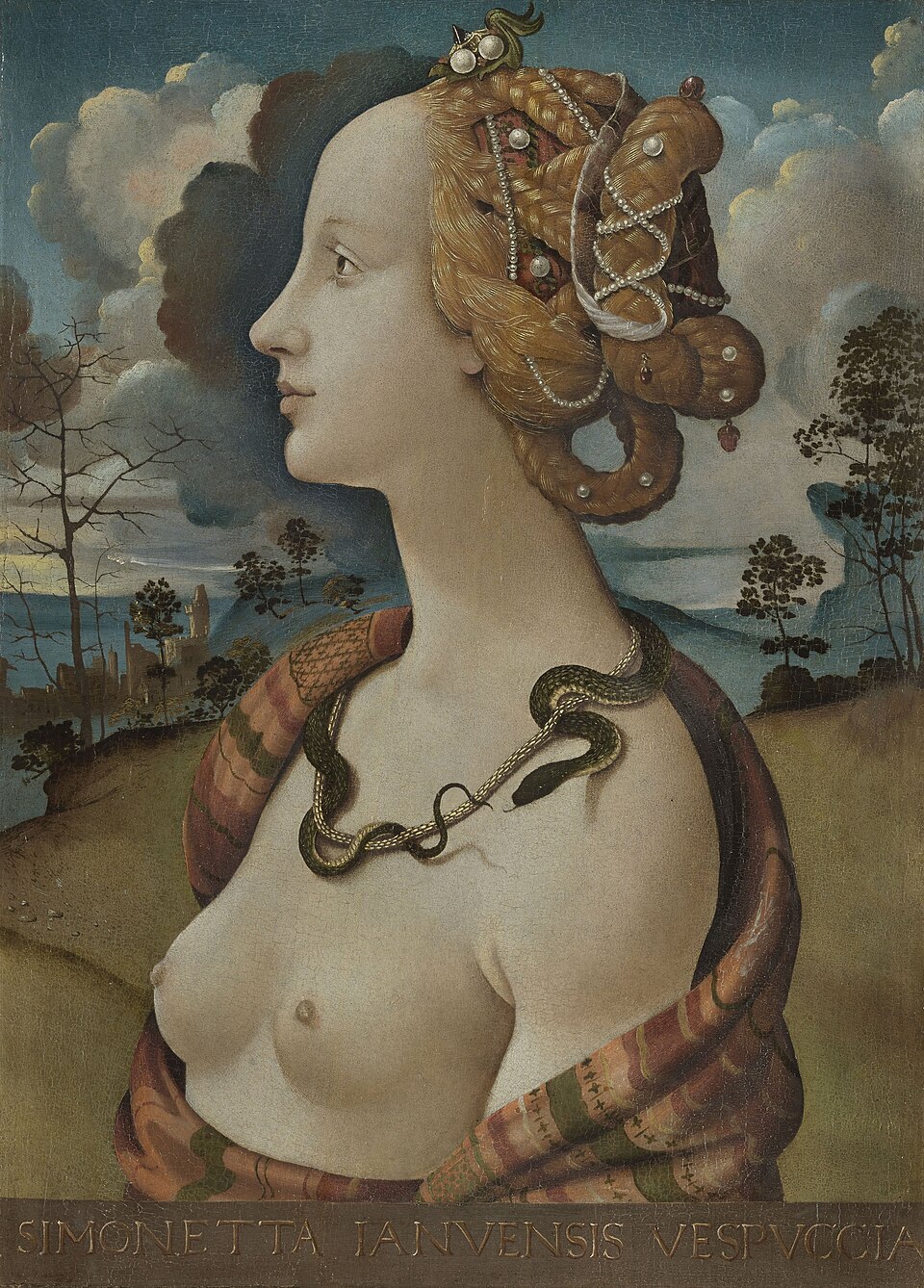
Piero di Cosimo’s Portrait of Simonetta Vespucci: Memory and Invention
A young woman appears in strict profile against a landscape darkening beneath storm clouds. Her pale face is calm and remote, her elaborately plaited hair threaded with pearls and precious stones. Her breasts are uncovered, and around her neck a living serpent winds itself through a gold chain. Along the lower edge of the panel,…
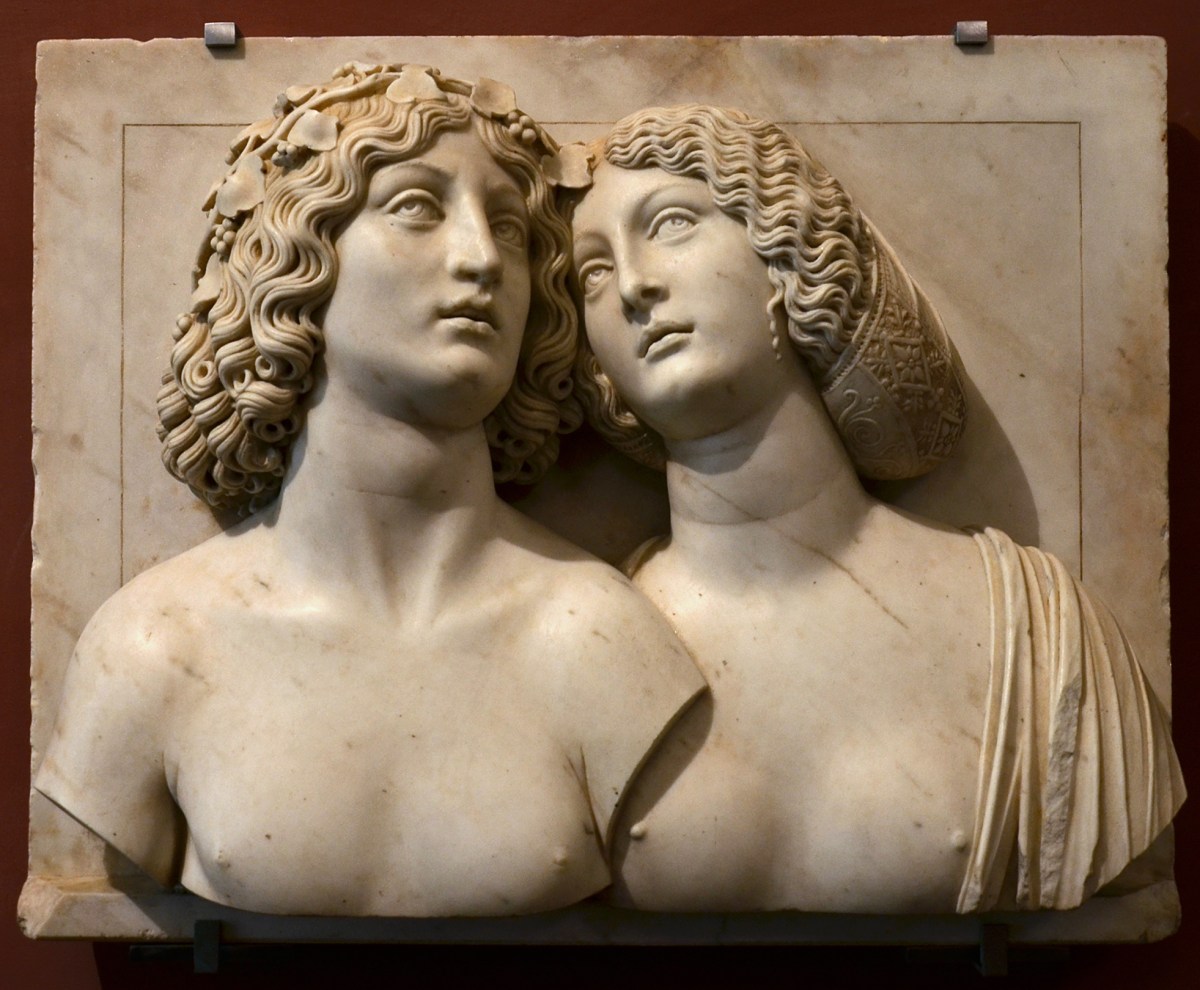
“Lost in Like but Separate Dreams”: Tullio Lombardo’s Double Portrait and Bacchus and Ariadne
Tullio Lombardo, born around the middle of the fifteenth century and active until his death in Venice in 1532, belonged to one of the leading family workshops of sculptors and architects in Renaissance Venice. He trained and worked alongside his father, Pietro Lombardo, and his younger brother Antonio, contributing to major architectural and funerary commissions…
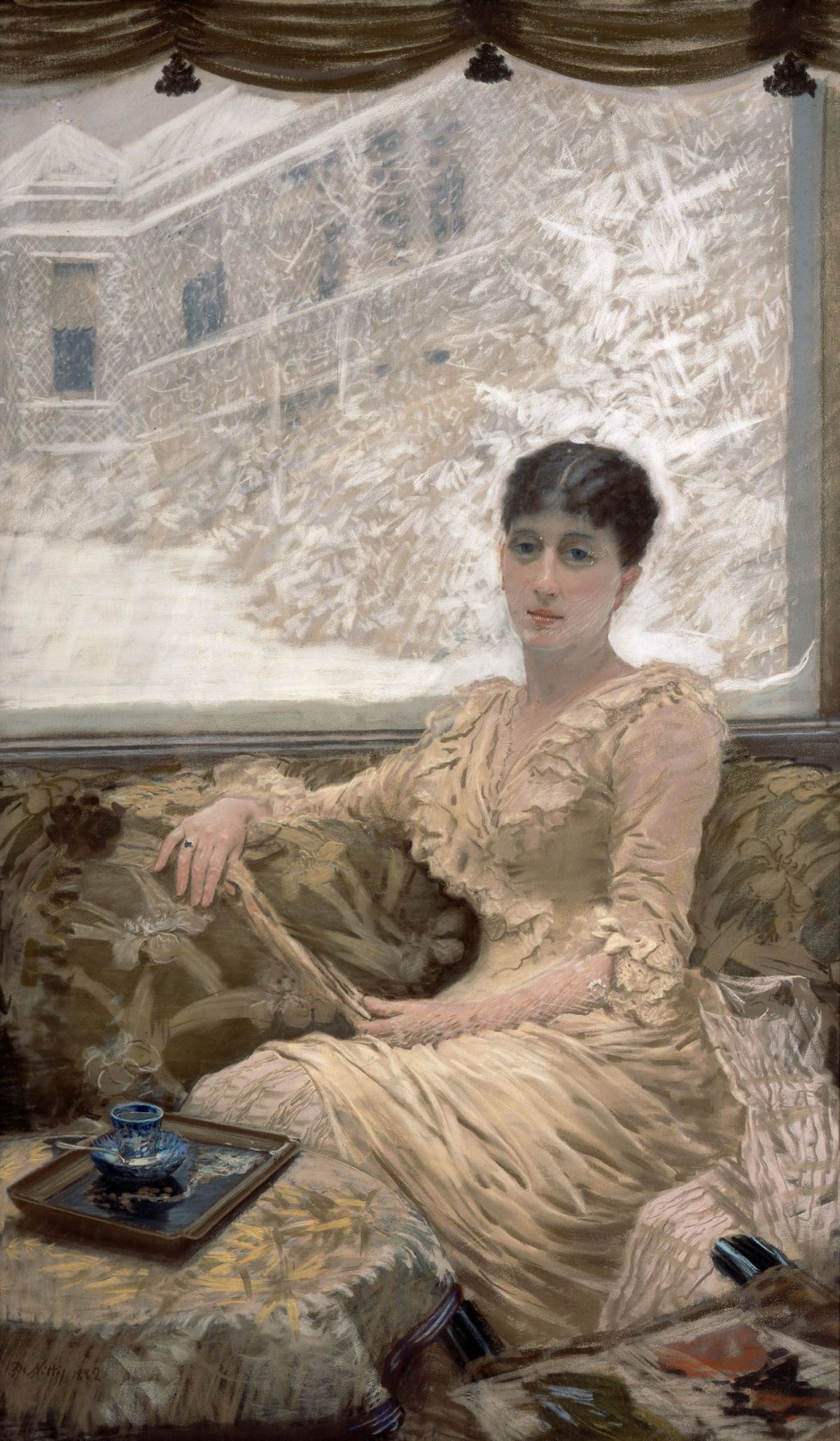
Two Women in White: Whistler’s Symphony in White, No. 2 and De Nittis’s Giornata d’inverno
This essay brings together Giuseppe De Nittis’s Giornata d’inverno. Ritratto della signora De Nittis of 1882 and James McNeill Whistler’s Symphony in White, No. 2: The Little White Girl of 1864 as an accostamento: a juxtaposition of two works that share a contextual affinity. They are separated by nearly two decades. Yet Edmond de Goncourt’s…
Get new content delivered directly to your inbox.
 Inner Surfaces