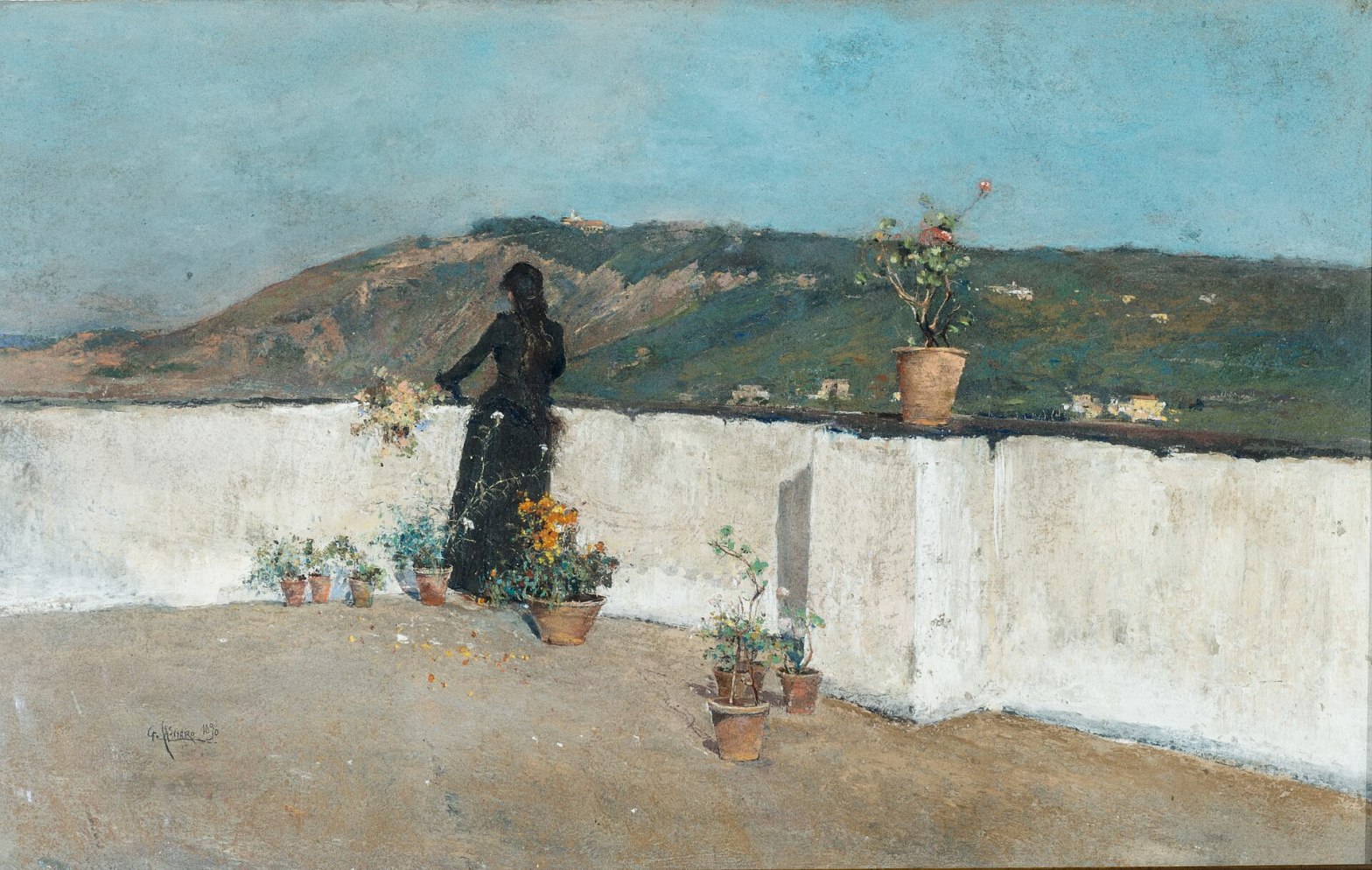
Giuseppe Casciaro’s association with Paris appears to have developed earlier than has often been assumed. Vito Carbonara notes that, in 1889, Pio Enea Cugeno referred to works by the young painter as already exhibited, or intended for exhibition, in the French capital. A further indication appears in April 1891, when the Gazzetta delle Puglie reported that two English visitors to Casciaro’s Naples studio were unable to buy a work because those then available had already been consigned to the Paris market. Taken together, these references suggest that Casciaro had established some degree of artistic and commercial connection with the city before his documented appearance at the Paris Salon in 1892 and his gold medal there in 1893. Subsequent exhibitions, awards and repeated use of Parisian addresses reveal an increasingly sustained engagement with the city’s artistic and commercial networks. This relationship became especially visible in 1896, when he held an important solo exhibition at the Galerie des Champs-Élysées, confirming that he had become a recognised presence within the Parisian art world while remaining devoted to the landscapes of southern Italy.
From 1893, 7, or 7 bis, Rue Scribe recurs among the Paris addresses associated with Casciaro, offering one clear point of entry into his professional connections in the city. The precise function of the premises remains uncertain: they may have served as a gallery, a point for correspondence and sales, a temporary base during visits, or some combination of these. Whatever their practical use, Casciaro’s repeated association with the address indicates a sustained connection with this part of the Parisian art market.
Rue Scribe was also associated with the dealer or intermediary Del Frate, and the formula chez M. Del Frate appears in Paris exhibition catalogues in connection with a number of artists from Italy. Beyond this administrative association, Del Frate is documented as having purchased works by Casciaro at Angers in 1895 and at Monaco in 1896, while correspondence indicates that Casciaro remained connected with the gallery in 1902. Although the precise terms of the arrangement are unknown, the evidence suggests that the address formed part of a continuing commercial relationship.
The location appears to have served as a point of convergence for a succession of Italian artists, a number of them associated with Rome and with central or southern Italy. This suggests a comparatively modest but active channel through which works, correspondence and commercial opportunities entered the Parisian exhibition system. Del Frate’s activity is now difficult to reconstruct, but the recurrence of the address offers a promising avenue for further research into the networks that enabled artists such as Casciaro to circulate beyond Italy.
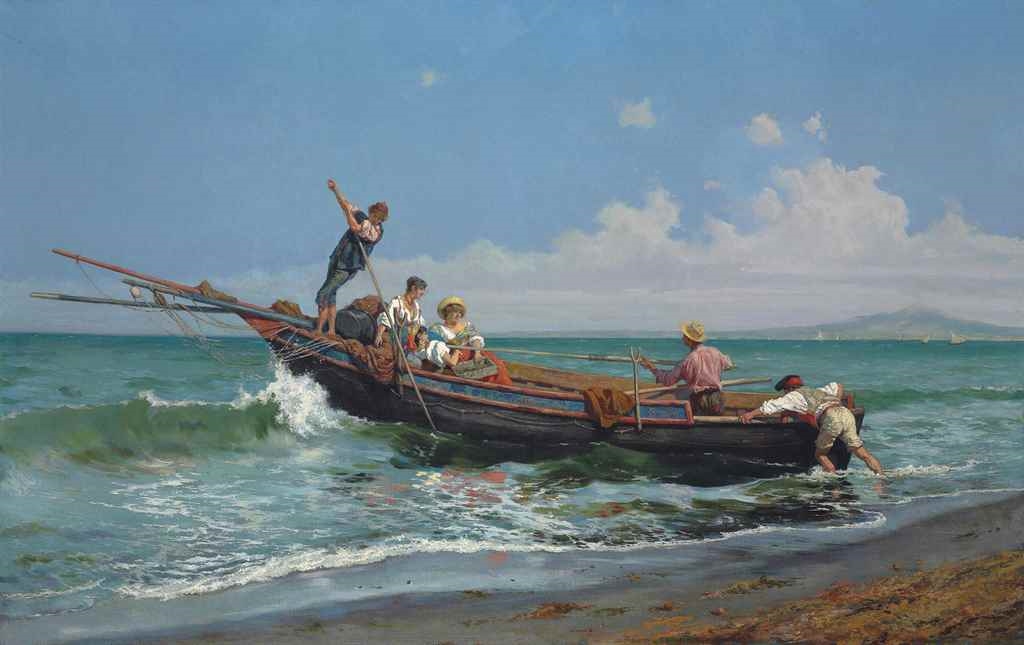
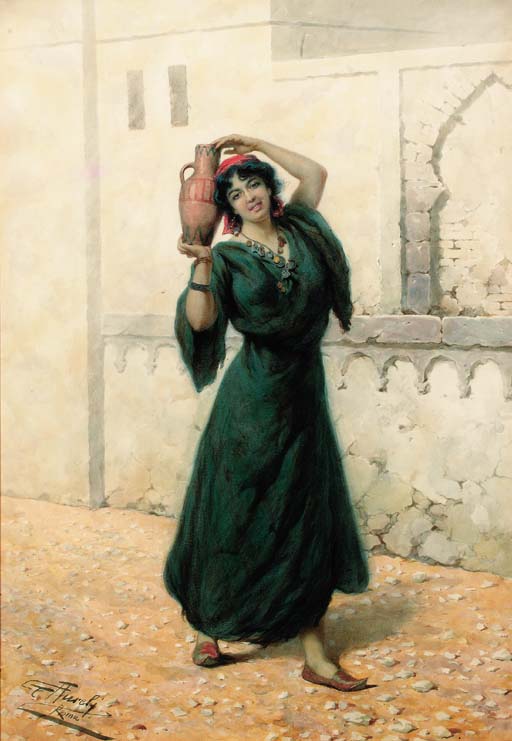
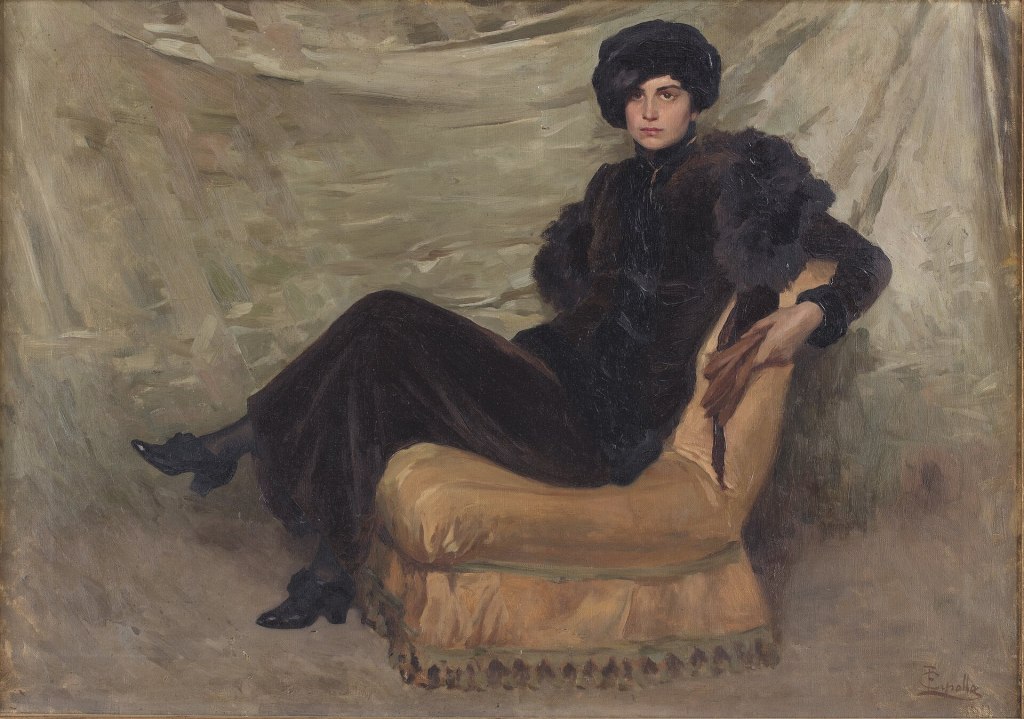
A number of other Italian artists are associated with the Rue Scribe address. For the purposes of this brief study, a small selection may serve to give the network some definition. Pietro Gabrini (1856–1926), a Roman painter of landscapes and genre scenes, appears alongside Casciaro at Rue Scribe in 1894. Giuseppe Aureli (1858–1929), also Roman and a pupil of Gabrini, used the Del Frate address in the following year, suggesting that access to the dealer may sometimes have followed existing artistic and professional relationships. Fabio Cipolla (1852–1935), another Roman painter, was associated with the address in 1898. These connections do not amount to a coherent Del Frate school, but they do reveal a commercial and administrative point through which painters of differing backgrounds and interests could enter the Parisian art market.
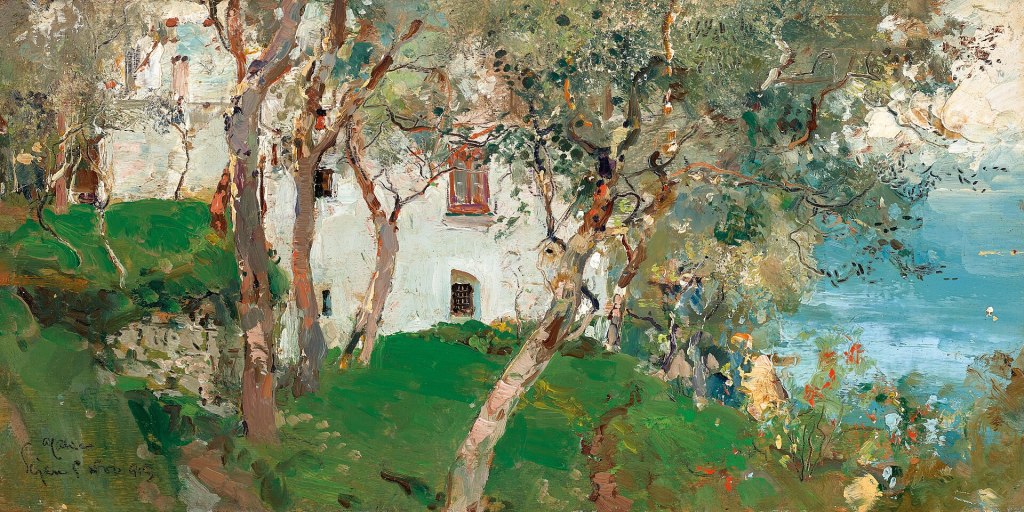
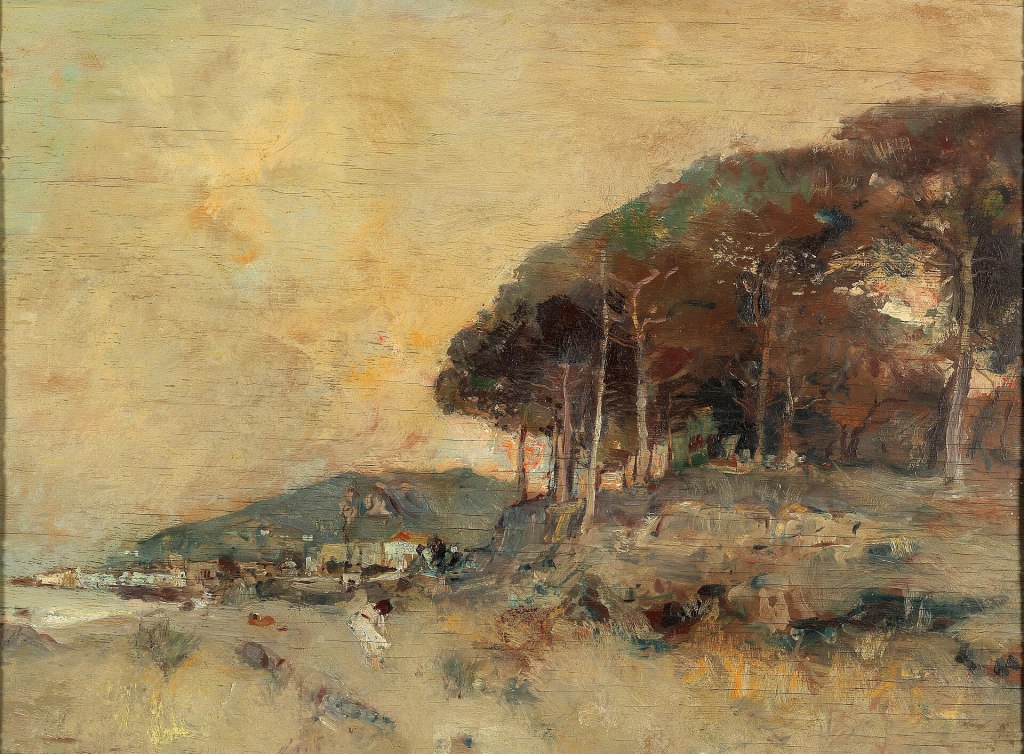
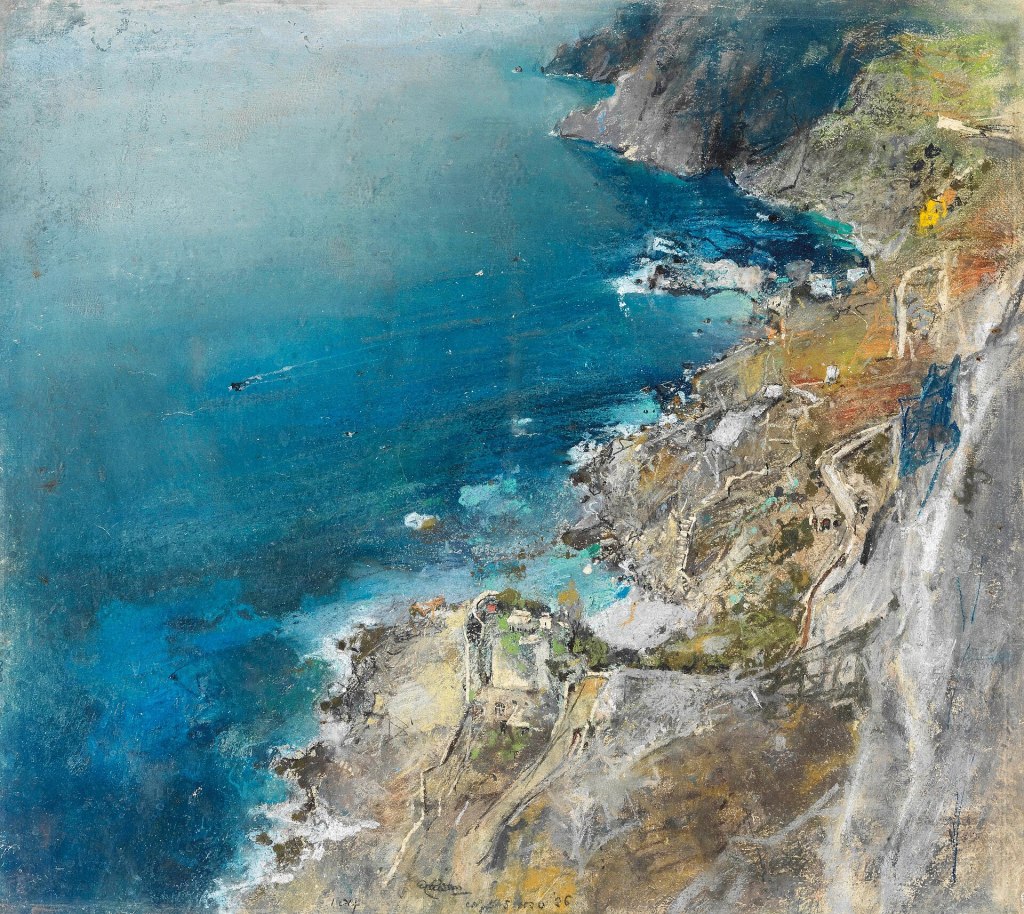
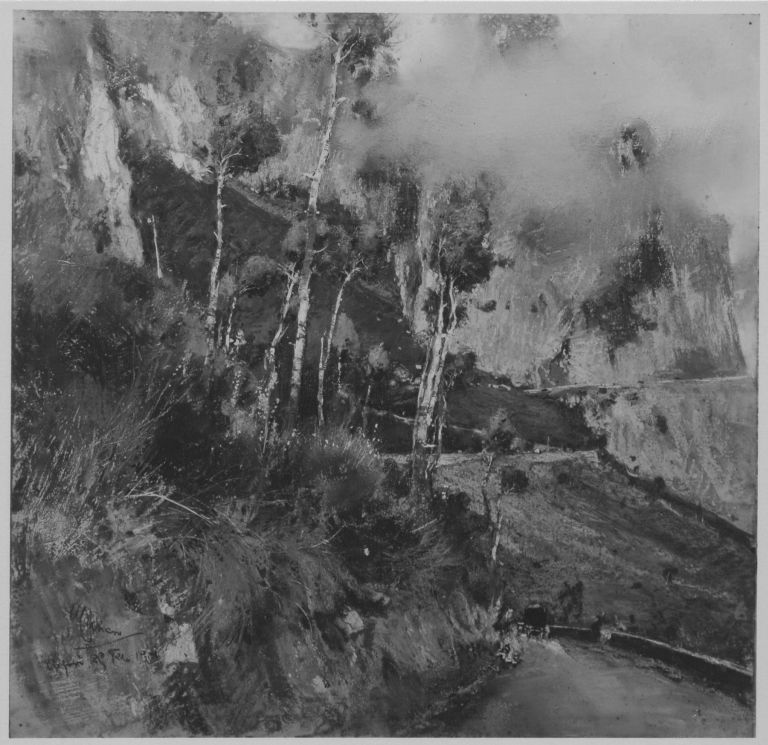
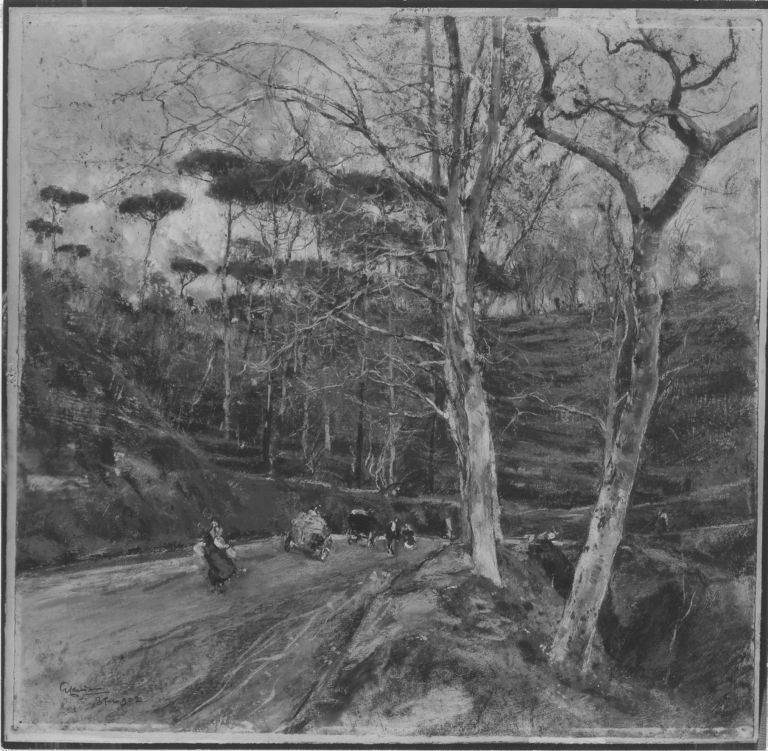
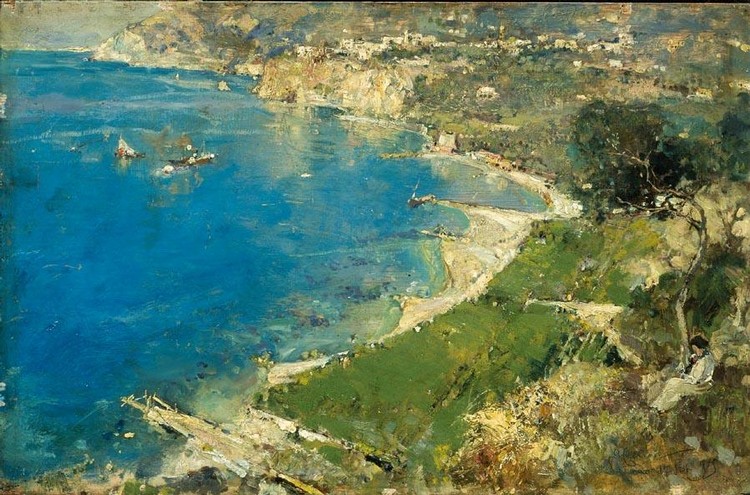
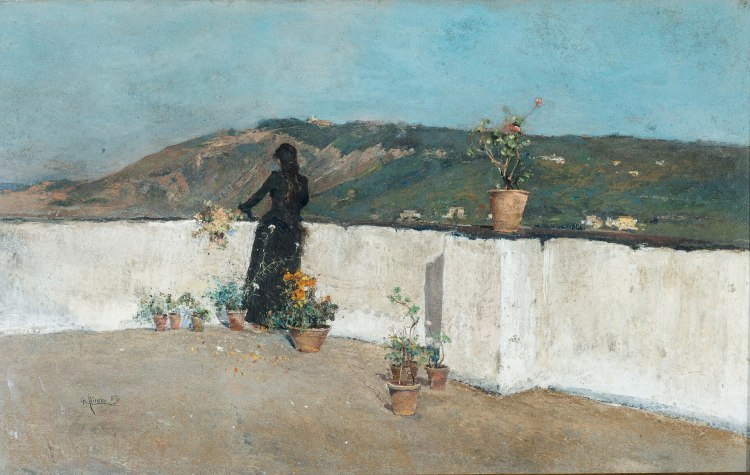
Casciaro’s attachment to place was neither narrow nor repetitive. In Campania, including Naples, the Vomero, Capri and the Vesuvian terrain, he returned to landscapes already familiar through a long tradition of representation, but often chose viewpoints and fragments that lay outside the most recognisable motifs. His modernity lies partly in this ability to look again at celebrated places while attending to transient atmospheric effects and to portions of the landscape that might otherwise pass unnoticed. Casciaro also gave sustained and affectionate attention to other places of more personal significance, including Ortelle in Salento and Nusco in Irpinia. His work therefore moves between sites already embedded in the European imagination and landscapes made intimate through prolonged familiarity.
Rue Scribe shows that this deep local attachment did not entail isolation. Casciaro’s work circulated within the Parisian art world while offering an individual and closely observed vision of southern Italy. As Vito Carbonara has shown, his connection with French culture extended beyond exhibitions and sales. He illustrated the cover of the Neapolitan edition of the Goncourts’ Sœur Philomène, received a number of books from Guy de Maupassant, and later named his youngest child Guido in tribute to the writer. He was also present at a banquet held in Zola’s honour during the writer’s visit to Naples in 1894 and was associated with figures such as Vittorio Pica and Matilde Serao. Such connections place him within a Franco-Neapolitan intellectual culture that cannot be reduced to the art market alone.
Casciaro’s enduring attachment to the landscapes closest to him placed no limit on his success in Paris. On the contrary, it gave his work much of its distinctive character. What Rue Scribe reveals is one of the lesser-known networks through which a vision of southern Italy, rooted in both celebrated landscapes and places of personal significance, entered the leading artistic and commercial centre of the late nineteenth century.
[Producing these essays requires care, time, research, and resources. Contributions to help sustain this exploration would be greatly appreciated.]
Donate to Inner Surfaces here.
For a broader introduction, see Giuseppe Casciaro: An Introduction with Context, also on Inner Surfaces.
Bibliography
I have consulted the following sources. Any errors are mine alone.
Carbonara, Vito. Giuseppe Casciaro: l’artista e le stagioni pittoriche a Nusco. Atripalda: Mephite, 2022.
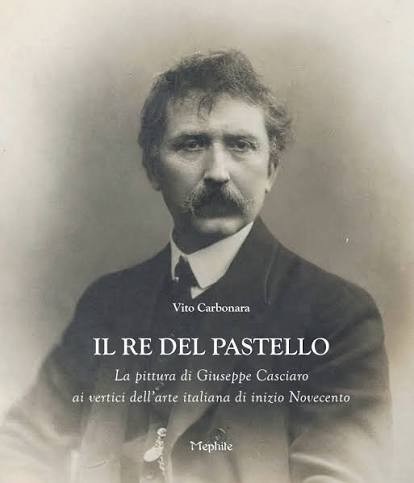
Carbonara, Vito. Il re del pastello: la pittura di Giuseppe Casciaro ai vertici dell’arte italiana di inizio Novecento. Atripalda: Mephite, 2026.
Fiore, Andrea, and Maurizio Russo, eds. Giuseppe Casciaro 1861–1941. Privato. Monteroni di Lecce: Esperidi, 2023.
Galante, Lucio. “Casciaro, Giuseppe.” In Dizionario Biografico degli Italiani, vol. 21. Rome: Istituto della Enciclopedia Italiana, 1978.
Virno, Cinzia, ed. I Casciaro: Giuseppe, Guido e Carolina. Pastelli e oli. Exhibition catalogue. Rome: Ricerca d’Arte, 2004.

