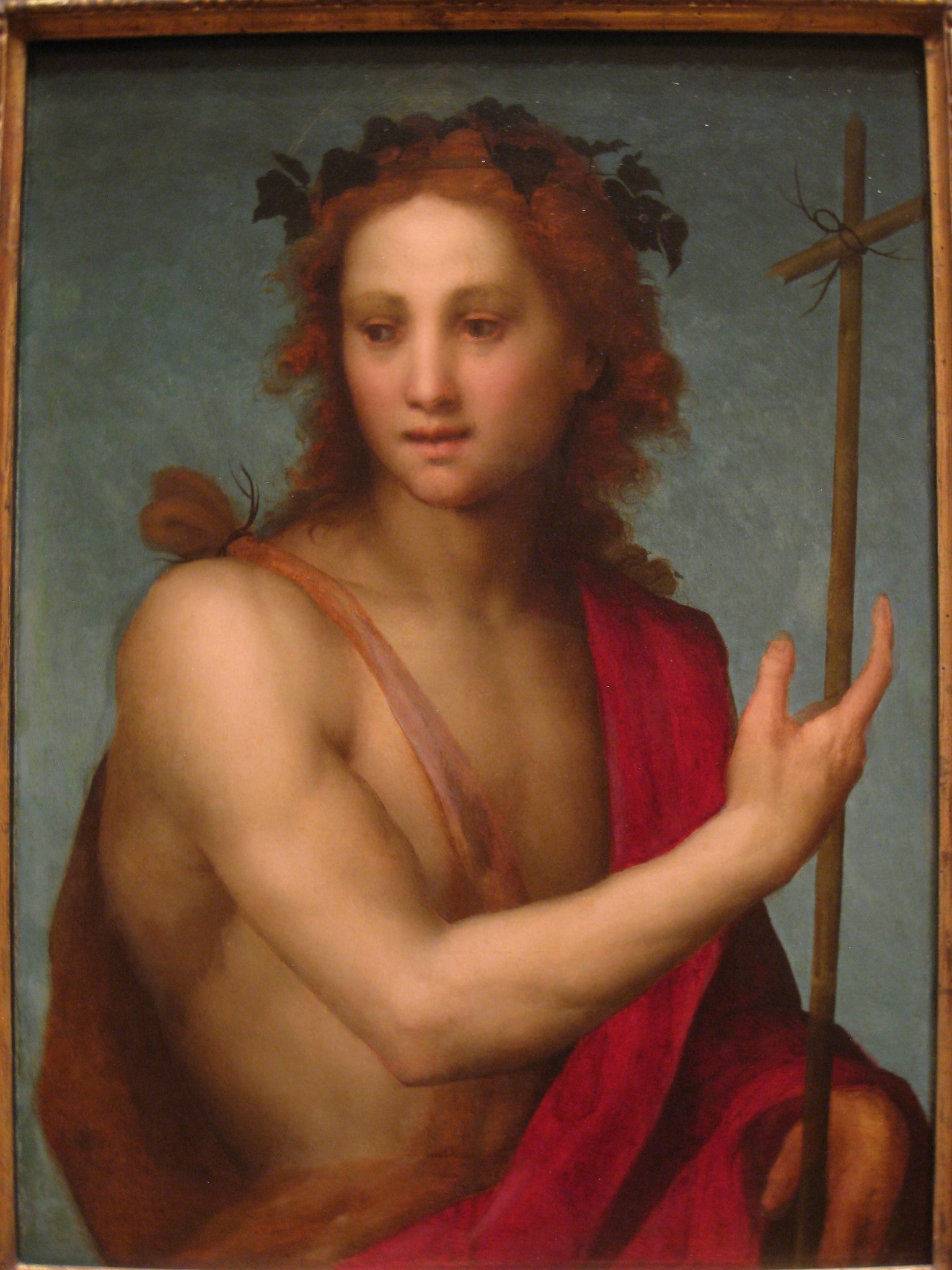
Before France Andrea del Sarto’s journey to France in 1518 has acquired a special place in accounts of his career. John Shearman treated that year as the beginning of Andrea’s ‘heroic period’, while Jan Sammer’s recent reconstruction of the painter’s movements has given the French episode a much firmer documentary basis than it previously possessed.Continue reading “Andrea del Sarto and the French Court: Leonardo, Raphael and Visual Legacy”
Tag Archives: Italian Renaissance
Titian and Isabella d’Este: The Truth of a Portrait
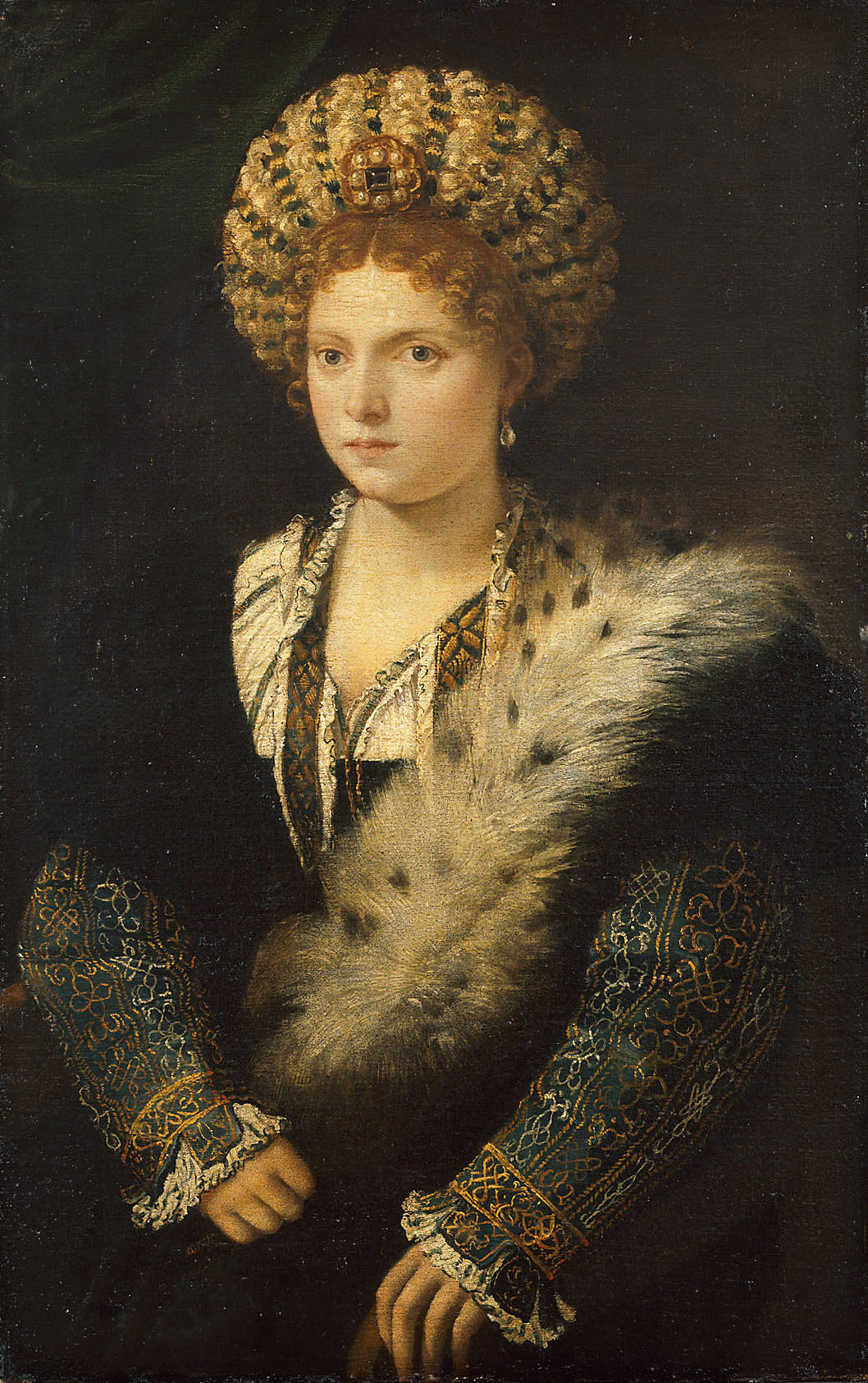
Two painted versions of Isabella d’Este have come to define her association with Titian, although neither records a simple encounter between painter and sitter. One, generally called Isabella in Red, is known principally through a copy made by Peter Paul Rubens after a lost Titian and shows Isabella as a mature woman. The other, IsabellaContinue reading “Titian and Isabella d’Este: The Truth of a Portrait”
Leonardo and Isabella d’Este: The Life of a Drawing
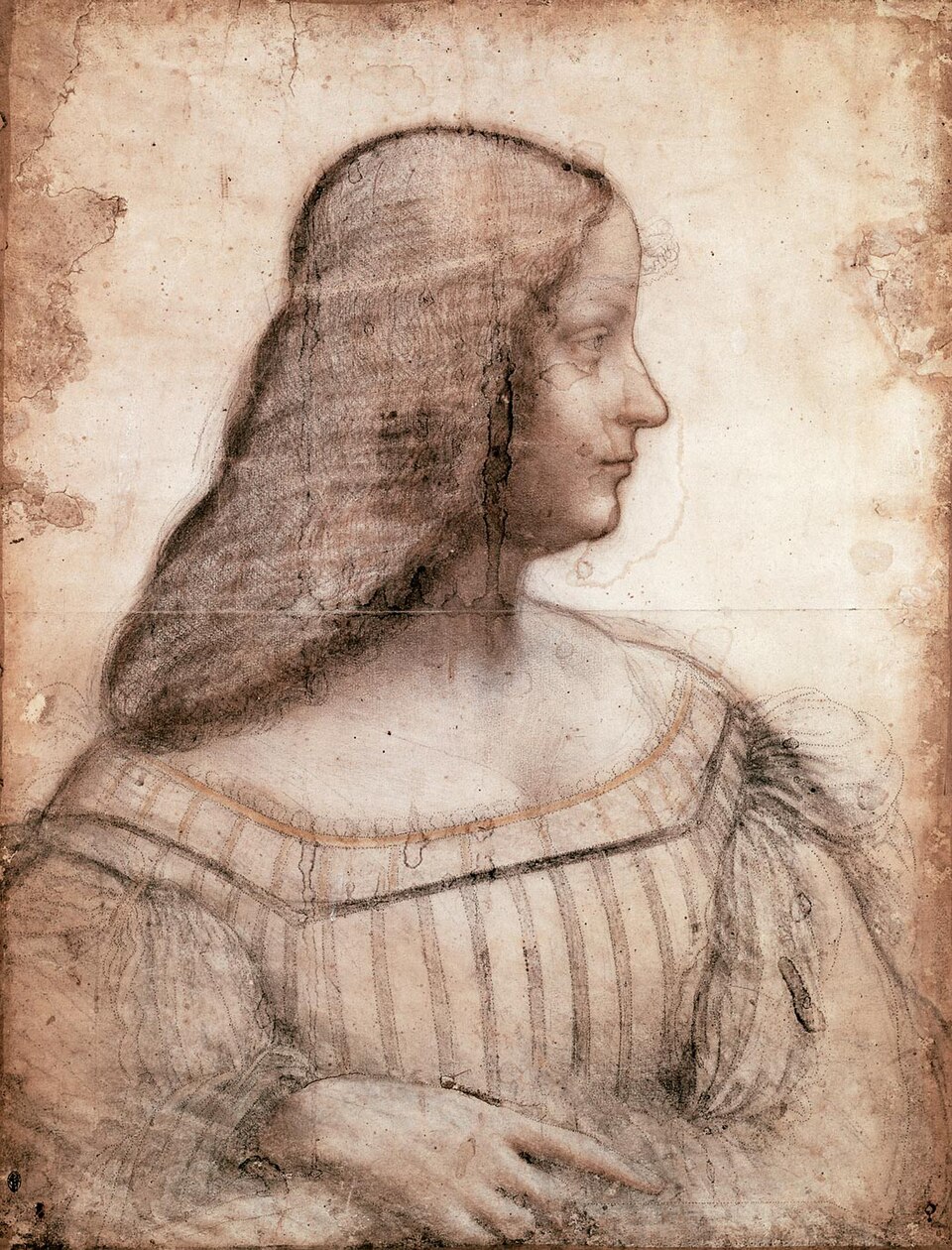
Isabella d’Este and Leonardo Isabella d’Este was born in Ferrara in 1474, the daughter of Ercole I d’Este and Eleonora d’Aragona, and in 1490 married Francesco II Gonzaga, marquis of Mantua. Her position at the Mantuan court involved political as well as dynastic responsibilities, while her collecting and patronage brought her into sustained contact withContinue reading “Leonardo and Isabella d’Este: The Life of a Drawing”
Hidden in Plain Sight I: The Pontano Chapel. Architecture, Rhetoric and Memory
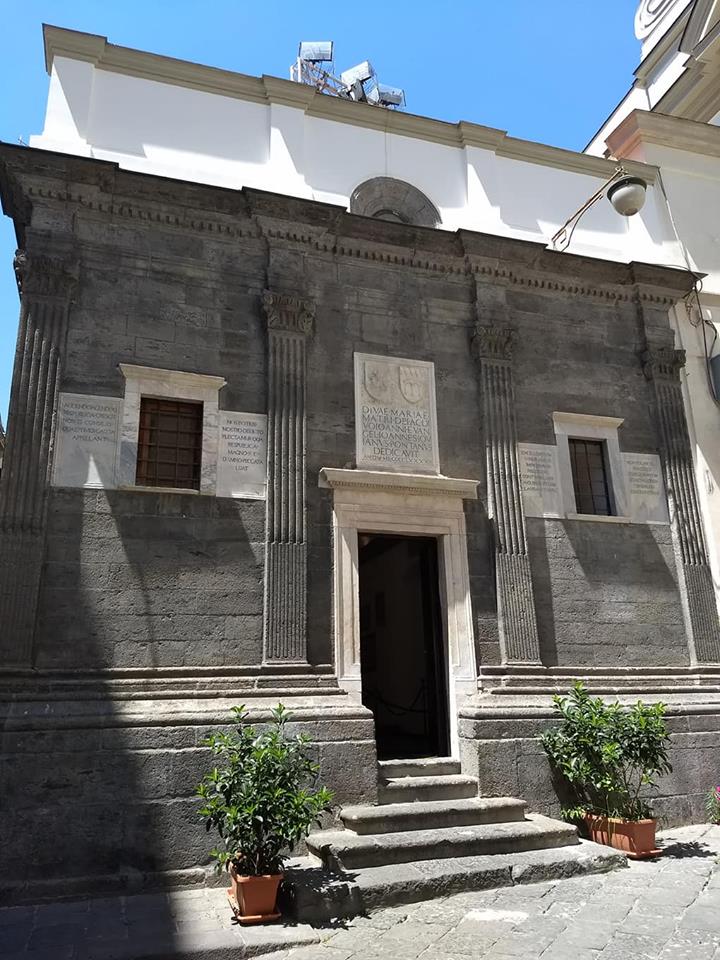
The Pontano Chapel stands on the Via dei Tribunali, one of the busiest and most historically dense streets in Naples. It is not hidden, yet it is remarkably easy to pass without understanding what it is. Its grey piperno exterior is austere, its Latin inscriptions are inaccessible to many viewers, and the intellectual culture thatContinue reading “Hidden in Plain Sight I: The Pontano Chapel. Architecture, Rhetoric and Memory”
Piero di Cosimo’s Portrait of Simonetta Vespucci: Memory and Invention
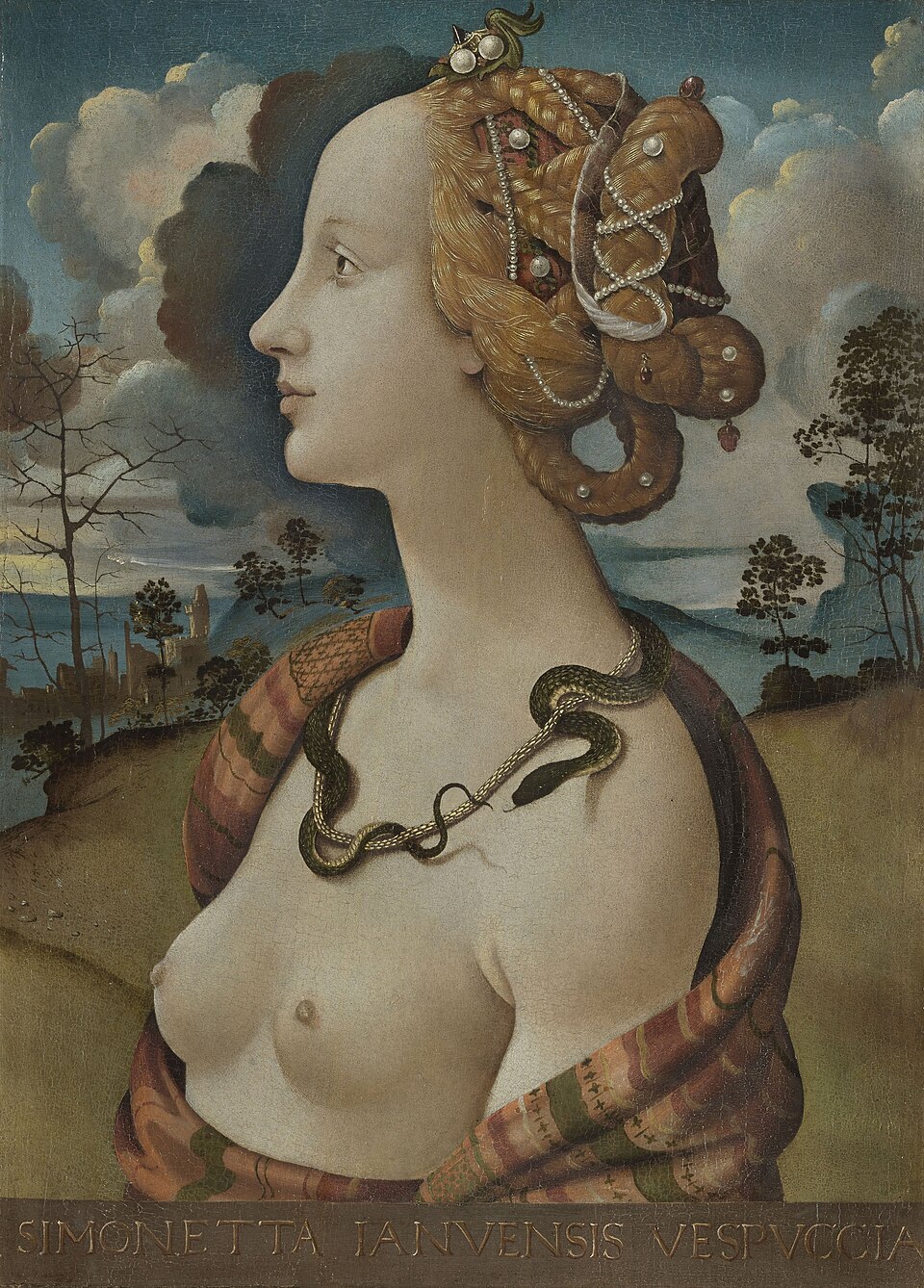
A young woman appears in strict profile against a landscape darkening beneath storm clouds. Her pale face is calm and remote, her elaborately plaited hair threaded with pearls and precious stones. Her breasts are uncovered, and around her neck a living serpent winds itself through a gold chain. Along the lower edge of the panel,Continue reading “Piero di Cosimo’s Portrait of Simonetta Vespucci: Memory and Invention”
“Lost in Like but Separate Dreams”: Tullio Lombardo’s Double Portrait and Bacchus and Ariadne
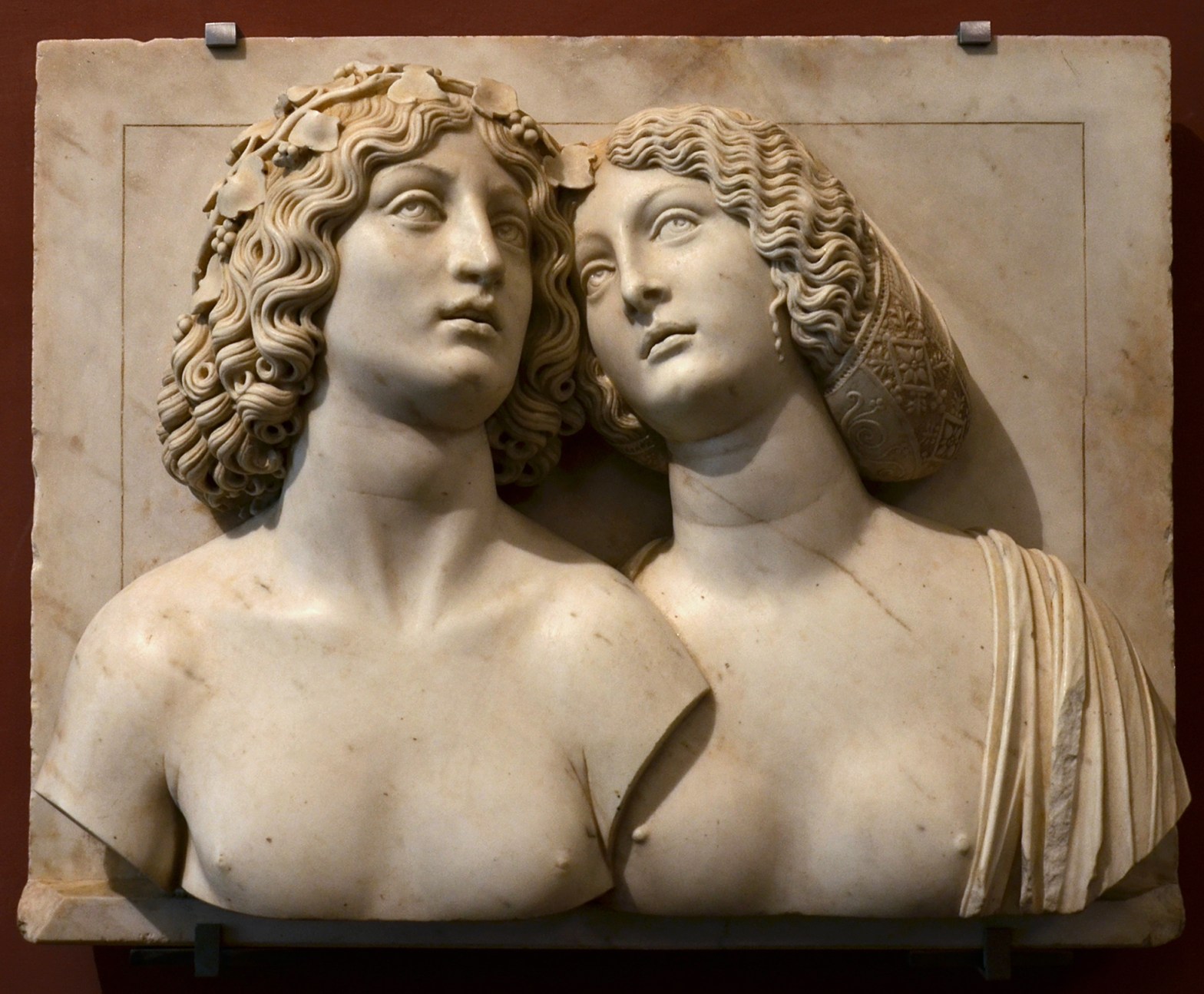
Tullio Lombardo, born around the middle of the fifteenth century and active until his death in Venice in 1532, belonged to one of the leading family workshops of sculptors and architects in Renaissance Venice. He trained and worked alongside his father, Pietro Lombardo, and his younger brother Antonio, contributing to major architectural and funerary commissionsContinue reading ““Lost in Like but Separate Dreams”: Tullio Lombardo’s Double Portrait and Bacchus and Ariadne”
Polidoro da Caravaggio (c. 1499–1543): Studies for an Annunciation

Two small roundels, the Angelo annunciante and the Vergine annunciata, painted in Naples in 1527–28 and now in the Museo e Real Bosco di Capodimonte, are closely connected with a double-sided sheet of red-chalk studies of approximately the same date, now in the Fitzwilliam Museum, Cambridge. Together, the drawings and paintings offer an unusually concentratedContinue reading “Polidoro da Caravaggio (c. 1499–1543): Studies for an Annunciation”
Raphael (1483–1520): Drawings for the Vault of the Stanza di Eliodoro
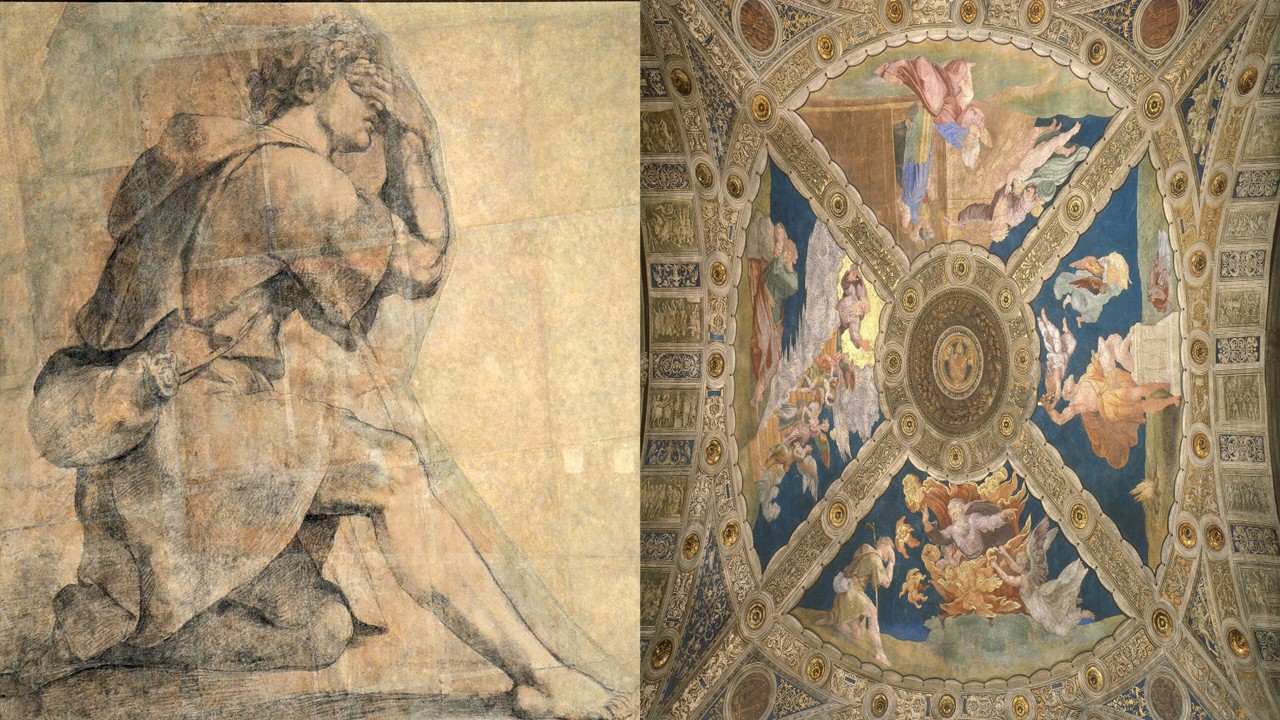
The drawings considered here converge around Raphael’s decoration of the vault of the Stanza di Eliodoro. Their significance lies not only in the light they cast on the completed frescoes, but also in what they reveal about Raphael’s working practice, his movement between projects, his responsiveness to different visual sources and his adaptation of drawingContinue reading “Raphael (1483–1520): Drawings for the Vault of the Stanza di Eliodoro”

