Tullio Lombardo, born around the middle of the fifteenth century and active until his death in Venice in 1532, belonged to one of the leading family workshops of sculptors and architects in Renaissance Venice. He trained and worked alongside his father, Pietro Lombardo, and his younger brother Antonio, contributing to major architectural and funerary commissions before developing an increasingly distinctive sculptural language of his own. His work combines close engagement with ancient sculpture with the refined classicism associated with Venetian humanist culture. The paired reliefs considered here belong among his most original explorations of ideal beauty, portraiture and the imaginative recovery of antiquity.
In the 1490s, Tullio Lombardo developed a distinctive Venetian form of marble relief in which two bust-length figures appear closely joined within a framed rectangular field. The format seems to have drawn upon several different traditions. Roman funerary monuments offered a sculptural precedent for the presentation of paired figures, while ancient carved gems may have suggested both their idealised classical appearance and the pronounced projection of the busts from the surrounding field. Northern paintings and engravings provided further compositional precedents. Paired images of Christ and the Virgin, and corresponding portraits of husbands and wives, had established the visual association of closely related bust-length figures, whether within a single field or on adjoining panels. Tullio did not simply reproduce any one of these models, but combined and transformed them into a new kind of sculptural object, uniting the immediacy of portraiture with the imaginative distance of antiquity.
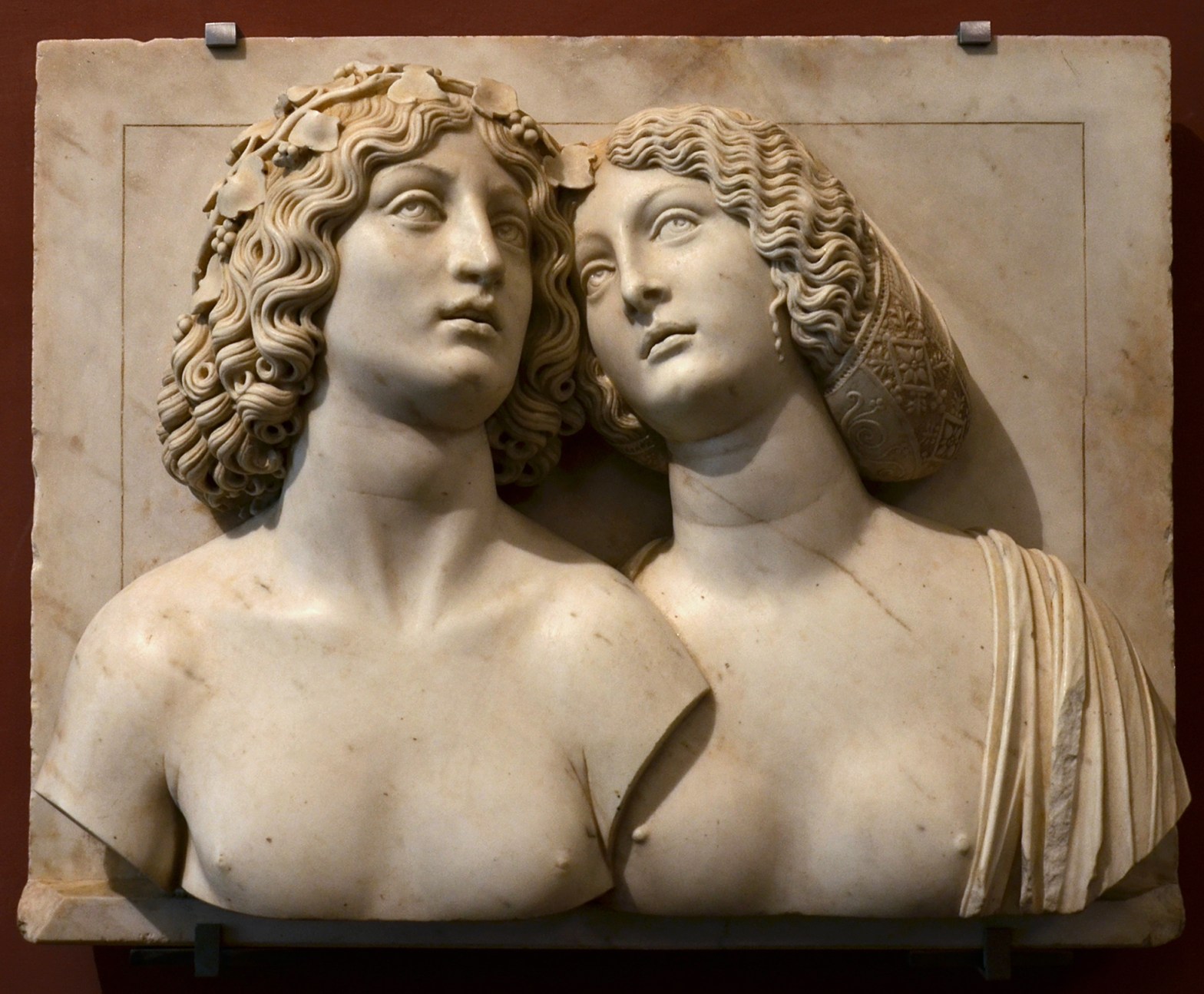
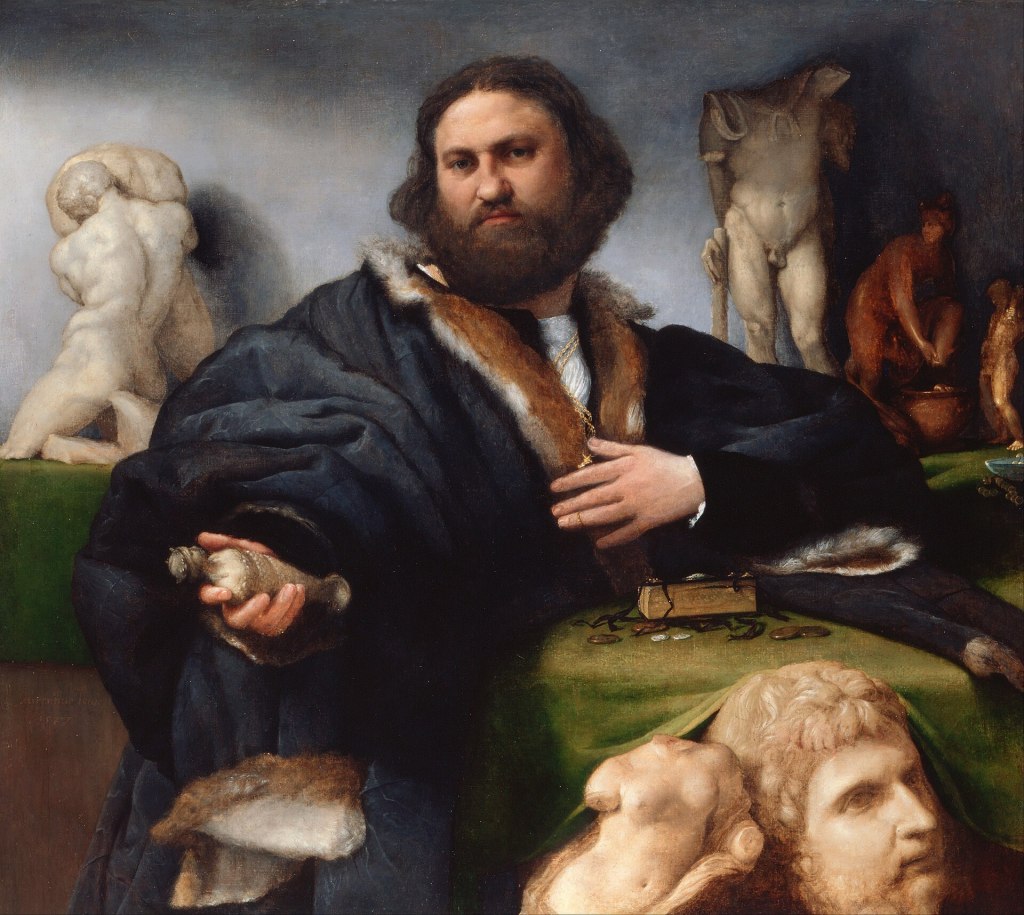
The format was well adapted to an emerging audience of cultivated private collectors. As autonomous reliefs rather than parts of a tomb or architectural ensemble, such works could be examined closely and appreciated for their references to antiquity, portraiture and contemporary painting. This orientation becomes still more pronounced in Bacchus and Ariadne. Its broader rectangular field, incised border and strongly frontal composition give the relief the character of a marble picture and seem more specifically to address the visual habits of collectors of paintings. The kind of domestic collecting culture to which such a work was suited is vividly evoked in the following generation by Lorenzo Lotto’s Portrait of Andrea Odoni of 1527, in which the Venetian collector appears surrounded by antique sculpture.
The resemblance to Roman funerary reliefs anchors Tullio’s format in the sphere of lived human experience. Such monuments preserve the presence of actual men and women and the relationships between them, rather than belonging wholly to the distant world of myth or literature. That association lends Tullio’s figures a human familiarity, while the possibility that he drew upon contemporary sitters, or that the reliefs retain something of contemporary portraiture, gives them an additional immediacy. Yet their classical appearance, idealised beauty and possible literary associations simultaneously remove them from ordinary portraiture. As Sara Blake McHam and Alison Luchs suggest, they may be understood either as idealised contemporary portraits or as ancient protagonists of an “archaeological fantasy”: figures poised between recognisable life and an imagined antiquity.
Although both reliefs arise from the same sculptural conception, the Vienna relief represents a distinct development of the earlier format. The earlier Double Portrait possesses an energy and vigour that invites thoughts of a dramatic narrative. Bacchus and Ariadne, by contrast, moves into a smoother, more lyrical aesthetic.
The change becomes immediately apparent in the relation between the figures and the marble field. In the Ca’ d’Oro relief, the couple presses against the limits of an almost square slab. Their bodies project so strongly that deep channels cut between their necks and the background allow the heads to appear almost free of the marble plane. The figures resemble two nearly freestanding busts superimposed upon the slab rather than forms fully contained within it. In Bacchus and Ariadne, the broader horizontal format gives the couple more space and binds them more closely into a unified, picture-like composition.
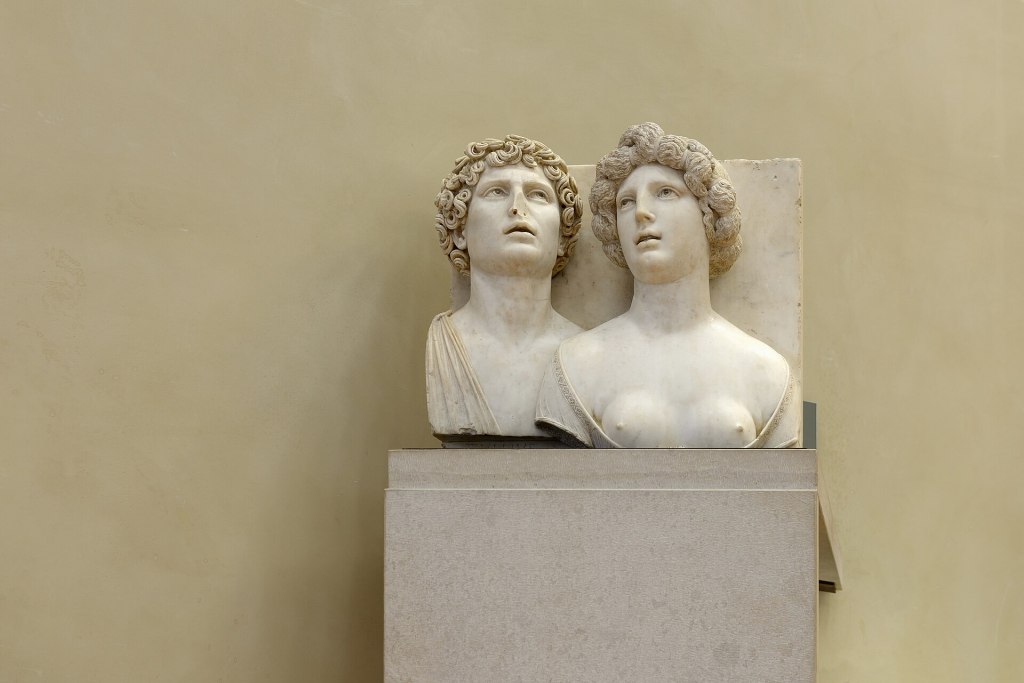
The treatment of the bodies reinforces this difference. The Ca’ d’Oro man is cut off abruptly across the upper chest, in a herm-like termination that intensifies the impression of a bust attached to the slab. The woman descends further and appears to rest upon the narrow projecting ledge beneath the figures. In Bacchus and Ariadne, both figures retain their shoulders and upper arms, and their outer contours are cut diagonally downwards towards the centre. Rather than seeming to settle upon the ledge, the two bodies appear suspended at an equal height above it. Their fragmentary condition is therefore less abrupt and more carefully absorbed into the composition.
The internal hierarchy of the pair has also changed. In the Ca’ d’Oro relief, the woman occupies the more prominent forward position, while the man appears behind her and is more abruptly truncated. In Bacchus and Ariadne, this arrangement is reversed. Bacchus stands clearly in the foreground, overlapping Ariadne’s right shoulder, while she inclines her head towards him from behind. The effect is not simply one of altered depth. The Vienna couple forms a more unified and tender grouping, with the man appearing to shelter the woman rather than merely sharing the field with her. Visual and expressive priority has passed from the female figure to the male.
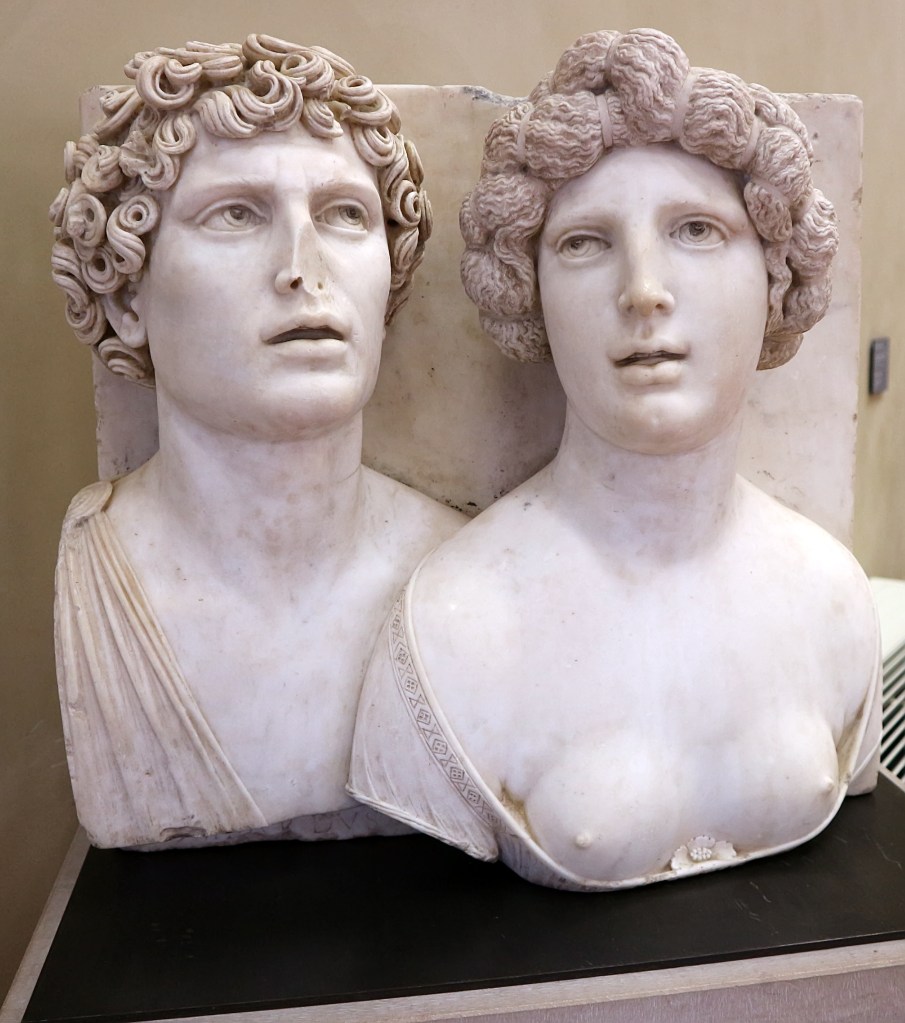
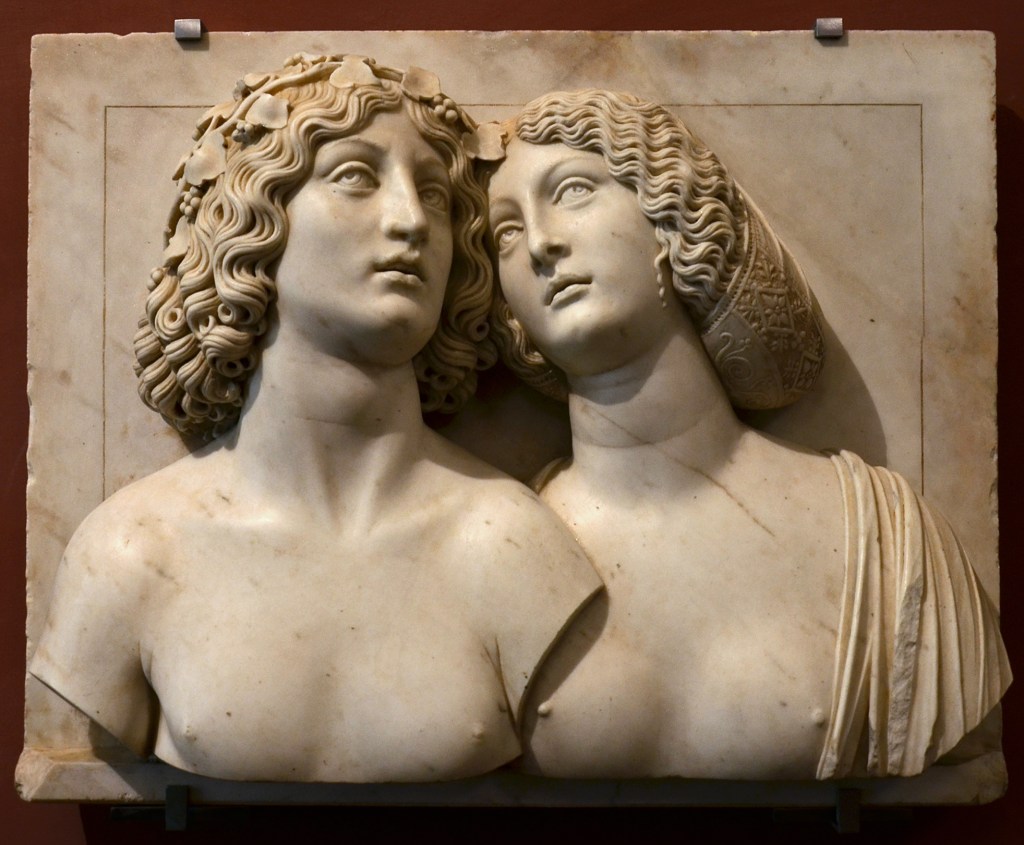
The new intimacy is realised through a series of subtle adjustments to contour and surface. The sharply defined hair and more abrupt transitions of the Ca’ d’Oro relief give way to long, undulating locks that soften the passage from head to neck and shoulder. Bacchus’s hair grazes Ariadne’s brow, while a leaf from his wreath lightly touches her forehead. Ariadne’s own hair swells against her brocaded snood, introducing a restrained inner tension within an otherwise tranquil design. The drapery is simplified in the same spirit. Instead of the taut, overflowing neckline of the earlier relief, broad, generalised folds descend over Ariadne’s shoulders, reinforcing the slower rhythm of the composition.
The movement of the heads and eyes deepens the contrast between the two couples. In the Ca’ d’Oro relief, both heads remain almost upright and physically separate, while their glances cross with an alertness that suggests an active, perhaps dramatic exchange. In Bacchus and Ariadne, the heads incline towards one another, but the eyes move away. The raised brows give the figures an attentive, almost listening expression, as though both were responding to something beyond the relief. Ariadne’s inclined position leaves half her face in shadow, withdrawing her further from the beholder and helping to turn the emotional intensity inward.
This sensitive distinction between the orientation of the head and the direction of the eyes has an affinity with Antonello da Messina’s portraiture, where slight divergences of movement and gaze create an unusually vivid sense of alertness and psychological presence.
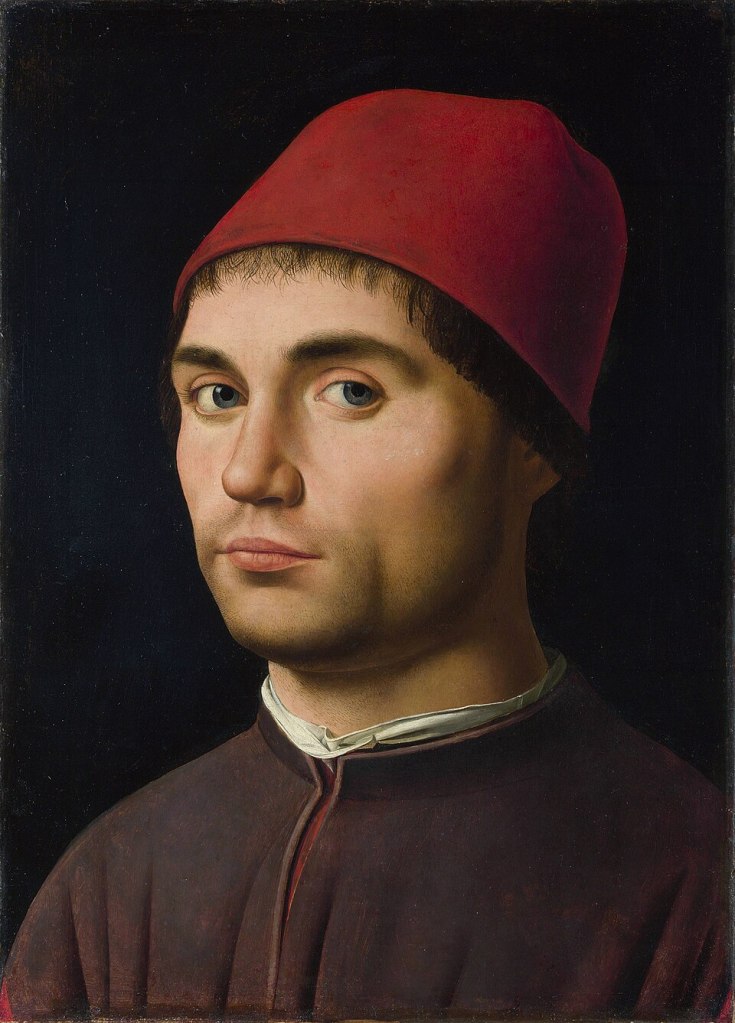
Tullio uses the device differently in the two reliefs. The earlier pair appears caught within an unfolding encounter, whereas the physical closeness of the Vienna figures is accompanied by psychological absorption rather than direct communication. They seem less concerned with action than with a shared inward state, what Alison Luchs describes as being “lost in like but separate dreams.”
The handling of the marble changes just as decisively. In the Ca’ d’Oro relief, Tullio excavates deeply around the necks and opens the man’s curls so that light penetrates the carving. Flesh, hair and fabrics are sharply differentiated, while the highly polished surfaces intensify the contrast between soft skin and more intricately worked details. In Bacchus and Ariadne, undercutting is much more restricted. The eyes are less deeply drilled, the features project less strongly, and the transitions between forms are more gradual. Light and shadow therefore move across a more even and homogeneous surface rather than breaking into the flickering contrasts of the earlier relief. The figures remain sensuous, but their animation no longer depends upon the forceful projection and deep excavation of the Ca’ d’Oro pair.
McHam and Luchs propose the doomed newlyweds of a Greek epigram as a possible subject for the Ca’ d’Oro relief. Published in the Anthologia Graeca at Florence in 1494, the poem laments Eupolis and Lycaenion, who were killed when the roof of their chamber collapsed on their wedding night. Francesco Colonna appears implicitly to have associated this story with Tullio’s sculptural conception: the woodcut monument to Sertulius and Rancilla in his Hypnerotomachia Poliphili of 1499 seems to combine a composition based upon Tullio’s relief with an inscription derived from the Greek epigram. The direction and closeness of the relationship have nevertheless been disputed. Jennifer Fletcher argued that Tullio’s sculpture postdated the woodcut, while Anne Markham Schulz, dating the relief to about 1491–93, placed it earlier but suggested that both works may ultimately have drawn upon comparable antique funerary models rather than one directly copying the other.
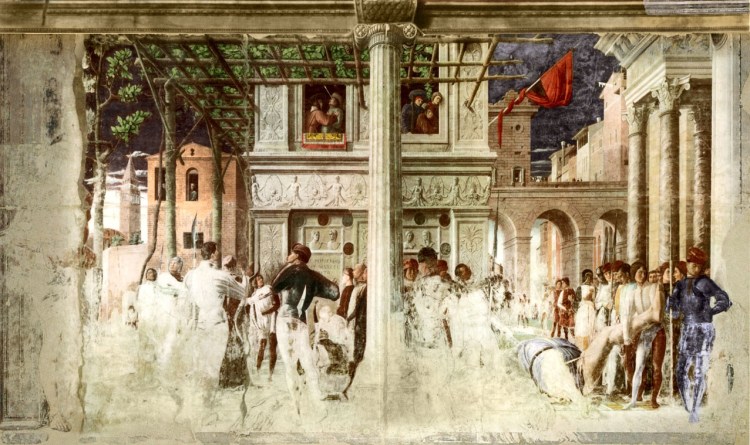
The Vienna pair is no easier to identify securely. The wreath in the young man’s hair, whether composed of ivy or grapes, supports his traditional identification as Bacchus, whose lover was Ariadne. Yet the woman lacks Ariadne’s customary attributes, while the elaborately carved brocaded snood enclosing her wavy hair belongs to contemporary sixteenth-century Venetian fashion. McHam and Luchs therefore ask whether the figures might be well-born Venetians assuming the guise of Bacchus and Ariadne. Their ultimate formal sources lie in the paired likenesses of Roman funerary monuments, once widespread in north-eastern Italy and familiar through works such as Mantegna’s Martyrdom of Saint Christopher. Yet couples represented as lovers joined by visible emotion are rare both in antiquity and in Renaissance portraiture, which more commonly presents restrained individuals or married partners. It is the unusual animation of Tullio’s pair, combined with their evocation of Roman grave sculpture, that has encouraged comparison with the lovers of the Hypnerotomachia Poliphili, whose stories express the Renaissance longing to recover the lost culture of antiquity.
McHam and Luchs also suggest that the young man might be understood as a poet or musician and the woman as his lover or muse, both familiar themes in Venetian culture and painting. His ivy wreath need not identify Bacchus alone. Although laurel became the more familiar emblem of poetry, ivy also carried poetic associations and could signify victory in ancient poetic competitions. The relief also resembles the close-up presentation of musical ensembles, as seen in Cariani’s A Concert of about 1518–20, where three closely grouped half-length figures are brought together through music, a book and glances directed in different ways.
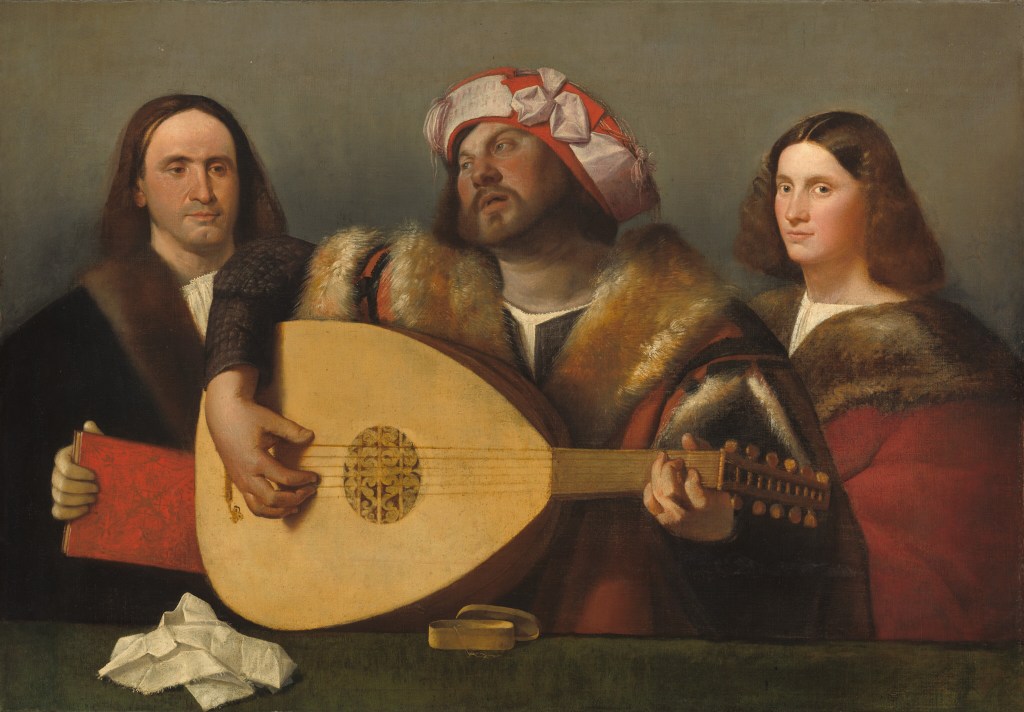
Such scenes usually make music visible through performers and stringed instruments. Tullio’s figure may instead be a singer who relies upon the voice, a physically invisible instrument, to praise his lover or muse. The sculpture would then embody an oxymoron: ephemeral sound made permanent in tangible stone. Its operation is also akin to poetry, in which brevity and allusiveness multiply possible meanings. Rather than demanding a single solution, its deliberate ambiguities permit several interpretations to remain active at once.
The chronology of Bacchus and Ariadne nevertheless remains disputed, and this affects its relationship with contemporary painting. Alison Luchs dates the relief to about 1505–10, seeing it as Tullio’s reconsideration of his earlier invention in the light of the new poetic language associated with Giorgione. Anne Markham Schulz instead proposes a later date of about 1520, relating the relief’s restrained undercutting, broader format, quieter modelling and more homogeneous surface to the Tomb of Doge Giovanni Mocenigo. She does not reject the comparison with Giorgione, describing the relief as a close sculptural counterpart to his melancholy figures, but her later dating places greater emphasis upon Tullio’s own later development within a pictorial culture that Giorgione had already helped to transform.
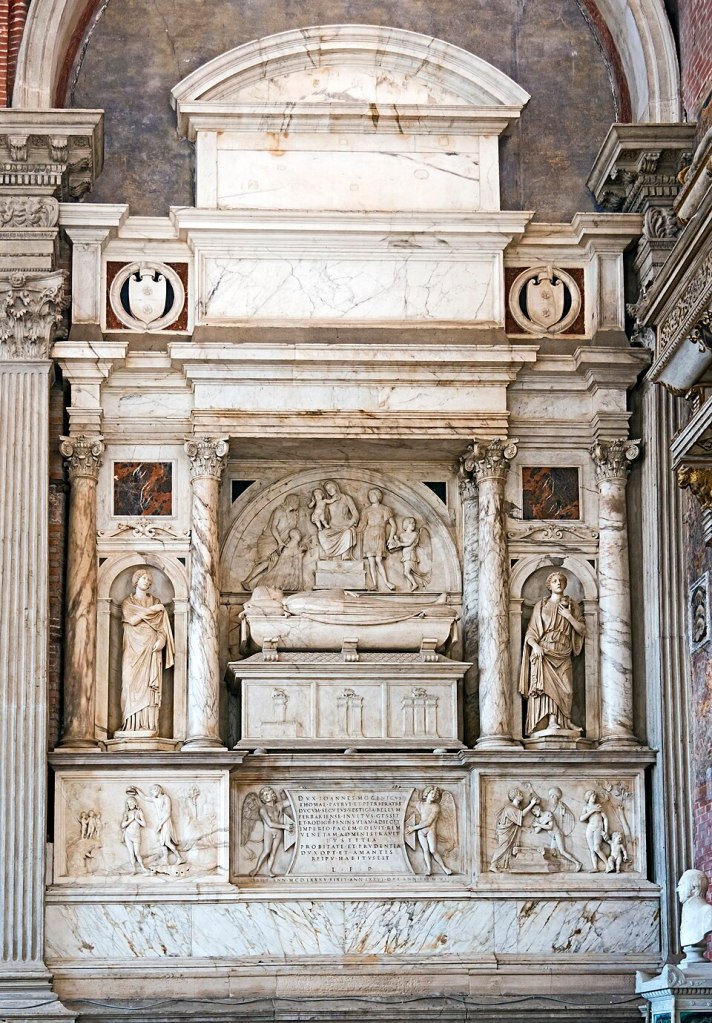
Alison Luchs places these developments within a broader dialogue between sculpture and painting in early sixteenth-century Venice. Rather than treating Bacchus and Ariadne simply as evidence that Tullio adopted pictorial effects, she proposes a more reciprocal process. The expressive possibilities first explored in the Ca’ d’Oro relief may themselves have helped prepare the ground for Giorgione’s poetic half-length figures. On Luchs’s dating of the Vienna relief to about 1505–10, Bacchus and Ariadne would have entered this dialogue while Giorgionesque painting was still developing and might itself have provided a stimulus to contemporary painters.
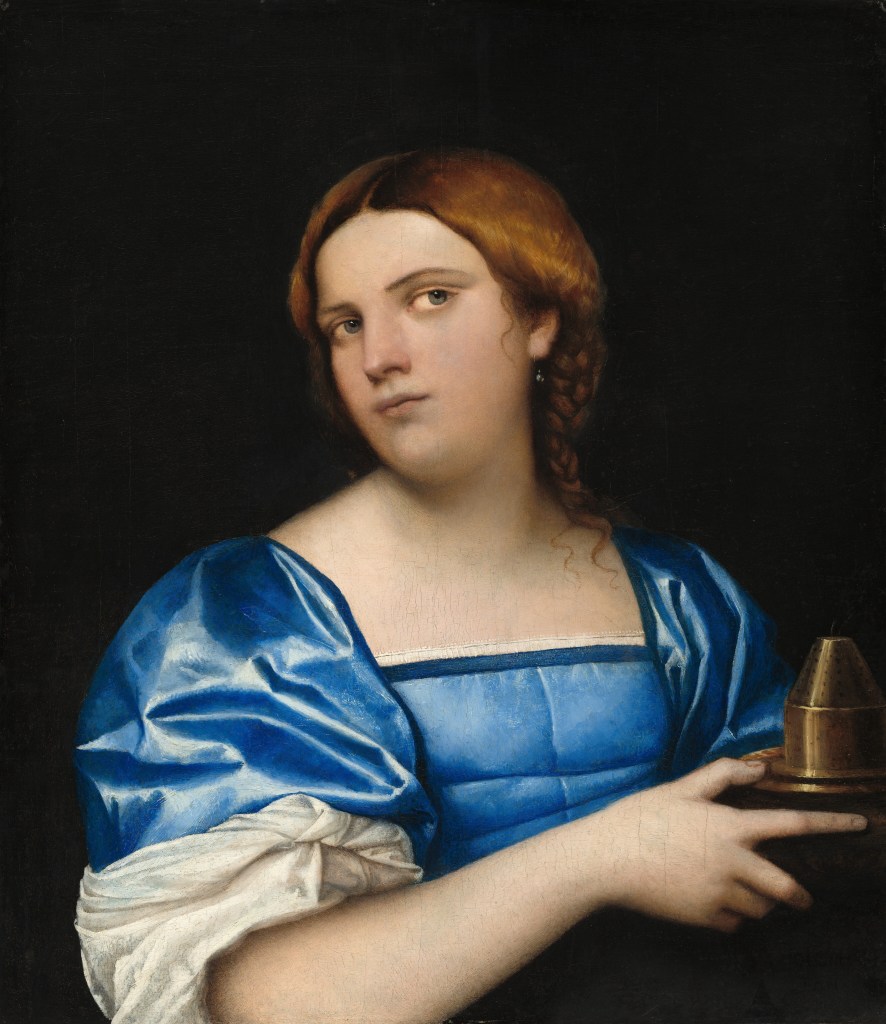
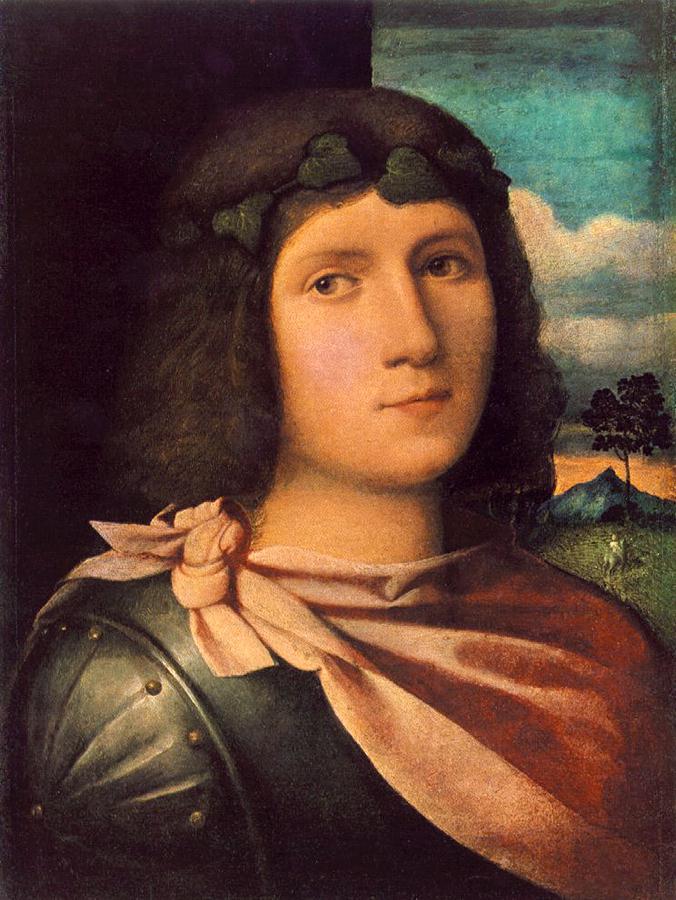
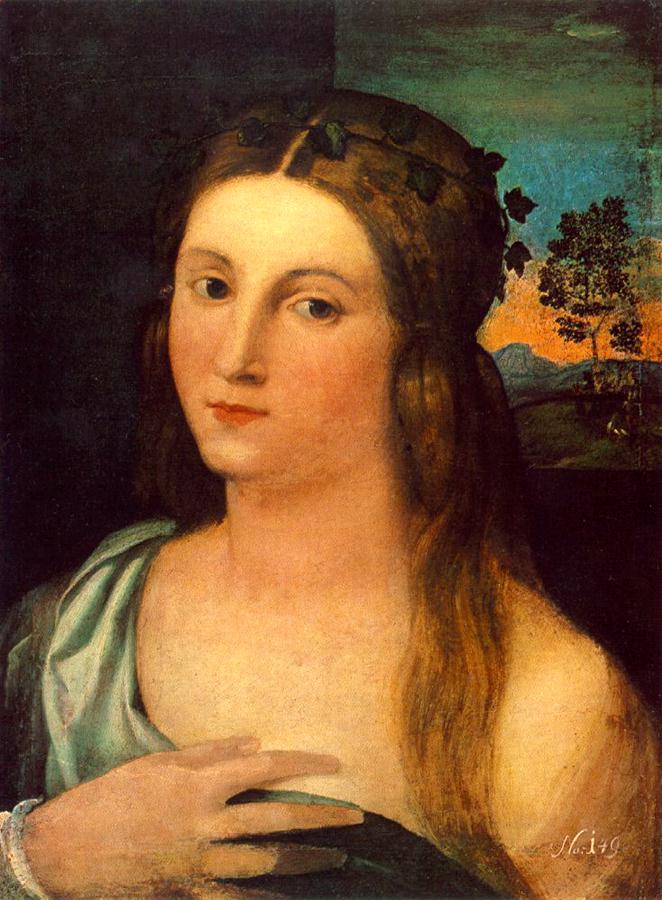
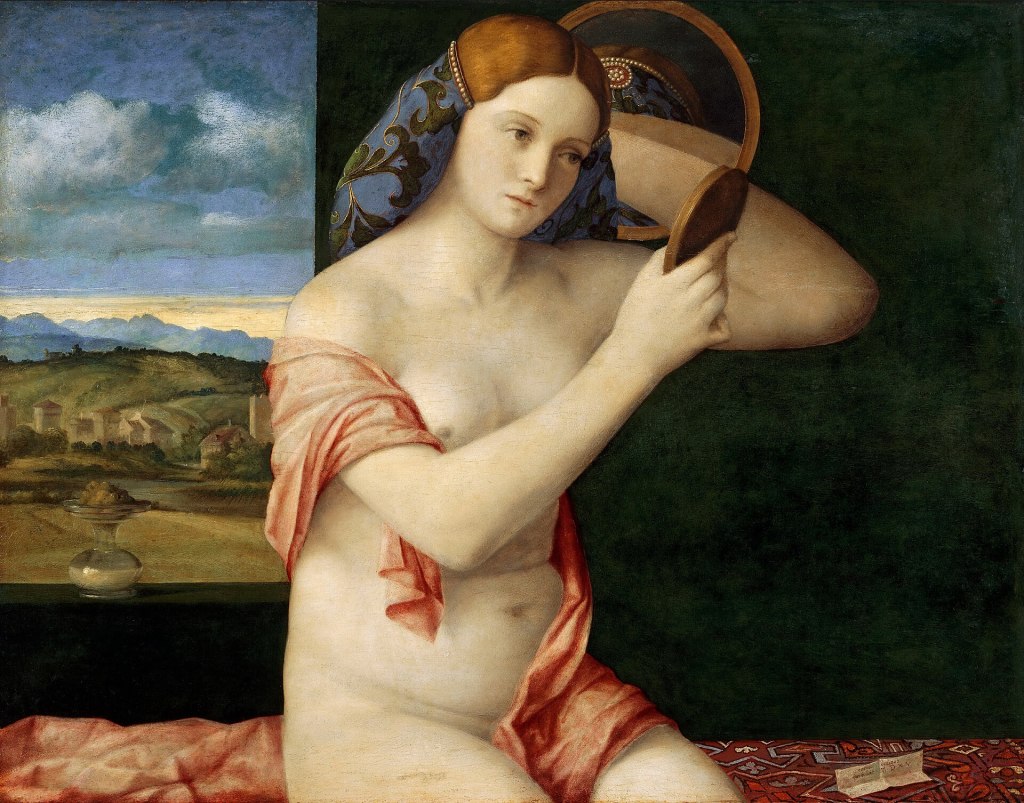
Possible echoes of Tullio’s Bacchus and Ariadne may be discerned in Sebastiano del Piombo’s Young Woman as a Wise Virgin, Bellini’s Nude with a Mirror and paired half-length figures associated with Palma Vecchio, suggesting that comparable pictorial and psychological effects were being explored across Venetian painting and sculpture. If, however, Schulz’s date of about 1520 is accepted, the relief would be better understood as a later response to an already established pictorial language than as part of the wider artistic dialogue through which that pictorial language developed.
Several features of Bacchus and Ariadne support this connection with contemporary painting. Tullio designs the relief for a privileged frontal viewpoint. Where Bacchus overlaps Ariadne’s right shoulder, his own left shoulder is compressed into an exceptionally thin layer of relief, a distortion that becomes apparent only when the sculpture is viewed obliquely. From the front, however, the figures form a coherent, closely joined ensemble. The bodily construction is therefore subordinated to the forward-facing image presented to the beholder, much as it would be in a painting. The thin incised border, resembling a frame, strengthens this pictorial effect.
This visual orientation is reinforced by the more restricted undercutting and gradual transitions of the carving. Light and shadow pass gently across the relatively homogeneous surface, contributing to the figures’ softened contours and inward mood. Ariadne’s inclined head leaves part of her face in shadow, not as a dramatic consequence of deep excavation but as an expressive veil that withdraws her from the beholder. Tullio thus makes shadow an active vehicle of mood rather than merely an effect of carving.
This painterly use of light and shadow brings the relief close to Giorgione’s idealised half-length figures, particularly the Boy with an Arrow, while the veiled identity and suggestive gesture of Laura offer a related comparison. In these works, youthful beauty is joined to an identity and emotional state that remain deliberately uncertain. Pose, gaze and expression, together with the suggestive adjustment of the garment in Laura, imply an inward life without resolving it into a clear narrative. These affinities help to explain why Luchs understands the relationship between Tullio and Giorgionesque painting as reciprocal rather than as a simple passage of influence from painting to sculpture.
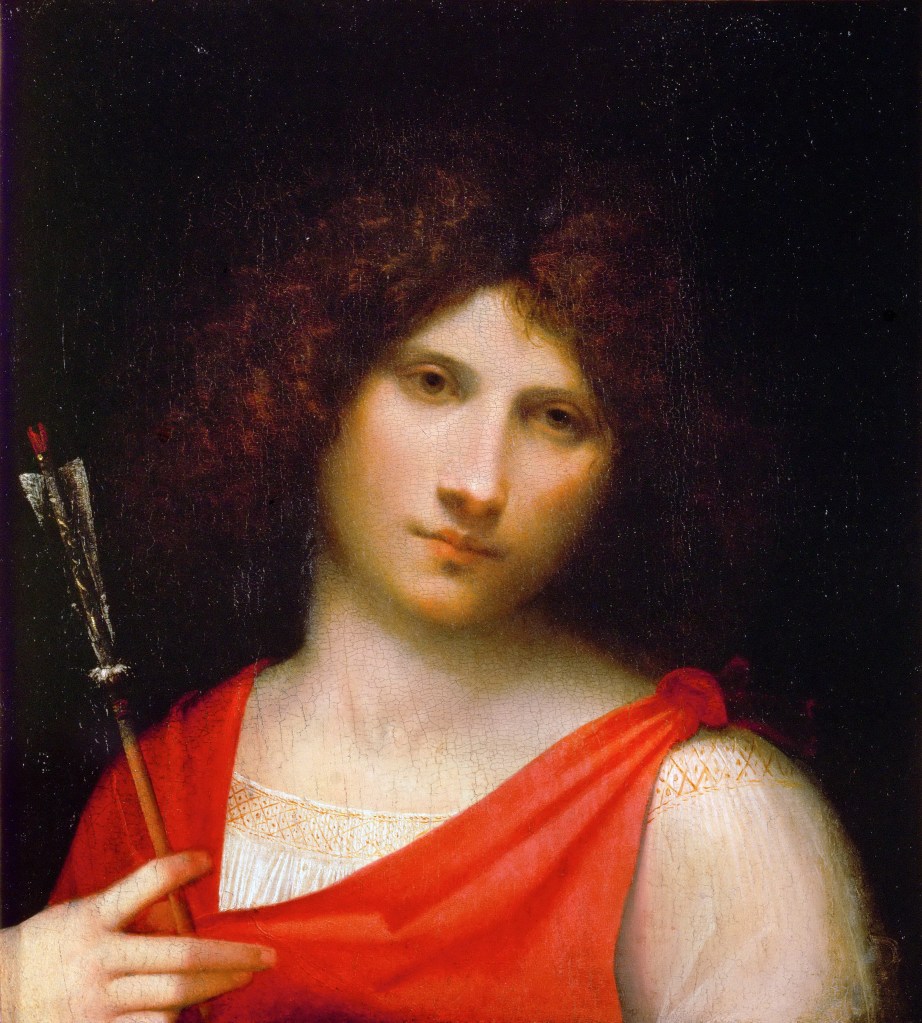
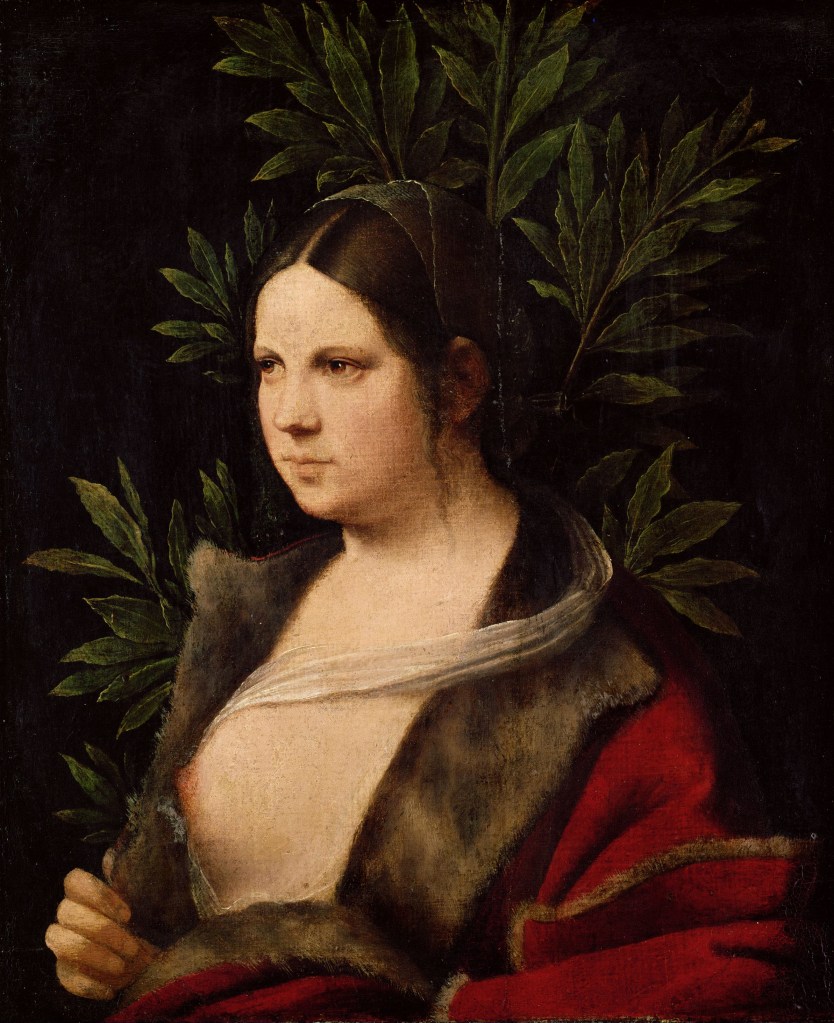
This exchange between sculpture and painting also belongs to the wider paragone debate, the rivalry through which the two arts asserted their different capacities. Tullio’s relief demonstrates that marble could suggest inward feeling, ambiguity and the fleeting effects of light rather than merely bodily solidity and permanence. Venetian painters could respond by emphasising what painting appeared uniquely able to achieve: colour, atmospheric continuity, variation of pose and the presentation of several kinds of image within a single work.
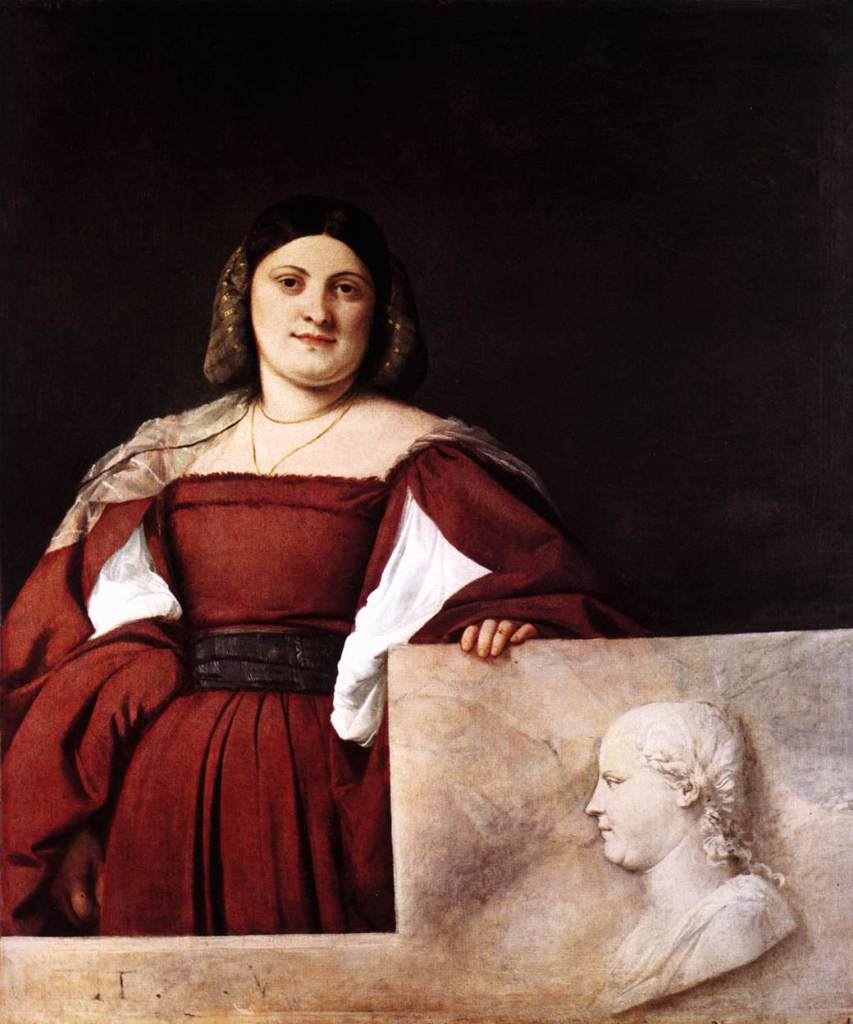
Titian’s La Schiavona offers a particularly pointed example. The sitter appears in contemporary dress with the immediacy of a living presence, while beside her a fictive marble relief presents the same woman in profile and in classical drapery. Titian’s colour and handling of flesh heighten the contrast between the animated figure and her sculpted counterpart. The painting therefore sets the living sitter against a sculptural image within its own field, while claiming the painter’s ability to represent both. Luchs notes that the marble parapet and relief have been interpreted as a challenge directed specifically towards Tullio’s high-relief portraits. Whether or not the allusion was so precise, the work belongs to the same Venetian culture of comparison in which painters and sculptors tested their powers against one another.
To conclude, the two reliefs reveal more than a refinement of Tullio’s carving or a movement towards a more pictorial style. In the Ca’ d’Oro work, the compressed setting, sharply differentiated surfaces and urgent relation between the figures encourage the search for an underlying narrative. In Bacchus and Ariadne, the broader field, softened modelling and separation of the gazes transform the paired image into something more elusive. Mythological, poetic and musical meanings remain possible, but none wholly governs the work. The relief instead makes ambiguity itself expressive, while demonstrating that marble could rival painting in its command of light, inward feeling and imaginative suggestion.
[Producing these essays requires care, time, research, and resources. Contributions to help sustain this exploration would be greatly appreciated.]
Donate to Inner Surfaces here.
Bibliography
I have relied on the following sources. Any errors are mine.
Fletcher, Jennifer. Review of Alison Luchs, Tullio Lombardo and Ideal Portrait Sculpture in Renaissance Venice, 1490–1530. The Burlington Magazine, 138 (December 1996), pp. 831–32.
Luchs, Alison. Tullio Lombardo and Ideal Portrait Sculpture in Renaissance Venice, 1490–1530. Cambridge: Cambridge University Press, 1995.
Luchs, Alison, ed. Tullio Lombardo and Venetian High Renaissance Sculpture. Washington, DC: National Gallery of Art; New Haven and London: Yale University Press, 2009.
Markham Schulz, Anne. The Sculpture of Tullio Lombardo. London and Turnhout: Harvey Miller Publishers, 2014.
McHam, Sarah Blake, and Alison Luchs. ‘Venetian Expressive Busts: Portraiture, Narrative, or Fantasy?’ In Tullio Lombardo and Venetian High Renaissance Sculpture, edited by Alison Luchs, pp. 60–85. Washington, DC: National Gallery of Art; New Haven and London: Yale University Press, 2009.

