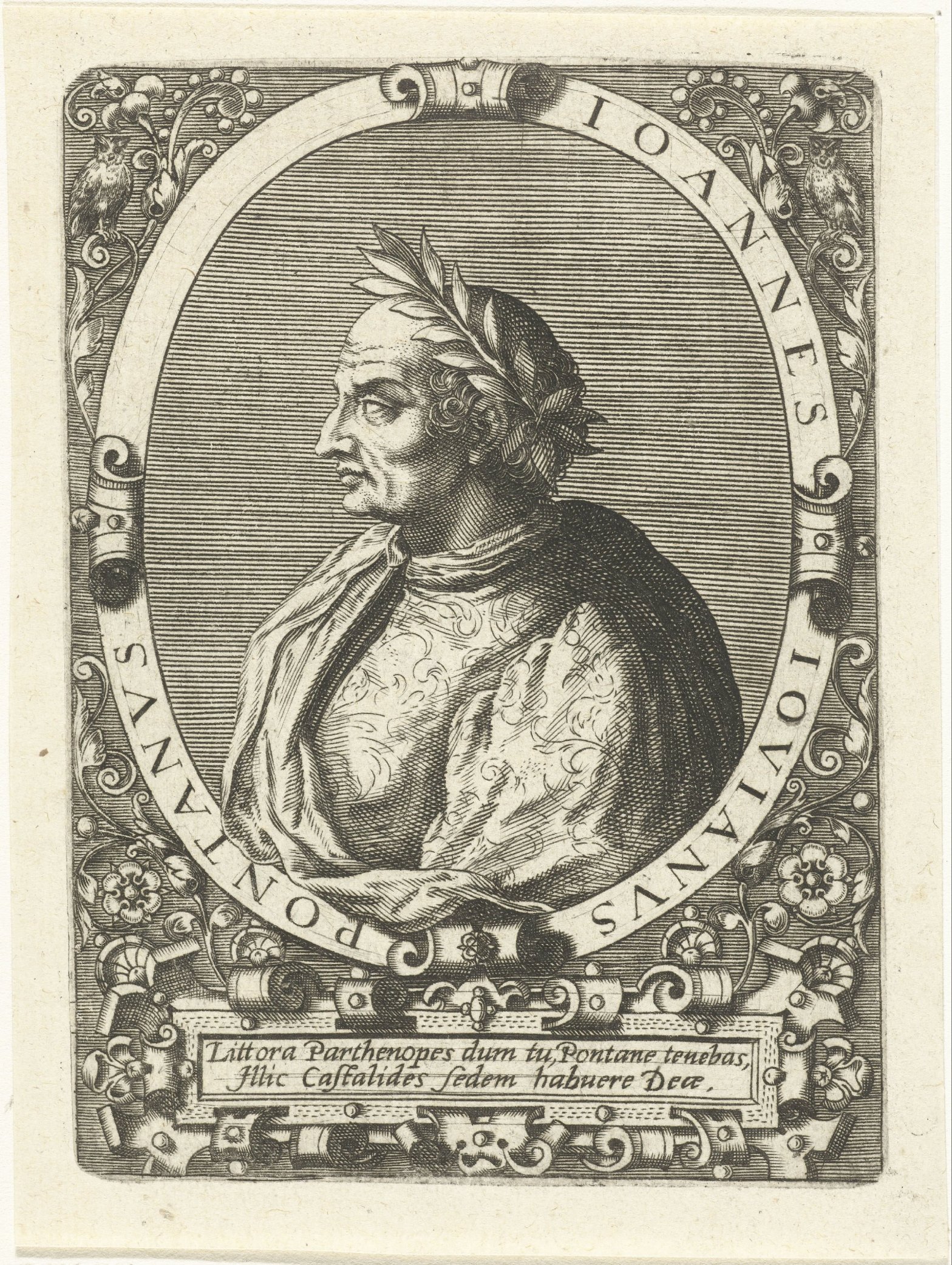
Theodor de Bry, Portrait of Giovanni Gioviano Pontano, c. 1597–99, engraving from Jean-Jacques Boissard, Icones virorum illustrium. Image credit: Rijksmuseum.
The inscriptions of the Pontano Chapel cannot be understood fully from their words alone. To a Renaissance humanist, epigraphy carried associations with the recovery of antiquity, philological scholarship, education, social and intellectual distinction, and the preservation of memory. These associations are particularly important in approaching a monument whose visual austerity can disguise the sophistication of its programme. The twelve exterior tablets belong to a culture in which ancient inscriptions were sought out, copied, collected, discussed and imitated, and in which the durability of the written word offered a powerful means of transmitting knowledge and reputation across time. To recover something of that culture is therefore to recover part of the meaning that Pontano’s inscriptions would have possessed for their first educated readers.
A particularly useful starting point is Leon Battista Alberti’s discussion of inscriptions in Book VII of De re aedificatoria. There is no firm evidence that Pontano drew directly upon this passage, but Alberti’s writings belonged to a humanist culture that was well represented in Naples, and Alberti himself visited the city in 1465. On those grounds alone, Alberti’s discussion warrants inclusion.
Alberti argues that the surfaces of a temple should contribute to the moral and intellectual formation of those who encounter them. Among his examples are the bronze tablets kept on the Capitol which preserved senatorial decrees, popular enactments, treaties and other records of the Roman state. Many were destroyed in AD 69, when fighting between supporters of Vitellius and Vespasian engulfed the Capitoline Hill and the Temple of Jupiter Optimus Maximus was consumed by fire. After securing the empire, Vespasian ordered the lost records to be reconstructed from surviving copies. Suetonius records that some three thousand bronze tablets had perished.
Outside Alberti’s discussion, another ancient precedent familiar to Renaissance humanists was provided by the Twelve Tables, the earliest celebrated codification of Roman law, traditionally compiled in 451–450 BC and publicly displayed in Rome. Livy recounted how the Twelve Tables were compiled and publicly displayed, making them part of the standard humanist understanding of Roman civic life. The fact that Pontano arranged twelve inscribed tablets on the exterior of his chapel invites comparison with this ancient precedent, particularly since several of his maxims concern government and public conduct.
Within Naples itself, Bianca de Divitiis has identified the Palazzo Carafa in Via San Biagio dei Librai as an important precedent for the architectural display of moral counsel. Diomede Carafa was a Neapolitan noble closely connected with the Aragonese court, and his Memoriali offered practical advice on conduct, service and government. During the remodelling of his palace in the later fifteenth century, moralising inscriptions were carved in the friezes of the six first-floor windows. Their maxims advocate reasoned conduct, sincere service and disciplined preparation, closely reflecting the practical outlook of the Memoriali. Concise moral counsel was therefore already being incorporated prominently into the architecture of an elite Neapolitan residence before the construction of Pontano’s chapel. De Divitiis explicitly identifies Carafa’s façade as a precedent for Pontano’s own use of moralising epigraphy.
Carafa’s use of inscription also served a more public form of self-representation. Above the palace portal, an all’antica inscription named him as Count of Maddaloni and presented the building as an honour to Ferrante and to the city. This combination of name, political allegiance and monumental display belonged to a wider practice among the Neapolitan administrative elite, in which inscriptions, coats of arms and emblems asserted the patron’s identity on the urban façade. A comparable example was provided by Orso Orsini, whose palace at Nola carried an all’antica inscription naming him and declaring that he had built the residence in 1470.
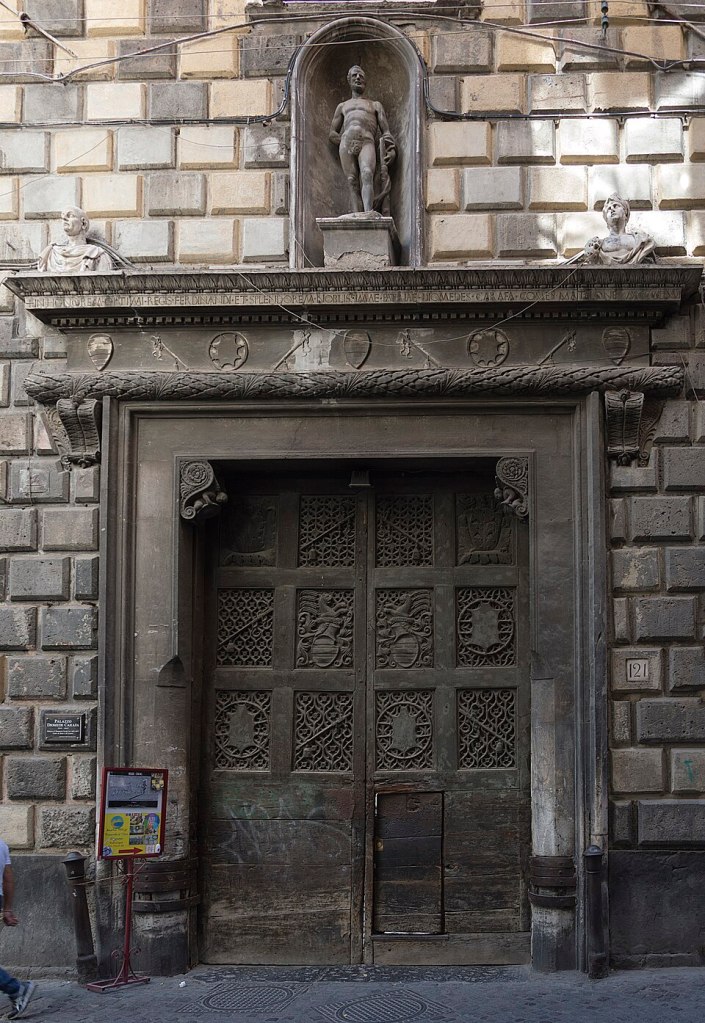
A further inscription, on the pedestal of a column in the courtyard, placed the palace within a more explicitly dynastic framework. It presented the building as an honour to the king and to Carafa’s native city, while also explaining his attachment to the site through his ancestors. Here inscription connected political service with family reputation and continuity of place. That combination is important for Pontano, because it shows how written language could give architectural permanence not only to moral counsel but also to a patron’s public and familial identity.
Giuliana Vitale has placed such concerns within the wider conduct of the Neapolitan nobility. Through the Angevin and Aragonese periods, noble families sought to establish themselves in the city through possession of an imposing domus and, where possible, a chapel, while retaining both property and family name in prestigious central locations. Carafa’s will provides separate evidence of the importance he attached to continuity: it stipulated that the palace should pass through the Carafa family and, if his direct male line failed, to the nearest first-born male of another branch bearing the same surname. The inscription and the testament thus approach the same concern from different directions, associating the palace both with ancestral memory and with the continuation of the family.
Pontano’s circumstances were different. His position was grounded in royal administration and humanist culture rather than aristocratic lineage, and the death of his son Lucio left him without a male heir to continue the family line. His chapel nevertheless attached his name and his family memorials to a prominent urban locus. The inscriptions worked alongside the references to Pontaniana in his dialogues, directing commemoration towards an intellectual community as well as a family line. The comparison with Carafa therefore helps define two different ways in which inscription, writing and place could be used to establish continuity beyond an individual lifetime.
The epigraphic culture surrounding Pontano was not confined to newly commissioned buildings. Ancient monumental inscriptions remained visible both within Naples and across the surrounding region. Close to the chapel itself, the remains of the ancient Temple of Castor and Pollux, incorporated into the later structure of San Paolo Maggiore, preserved a monumental Greek inscription naming its patrons and dedicating the building to the Dioscuri and to the city. At Pozzuoli, the Temple of Augustus preserved another prominent foundation inscription, recording the Calpurnii as patrons of the building. These were not merely archaeological survivals but conspicuous examples of the ancient practice of attaching patronage and civic identity to architecture through inscription.
The wider landscape offered many further encounters with written antiquity. Roman remains at Pozzuoli, Cumae and Baiae preserved texts on funerary monuments, architectural fragments and objects of everyday use. Some sense of their range can still be gained from the De Criscio Collection in the Kelsey Museum of Archaeology, assembled from antiquities found around Pozzuoli and including inscriptions from Pozzuoli and Cumae as well as inscribed utilitarian objects. A much larger body of epigraphic material from Naples and Campania is preserved in the Museo Archeologico Nazionale di Napoli, including inscriptions that passed through early modern antiquarian collections before entering the museum. Pontano himself was alert to this less monumental evidence. In De magnificentia he records unusually broad lead water pipes discovered among the ruins between Baiae and Pozzuoli, inscribed with the name of the emperor Claudius. The example is revealing because it shows writing surviving not only on tombs and public monuments, but within the infrastructure of Roman daily life. Such finds made the written presence of antiquity part of the material landscape around Naples.
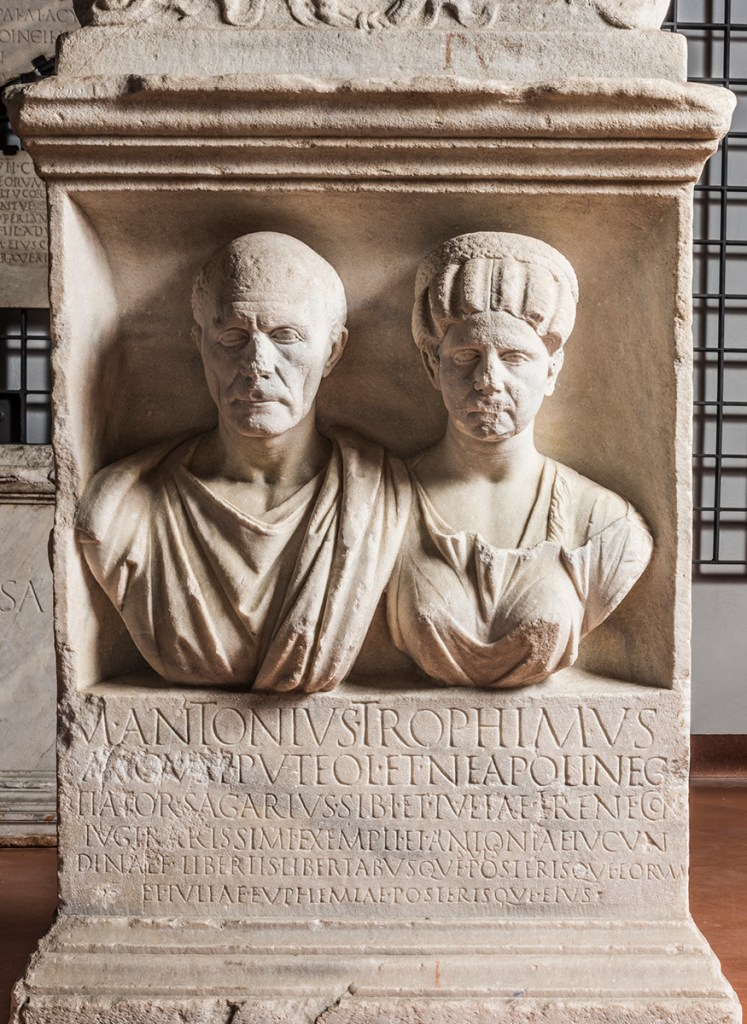
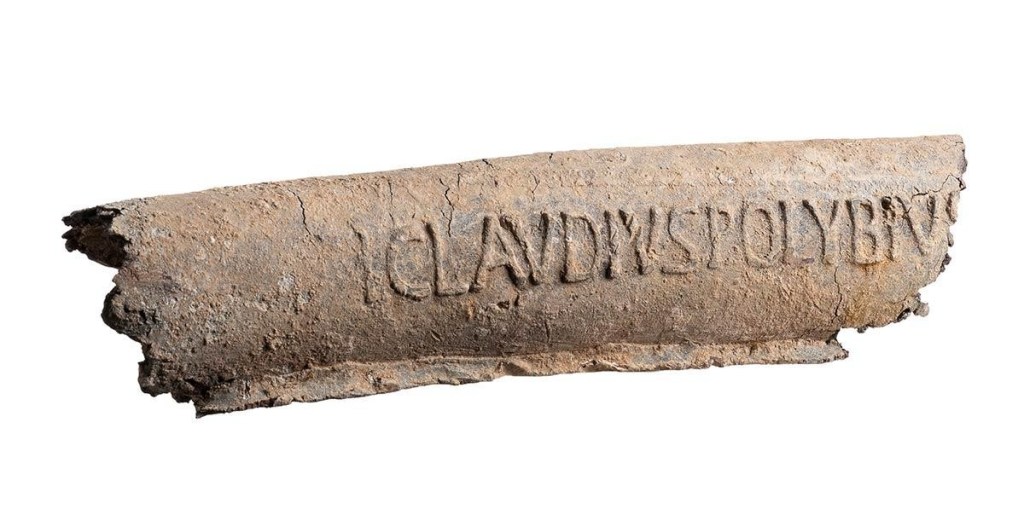
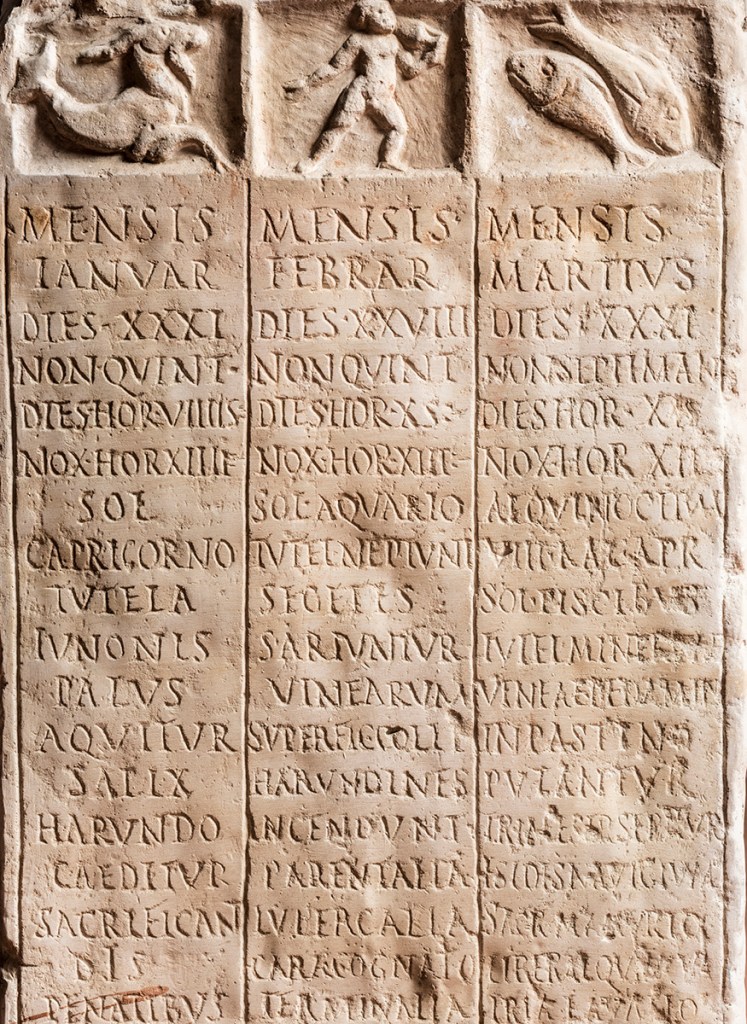
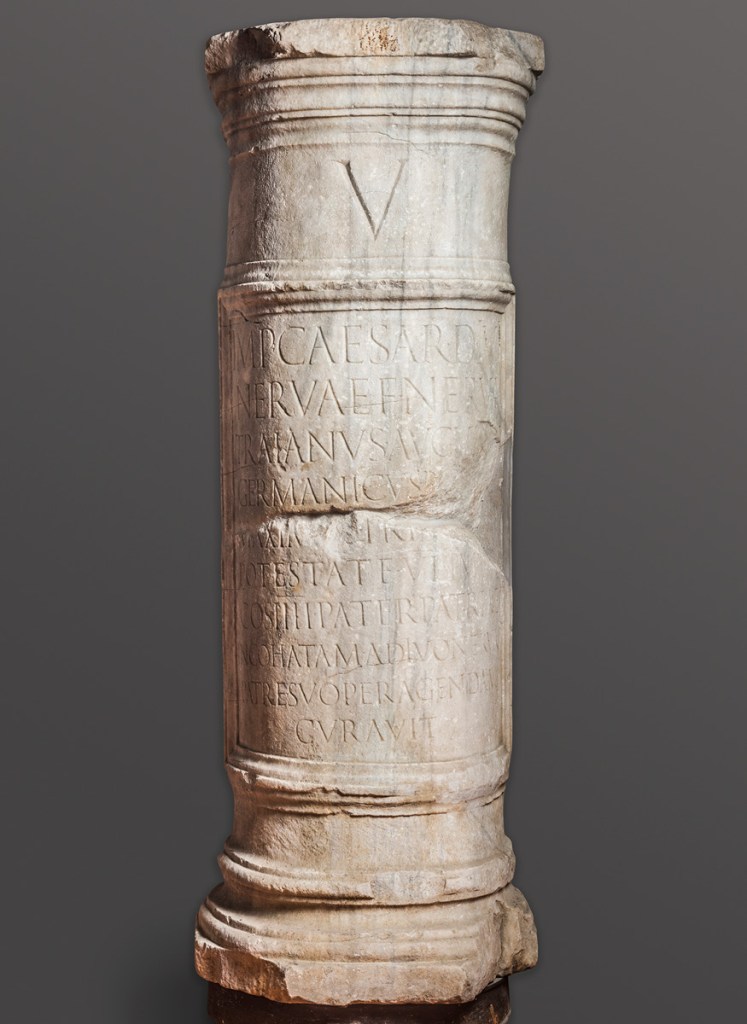
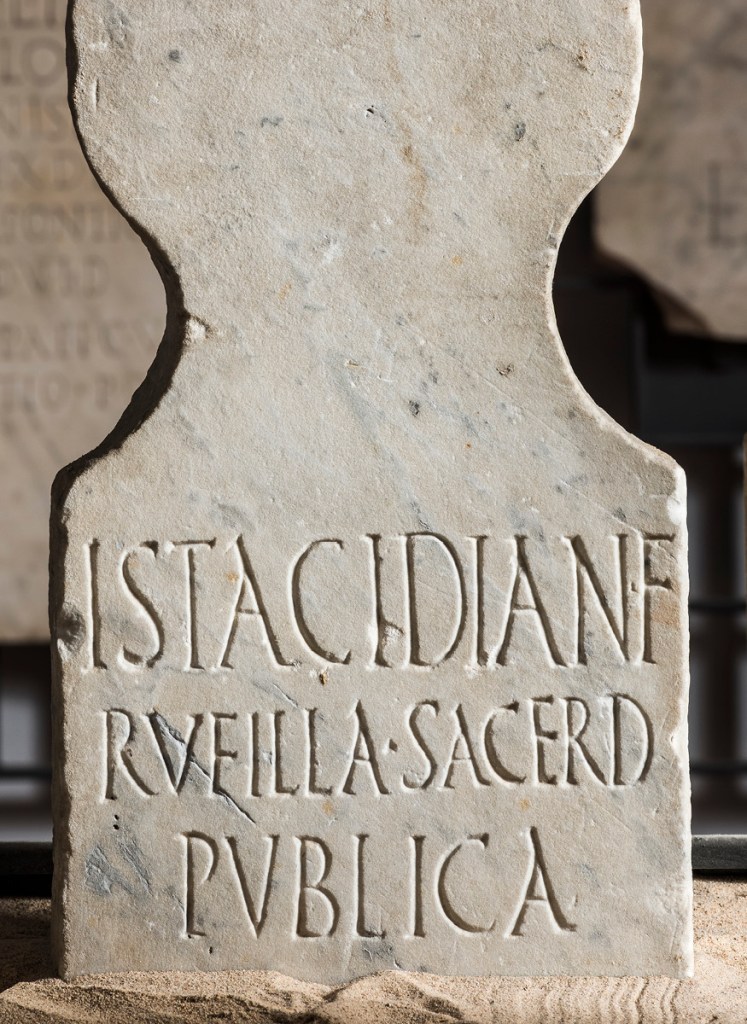
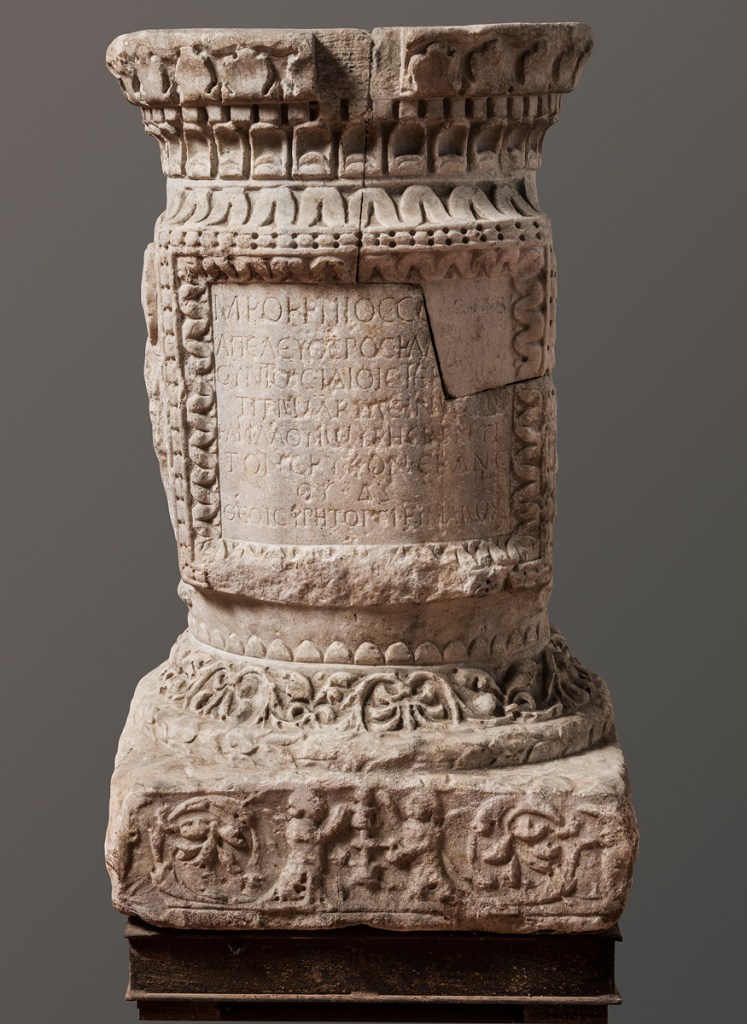
We also have evidence of a systematic engagement with inscriptions through the work of Fra Giocondo. An entry in the Aragonese royal treasury accounts from October 1489 records Giocondo and Jacopo Sannazaro travelling together to inspect quelle anticaglie, placing antiquarian fieldwork directly within the Neapolitan humanist circle.
Giocondo’s presence in Naples is especially significant because it places this epigraphic activity close to Pontano’s own intellectual world. He has also been associated with the design of the chapel, although the attribution remains uncertain. More securely, his companion in the antiquarian excursion was Jacopo Sannazaro, a prominent member of Pontano’s circle and one of the humanists most closely associated with the academy that gathered around him. Giocondo’s study of inscriptions was therefore taking place within a network to which Pontano himself belonged.
During the winter of 1487–88, Lorenzo de’ Medici asked Alessandro Cortese in Rome to arrange the compilation of a collection of ancient inscriptions. The celebrated humanist scribe Bartolomeo Sanvito was responsible for copying the manuscript, which was subsequently sent to Fra Giocondo in Naples for checking and correction. Cortese entrusted this critical stage to the man he described as the “prince of antiquarians”, reflecting Giocondo’s exceptional reputation for epigraphic scholarship. The project thus brought together Medici patronage in Florence, scholarly organisation in Rome and antiquarian expertise in Naples, illustrating the wider humanist network through which the study of inscriptions was developing.
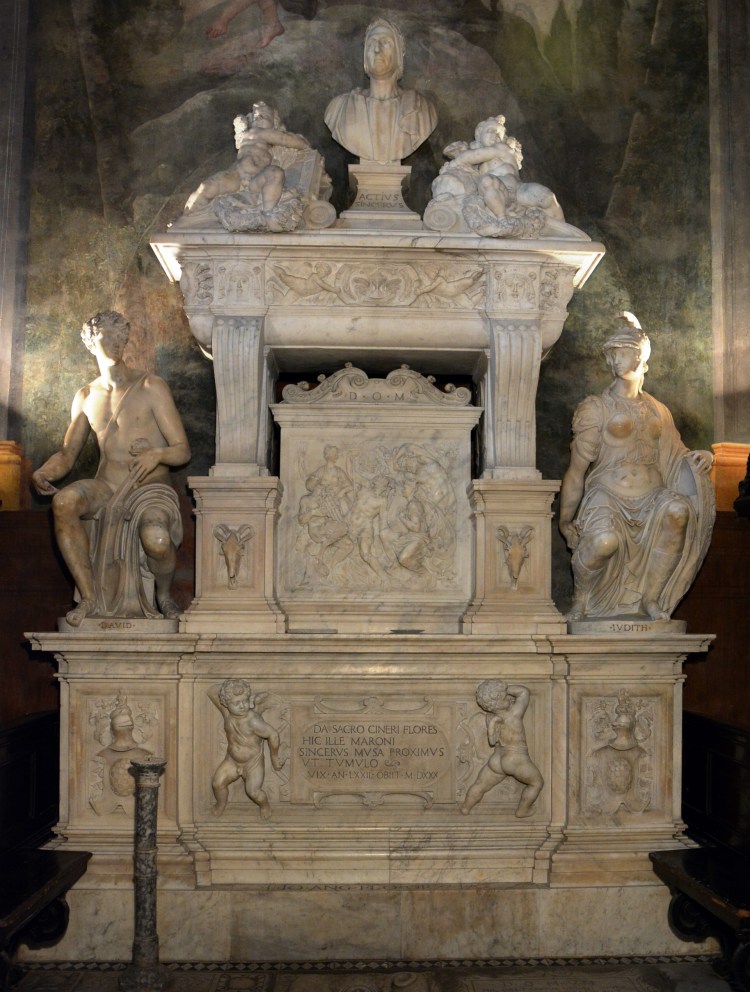
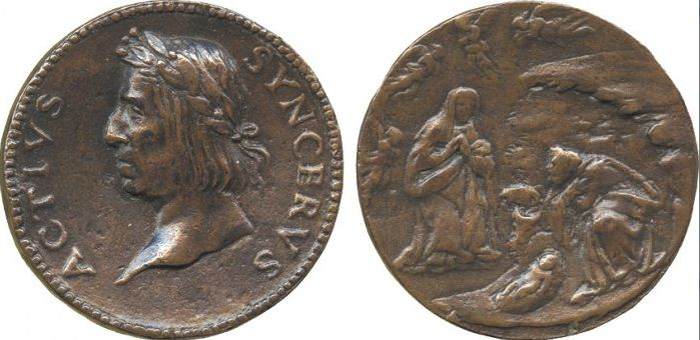
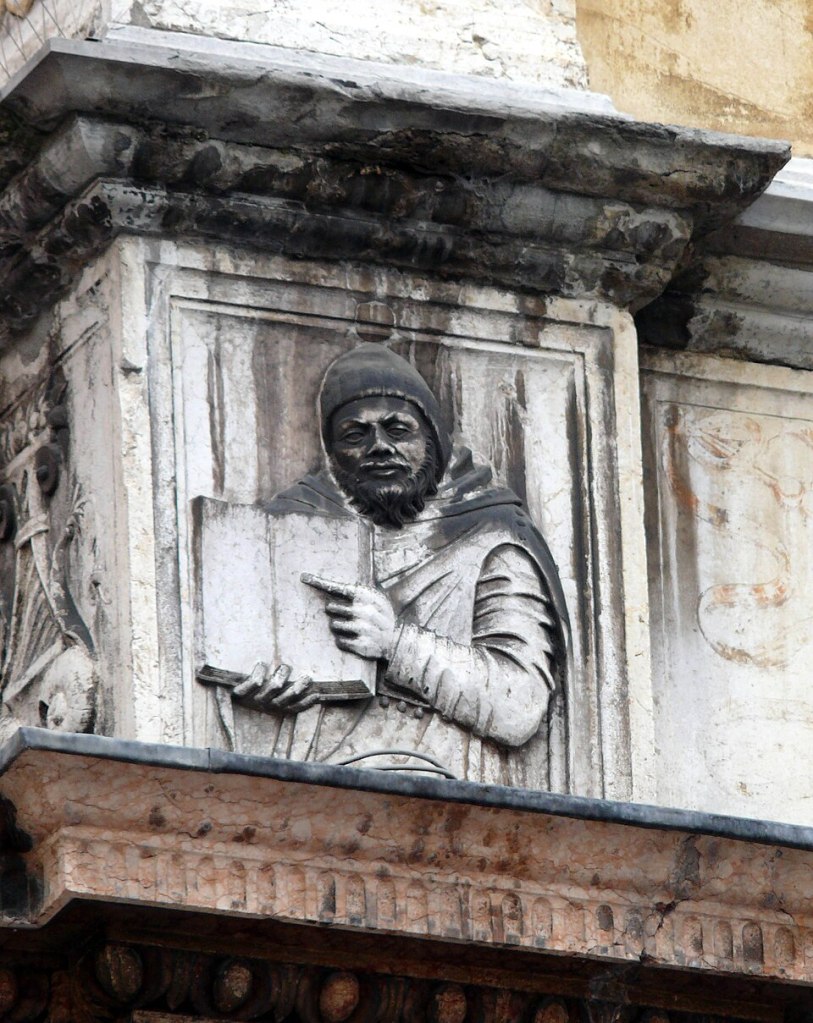
Giocondo’s particular contribution lay in the care with which he established the accuracy of inscriptions. He distinguished texts that he had examined directly on surviving monuments and artefacts from those known only through manuscript copies, treating the original object as the more reliable source. This concern with first-hand verification brought epigraphy close to the methods of humanist philology, in which different forms of evidence were compared in the attempt to recover authentic ancient texts and language. The study of inscriptions could therefore contribute to a broader humanist pursuit of historical and textual accuracy.
In the preface to the collection prepared for Lorenzo de’ Medici, Giocondo gives this concern with survival a broader cultural meaning. He laments the destruction of ancient buildings, many of which had been dismantled for reuse or reduced to lime, and presents inscriptions and sculpture as among the most durable remains of a civilisation otherwise disappearing from view. Inscriptions preserved not only names and historical information but qualities of language that he particularly admired: brevity, precision and elegance. Their value therefore lay both in what they recorded and in the fact that they carried the forms of ancient culture across time.
Pontano’s interest in inscriptions was likewise closely connected with the study of language. As Giuseppe Germano has shown in his study of De aspiratione (1481), Pontano drew upon epigraphic evidence when considering questions of Latin usage, spelling, names and unusual forms, treating inscriptions as material capable of preserving ancient linguistic evidence with particular authority. Their value lay partly in having escaped the repeated copying through which manuscript texts could acquire errors and alterations. Epigraphy therefore offered Pontano a means of testing received textual forms against evidence that had survived directly from antiquity.
The same material also had an educational use. Germano connects Pontano’s epigraphic interests with the teaching activity attested by Facio and, later, by Tristano Caracciolo, who records that Pontano gave private lessons on Latin poets and historians to members of the Neapolitan patriciate. Inscriptions could therefore serve as practical material for the study of language, historical usage and classical culture. Their value was not confined to private scholarship: they could also form part of the transmission of humanist learning to a younger generation.
The culture of epigraphy also intersected with the collecting of antiquities. Diomede Carafa’s palace housed inscriptions, cippi, urns, busts, reliefs and other ancient objects, creating an environment in which classical remains could be displayed and studied together. Pontano appears to have known the collection at first hand: in De aspiratione he refers to an inscribed urn decorated with the Rape of Proserpine that belonged to Carafa. The episode shows how aristocratic collecting and humanist scholarship could reinforce one another, with objects acquired for display also serving as evidence for philological and antiquarian enquiry.
Independent of the manuscript tradition, ancient objects also carried considerable cultural prestige. In the Carafa palace, their possession and display contributed to the magnificence of an aristocratic residence, while their accessibility to scholars such as Pontano gave them an intellectual function. The collection thus brought aristocratic patronage and humanist scholarship into close contact. This antiquarian culture continued to develop in Naples during the following century. Matteo Geronimo Mazza, a Salernitan jurist and scholar who lived for much of his life in Naples, compiled several epigraphic sylloges and assembled a substantial collection of inscribed marbles at his villa at Marechiaro. De Divitiis places Mazza within a Neapolitan tradition of antiquarian collecting that reached back to Pontano. Much of Mazza’s collection was later dispersed, and in the early nineteenth century a substantial group of inscriptions passed into the Real Museo Borbonico, now the Museo Archeologico Nazionale di Napoli.
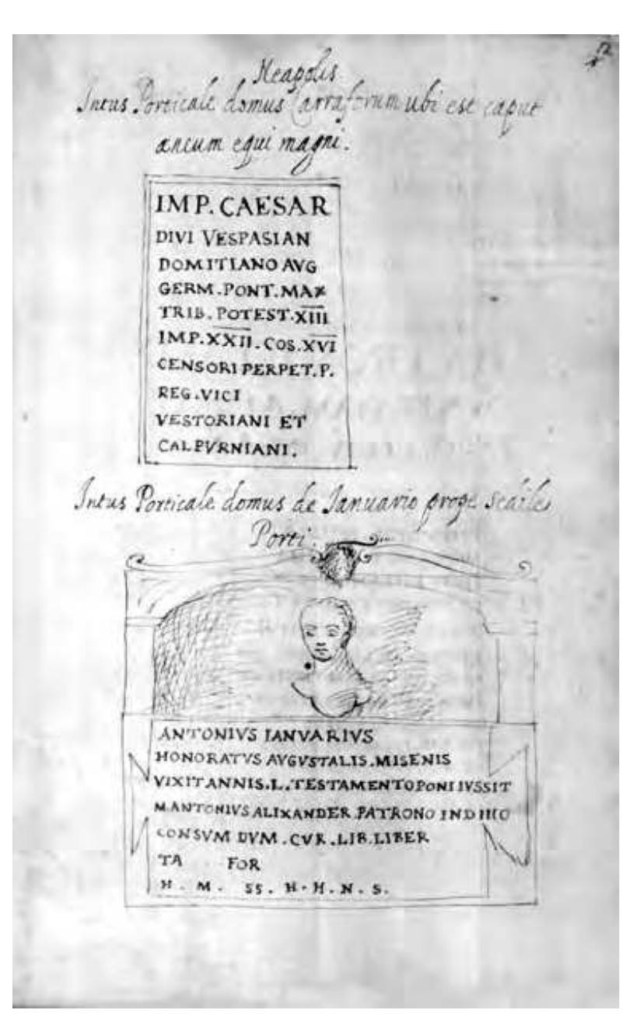
Pontano’s engagement with epigraphy also extended beyond Naples through his repeated contact with Rome. His diplomatic missions brought him into another city where ancient inscriptions remained unusually visible, while the movement of scholars between Rome and Naples further strengthened these connections. Figures such as Fra Giocondo and Alessandro d’Alessandro carried with them methods of reading, collecting and discussing antiquities that linked the two centres of humanist culture. Rome therefore provided not only a reservoir of ancient material, but also a wider intellectual environment in which inscriptions were actively interpreted and debated.
One especially revealing example comes from Alessandro d’Alessandro, who describes walking among the ruins of Rome with Pomponio Leto and discussing an inscription concerning the ancient curiae. The episode shows epigraphy functioning as a conversational form of scholarship: an inscribed fragment could prompt questions about Roman institutions, topography and language, with the ruined city itself becoming a setting for historical enquiry. D’Alessandro’s links with both Leto and Pontano make this type of enquiry particularly relevant to the intellectual networks surrounding the Neapolitan academy.
Pomponio Leto provides an especially close Roman parallel. His antiquarian interests extended from archaeological investigation and the collection of inscriptions to his own plans for commemoration: in 1498 he expressed the wish to be buried in an ancient sepulchre on the Via Appia. His house also formed part of this epigraphic culture. Inscriptions were displayed in its atrium, some apparently on the walls, while further marble fragments stood outside. Among these were texts associated with presumed ancestors; some were genuinely ancient, including an epitaph of Sextus Pomponius kept in Leto’s vigna, while others were of doubtful authenticity. Giocondo’s sylloge also included inscriptions transcribed from Leto. The house, which functioned as a meeting place, therefore brought antiquarian display, scholarly exchange and personal commemoration into the same environment.
The parallel with Pontano lies not in any exact replication of Leto’s practices, but in the way both men used antiquity to shape a personal memorial. Leto sought burial in an ancient tomb and surrounded his residence with inscribed remains; Pontano placed family memorials and newly composed inscriptions within a chapel whose language and forms repeatedly invoked the classical past. In both cases, epigraphy offered a means of bringing commemoration into contact with antiquity, while also locating that memorial project within a community of scholars capable of reading and sustaining it. For Pontano, however, the emphasis fell less upon claims of ancestry than upon the preservation of family memory and of a public reputation founded upon learning, authorship, integrity, judgement and service.
Pontano’s connection with Leto was more than indirect. In De sermone he refers to him as an example of modesty, and after Leto’s death in 1498 he composed an epitaph for him. Alessandro d’Alessandro provides a further link between their circles, while Pontano’s praise in Aegidius of Pietro Tamira, one of Leto’s pupils, points to his continuing awareness of Roman humanist scholarship. These connections place the comparison between Leto and Pontano within a real network of contact between Roman and Neapolitan humanism.
Seen against this background, the prominence of inscription in the Pontano Chapel becomes less anomalous. For a humanist of Pontano’s generation, inscribed stone carried associations with antiquity, textual authority, scholarship, education, social distinction and commemoration. It could preserve language with unusual durability, attach names and reputations to place, and invite continued reading and interpretation. Pontano drew these possibilities together in a monument that commemorated his family and gave lasting form to his public identity and intellectual values.
The twelve exterior tablets can now be approached not simply as a series of moral sayings, but as part of a much broader culture of inscription. Their form, placement and durability carried associations that would have been legible to Pontano’s educated contemporaries: with antiquity, learned authority, public counsel, commemoration and the transmission of ideas across time. The next stage is therefore to turn from the culture that made such inscriptions meaningful to the individual tablets themselves, their language, sources and arrangement.
Producing these essays requires care, time, research, and resources. Contributions to help sustain this exploration would be greatly appreciated.
Donate to Inner Surfaces here.
Bibliography
I consulted the following sources. Any errors are mine.
Primary sources
Alberti, Leon Battista. On the Art of Building in Ten Books, trans. Joseph Rykwert, Neil Leach and Robert Tavernor. Cambridge, Massachusetts, 1988.
Carafa, Diomede. Memoriali, ed. F. Petrucci Nardelli. Rome, 1988.
Facio, B., De viris illustribus, ed. L. Mehus, Florence, 1745.
Pontano, Giovanni. I dialoghi, ed. Carmelo Previtera. Florence: Sansoni, 1943.
Pontano, Giovanni Gioviano. De sermone libri sex, ed. Sergio Lupi and Antonino Risicato. 1954.
Pontano, Giovanni. I libri delle virtù sociali, ed. Francesco Tateo. Rome: Bulzoni, 1999.
Secondary sources
Borsi, Stefano. Leon Battista Alberti e Napoli. Florence, 2006.
Brenzoni, Raffaello. Fra Giovanni Giocondo veronese: Verona 1435–Roma 1515: figura genialissima e tipica della versatilità rinascimentale italiana alla luce delle fonti coeve e dei documenti esposti cronologicamente. Florence: L. S. Olschki, 1960.
Brooke, John. Giovanni Pontano (1429–1503) and Social Mores, Memorial and Material Culture in Renaissance Naples, c. 1450–1490. Unpublished PhD thesis, Department of History of Art and Screen Media, Birkbeck College, University of London, 2010.
Clarke, Georgia. Roman House–Renaissance Palaces: Inventing Antiquity in Fifteenth-Century Italy. Cambridge: Cambridge University Press, 2003.
De Divitiis, Bianca. Architettura e committenza nella Napoli del Quattrocento: Diomede Carafa e Giovanni Pontano. Venice, 2007.
De Divitiis, Bianca. “PONTANVS FECIT: Inscriptions and Artistic Authorship in the Pontano Chapel.” California Italian Studies 3, no. 1 (2012).
De Divitiis, Bianca. “Matteo Geronimo Mazza: A Recovered Sylloge by a Renaissance Antiquarian and Collector.” Journal of the Warburg and Courtauld Institutes 83 (2020), pp. 161–256.
De Divitiis, Bianca, and Fulvio Lenzo. “Parole di pietra. Epigrafia, studio dell’antico e nuove architetture nel Rinascimento meridionale.” Opus Incertum 8 (2022), pp. 32–51.
Gahtan, Maia Wellington. “Reading Pontano’s ‘libretto co’ fogli di marmo’.” Opus Incertum 8 (2022), pp. 48–59.
Germano, Giuseppe. Il De aspiratione di Giovanni Pontano e la cultura del suo tempo. Naples, 2005.
Kidwell, Carol. Pontano: Poet and Prime Minister. London: Duckworth, 1991.
Koortbojian, Michael. “A Collection of Inscriptions for Lorenzo de’ Medici: Two Dedicatory Letters from Fra Giovanni Giocondo.” Papers of the British School at Rome 70 (2002), pp. 297–317.
Magister, Sara. “Pomponio Leto collezionista di antichità. Note sulla tradizione manoscritta di una raccolta epigrafica nella Roma del tardo Quattrocento.” Xenia Antiqua 7 (1998), pp. 167–196.
Maffei, Domenico. Alessandro d’Alessandro, giureconsulto umanista, 1461–1523. Milan: Giuffrè, 1956.
Santoro, Mario. “Humanism in Naples.” In Renaissance Humanism: Foundations, Forms, and Legacy, vol. 1, ed. Albert Rabil Jr., Philadelphia, 1988, pp. 297–329.
Vitale, Giuliana. Modelli culturali nobiliari nella Napoli aragonese. Salerno, 2002.

