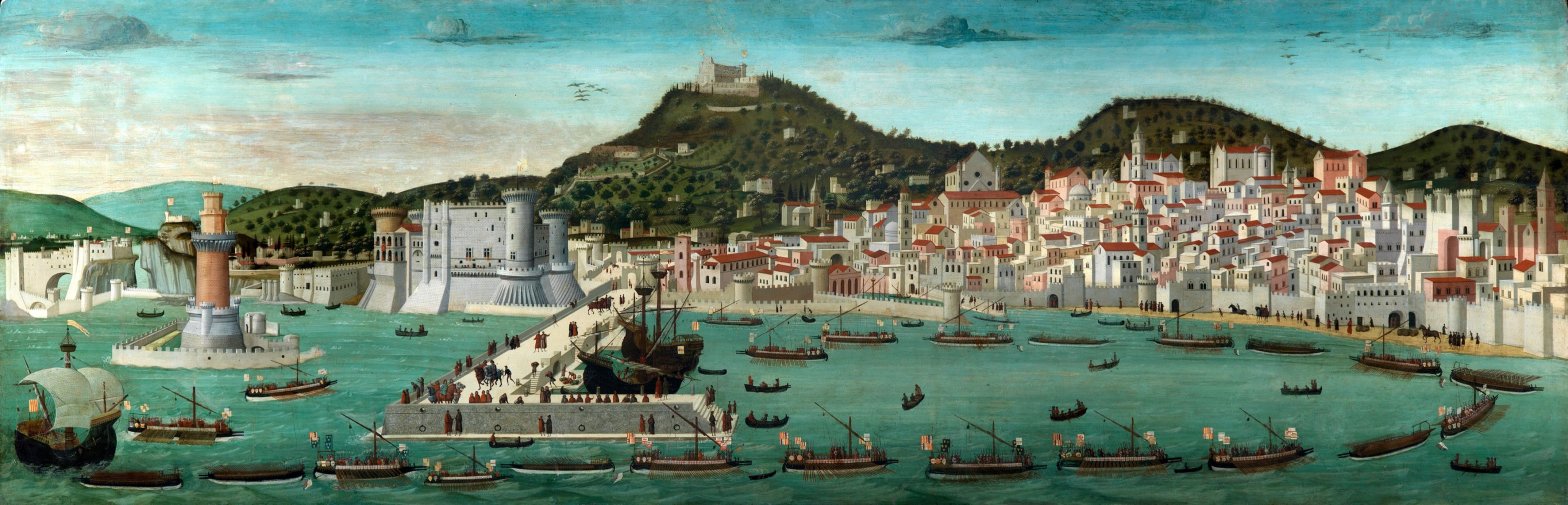
An ageing counsellor and a public monument
The exterior of the Pontano Chapel carries twelve sententiae concerned with government, public conduct and the formation of character. Before examining the tablets individually, this series will first consider the political circumstances in which they were created and then the Renaissance culture of epigraphy within which they were conceived.
The present essay approaches the chapel through Pontano’s work as administrator, diplomat and counsellor during the difficult final years of Ferrante’s reign.
By the time of the dedication of the chapel in 1492, Pontano had served the Aragonese dynasty for more than four decades, first as a humanist attached to the court and later as secretary, administrator, diplomat and counsellor. His authority rested upon long experience of government, diplomatic judgement, rhetorical skill and sustained access to the court. He could formulate policy, conduct negotiations and advise the royal family, but executive power remained with the king and the ruling elite.
The political tensions of 1491–92 brought that distinction into particular focus. Relations between Ferrante and Pope Innocent VIII had deteriorated, and renewed papal recourse to France threatened the security of the Aragonese throne. Pontano favoured reconciliation and criticised the king’s irresolution, warning that delay endangered the prospect of a favourable peace. He urged the Duke of Calabria and Federico d’Aragona towards concession and travelled to Rome to help conclude the agreement with the papacy in early 1492. These years have been described as a period of marked friction between Pontano and the ruler he nevertheless continued to serve.
The exterior inscriptions belong to this setting. They give permanent public form to principles of prudence, decision, trust and civic responsibility that Pontano had spent much of his career applying in government. They preserve the judgement of the counsellor independently of the policies eventually pursued by those who exercised executive power. The chapel could therefore serve not only as a memorial to public service, but as a statement of the standards by which Pontano wished that service to be understood.
The programme is not uniformly political. The four maxims facing the square of Santa Maria Maggiore concentrate particularly upon the state and the conduct of statesmen, while the eight inscriptions along Via dei Tribunali address broader questions of fortune, character and personal behaviour. Politics therefore forms part of a wider humanist ethic in which the government of the state and the government of the self remain closely connected.
The detailed language, sources and arrangement of the individual inscriptions will be considered later. Here the central point is that the chapel entered the civic life of Naples as a written monument, carrying Pontano’s understanding of conduct, counsel and government into public space.
Why a written monument?
In 1685, the Neapolitan antiquarian and guidebook writer Pompeo Sarnelli described the Pontano Chapel as “a little book with pages of marble, written inside and out, in verse and prose”. The phrase, taken from his Guida de’ forestieri, captures something essential about the building. Architecture provides its structure, but words occupy an unusually large part of its visible surface. The chapel asks to be encountered not only as a funerary monument, but as a text written across its exterior and interior surfaces.
Bianca de Divitiis has examined the inscriptions as statements about Pontano’s relationship to the building itself. Above the entrances, the dedicatory texts present him publicly as the chapel’s patron. Inside, the repeated formula Pontanus fecit on the pavement advances a more ambitious claim. De Divitiis interprets it as an authorial signature, informed by ancient literary and epigraphic models: Pontano presents himself not merely as the man who commissioned the chapel, but as its auctor, responsible for its conception and entitled to attach his name to the completed work. The inscriptions therefore preserve more than information. They establish the terms in which Pontano wished posterity to understand his part in the monument.
Maia Wellington Gahtan has approached the chapel from a different but complementary direction. She argues that its inscriptions perform many of the commemorative and exemplary functions more commonly entrusted to sepulchral painting and sculpture. Rather than presenting Pontano’s virtues principally through portraiture, allegory or narrative imagery, the chapel names the dead, records patronage, articulates grief and addresses the visitor through written language.
For Gahtan, however, these texts do more than preserve names and reputations. She relates the programme to the conversational culture of humanist academies and to Pontano’s own interest in discourse. The exterior maxims ask readers to recall other texts, supply interpretations and test general principles against their own experience. Reading therefore becomes a form of exchange between ancient authors and a Renaissance compiler, and between the monument and those who encounter it. The chapel commemorates the dead while continuing to provoke reflection among the living.
The altar fresco provides the chapel’s principal devotional image, while its wider commemorative and public programme is articulated through inscriptions. Dedications, epitaphs, moral maxims and claims of patronage and authorship identify the dead, define Pontano’s relationship to the building and invite the visitor to engage with the monument through reading.
De Divitiis and Gahtan therefore reveal two closely related dimensions of the written monument. Its inscriptions construct Pontano’s identity as patron and author, while also creating an active relationship with readers in public space. Sarnelli’s image of a marble book is more than a picturesque description: the chapel was organised as something whose pages could be encountered successively, interpreted and discussed.
These studies explain the prominence and operation of writing within the monument. They also prepare the political question pursued here. Pontano’s public authority depended in large part upon his command of language: he drafted, negotiated, advised, corresponded and persuaded. By transferring moral and political thought into durable inscriptions, the chapel preserved the medium through which much of that authority had been exercised, while directing it beyond the court and beyond his lifetime. The next question is therefore not simply why Pontano covered the building with writing, but what kind of public counsel he intended that writing to preserve.
Public counsel and the limits of office
Pontano’s political authority was grounded in long service rather than birth, military command or formal legal qualification. By the early 1490s he was deeply involved in the practical machinery of the Aragonese state. He directed chancery business, supervised official correspondence and documents, conducted embassies and took part in negotiations affecting the security of the dynasty. His work ranged from the daily administration of government to the interpretation of events across Italy.
The burdens of office were considerable. On 7 May 1490, Pontano attempted to relinquish responsibility for the chancery, complaining that its income no longer covered its expenses and that he was contributing from his own resources to support its personnel. He also criticised Ferrante’s financial priorities, accusing him of spending lavishly on matters that were “not so important, but false and showy”, while hesitating over comparatively modest expenditure in affairs of major political consequence. Pontano nevertheless offered to continue handling letters of state until a successor could be found. The episode shows a loyal servant frustrated by the material conditions and financial judgement under which government was conducted, rather than a humanist withdrawing from public affairs.
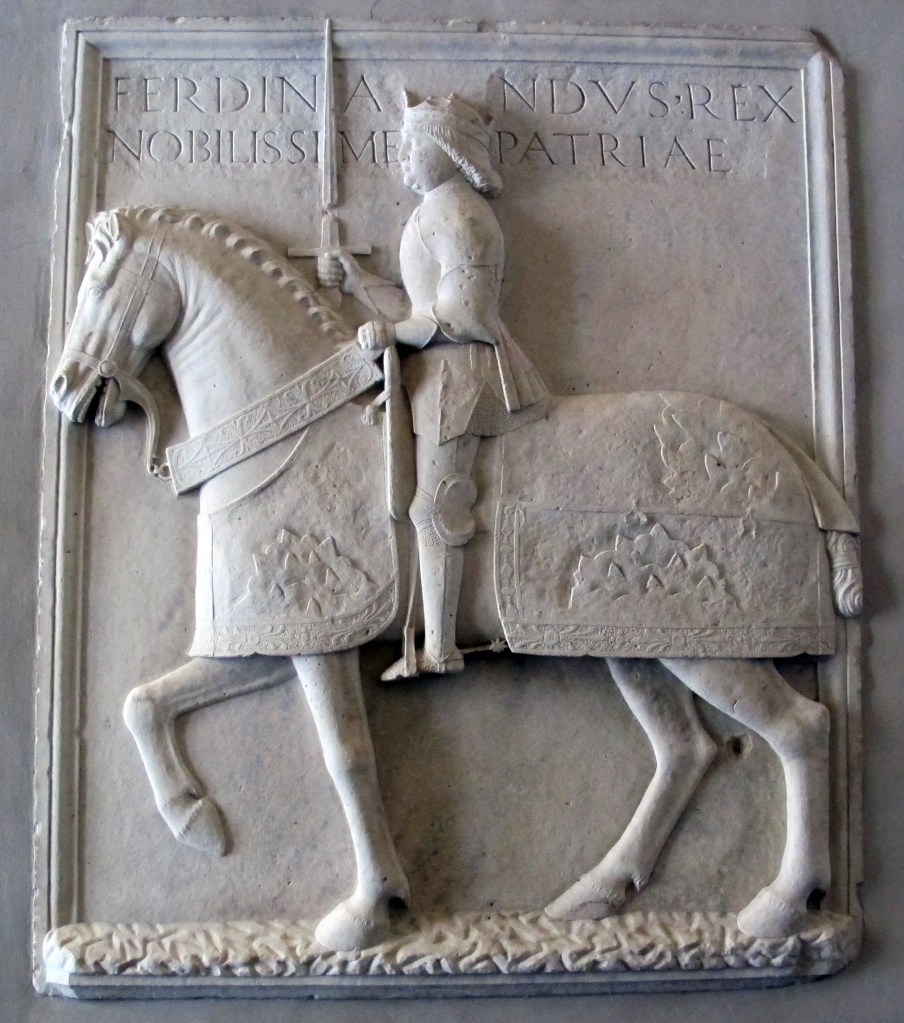
The wider circumstances were increasingly dangerous. Ferrante had emerged from two baronial revolts with his authority intact but with the kingdom marked by fear and resentment. In old age he had become more suspicious and hesitant. Relations with Pope Innocent VIII remained unstable, while papal recognition of the Aragonese succession was essential to the dynasty’s security. French intervention was no longer a remote possibility, and Ludovico il Moro’s ambitions in Milan threatened to draw Charles VIII into Italy. Naples depended upon a shifting network of relations with Rome, Florence, Venice, Milan and the Spanish monarchy, none of which could be taken for granted.
Pontano regarded reconciliation with the papacy as a principal defence against political isolation. During the negotiations of 1491–92, he urged Ferrante to act decisively, to accept limited concessions and to preserve the good faith upon which diplomacy depended. He also addressed Alfonso, Duke of Calabria, and Federico d’Aragona, asking the younger princes to recognise the larger advantages at stake. Carol Kidwell repeatedly draws attention to his concern at seeing substantial political gains endangered by reluctance to make comparatively small financial sacrifices. His letters return to procrastination, excessive caution and dependence upon Fortune where preparation and judgement were required.
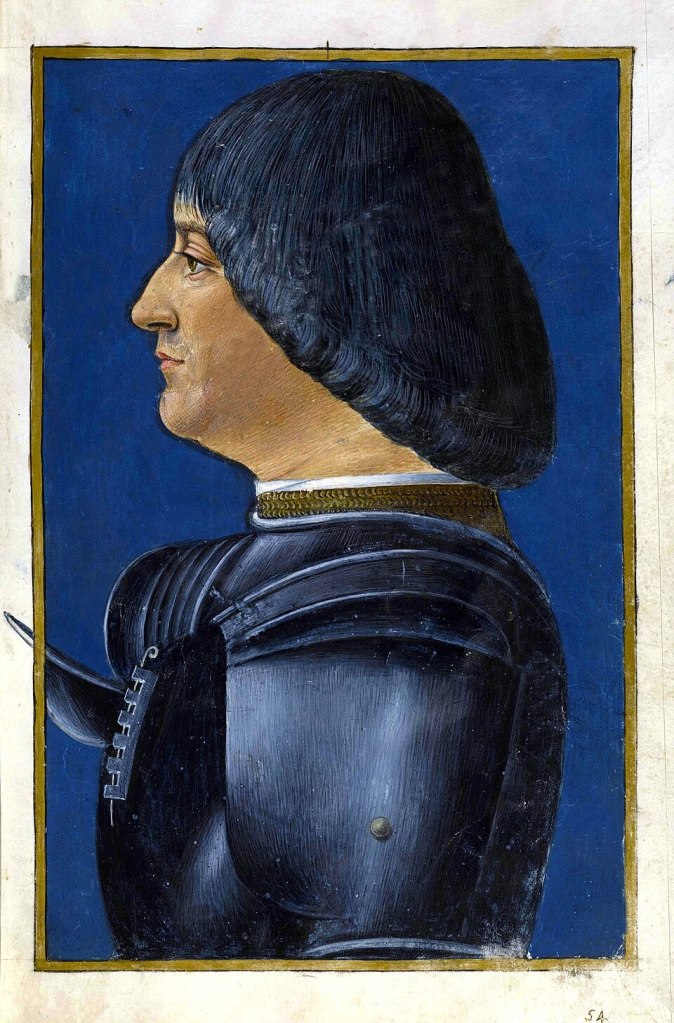
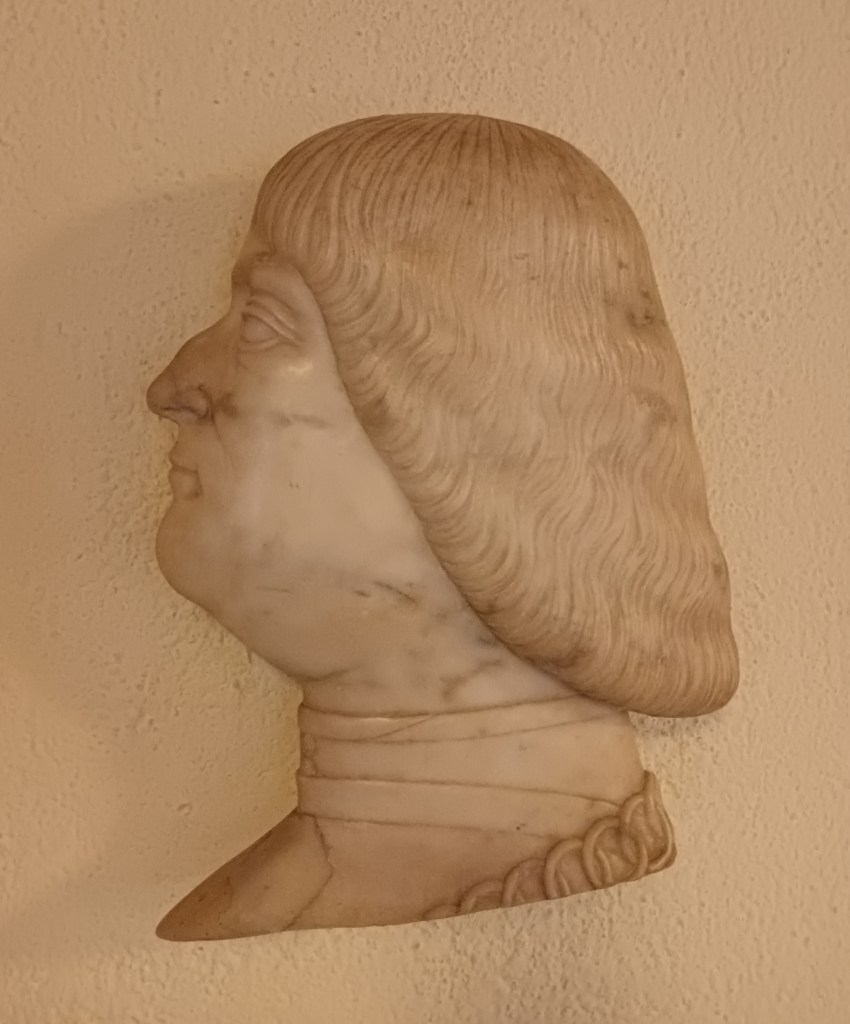
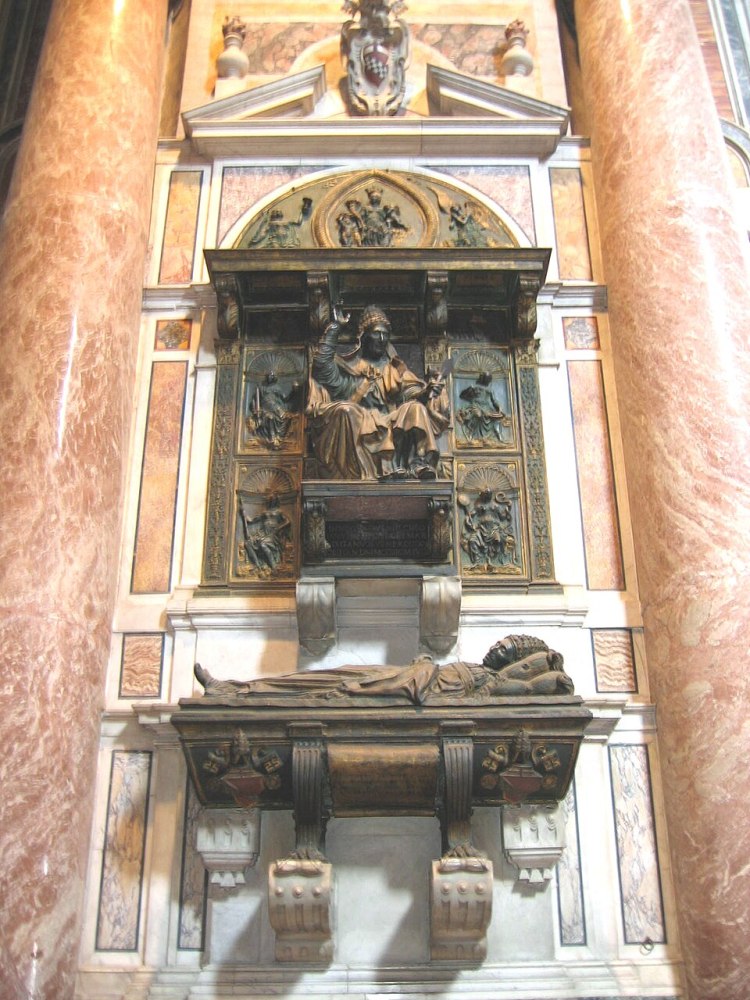
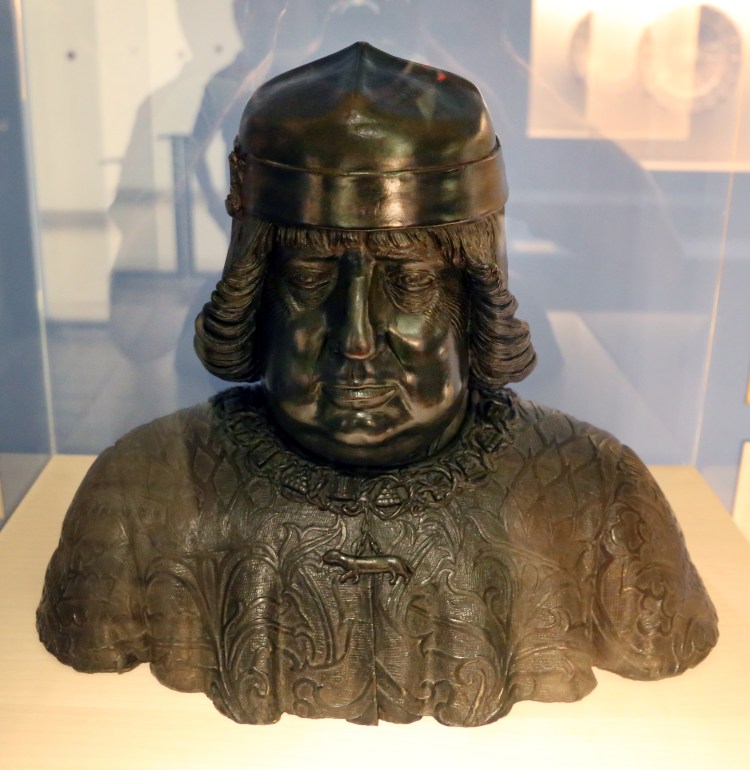
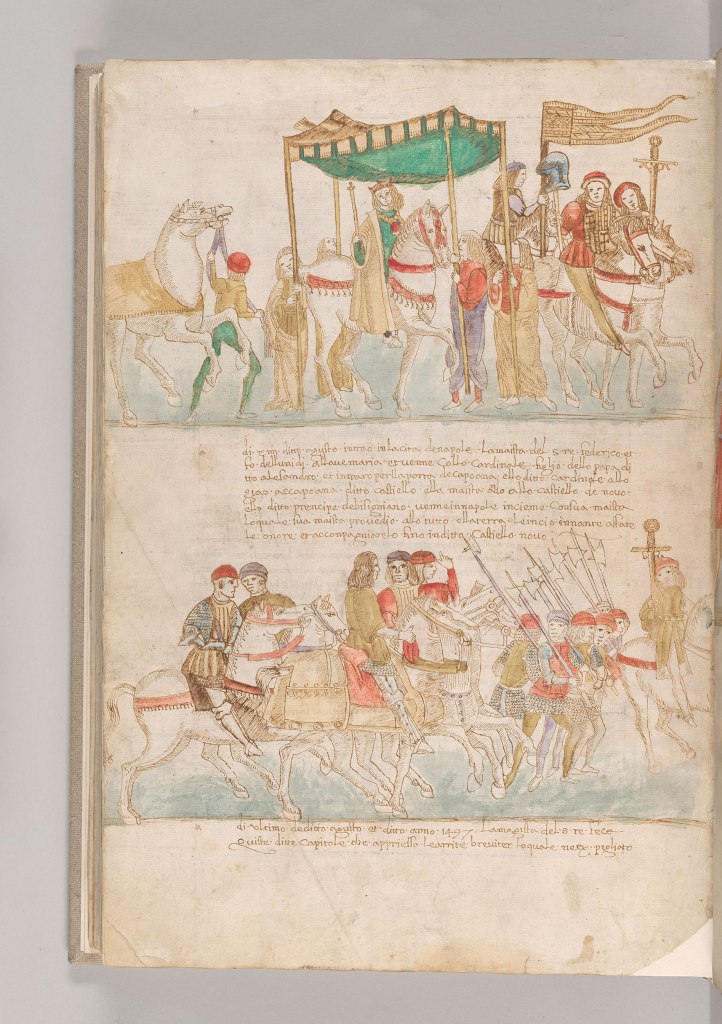
Pontano’s letters are notable for the force with which he addressed members of the royal family. His frankness towards Ferrante rested upon decades of service and a confidence that his diplomatic judgement had repeatedly proved its value. His relationship with Alfonso had an additional dimension: Pontano had served as the prince’s tutor before becoming his secretary and counsellor. Political advice could therefore retain something of the authority of instruction. Whether addressing the ageing king or the generation expected to succeed him, Pontano wrote as a servant who believed that loyalty required candour rather than acquiescence.
His frustration became acute when agreements negotiated in his name were reconsidered or imperfectly observed. Diplomatic authority depended upon personal credit. A counsellor who could not rely upon his ruler to honour commitments risked losing the confidence of princes, cardinals and ambassadors elsewhere in Italy. Pontano therefore treated reputation not merely as a private possession, but as an instrument of statecraft. His writing, integrity and good faith enabled him to negotiate effectively on behalf of the kingdom.
Pontano’s authority was also challenged in a dispute with doctors of law connected with the Studio, the University of Naples re-established by Ferrante in 1465. The institution trained lawyers for service in the kingdom, and several of its leading figures also held senior judicial and administrative offices. Their complaint that they had not been sufficiently consulted during the papal negotiations therefore asserted the claims of formal legal expertise within government. They also questioned Pontano’s legal competence. He replied that, although he was not a doctor of law, decades spent examining books, documents and affairs had given him an expertise that formal qualification alone could not supply. With characteristic asperity, he described himself as an old man who had worn out his teeth over documents and books. He did not dismiss law or trained jurists, naming Colantonio di Capua and Antonio d’Alessandro with respect. His objection was to the suggestion that jurisprudence possessed an exclusive claim over political understanding.
Pontano’s authority rested upon a wider combination of experience, historical knowledge, rhetorical command and moral judgement. His letters show him weighing alliances, anticipating military movements, assessing the motives of rulers and recommending practical remedies. He repeatedly urged action over delay, good faith over opportunism and prudent preparation over reliance upon favourable circumstances. Speaking well to ambassadors was good, he observed on one occasion, and writing was better, but deeds were what counted. His humanism was therefore directed towards action rather than literary accomplishment alone.
Probity formed part of the same conception of counsel. Pontano described himself as a faithful and uncorrupted servant and contrasted his conduct with officials who had enriched themselves while impoverishing the king. He could complain bitterly about inadequate reward, but he also insisted that his reputation did not depend entirely upon royal favour. It had been earned through service and recognised beyond the kingdom. This allowed him to defend the independence of his judgement while continuing to affirm his loyalty to the dynasty.
The chapel was dedicated while these tensions were especially acute. Its commemorative purpose looked towards death, family loss and posterity, but Pontano’s public identity could not be separated from the work of counsel. The political voice associated with the monument is therefore not simply valedictory. It is concise, firm and directed towards future conduct. The chapel preserved the memory of a man approaching the end of life, while also giving durable form to the authority, judgement and probity through which he had sought to serve the state.
Producing these essays requires care, time, research, and resources. Contributions to help sustain this exploration would be greatly appreciated.
Donate to Inner Surfaces here.
Bibliography
I have consulted the following texts. Any errors are mine.
Alberti, Leon Battista, On the Art of Building in Ten Books, trans. Joseph Rykwert, Neil Leach and Robert Tavernor, Cambridge, Massachusetts, 1988.
Bentley, Jerry H., Politics and Culture in Renaissance Naples, Princeton, New Jersey, 1987.
Brooke, John, Giovanni Pontano (1429–1503) and Social Mores, Memorial and Material Culture in Renaissance Naples, c. 1450–1490, unpublished PhD thesis, Department of History of Art and Screen Media, Birkbeck College, University of London, 2010.
de Divitiis, Bianca, ‘PONTANVS FECIT: Inscriptions and Artistic Authorship in the Pontano Chapel’, California Italian Studies, 3.1, 2012, pp. 1–36.
Figliuolo, Bruno, ‘Pontano, Giovanni’, Dizionario Biografico degli Italiani, 84, Rome, 2015.
Filangieri di Candida, Riccardo, ‘Il tempietto del Pontano in Napoli’, in In onore di Giovanni Gioviano Pontano nel quinto centenario della sua nascita, Naples, 1926, pp. 15–49.
Kidwell, Carol, Pontano: Poet and Prime Minister, London, 1991.
Monti Sabia, Liliana, Un profilo moderno e due Vitae antiche di Giovanni Pontano, Quaderni dell’Accademia Pontaniana, 25, Naples, 1998.
Percopo, Erasmo, ‘La vita di Giovanni Pontano’, Archivio storico per le province napoletane, n.s., 22, 1936, pp. 116–250.
Sarnelli, Pompeo, Guida de’ forestieri, curiosi di vedere e d’intendere le cose più notabili della regal città di Napoli e del suo amenissimo distretto, Naples, Giuseppe Roselli, 1685.
Senatore, Francesco, ‘La cancelleria del regno aragonese di Napoli attraverso i registri del grande sigillo di Antonello Petrucci’, Studi di storia medioevale e di diplomatica, 9, 2025, pp. 247–291.
Wellington Gahtan, Maia, ‘Reading Pontano’s “libretto co’ fogli di marmo”’, Opus Incertum, 8.1, 2022, pp. 48–59.

