Florence, the Macchiaioli and the problem of belonging
Silvestro Lega belongs securely to the history of the Macchiaioli, but not quite comfortably to any shorthand definition of them. That is partly because the Macchiaioli themselves were never a school in the strict sense. They were a loose and sometimes fractious constellation of painters, critics and friends who gathered in Florence during the 1850s, most famously at the Caffè Michelangiolo, and who shared an impatience with the conventions of academic painting. Their name, initially derisive, came from the macchia, the patch or stain of colour through which forms could be apprehended as relationships of light and dark rather than laboriously assembled from descriptive detail. Yet even this apparently technical term can mislead. The macchia was less a recipe than a way of insisting upon the coherence of the first visual impression, upon the picture conceived as a totality.
The movement emerged at a charged historical moment. The Italy into which Lega had been born in 1826 was not a unified state but a collection of kingdoms, duchies and territories, several subject directly or indirectly to Austrian power. The revolutions of 1848, the wars of independence that followed and the creation of the Kingdom of Italy in 1861 transformed the political world in which his generation came of age. Unification itself did not settle every question. Giuseppe Mazzini and his followers had envisaged a democratic republic; the state that actually emerged was a constitutional monarchy under the House of Savoy. For artists who had identified national independence with republican or democratic aspirations, achievement could therefore coexist with disappointment.
Lega was not politically detached from these events. A committed admirer of Mazzini, he wrote anti-Austrian proclamations and volunteered in the fighting of 1848. Nor was he unusual among the Macchiaioli in having been drawn personally into the Risorgimento. Several members of the group participated directly in the struggles for independence, while political questions were integral to the milieu in which they formed. Artistic and political rebellion could seem contiguous, although it would be misleading to make one the simple expression of the other. The macchia was not a republican code, and a sunlit Tuscan field did not become political merely by being painted from life. Rather, inherited authority was being questioned simultaneously in several spheres. Contemporary soldiers, ordinary labour, domestic life and the landscape immediately before the artist could now claim a seriousness previously reserved for history, mythology and religion.
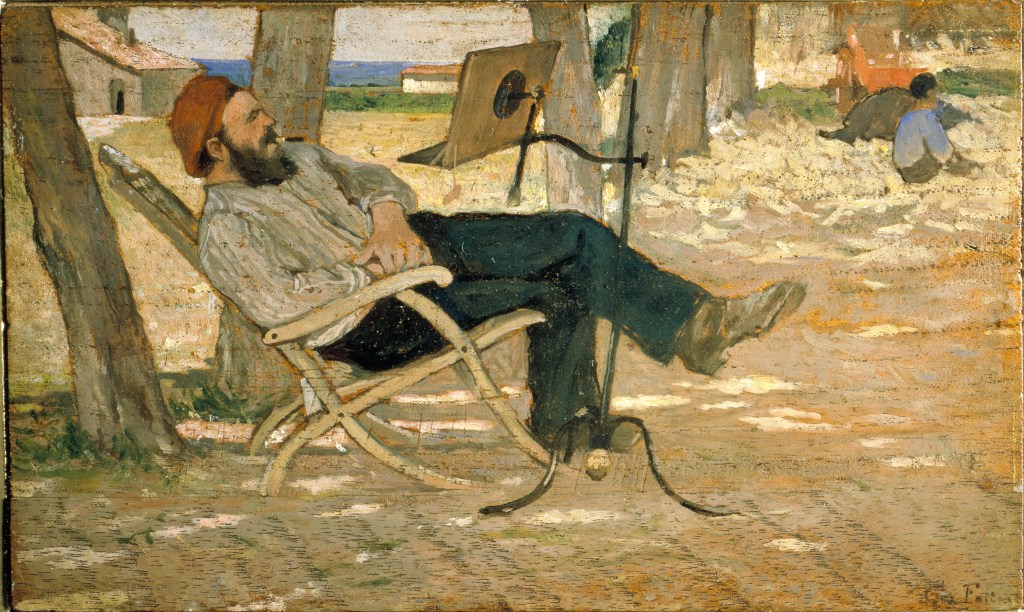
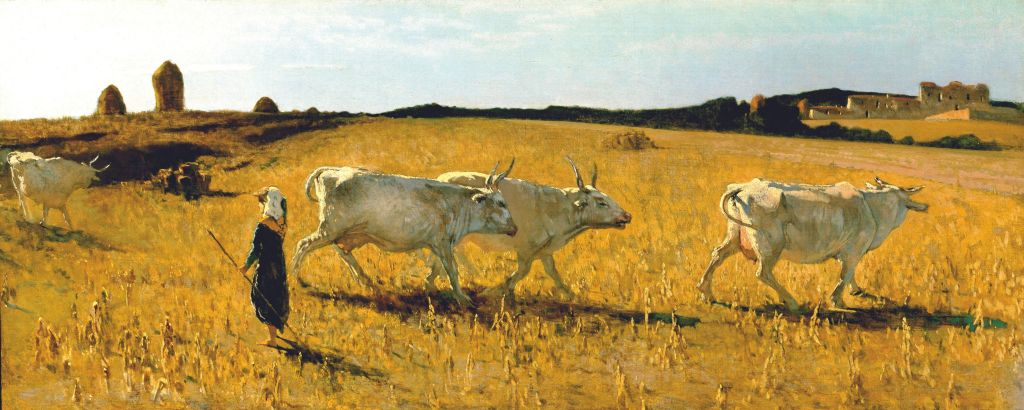
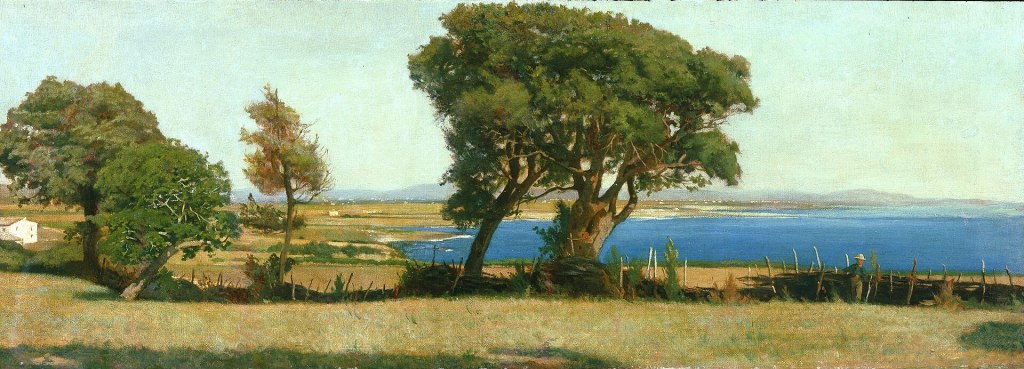
There was, moreover, no single Macchiaiolo landscape. One of the movement’s best-known centres was Castiglioncello, a small settlement on the Tuscan coast south of Livorno, where the critic and patron Diego Martelli inherited an estate in 1861. Fattori, Signorini, Giuseppe Abbati, Raffaello Sernesi and others worked there amid a coastal landscape of pinewoods, cliffs, open country and sea. Friendship, hospitality and artistic experiment became inseparable. Lega, however, was never identified with the Castiglioncello group as closely as several of his companions. His characteristic territory during the 1860s lay elsewhere.
That territory was Piagentina, then a semi-rural district immediately beyond the eastern edge of Florence, outside Porta alla Croce and between the Arno and the Affrico. It was neither urban Florence nor an Arcadian retreat. Villas, gardens, cultivated plots, lanes and fields occupied a porous borderland in which the city remained close at hand. Other Macchiaioli worked there, but for Lega it became something more enduring: a lived environment bound to the Batelli, Cecchini and Sacchetti families, to friendship and affection, and eventually to some of his most sustained painting. Later, another stretch of the Arno at Bellariva would provide a different domestic and artistic community through the Tommasi family. Still later came Gabbro, inland from Livorno in the Tuscan hills, where the Bandini household and the surrounding countryside furnished him with a markedly different repertory of people and places.
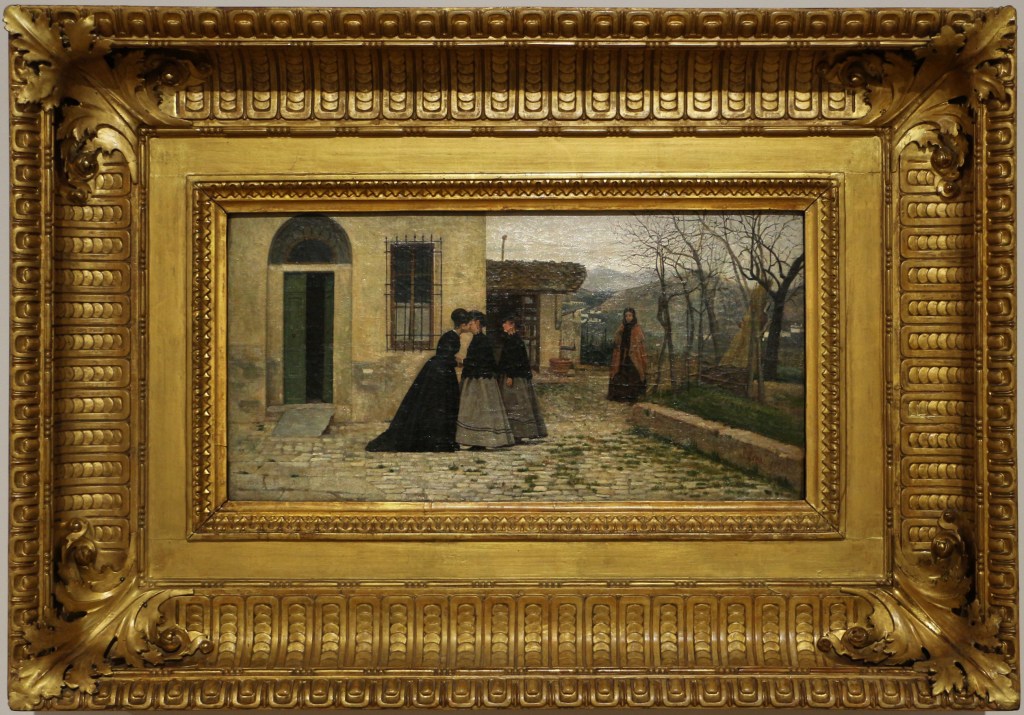
Seen in this way, geography is not incidental to Lega’s career. The places in which he worked repeatedly altered the terms on which observation, social life and painting met. Yet he also brought something persistent to each of them. His formation had been more academic than that of several of his future companions. Under Luigi Mussini he absorbed the Purist admiration for the Trecento and Quattrocento and an exacting discipline of drawing; under Antonio Ciseri he encountered another highly controlled pictorial tradition. Purism itself did not necessarily oppose direct observation. Mussini urged an indefatigable study of the vero, the visible truth before the artist, while looking to the early Italian masters for intellectual and formal discipline.
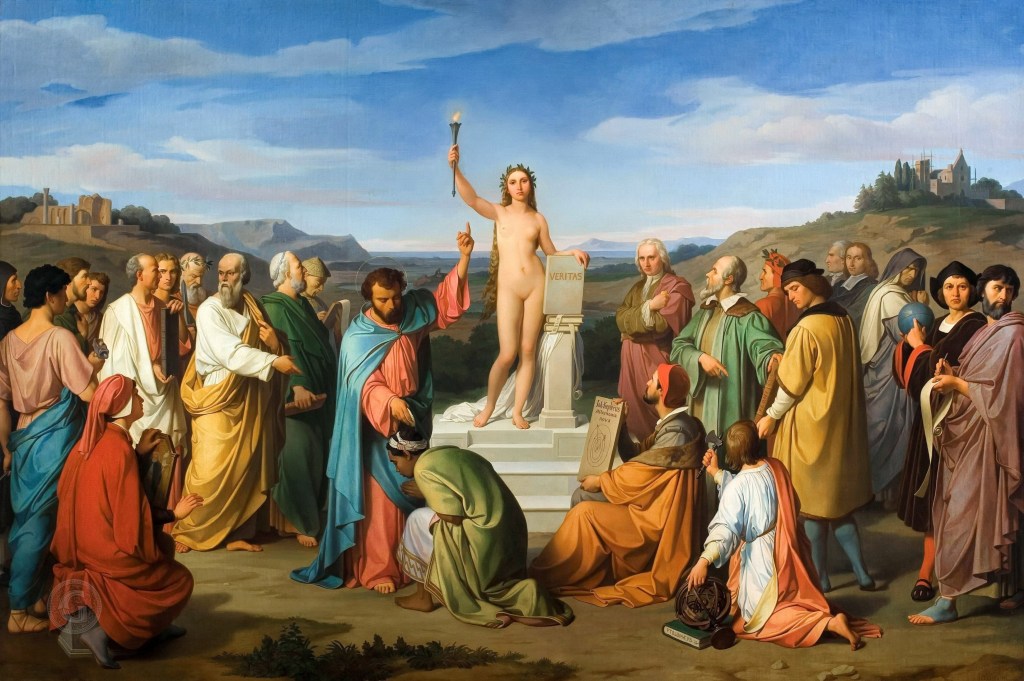
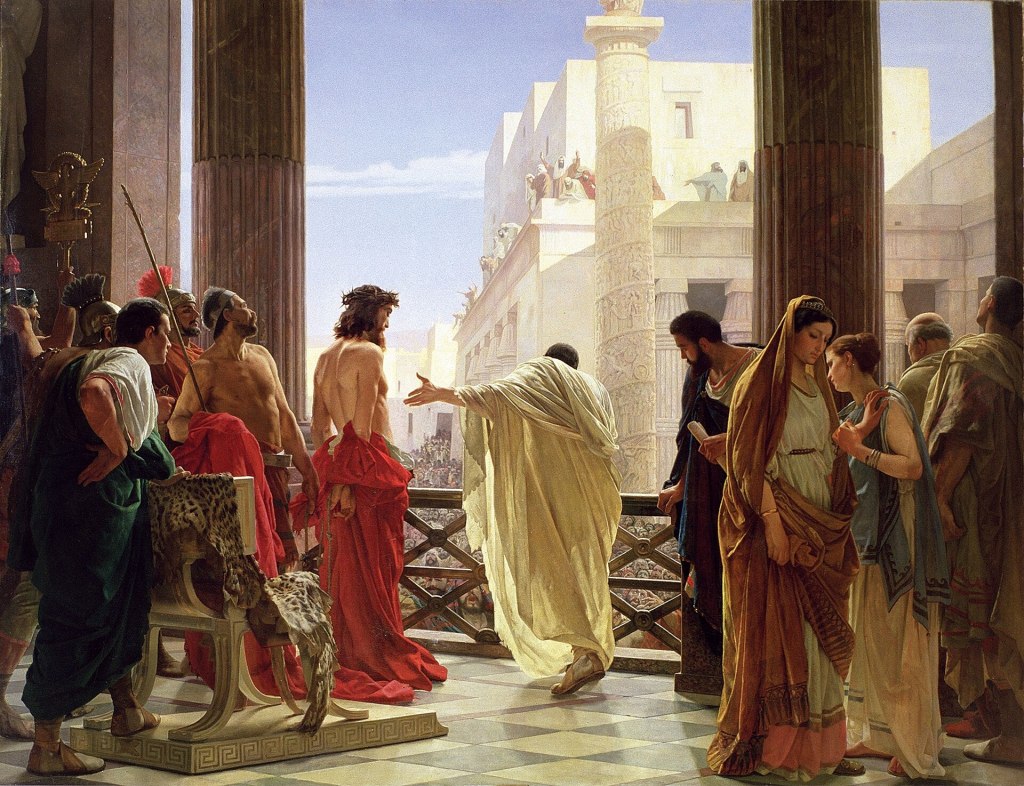
Lega’s eventual allegiance to the Macchiaioli was therefore not a clean repudiation of everything he had learnt. That older schooling remained latent within his mature work, sometimes conspicuously so. The interest of his development lies less in watching discipline give way to spontaneity than in following the changing accommodation between the two. Piagentina, Bellariva and Gabbro would each test that accommodation differently. Before reaching them, however, Lega had first to discover how to paint, as he later put it, da me: for himself.
From Modigliana to Piagentina: learning to work da sé
If Lega later remembered his training with gratitude, he also remembered the difficulty of escaping from it. Luigi Mussini had awakened in him, as he put it, “the true passion for art”, and the young painter progressed rapidly in drawing. Yet by the 1850s he had become increasingly conscious of inhabiting artistic systems that no longer seemed sufficient. Mussini and his associate Adolf von Stürler appeared to him as devotees of Albrecht Dürer; under Antonio Ciseri he found himself in what he called another “labyrinth”, this time dominated by the example of Giuseppe Bezzuoli. The problem was not want of instruction but an excess of inherited directions. At one point Lega described himself as imbrogliatissimo: thoroughly entangled.
His response was gradual rather than iconoclastic. Returning to his native Modigliana, in Romagna, he began, in his own memorable phrase, “to forget Ciseri and to work for myself”: cominciai a scordarmi del Ciseri e a fare da me. Giuseppe Mesirca rightly treats this independence as something more complicated than the abandonment of academic discipline. The clear draughtsmanlike structure acquired through Ciseri remained, as did a propensity for measured composition and controlled colour. What altered was the authority under which these means were employed. Lega was trying to work, as he subsequently expressed it, come l’animo mio sentiva, as his own spirit felt.
Portraiture helped him towards that independence. The living sitter demanded an encounter with something less tractable than an inherited composition, and Lega’s early portraits already reveal how restraint could become psychologically expressive. A mouth, an attentive gaze, a slight disturbance in an otherwise ordered surface might carry more weight than overt gesture. This capacity to make feeling emerge through formal reticence would survive every subsequent transformation of his manner.
Landscape brought a more abrupt revelation. Lega recalled that in 1859, having scarcely painted landscape before, he went into the countryside with other artists to make studies from nature. The experience seemed to transport him “into a new life in art”. The wording is worth attending to. He does not describe nature as something passively copied; an external encounter produces an impressione within him. Observation and inward response are already intertwined.
The immediate context was itself changing. Giovanni Costa, newly arrived in Florence from Rome and conversant with developments in French landscape painting, encouraged artists to study directly from the vero. For Lega, however, this new attentiveness to landscape coincided with another form of engagement with contemporary reality. The wars of independence supplied subjects that belonged neither to the academy nor to retrospective history painting. In works such as Bersaglieri che conducono prigionieri austriaci, contemporary soldiers occupy an observed world without being inflated into theatrical heroes. The restraint is characteristic: the modernity of the picture lies as much in its refusal of patriotic bombast as in its subject.
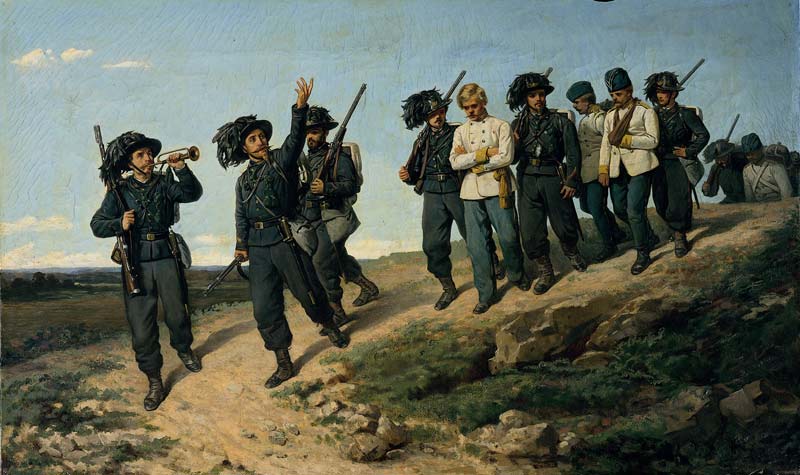
Looking back, Lega regarded these military paintings of 1859–61 as the point at which his emancipation became complete. “In these pictures,” he wrote, “I believe I began to show my complete separation from the different schools in which I had been trained. There I was myself”: Lì ero io. It is a remarkably succinct definition of artistic independence. He had not ceased to be the draughtsman formed by Mussini and Ciseri; rather, the discipline they had given him was becoming available for purposes of his own.
That distinction is essential before turning to Piagentina. Lega did not arrive there by exchanging order for spontaneity, or academic convention for an unmediated transcription of nature. He arrived with a highly trained eye, a newly discovered responsiveness to landscape and a growing conviction that the vero had to be encountered personally. The question now was what kind of painting those apparently disparate inheritances might make together.
Piagentina: a landscape made habitable
Piagentina gave Lega something more than a convenient place to paint. The district lay just beyond Florence’s eastern edge, outside Porta alla Croce and between the Arno and the Affrico: close enough to the city for its towers and cupolas still to register in the landscape, yet sufficiently open for villas, gardens, fields and cultivated plots to form a semi-rural world of their own. Telemaco Signorini later remembered the roads dividing beyond the last houses, one leading towards the Arno beneath plane trees, another crossing fields towards the Affrico. Near the little bridge stood the villa of Spirito Batelli, where Lega became closely attached to the family and where much of his art in the 1860s found its natural habitat.
The distinction from Castiglioncello is instructive. There, the Macchiaioli encountered the more expansive coastal landscape associated with Diego Martelli and his circle. Piagentina offered something less spectacular and, for Lega, perhaps more congenial: a cultivated margin where landscape, architecture and domestic existence continually overlapped. Francesca Dini has stressed the unusual coherence of the works produced there. The surrounding countryside was not scenery appended to human activity. Gardens, interiors, villas, women working or reading, paths and fields belonged to a single lived environment, increasingly assimilated into the painter’s emotional life.
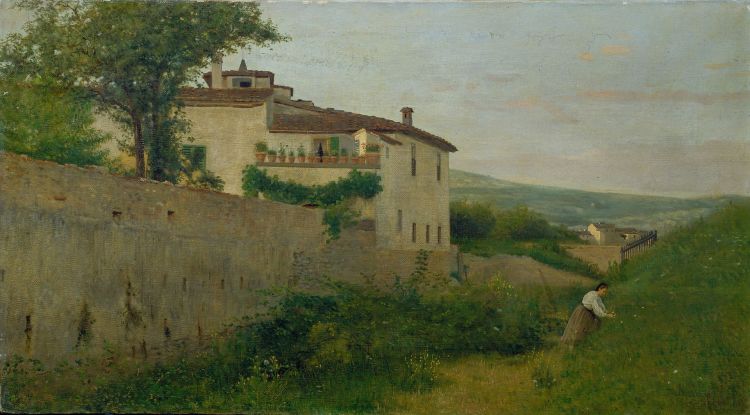
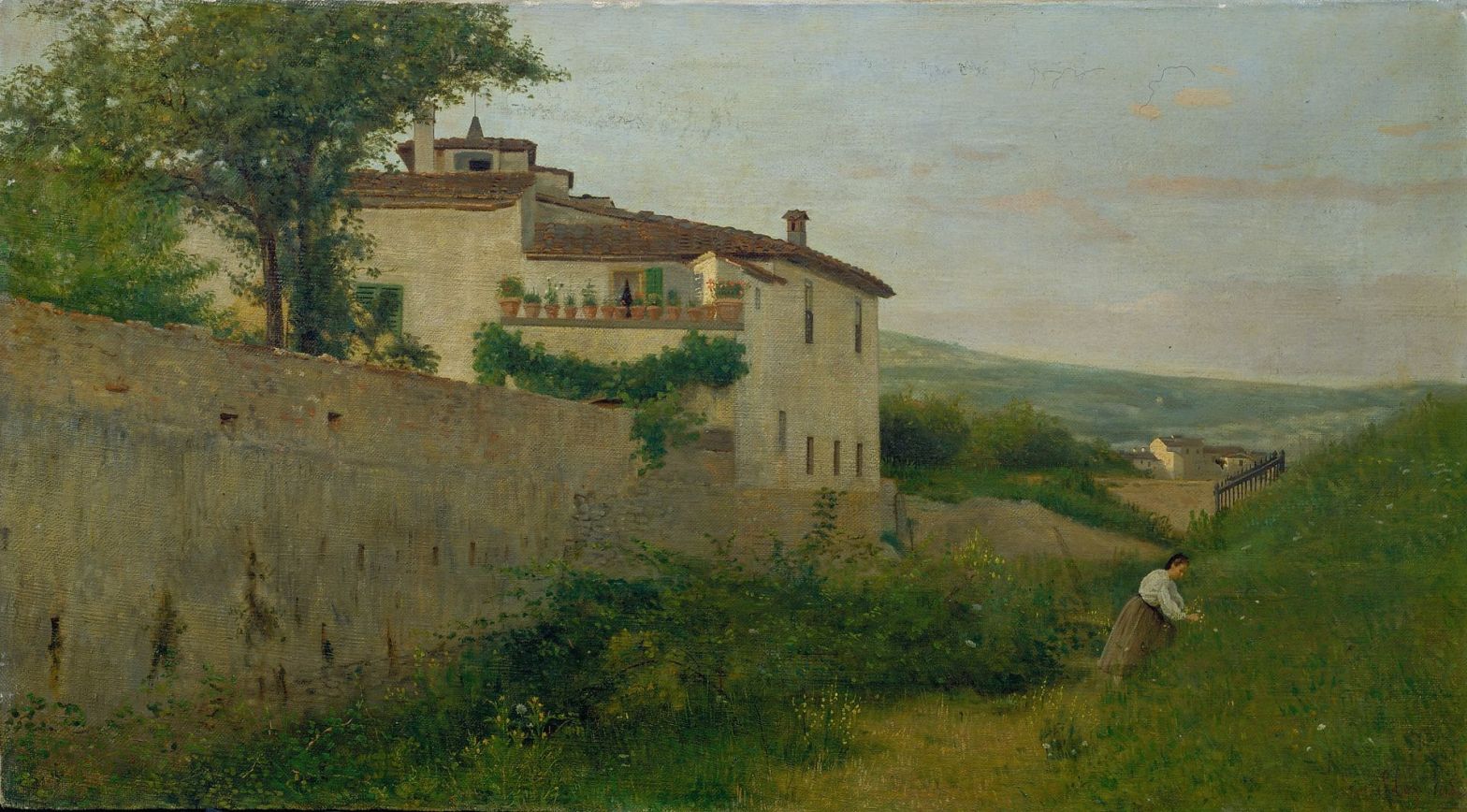
Il villino Batelli a Piagentina of 1863 makes an apt point of entry. The composition is remarkably unostentatious. A long white villa and its enclosed garden occupy one part of the picture; countryside opens beyond, while vegetation presses into the foreground and a small figure gathers flowers nearby. Florence remains perceptible in the distance. Yet the apparent simplicity is the result of careful organisation. Large areas of architecture, foliage, sky and open ground are made to balance and qualify one another, while the tree canopy partly interrupts the villa and prevents its geometry from becoming inert. The handling is arguably subtler and more vibrant than in Le lavandaie presso Firenze of the previous year, but nothing has dissolved. Observation is being made to coexist with a strong sense of pictorial totality.
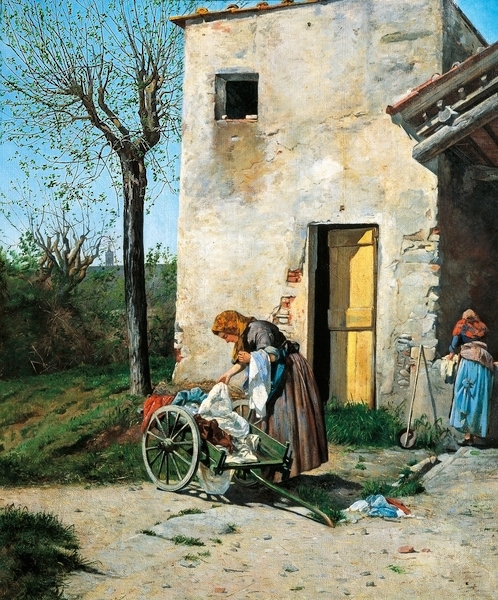
That equilibrium helps explain why Lega should never be understood as having exchanged his earlier discipline for the macchia. Telemaco Signorini later characterised his aim as a sincere interpretation of the vero joined to a renewed engagement with the Quattrocento and the feeling of modern life. Mario Tinti would call the result a realismo spiritualizzato, a spiritualised realism. The phrase risks sounding more nebulous than the pictures themselves, yet it identifies something genuine. In Lega’s hands, everyday reality is neither embellished into anecdote nor reduced to neutral description. Formal order gives ordinary experience a peculiar gravity.
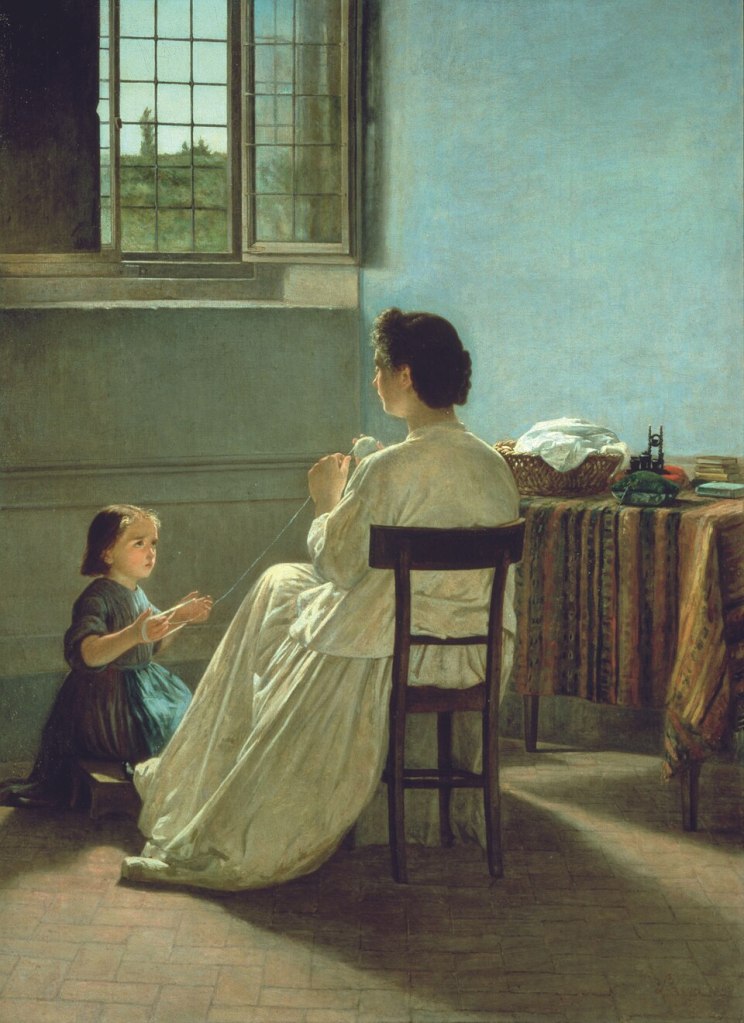
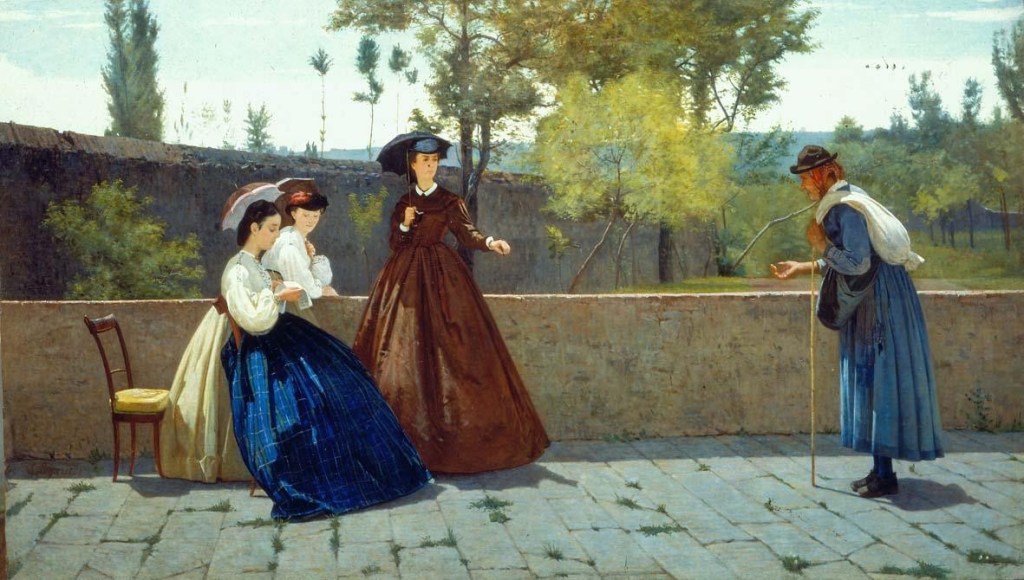
This is evident in works such as L’educazione al lavoro and L’elemosina. Their subjects are modest and contemporary, but the figures possess a measured stillness which can recall early Renaissance painting without lapsing into imitation. Carlo Sisi has gone further, reading the domestic paintings of Piagentina as expressions of the values of the educated liberal bourgeoisie that had emerged from the Risorgimento: family, work, continuity, instruction and confidence in a comprehensible social order. L’educazione al lavoro, with its quiet transmission of practical knowledge between generations, lends itself very well to such a reading.
There is a danger, however, in making Piagentina too coherent. The ordered life these paintings represent was not without tension, and Lega’s restraint can accommodate unease as readily as serenity. Passa il Viatico, painted towards the end of the decade, is exemplary in this regard. Three figures kneel at the threshold of a poor building as the sacramental procession passes somewhere beyond our view. The event itself is withheld. Giuseppe Mesirca was alert to the severity of the setting and to the subdued orchestration of greys, violets, greens and browns. Nothing theatrical occurs, yet mortality has entered the picture. The scene depends upon implication, upon the pressure exerted by what remains unseen.
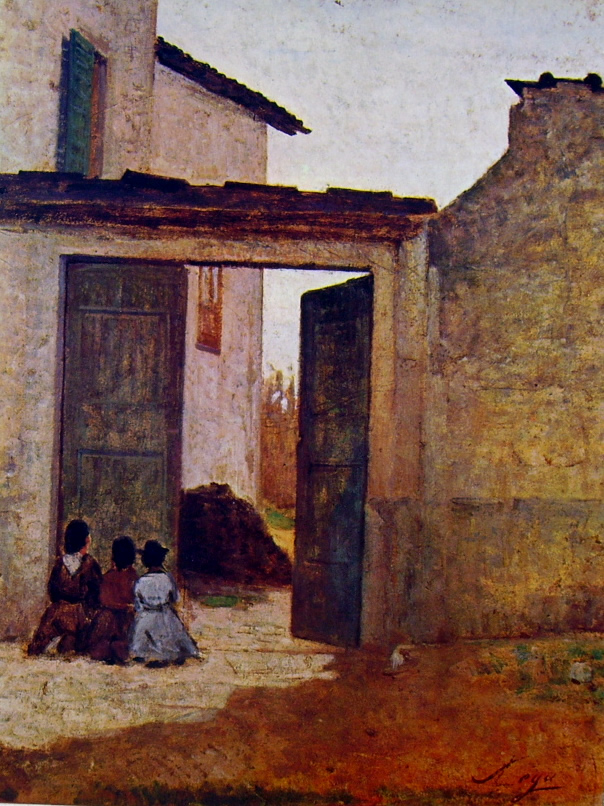
Even at its most tranquil, then, Piagentina is not quite an idyll sealed against history or anxiety. Laura Lombardi has interpreted the Batelli villa itself as the embodiment of a world of affections and ideas already vulnerable to change. Florence was expanding; the countryside beyond its walls would not remain untouched; the political hopes of the Risorgimento had settled into a more ambiguous national reality. None of this requires us to convert Lega’s paintings into political allegories. It does, however, prevent their stillness from becoming timeless.
What Piagentina offered was a temporary consonance between place, social life and artistic language. Lega could paint directly from the visible world without surrendering the habits of order acquired in his youth; he could invest ordinary motifs with feeling without forcing them into narrative rhetoric. Diego Martelli’s phrase sentimento della cosa, the feeling of the thing, is useful here. A wall, a patch of cultivated ground, a seated woman or the fall of evening light acquires significance through the attention brought to it.
By the end of the decade that consonance was becoming harder to sustain. Deaths within the Batelli household, culminating in that of Virginia Batelli in 1870, altered the emotional fabric of Lega’s life, while the collective Macchiaiolo moment itself was beginning to loosen. Yet it would be misleading to treat what followed as the simple collapse of a golden age. Piagentina had already shown that immediacy and structure, observation and feeling, could be combined in more than one way. The 1870s would test how far those combinations could be remade.
After Piagentina: several ways forward
The end of the Piagentina years did not leave Lega with another coherent manner ready to take their place. During the 1870s his painting becomes more various, as the close correspondence between place, domestic life and pictorial language begins to loosen. Landscape, portraiture, contemporary history and scenes of everyday life now develop along somewhat different lines. It is this plurality, rather than the emergence of a single new style, that gives the decade its character.
The changing artistic climate formed part of the process. Telemaco Signorini, writing anonymously in L’Italia artistica, criticised Il canto di uno stornello for what he considered too timid an approach to the vero, praising instead a fattura spezzata, a more broken and fragmented execution. Lega did not simply follow the path Signorini advocated, but the criticism shows that the severe clarity of the Piagentina manner was itself being questioned.
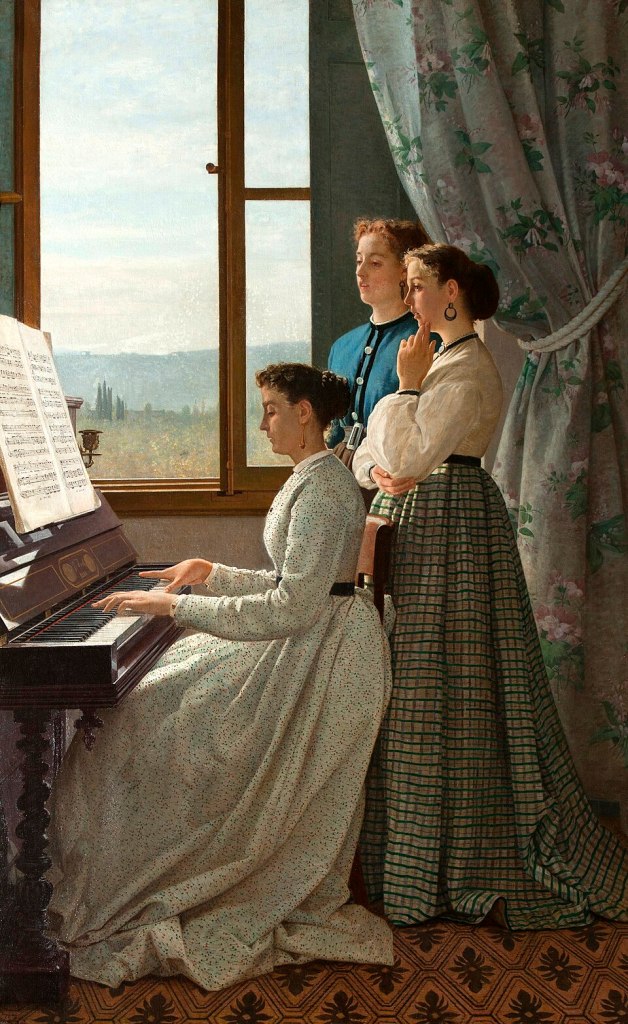
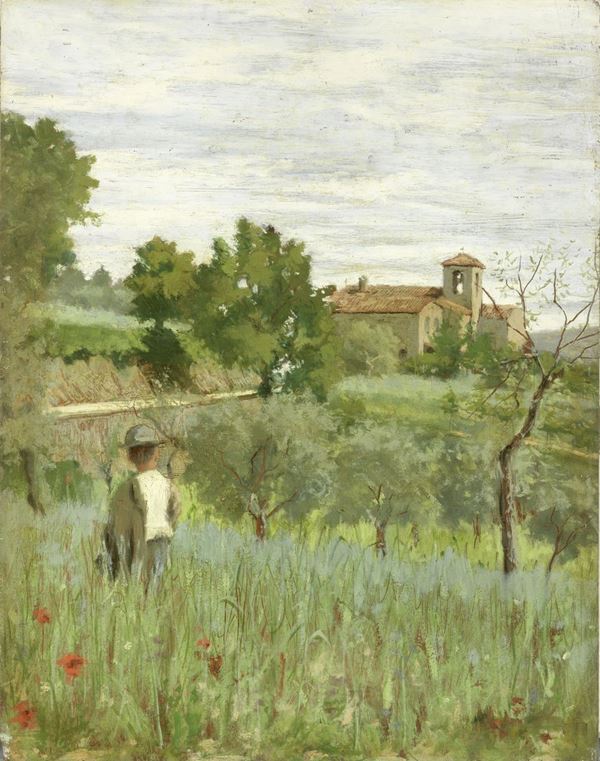
In landscape, the response can be seen in a group of works that Francesca Dini associates with a more direct and materially emphatic kind of painting. In Paesaggio romagnolo, Case a San Gervasio and Campagna con contadino fra il grano, the broad horizontal organisation familiar from Piagentina increasingly gives way to vertical formats. The paint grows denser and the colour warmer; Dini describes the new chromatic register as “Giorgionesque”, in contrast to the more diaphanous colour of the previous decade. What changes, then, is not simply the degree of finish. The format itself becomes less expansive and equable, while colour and impasto assume a more conspicuous part in the construction of the image.
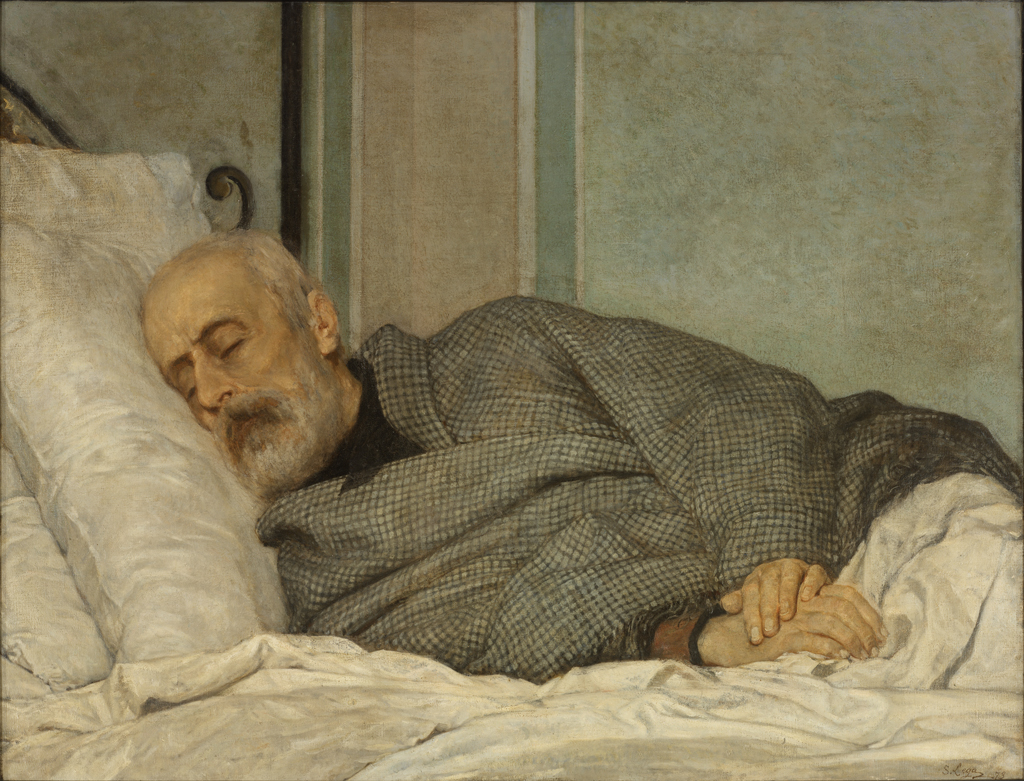
Elsewhere, however, Lega was pursuing a very different kind of concentration. His response to the death of Giuseppe Mazzini in March 1872 produced one of the most singular paintings of his career. Having gone to Pisa, Lega developed Gli ultimi momenti di Giuseppe Mazzini through drawings and studies before completing the painting in 1873. The subject could readily have encouraged patriotic rhetoric. Instead, Mazzini lies in a sparsely described room, represented as still living and stripped of the conventional apparatus of heroic commemoration. The great republican remains recognisably a man at the end of his life. Contemporary critics noticed this refusal of apotheosis, and Diego Martelli regarded the painting as one of Lega’s outstanding achievements. Here, the political convictions of his youth re-enter his art, but through close engagement with a contemporary event rather than through the conventions of history painting.
Nor did the domestic repertory disappear with Piagentina. Carlo Sisi sees Le bambine che fanno le signore and La visita alla balia as belonging to a more analytical phase of Lega’s realism. The familiar bourgeois milieu survives, but its former poise is less complete, and greater attention falls upon individual behaviour and psychological distinction. These paintings bring Lega into contact with the developing Naturalist culture of the period without turning him into a programmatic Naturalist painter. His own description of Le bambine che fanno le signore as “a little low in tonality” is characteristically practical: even while the character of his subjects was changing, he continued to think of the picture as an organised chromatic whole.
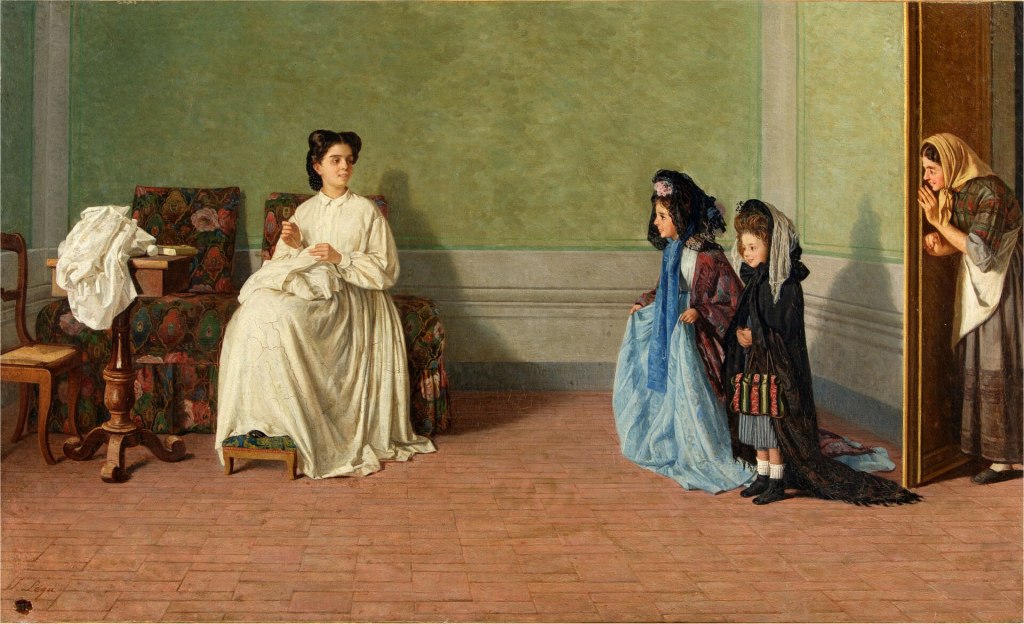
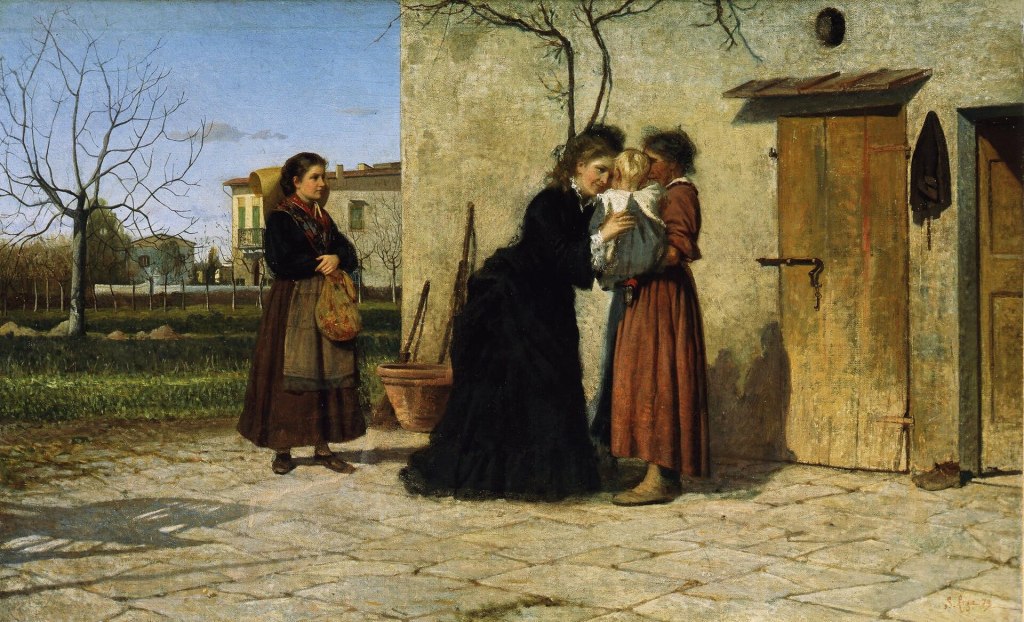
The decade was difficult personally and uneven in productivity, but it was not a withdrawal from contemporary artistic life. In 1875 Lega and Odoardo Borrani opened a short-lived gallery in Piazza Santa Trinita. Writing that year, Lega referred to the “progress of modern art”, a phrase that places his own concerns firmly in the present. His painting might no longer possess the stylistic assurance of Piagentina, but he had no interest in merely preserving what he had already achieved.
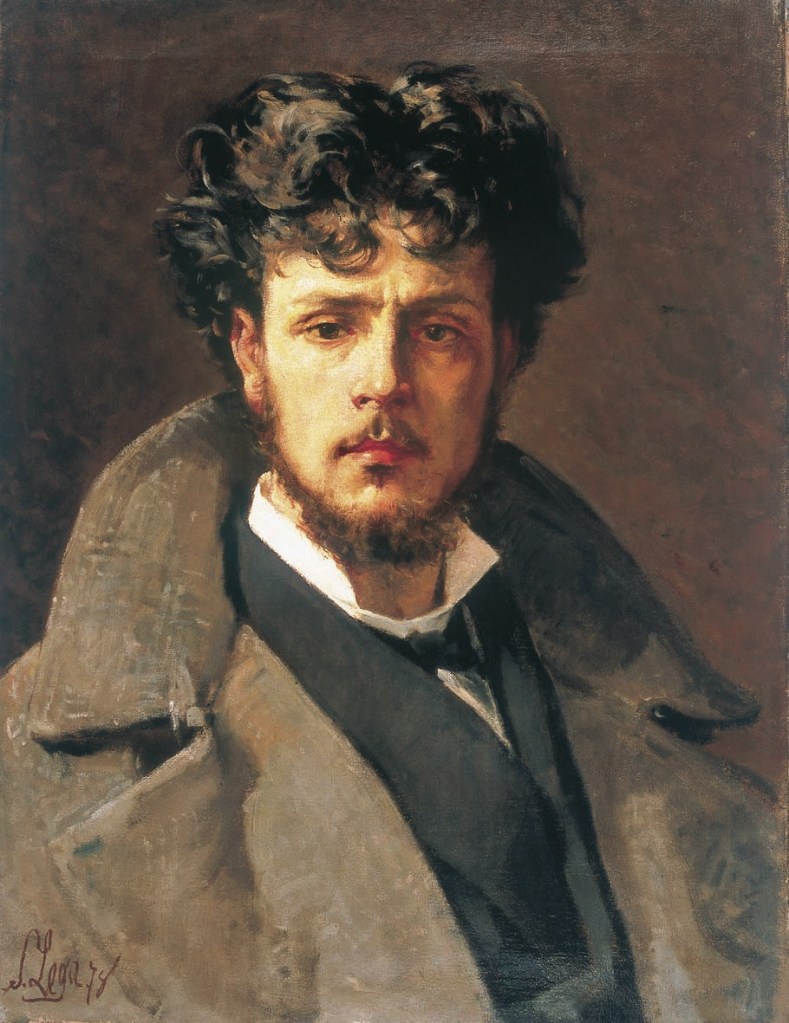
By the later 1870s, that engagement was widening. In 1878 Lega saw paintings by Camille Pissarro which Martelli had sent from Paris, and the following year he was again exhibiting in Florence, reviving older friendships and forming new ones. Among these was his relationship with the sculptor Rinaldo Carnielo, whose portrait belongs to this period of widening exchange. In the painting, Lega places the sitter against a dark, restricted background and gives unusual weight to the modelling of the head and face. The handling is broader and more material than in his earlier portraiture, while the concentrated setting draws attention towards Carnielo’s psychological presence. The portrait offers evidence that Lega had begun to absorb aspects of recent French painting into his own practice, without adopting them wholesale.
The 1870s thus have a shape, though not the unity of the previous decade. Lega explores warmer and denser landscape painting, a starkly restrained form of contemporary history, altered kinds of domestic realism and a changing approach to portraiture. No single one of these becomes the new formula. Instead, the decade opens his painting out after the concentrated achievement of Piagentina. By its close, renewed contact with French painting and with a wider Florentine artistic circle had given that process further impetus. Bellariva would provide the next important setting in which it could develop.
Bellariva: renewal and another community
Bellariva gave Lega something the 1870s had lacked: not a new doctrine, but a setting in which artistic work, domestic life and exchange with younger painters again became continuous. Around 1880 he became increasingly closely involved with the Tommasi family at Villa La Casaccia, on the eastern outskirts of Florence along the Arno. The circumstances recall Piagentina without repeating it. Once again he found himself working within an inhabited landscape rather than in an abstract countryside, but the social setting was different and so was the artistic climate.
The Tommasi connection placed Lega among a younger generation. He taught Angiolo and Lodovico Tommasi and took a close interest in Adolfo Tommasi’s development. Signorini later recalled that Lega encouraged Adolfo to distrust conventional teaching and to look at nature “with his own eyes and with his own personality”. The advice has a particular resonance in Lega’s case. More than twenty years earlier he had described his own emancipation as learning to work da me; he was now urging the same independence upon painters young enough to have known the Macchiaioli chiefly as an established generation.
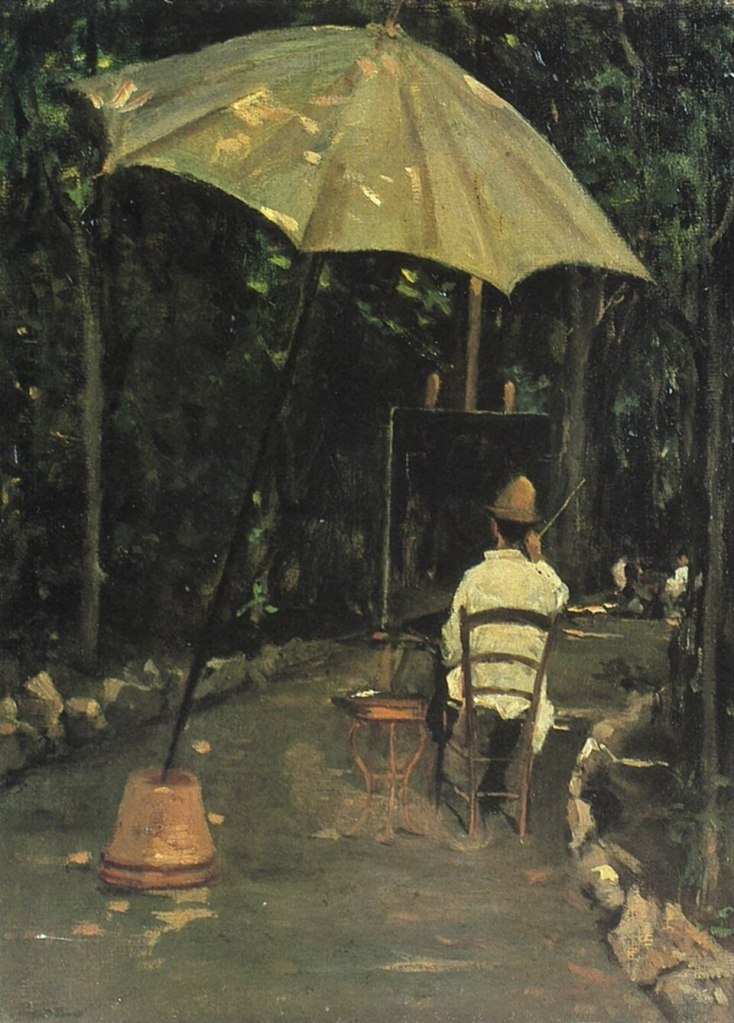
At Bellariva, however, this interchange was not simply pedagogical. The Tommasi household gave Lega access to a new network of domestic relationships, while his younger brother Ettore, Ettore’s wife Adele and their son Antonio also became part of the domestic circle surrounding him. Diego Martelli later described the period as one in which Lega recovered “the warmth of childhood and of womanhood”. The phrase is characteristically nineteenth-century, but the underlying point is clear enough: sustained work returned together with a sense of belonging.
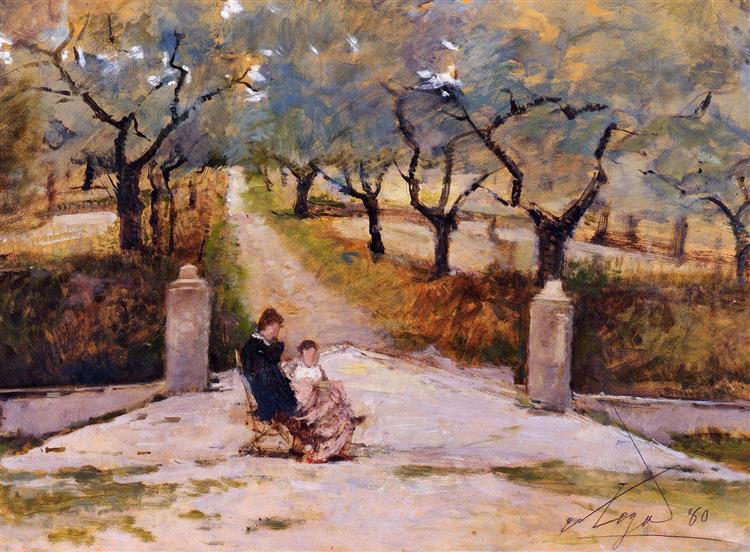
The paintings of these years register the change without reverting to the formal poise of Piagentina. In In villa of 1880, the familiar ingredients of Lega’s earlier domestic art remain present: figures, garden, architecture, summer light. Yet the handling is markedly more abbreviated. Forms are established with broader strokes, edges are less insistently secured, and the surface retains something of the immediacy of a study. The subject is intimate, but the painting no longer depends upon the crystalline order that had given the Piagentina pictures their peculiar stillness.
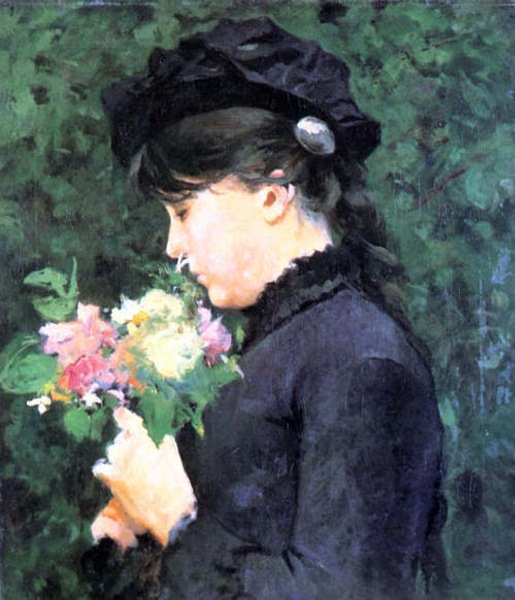
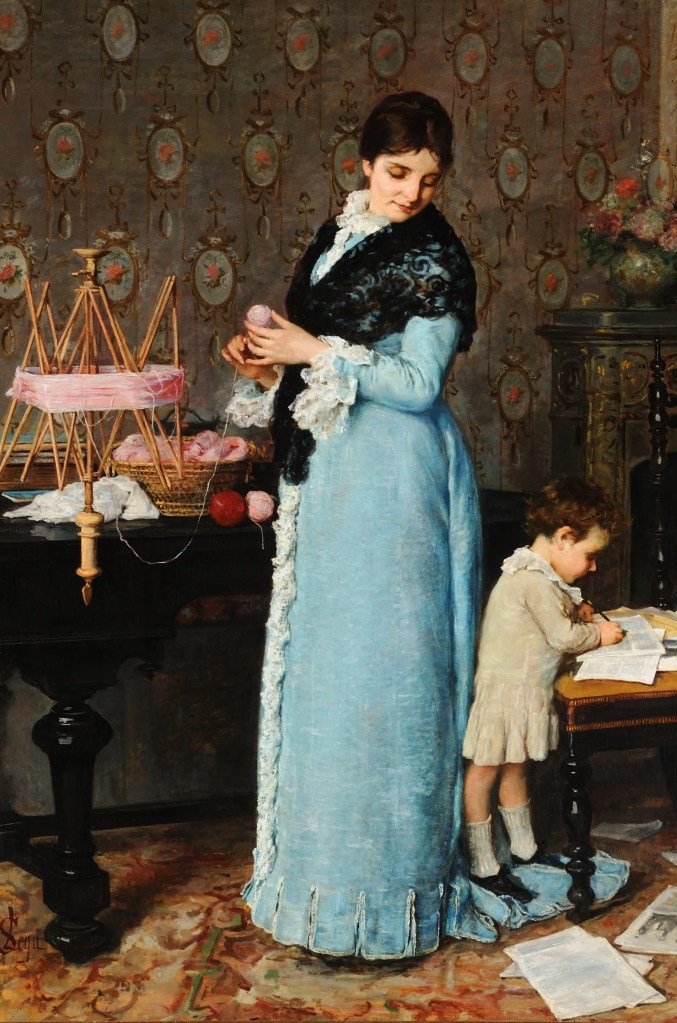
Other Bellariva works explore the same revival through figure painting. In Una madre, Lega represented his sister-in-law Adele with the young Antonio. Francesca Dini draws attention to the rich blue of the woman’s dress, which gives the sober interior much of its chromatic life. The emotional relation between mother and child is carried through posture, gaze and the organisation of the figures rather than through anecdotal incident. In Ritratto di signora in giardino, the so-called Bruttona of 1883, physical individuality is allowed to remain uncompromised by conventional prettification. Both paintings suggest an artist newly attentive to colour and immediacy while retaining the concentration that had always marked his portraiture.
Uffizi Galleries: Ritratto di signora in giardino
The Uffizi’s entry for Lega’s Ritratto di signora in giardino (1883), familiarly known as La Bruttona, includes a reproduction of the painting and a discussion of its place within the Bellariva period.
French painting formed part of this changed atmosphere. Lega had already seen Pissarro’s work in 1878, and in 1880–81 paintings by Manet and other French artists were shown in Florence at exhibitions organised by the Società Donatello. Martelli, who had been one of the earliest Italian critics to explain Impressionism seriously, believed that some of Lega’s studies now approached the “serene gaiety” of the French Impressionists. His comment is valuable because it identifies an affinity in luminosity and handling without requiring Lega to become an Impressionist in any strict sense.
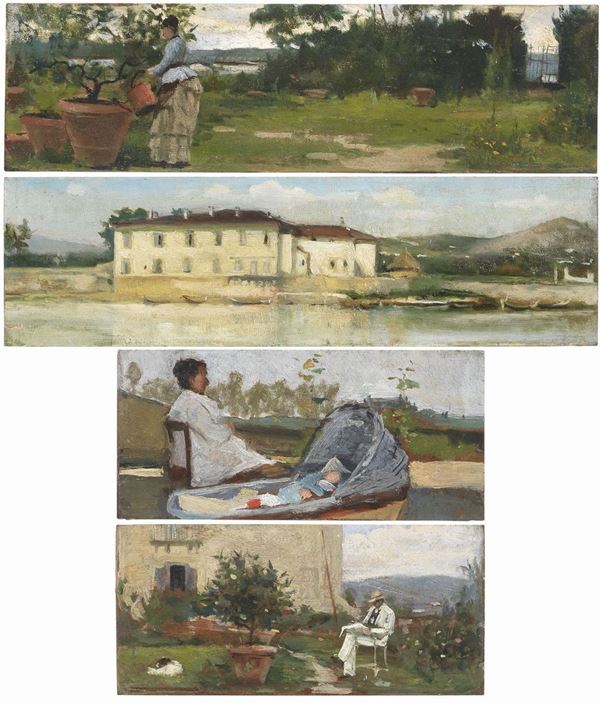
Indeed, the Bellariva paintings are more interesting for the way new experience is absorbed into an already complicated practice. Their brighter tonal effects and freer surfaces coexist with habits of concentration acquired much earlier. Lega’s eye disease was already troubling him, but Martelli insisted in 1885 that it had not prevented him from perceiving masses or the splendour of colour. “Now Silvestro Lega works intensely,” he wrote. The remark catches the essential character of Bellariva: not a late survival, and not yet the harsher concentration of Gabbro, but a period in which Lega again found sustained work, artistic companionship and a means of responding afresh to the visible world.
Gabbro: people, place and the late vero
Gabbro brought Lega into another kind of inhabited landscape. The village lies inland from Livorno, among the low Tuscan hills, and from about 1886 he began to spend increasingly long periods there. Through Angiolo Tommasi and Angiolo Torchi he came into contact with Count Odoardo Rosselmini and, more importantly, with the Bandini family at Poggio Piano. Before long he was a regular presence in the household, teaching Clementina Bandini’s daughters Giulia and Paolina, painting members of the family and working in the surrounding countryside. As at Piagentina and Bellariva, place and social life became inseparable from artistic practice; yet Gabbro produced neither a return to the 1860s nor a simple continuation of Bellariva.
The scale of this final phase is easy to underestimate. Works associated with Gabbro account for an exceptionally large proportion of Lega’s known production, encompassing portraits, domestic scenes, landscapes and studies of local rural people. The Bandini household itself offered a varied social environment. Clementina managed the estate and oversaw the education of her children; artists and friends came and went; newspapers, reading, painting and conversation belonged to everyday life. In La signora Clementina Bandini con le figlie a Poggio Piano of 1887, Lega represents that life without converting it into a society portrait. Clementina appears as the active centre of a working household, surrounded by daughters whose differing positions and gestures give the group a quiet internal animation.
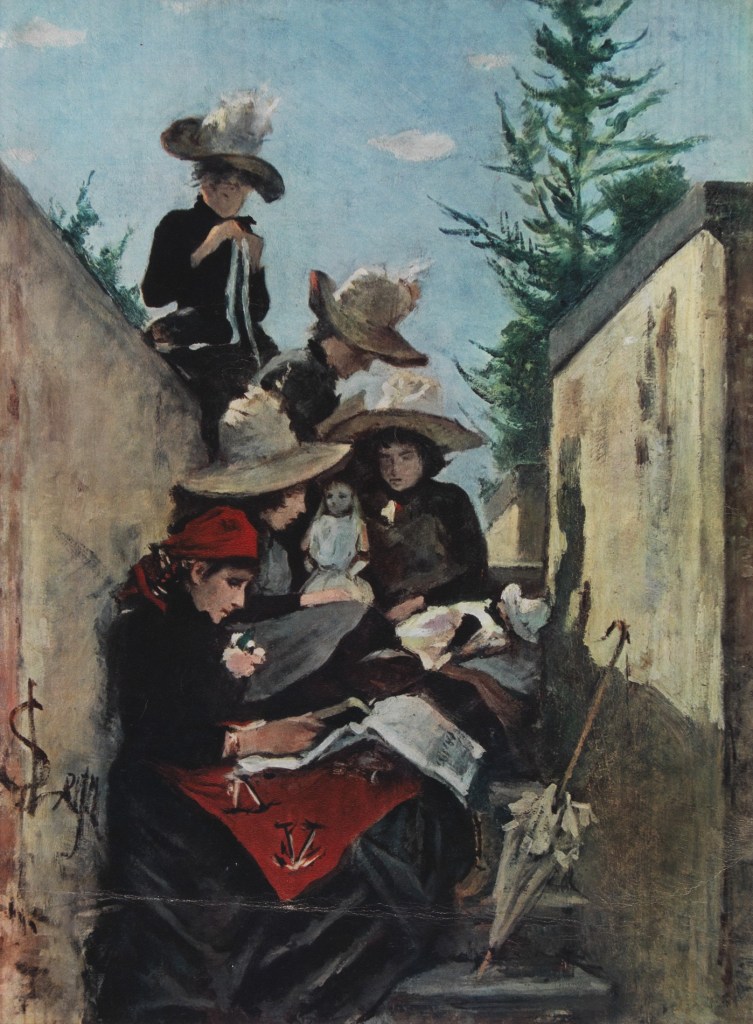
The painting also makes clear how far Lega’s late freedom could coexist with organisation. Hats, dresses, pieces of wall, openings of sky and areas of vegetation are disposed with considerable calculation, even where individual forms are handled broadly. Francesca Dini has emphasised the intensity of colour in these works, especially the recurring importance of reds and other concentrated chromatic accents. Earlier critics sometimes described the late paint itself in almost physical terms. Mario Tinti compared its richness to ripe fruit splitting open with warm juices: an extravagant image, but one that catches the increasing materiality of Lega’s colour.
That material richness was only one possibility within the Gabbro work. Some pictures become darker, drier or more compressed; others retain considerable luminosity. Emilio Cecchi detected in the late compositions something increasingly “convulsive and breathless”, while Raffaele Monti spoke instead of a purified and meditated painting. The difference between those descriptions is instructive. There is no single Gabbro manner. What unites the best of the work is not a uniform surface but a heightened concentration upon the relationship between figure, place and paint.
Carlo Sisi approaches the local women, the gabbrigiane, from this direction. Contemporary descriptions could easily have turned them into picturesque rural types: women accustomed to hard labour, travelling between the countryside and Livorno with heavy baskets of produce. Lega’s interest, however, was not primarily ethnographic. Sisi stresses the concentration upon faces and individual character, and the way physiognomy becomes a means of attending to temperament and state of mind. The women belong unmistakably to a particular environment, but they do not merely illustrate it. Signorini expressed the principle neatly: the women should be recognisable as belonging to that place, and the place as belonging to those women.
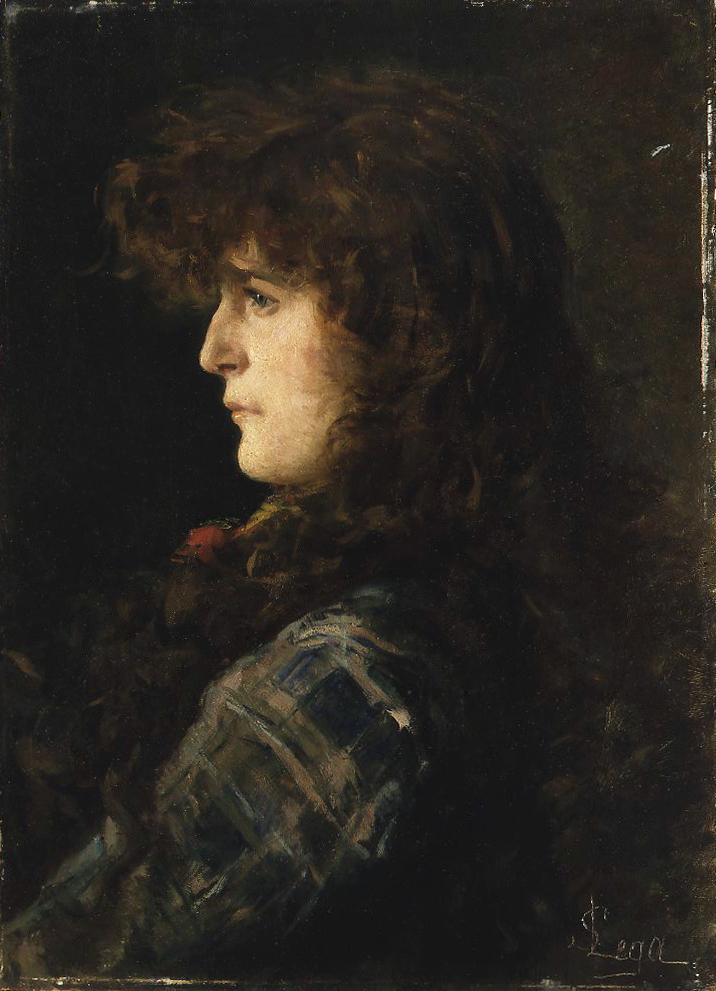
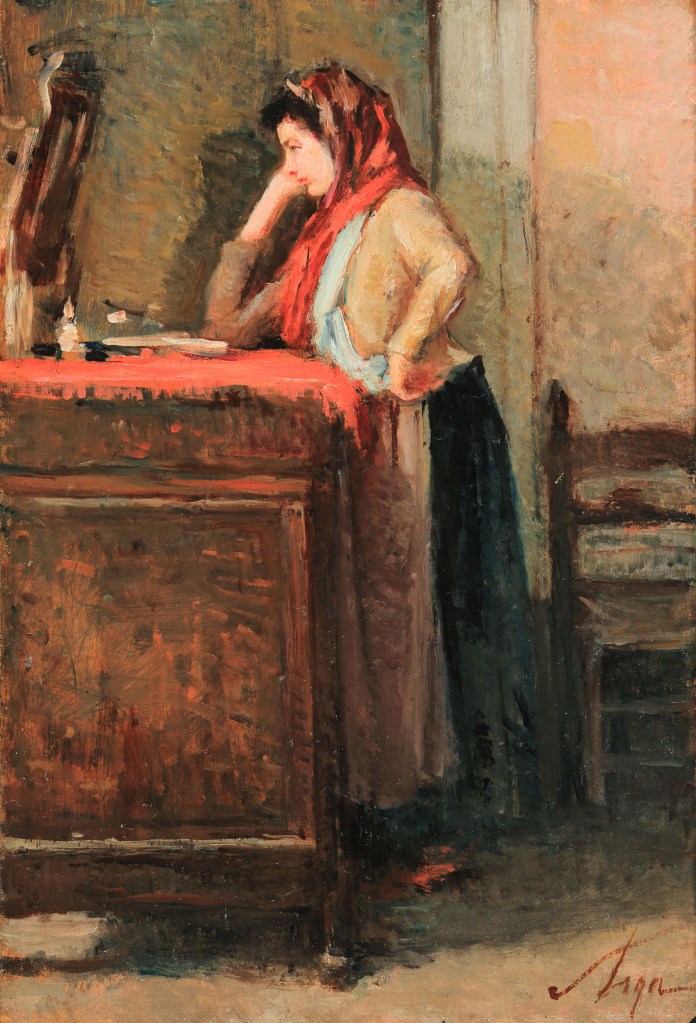
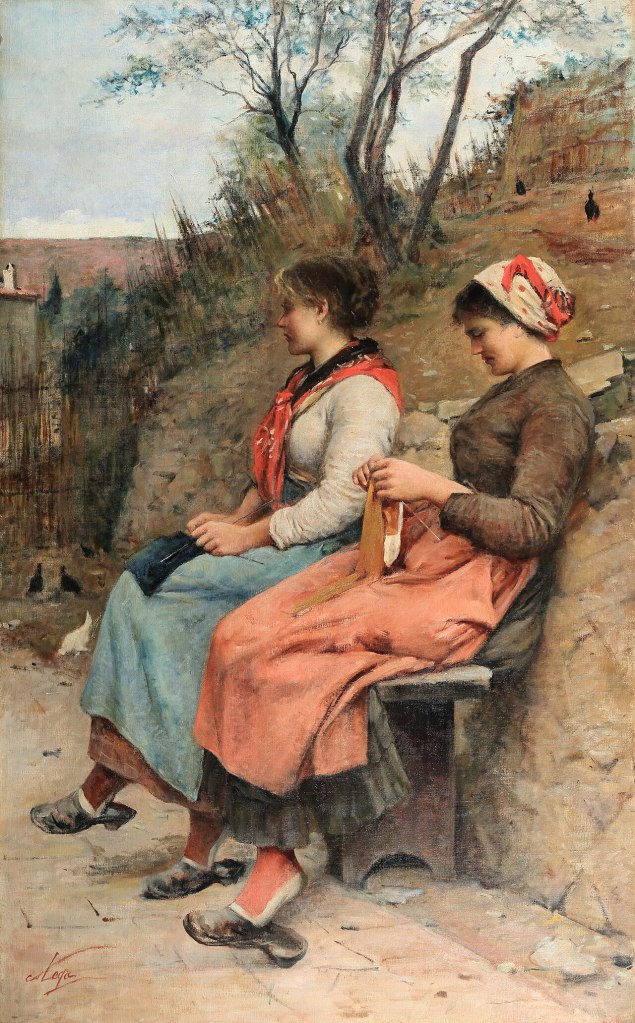
This distinguishes Lega from much contemporary Naturalist painting devoted to the heroics or hardship of agricultural labour. He rarely turns work in the fields into an epic subject. Instead, rural identity is carried through bodies, clothing, complexion, posture and the particular spaces in which people live. In some of the late heads, descriptive information is pared down still further. Faces emerge from abbreviated strokes and concentrated colour, with little interest in idealisation. The vero has become more searching, but not more documentary.
Lega’s own letters give this relationship to the visible world an unusual immediacy. Writing from Villa Bandini in May 1887, he told Telemaco Signorini that he was making “more studies than pictures” and that “the splendid countryside does nothing but suggest things to me”. He described the previous evening’s sunset almost as a miracle, then added that he was “someone who is trying not to grow old”. The remark gives direct expression to his determination to remain artistically responsive.
As these years went on, however, Lega’s worsening eyesight increasingly complicated that direct engagement with the visible world. It would be tempting to connect the freer or more abbreviated character of some late works directly with the condition, but the evidence does not support so simple an explanation. In another letter he admitted that when he stood before the vero he felt his misfortune most acutely. Yet the same letter shows him scraping down a canvas for the third time, dismissing a model and preparing to try again. He was also working in pastel and referred, with characteristic economy, to “a landscape all sunlight”. Difficulty before nature did not make him abandon it.
Landscape, indeed, remained integral to these years. In Alla villa di Poggio Piano the figures, architecture and surrounding vegetation belong to a single field of broken colour, more loosely held than in the Piagentina works but still carefully distributed across the surface. Elsewhere in his late landscape painting, as in La salita del Pellegrino of about 1890, narrative almost disappears altogether. A road, a wall, a slope or a stand of vegetation is sufficient. By reducing the subject, Lega makes the act of selection more conspicuous: what matters is how a particular interval of countryside has been seen, divided and weighted.
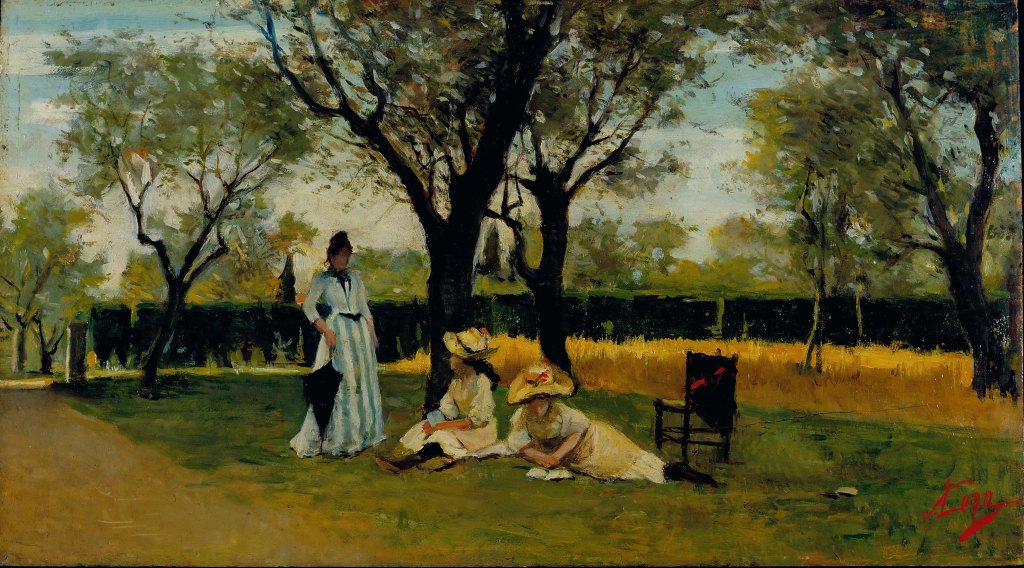
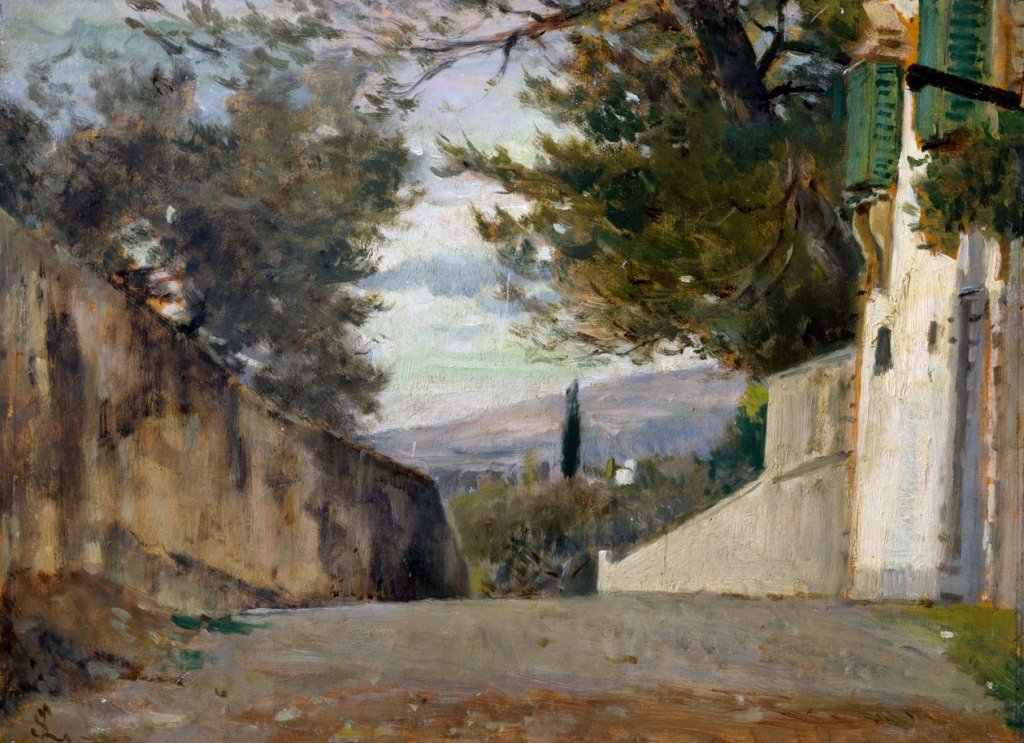
Gabbro therefore resists the idea of a late “liberation” in which the old discipline is finally discarded. Some works are freer, some darker, some chromatically richer; others remain strongly constructed. What has changed is the range within which Lega can now move. Family life, rural physiognomy and landscape are no longer reconciled through the lucid equilibrium of Piagentina. They are examined more closely, sometimes more harshly, and with a surface increasingly responsive to the pressure of the particular thing seen. In that sense the late vero is both narrower and deeper: less concerned with an exemplary world, more absorbed in the stubborn individuality of places and people.
Coda: persistence rather than culmination
It is tempting to make Lega’s late work the culmination of his career, as though the greater freedom of Gabbro finally released something that had been constrained by the discipline of his youth. The paintings do not support so simple an ascent. Abbreviated handling had appeared much earlier, while habits of drawing, structure and chromatic organisation never disappeared. What changed repeatedly was the balance among them.
Piagentina had brought those elements into a complete accord. At Bellariva the balance shifted within a different social setting and through fresh contact with contemporary painting; at Gabbro the same elements were tested against another landscape, another group of people and the increasingly difficult circumstances of Lega’s later life. None of these places contains the definitive Lega. Each allowed him to remake the relation between the vero, pictorial order and personal response.
His letters perhaps express that continuity most clearly. As a younger man he had described artistic independence as learning to work da me, and later insisted that he wanted to paint as his own spirit felt. In 1887 he could still call himself someone “trying not to grow old”. Even when failing eyesight made direct work before the vero painful, he continued to make studies, restart paintings and pursue new effects of light.
There is something fitting, then, in a letter of April 1895, written only months before his death. Lega was physically weak enough for a short walk to exhaust him, but at Villa San Giorgio he could still “breathe” and make studietti as a diversion from his sufferings. The scale of the work had diminished, but the activity itself had not ceased. Across a career repeatedly unsettled by changing artistic allegiances, political disappointment, bereavement, illness and financial difficulty, what persisted was not a manner but the need to continue looking, testing and painting.
Producing these essays requires care, time, research, and resources. Contributions to help sustain this exploration would be greatly appreciated.
Donate to Inner Surfaces here.
Bibliography
Bartolena, Simona, ed. I Macchiaioli e l’invenzione del plein air tra Francia e Italia. Cinisello Balsamo: Silvana Editoriale, 2023.
Bietoletti, Silvestra, and Laura Lombardi. L’opera critica di Diego Martelli: dai Macchiaioli agli Impressionisti. Exhibition catalogue, Livorno, Museo Civico Giovanni Fattori, Villa Mimbelli, 3 October 1996–12 January 1997. Florence: Artificio, 1996.
Dini, Francesca, ed. Silvestro Lega da Bellariva al Gabbro. Exhibition catalogue, Castiglioncello, Centro per l’arte “Diego Martelli”, Castello Pasquini, 19 July–19 October 2003. Florence: Polistampa, 2003.
Dini, Francesca. “L’ultimo Lega.” In Silvestro Lega da Bellariva al Gabbro, edited by Francesca Dini, 15–36. Florence: Polistampa, 2003.
Mesirca, Giuseppe. Silvestro Lega. Florence: Edizioni d’Arte Il Fiorino, 1985.
Mazzocca, Fernando, and Carlo Sisi, eds. I Macchiaioli: prima dell’impressionismo. Exhibition catalogue, Padua, Palazzo Zabarella, 27 September 2003–8 February 2004. Venice: Marsilio, 2003.
Rylands, Philip. “I Macchiaioli: Turin and Forlì.” The Burlington Magazine 149, no. 1251, June 2007, 432–34.
Sisi, Carlo. “Terra promessa.” In Silvestro Lega da Bellariva al Gabbro, edited by Francesca Dini, 37–42. Florence: Polistampa, 2003.
Brera / Palazzo Citterio. “Testa di donna o ‘Gabbrigiana’.” Online collection entry.
Catalogo generale dei Beni Culturali. “Silvestro Lega, Una madre.” Online catalogue entry.
Silvestro Lega Catalogo Generale. “Autobiografia.” Online resource.
Treccani. “Lega, Silvestro.” Dizionario Biografico degli Italiani, vol. 64, 2005.
Uffizi Galleries. “Silvestro Lega, Il canto di uno stornello.” Online collection entry.
Uffizi Galleries. “Le Gallerie degli Uffizi ricevono in dono il Ritratto di signora in giardino.” Online article / collection notice.

