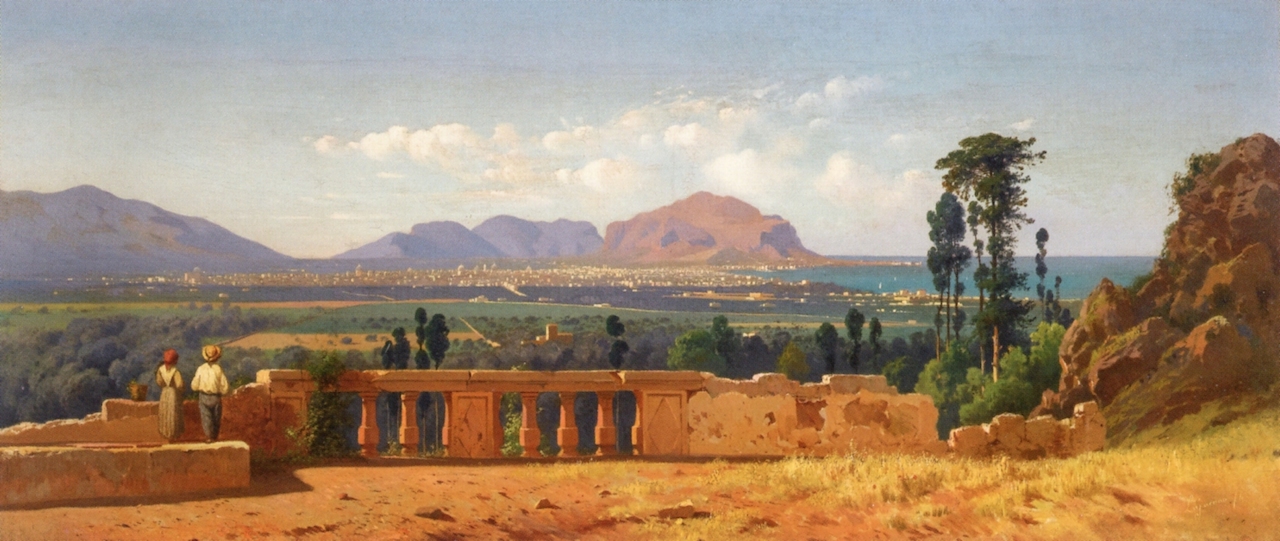
Francesco Lojacono (1838–1915), Palermo e il Monte Pellegrino da un terrazzo, 1874, oil on canvas, Novosibirsk State Fine Arts Museum.
(Credit: Wikimedia Commons).
Francesco Lojacono (Palermo, 1838–1915) occupies a central place in the history of nineteenth-century Italian landscape painting. Working for more than half a century, he transformed the representation of the Sicilian countryside from the structured naturalism of the mid-nineteenth century into a more atmospheric and introspective vision that anticipates the sensibilities of the fin-de-siècle. His work charts a gradual shift from careful descriptive realism toward a more reflective and emotional understanding of landscape.
Early Formation
Lojacono’s first training took place in Palermo under his father, Luigi Lojacono, a painter of historical subjects whose sacred works have recently been the subject of research by Maurizio Vitella and Sergio Alcamo. He later continued his studies in the studio of Salvatore Lo Forte, a painter of portraits and religious subjects.
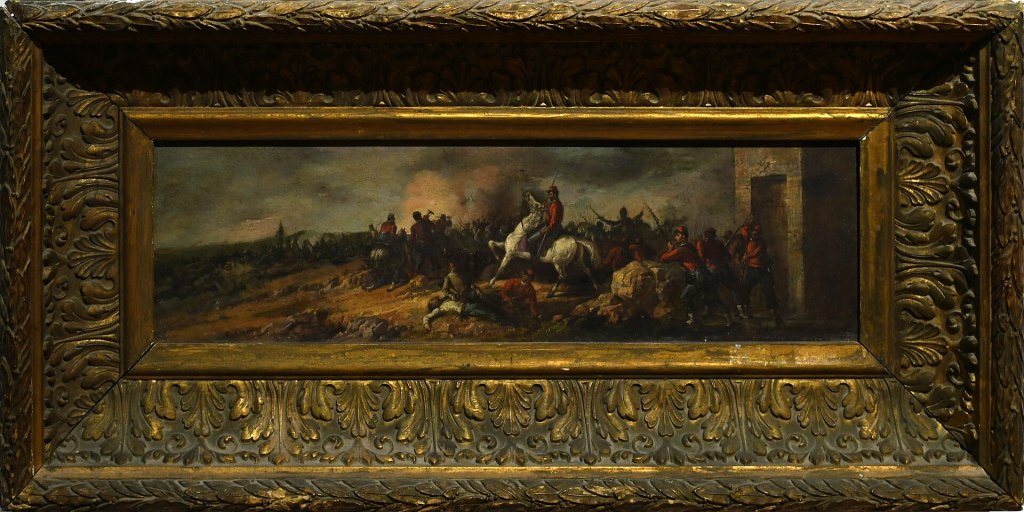
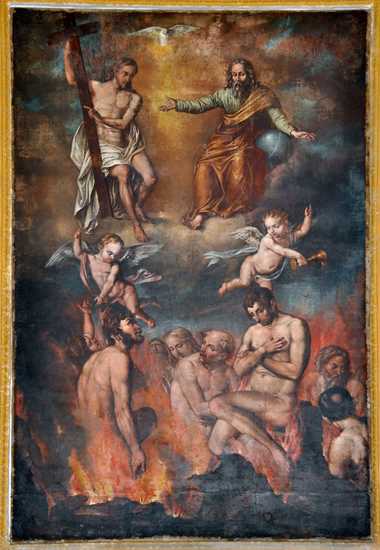
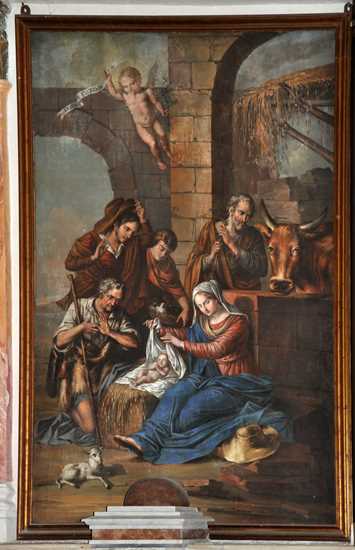
(Credits: Wikipedia/ Unipa).
Like many young painters of his generation he initially worked within a Romantic tradition of historical painting, but by the mid-1850s his attention had begun to shift toward landscape.
Even before leaving Sicily he had absorbed elements of the local landscape tradition through artists such as Francesco Zerilli and Tommaso Riolo. Zerilli’s panoramic views of Sicilian towns and countryside offered models of spatial clarity and atmospheric order, while Riolo’s landscapes often incorporated small figures and episodes of rural life that helped structure the pictorial field and humanise the terrain.
Tommaso Riolo (Palermo, 1815–1906), nephew and pupil of the Neoclassical painter Vincenzo Riolo, belongs to the generation that sustained the Palermitan tradition of topographical landscape in the mid-nineteenth century. Later influenced by the Neapolitan landscape painter Giacinto Gigante, he produced small coastal and suburban views of Palermo that retain the compositional structure of the late veduta tradition—foregrounds of houses and boats seen from the shore—while introducing a more direct observation of everyday urban life and natural light.
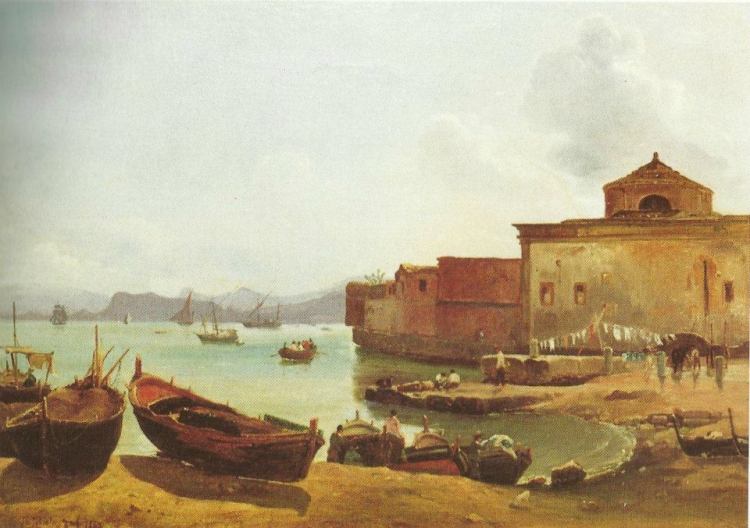
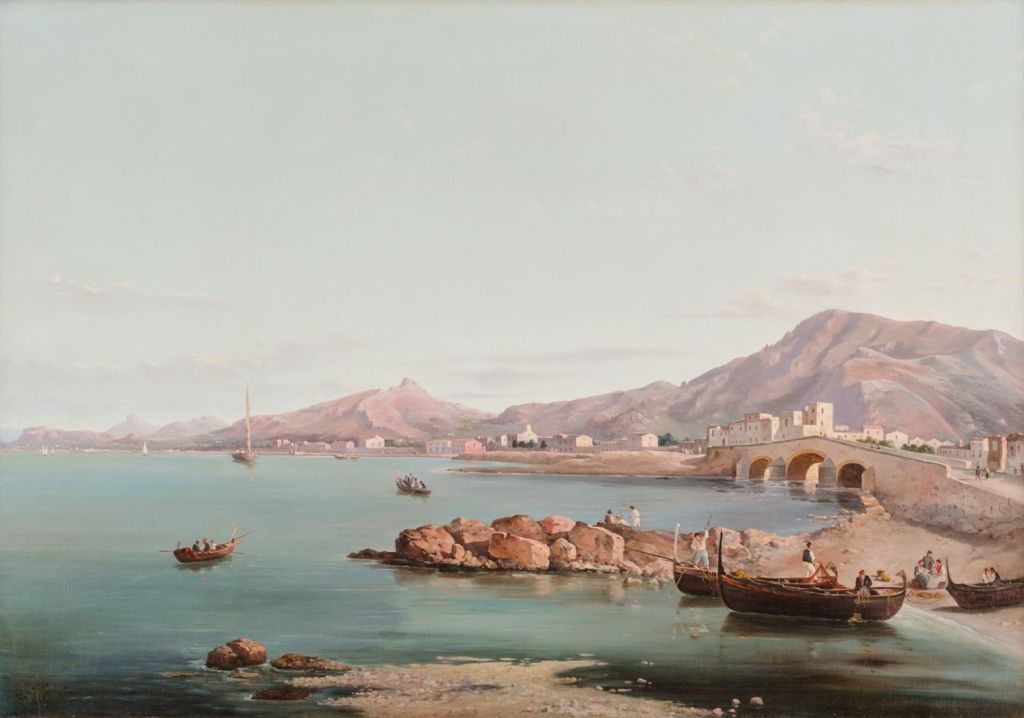
(Credits: Sicily in Painting).
Francesco Zerilli (1797–1837) specialised in small tempera landscapes depicting Sicilian cities, coastal sites, ruins, and rural outskirts marked by convents and aristocratic villas. Executed with meticulous graphic precision and illuminated by a clear, Hackert-derived light, these works often function as near-topographical records, though the views are organised within carefully balanced compositions. His preference for real coastal viewpoints and his attention to natural light and atmosphere reveal a loose affinity with the landscape sensibility associated with the Neapolitan School of Posillipo. His landscapes were widely appreciated by European collectors.
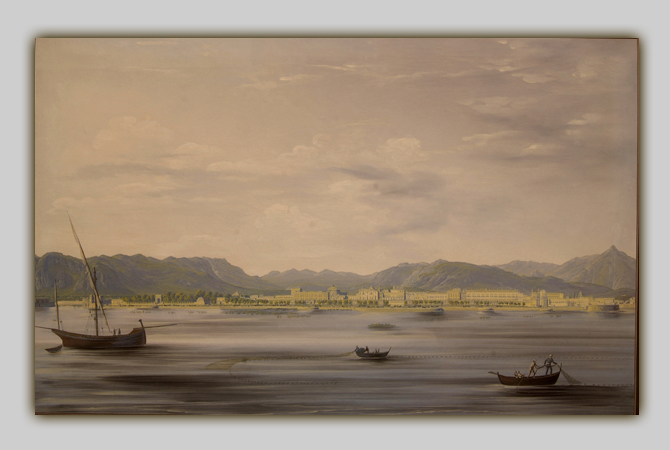
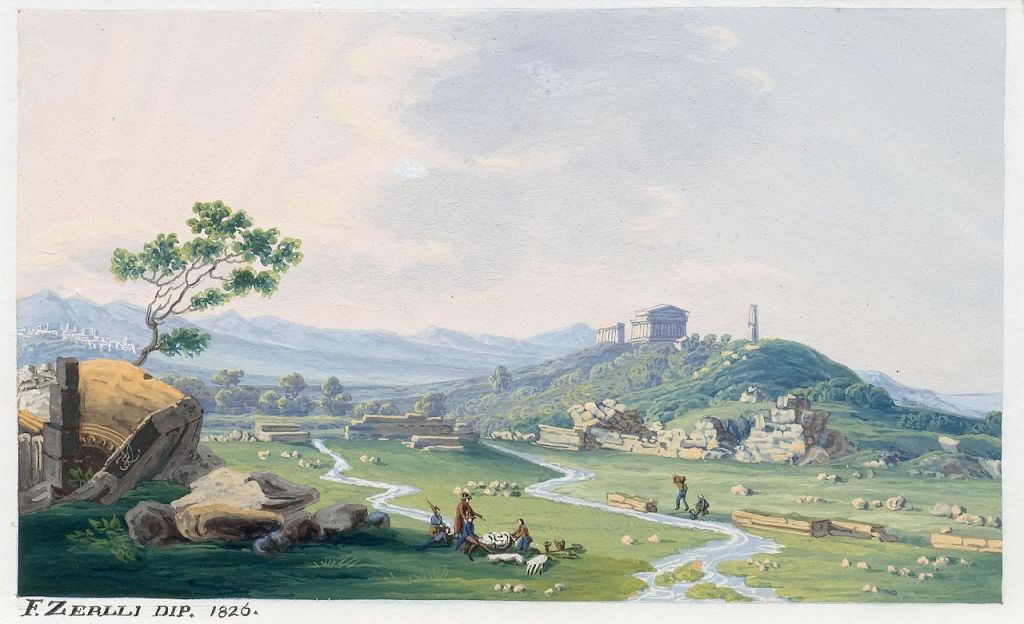
(Credits: Wikimedia Commons and Wikipedia).
A decisive moment came in 1856, when Lojacono obtained a scholarship that allowed him to study in Naples. There he encountered the circle of the Palizzi brothers and the painters associated with the School of Resina. Naples in these years was an important meeting point for different currents in European landscape painting, where Italian artists could engage with ideas circulating between Paris and the Barbizon school.
From this environment Lojacono absorbed a disciplined practice of painting from life and a close observational approach to nature. Painters associated with the School of Resina, including figures such as Marco De Gregorio (1829–1876), Federico Rossano (1835–1912) and Giuseppe De Nittis (1846–1884), were developing a landscape language grounded in direct observation of nature and a sensitive response to tonal and atmospheric effects, as well as an attentive study of humble rural motifs. In some early works the sky and horizon are simplified into broad planes of colour set against carefully described foreground vegetation, producing a contrast between enamel-like atmospheric zones and precise natural detail.
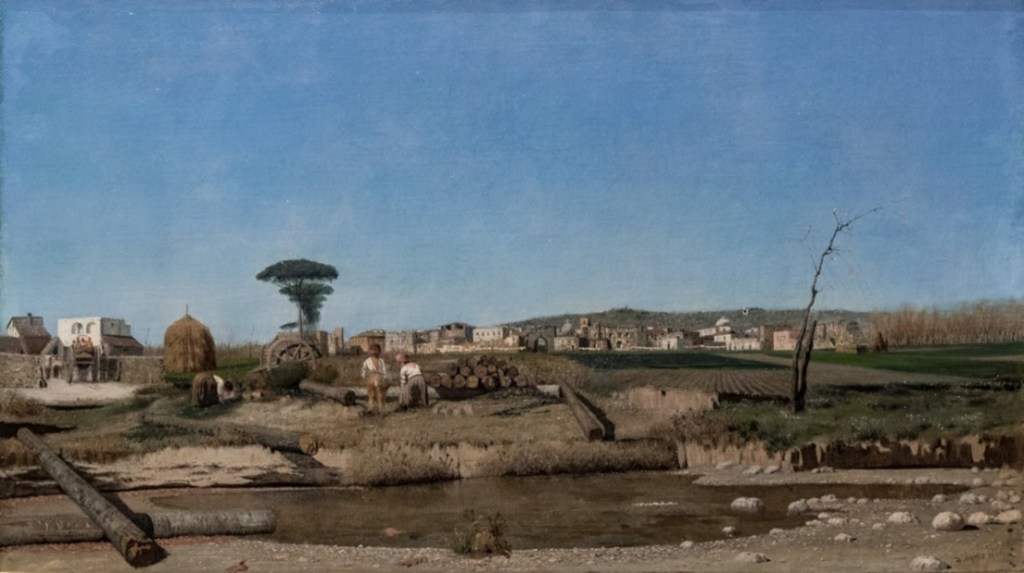
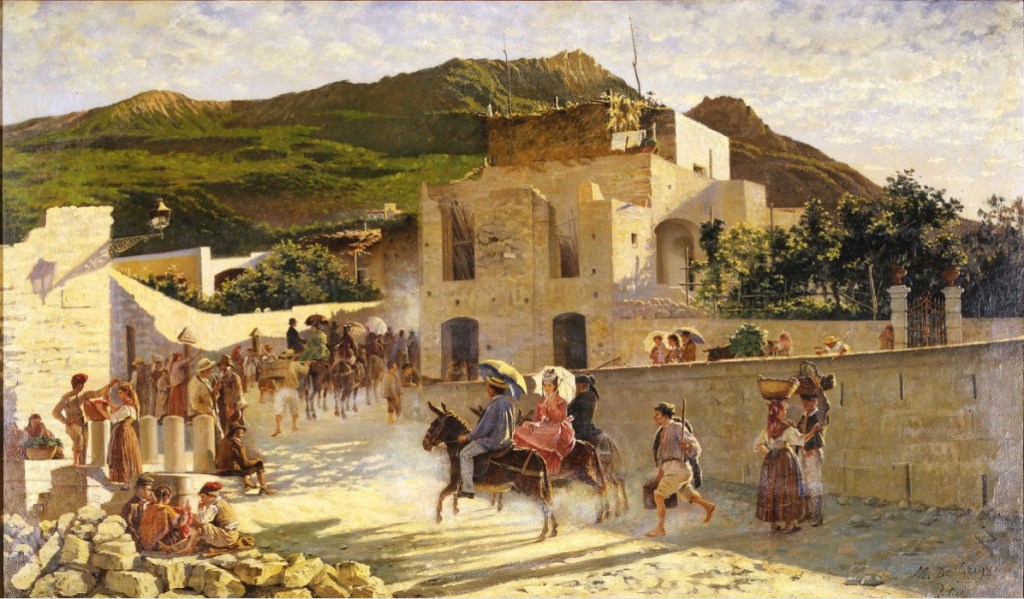
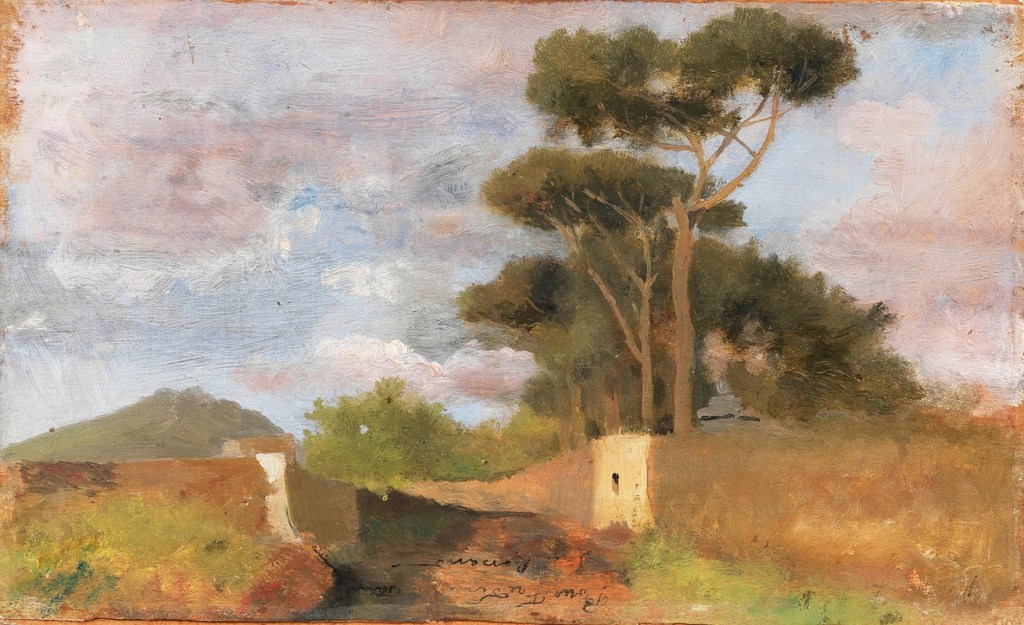
(Credits: Wikimedia Commons/ Artvee (Rossano)).
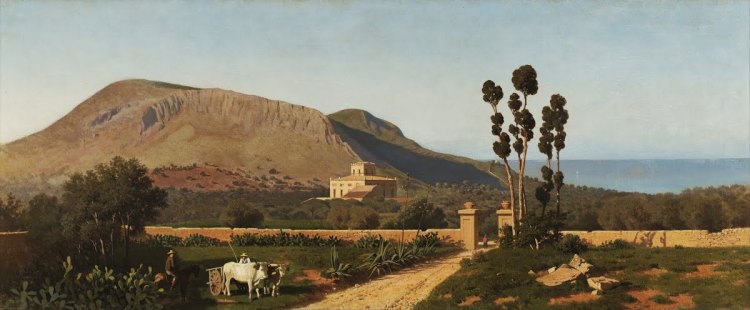
Works such as Monte Catalfano and Veduta dell’Acquasanta reveal this early synthesis of structural clarity and attentive observation.
(Credit: Google Arts and Culture).
The Veduta di Monte Catalfano adopts a pronounced panoramic format and reflects Lojacono’s growing commitment to realist observation, supported by his assured technical handling of light and by the careful description of small details such as the ox cart and the crumbling walls. The clear, crystalline atmosphere of the morning scene recalls, in the sharp division between sky and mountain, the tempera views of the early nineteenth-century vedutisti, while also signalling the artist’s engagement with the spatial and luminous concerns of the painters of the Scuola di Resina. The bright, even light, the balanced and almost motionless composition, and the fluid linearity defining the architecture of Villa San Marco—together with the simplified treatment of the figures—suggest, as Diana Grasso has noted, close affinities with the manner of Marco De Gregorio.
(Credit: Wikimedia Commons).
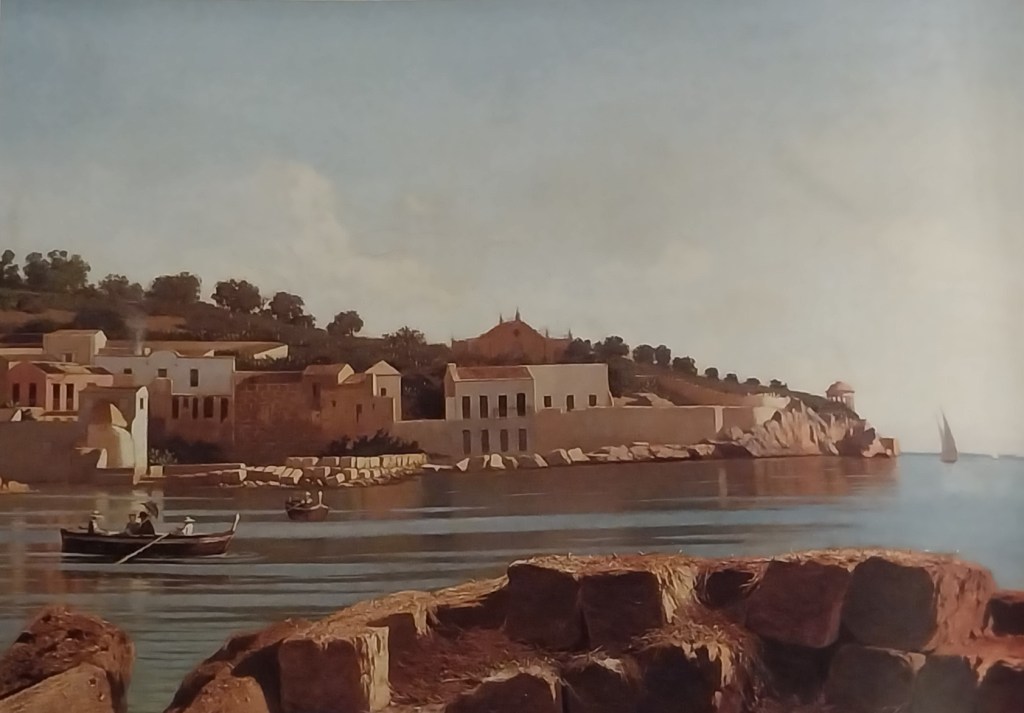
In Veduta dell’Acquasanta the landscape is rendered with almost photographic clarity. Clear, crystalline sunlight shapes the scene, defining the sharply cut volumes of the buildings and the foreground rocks in subtle gradations of ochre and brown, while vivid streaks of emerald green cross the still surface of the water. In the foreground, a breakwater of large rectangular stone blocks, their flat surfaces scattered with dry grass, is described with close attention to texture and to the play of light and shade across the stone. Small incidents of daily life lend animation to the tranquil setting: leisurely boaters beneath a parasol and in broad-brimmed hats drift across the water, while a thin plume of smoke rising from a distant house hints at quiet domestic activity. The dark recesses of the window bays sharpen the impression of intense sunlight, reinforcing the scene’s prevailing elegance, smoothness and delicacy.
Landscape and Realism
During the 1860s and 1870s Lojacono developed the language that would establish his reputation. His landscapes present Sicily as a real and inhabited environment rather than an idealised setting. Peasants, shepherds and travellers appear within the countryside not as picturesque ornaments but as integral elements of the scene.
In this respect his work parallels the literary realism of Giovanni Verga. Just as Verga sought to efface the author’s presence so that reality might appear with documentary clarity, Lojacono’s landscapes give the impression of direct observation even when carefully composed.
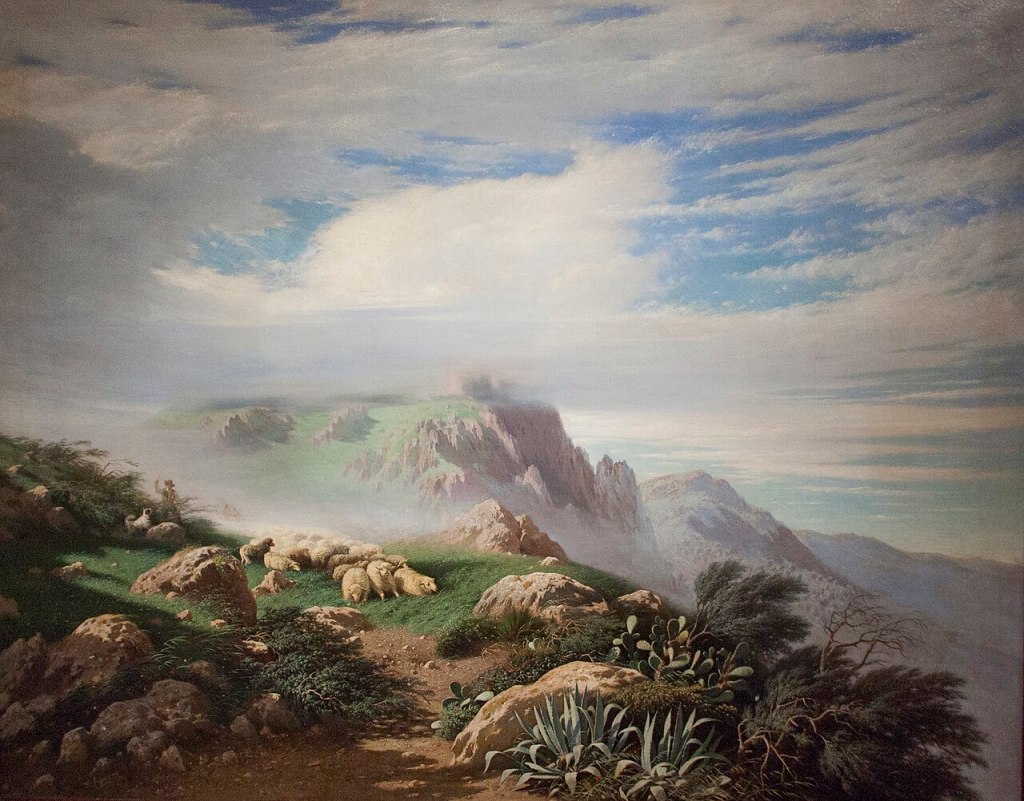
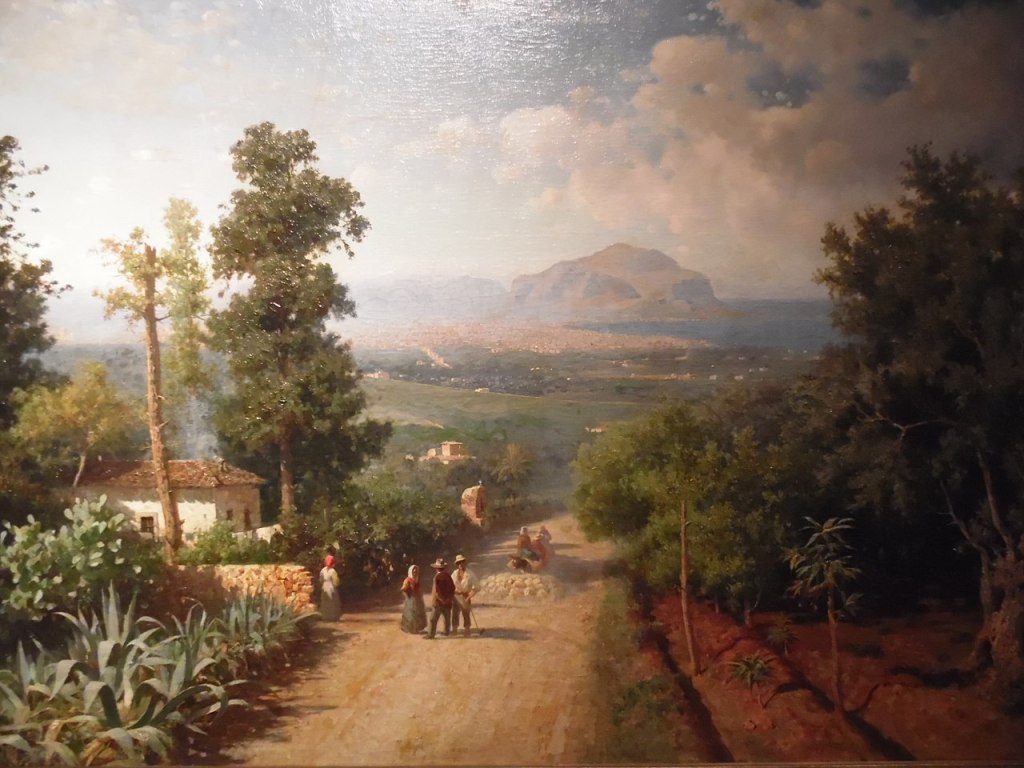
Paintings such as Vento in Montagna (1872) and the large Veduta di Palermo (1875) exemplify this approach. In the latter, peasants occupy the foreground while the city appears in the distance beneath the silhouette of Monte Pellegrino. Vegetation typical of the Mediterranean landscape—agaves, prickly pears and olive trees—anchors the scene firmly in its Sicilian setting.
A characteristic feature of these works is the balance between meticulous description and broader pictorial synthesis. Foreground rocks and plants are rendered with careful attention to natural detail, while distance and atmosphere are organised through comparatively simpler tonal planes.
(Credit: Wikimedia Commons).
Dated 1872, Vento di Montagna belongs to Lojacono’s early landscapes and still reflects the influence of the Palizzi school. The scene opens across a broad prospect divided almost equally between sky and earth, its gusty, unsettled atmosphere quite unlike the calm Sicilian countryside that would later become the painter’s preferred subject. In the foreground, rocks, shrubs, agaves and prickly pear are described with firm detail and warm colour, while the more distant slopes dissolve into cooler tones. The composition unfolds in distinct zones, from the sharply defined foreground to the misty middle ground, where a shepherd and his flock emerge through gusts of wind, the sheep crouching and struggling forward as the shrubs bend. The slightly improbable presence of Mediterranean plants in this windswept mountain setting suggests that the picture may represent not a single observed place but a synthesis of motifs, reflecting Lojacono’s early experiments with atmosphere and light.
(Credit: Wikimedia Commons).
Veduta di Palermo is one of Lojacono’s most celebrated paintings, this panoramic view looks out from the hills above Palermo across the city towards the gulf. The sea defines the skyline, while Monte Pellegrino forms the focal point of the perspective, structured around the country road that runs through the centre of the composition. The human presence is minimal but integral to the scene: a small cluster of figures at a crossroads and a flock of sheep returning to the fold, raising a cloud of dust. The landscape is suffused with the heavy atmosphere of a Sicilian summer: heat, light and drifting dust soften contours, veil the distant houses and dissolve the forms of figures and trees. Through rapid touches, transparent layers of colour and pearly washes in the sky, Lojacono evokes with remarkable immediacy the stillness and oppressive warmth of the countryside.
During these years Lojacono exhibited widely in Italy and abroad, including in Naples, Vienna and Paris. These exhibitions brought him into contact with younger painters exploring similar concerns of observation and light. Artists such as Giuseppe De Nittis were experimenting with a clearer tonal structure and a more modern treatment of atmosphere, reflecting the increasingly international character of Italian painting.
Sunlight and Reputation
By the early 1880s Lojacono had achieved national recognition. Royal acquisitions and official honours confirmed his standing, and his paintings began to circulate widely among collectors.
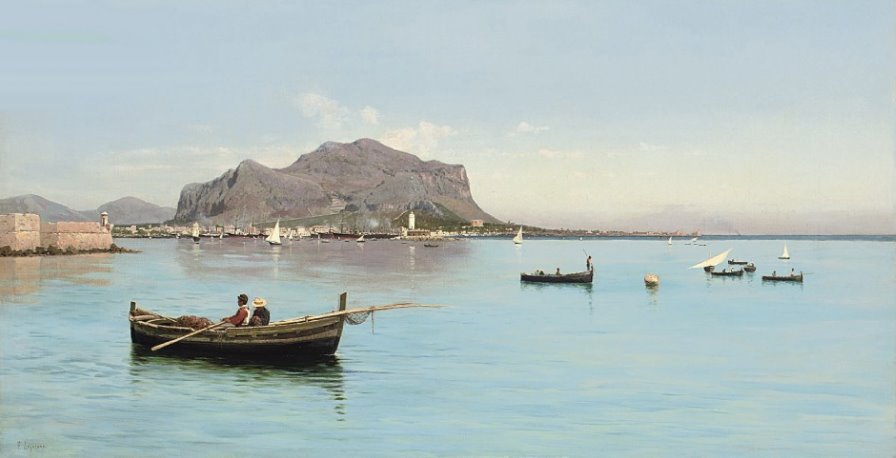
Many works of the late 1870s and 1880s depict luminous coastal scenes and rural life under intense Mediterranean light. Subjects capturing a view towards Monte Pellegrino or children fishing for clams on the seashore offer examples of the characteristic mood of this period.
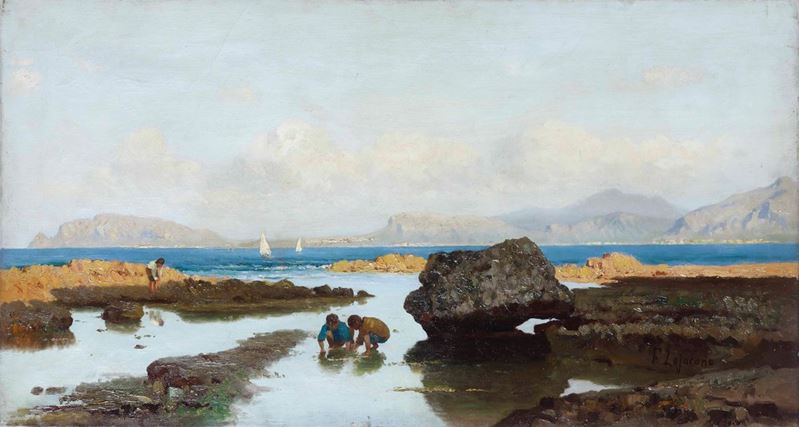
(Credits: Wikimedia Commons/ Mutual Art).
These paintings helped establish the celebrated image of Lojacono as the painter who had “stolen the sun.” At the same time, the popularity of these motifs encouraged repetition, and critics occasionally noted a tendency toward formulaic compositions designed to satisfy bourgeois taste.
The success of these subjects also encouraged a degree of studio production. Like many successful landscape painters of the period, Lojacono worked with assistants who helped prepare or repeat certain compositions destined for the expanding market of private collectors. Some versions were subsequently revised or simply signed by the artist, a practice that reflects the commercial success of his imagery rather than any fundamental change in his artistic intentions.
A Moment of Transition
By the end of the 1880s signs of change began to appear in Lojacono’s work. Critics occasionally remarked on a certain monotony in the repetition of familiar themes, yet the works he exhibited at the National Exhibition of Palermo in 1891 reveal an artist beginning to move beyond established formulas, experimenting with new ways of rendering light, atmosphere and the expressive possibilities of the landscape.
One compelling painting that anticipates this turning point is Monte San Giuliano. In this work the horizon is pushed very high while the viewpoint is dramatically lowered, so that the mountain dominates almost the entire surface of the canvas. The foreground earth is built up through countless small strokes of colour, while the sky appears as a thin and almost immaterial veil.
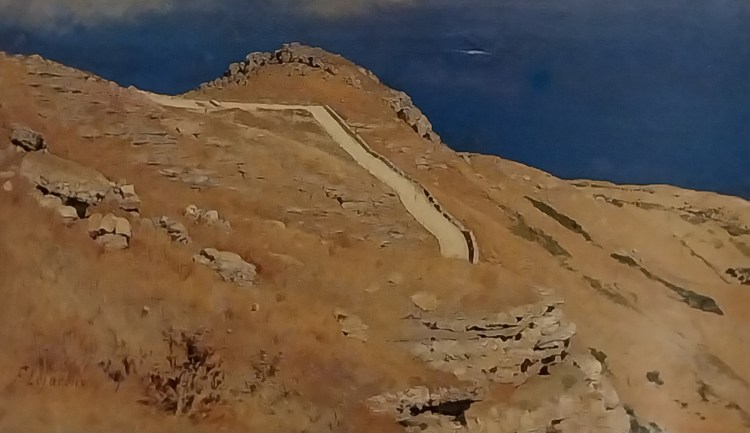
The effect is both monumental and strangely suspended, transforming the Sicilian landscape into something timeless and almost mythical. Paintings of this kind suggest a gradual shift away from descriptive realism toward a more expressive pictorial language. Lojacono moves away from the conventions of the classical veduta that characterised much of his work in the 1870s, adopting instead a language of striking formal simplicity and a decidedly anti-academic touch. The bold composition and the colour, laid down in swift patches, recall the verist tendencies of the Scuola di Resina, particularly the work of Federico Rossano. Although the picture has been generically titled Bozzetto paesaggistico, it appears to evoke an austere stretch of the Sicilian countryside at the height of summer. A road cuts diagonally across the landscape with a strong graphic accent, while pale, weathered rock formations and sparse vegetation suggest the arid terrain of western Sicily, especially the Agrigentino.
Late Landscapes and Atmospheric Studies
In the final decades of his life Lojacono’s approach to landscape became increasingly reflective. The clear panoramic vision of the 1860s and 1870s gradually gave way to more fragmentary compositions in which particular details, atmospheric conditions, or fleeting effects of light became central. Landscape was no longer simply observed and recorded; it became a vehicle for mood and meditation.
This transformation was encouraged in part by his friendship with the collector Giuseppe Sinatra. During extended stays in Agrigento the two men undertook photographic excursions through the surrounding countryside and the Valley of the Temples. These photographic explorations encouraged unusual viewpoints and close observation of seemingly incidental natural details — clusters of vegetation, oblique perspectives, or glimpses of landscape framed through successive planes.
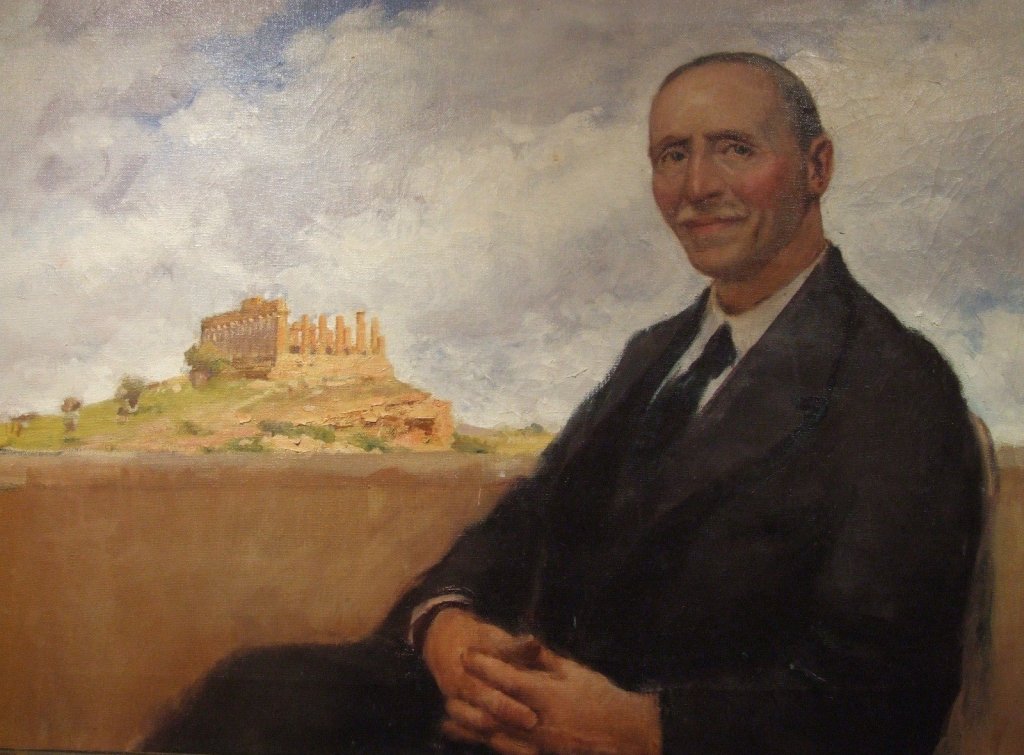
(Credit: Agrigento Ieri e Oggi).
A similar sensibility appears in Lojacono’s mature painting from the late nineteenth century onward. The frontal and all-encompassing clarity of his earlier landscapes is replaced by a more exploratory language. Sometimes the scene is constructed from loosely handled foreground motifs; at other times it is rendered with a startling immediacy, as though seized in a single moment of dazzling sunlight.
The brushwork itself becomes increasingly expressive. Dense touches of pigment and heavy applications of paint create surfaces that seem to pulse with light, while in other works the material appears almost to dissolve, producing softer and more atmospheric effects. Many of the works focus on small and anonymous studies which emphasise fleeting states of light and atmosphere. Landscape becomes a way of expressing moods or states of mind: solitude, calm, or the uneasy tension of approaching storms.
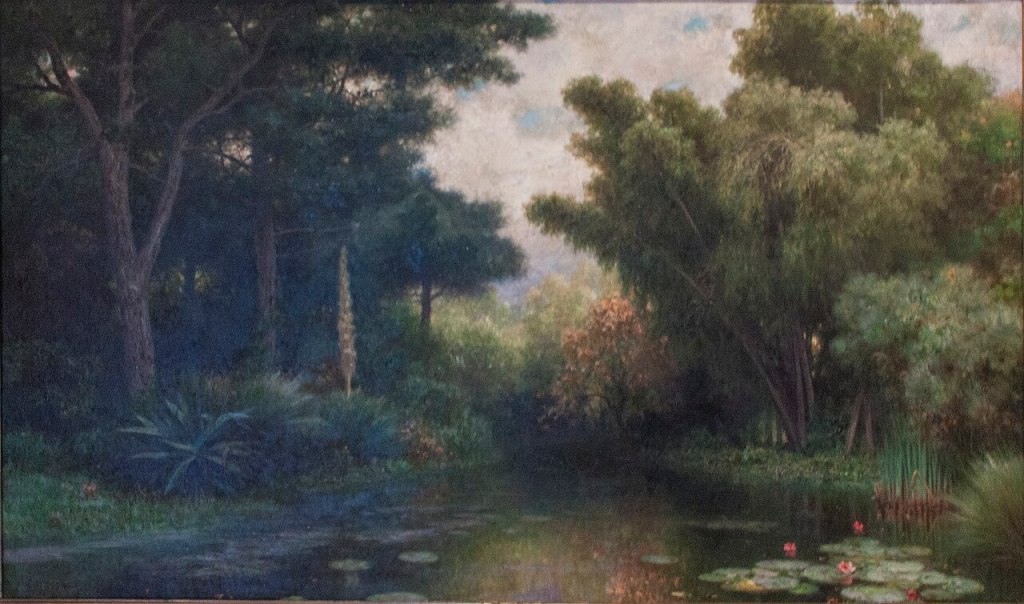
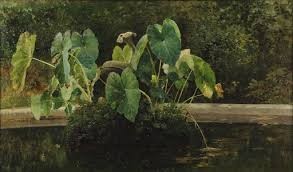
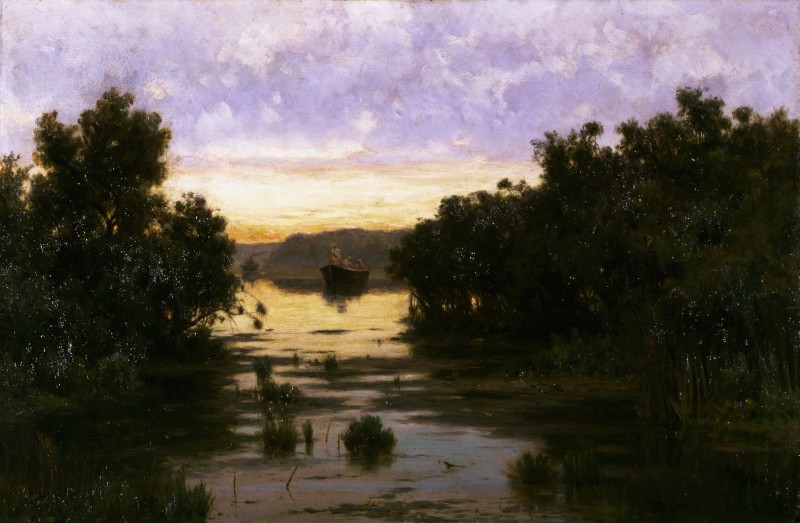
(Credits: Wikimedia Commons/ Google Arts and Culture).
Among the most striking works of this late period are a number of small studies of turbulent seas, now preserved in Palermo and Agrigento. These paintings, built from rapid strokes and agitated gestures, approach a kind of pictorial abstraction and reveal a remarkably modern sensibility. Yet they should be understood not as a departure from Lojacono’s lifelong subject but as one expression of his increasingly emotional response to nature.
In these late landscapes the Sicilian countryside and coastline are no longer simply luminous settings but mirrors of inner feeling. Their atmosphere recalls the neo-Romantic sensibility that also appears in the landscapes of Antonio Fontanesi, where nature becomes a place of reflection rather than description
A similar cultural shift can be seen in Italian literature around the turn of the century. The outward realism associated with Giovanni Verga gradually gave way to a more introspective sensibility in the poetry of Giovanni Pascoli. In collections such as Myricae, Pascoli explored the mystery of existence through heightened attention to the smallest impressions of everyday life.
Lojacono’s late landscapes evoke something comparable. Stormy seas, heavy skies, or fading light become symbols of an uncertain emotional condition. In works such as a winter marine study, waves crash against dark rocks beneath a sky swollen with rain, overturning the familiar image of the painter of Mediterranean sunlight. Here nature becomes psychological landscape — a space in which the drama of weather reflects an inner drama of feeling.
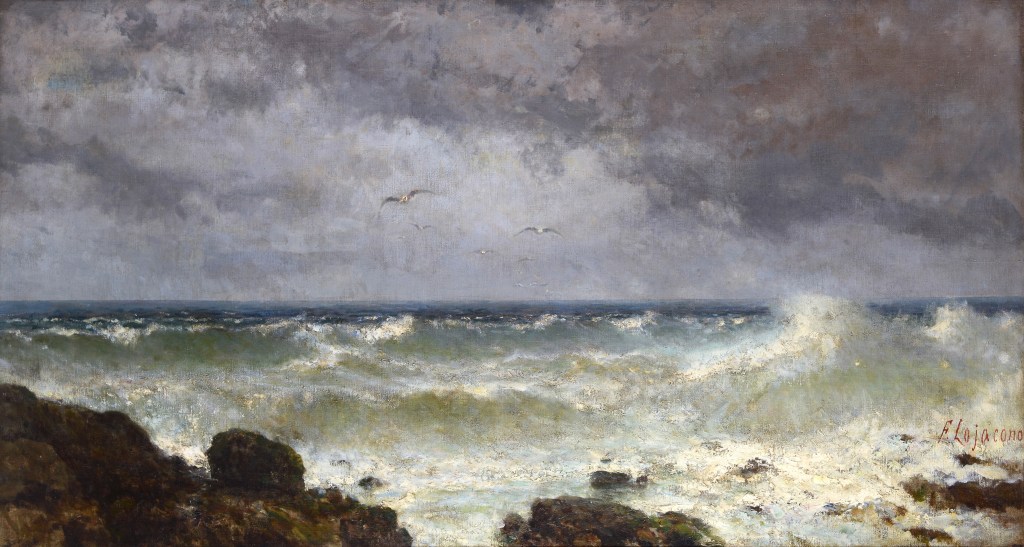
(Credit: Galleria Pananti).
Francesco Lojacono died in Palermo on 25 February 1915 after more than fifty years of artistic activity. Despite the compromises sometimes demanded by success, his work reveals a sustained search for new ways of seeing the Sicilian landscape. From the disciplined realism of his early years to the atmospheric freedom of his late paintings, he remains one of the most subtle interpreters of Mediterranean light and nature.
Four Exhibition Works
Strade di campagna (Un giorno caldo in Sicilia!), 1877 — Naples, Esposizione nazionale di belle arti, Palazzo delle Esposizioni, Via Toledo, 1877.
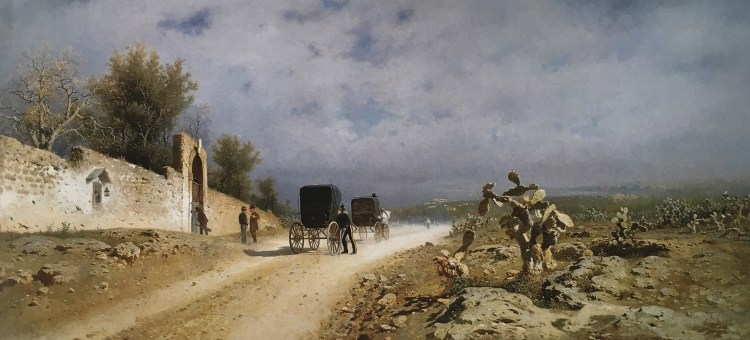
(Credit: Museo di Capodimonte).
Contemporary accounts reveal that the apparently tranquil landscape conceals a small narrative episode. Two hired carriages have halted on the dusty road before the closed gate of a farmhouse, where officers and civilians gather with sabres discreetly wrapped in cloth, suggesting an impending duel—perhaps the result of tempers inflamed by the oppressive heat of a Sicilian summer day. The anecdote, however, serves chiefly as a pretext for the expansive landscape itself, animated by prickly pear and silvery olive trees beneath a shimmering sky. The drama is presented with striking restraint, its quiet tension recalling perhaps the harsh codes of honour that haunt the Sicilian world of Cavalleria rusticana (1890) by Pietro Mascagni, drawn from the novella by Giovanni Verga.
L’arrivo inatteso (Il ritorno del coscritto), 1883 — Rome, Esposizione internazionale di belle arti, 1883.
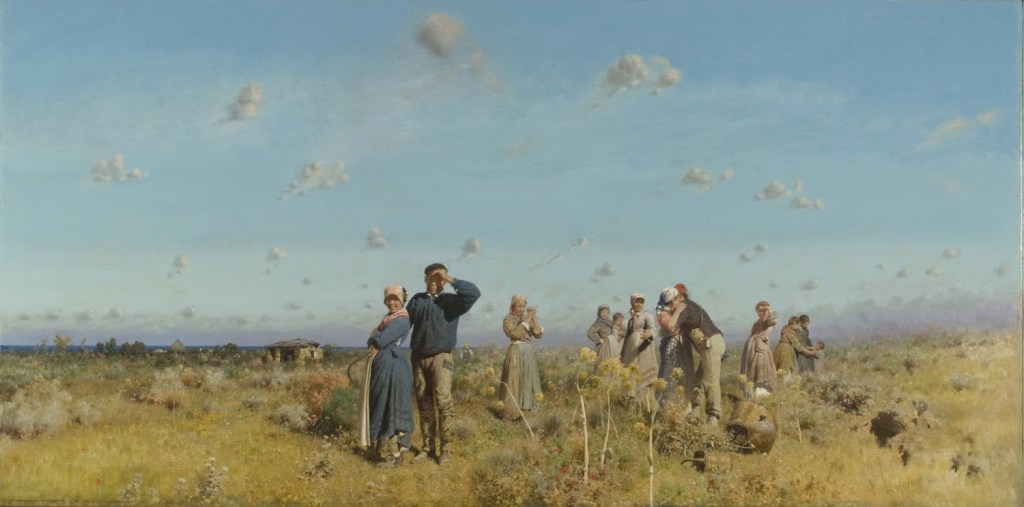
(Credit: Google Arts and Culture).
L’arrivo inatteso (Il ritorno del coscritto), exhibited in Rome in 1883, belongs to a group of works in which Lojacono introduces a modest narrative motif into a landscape that remains fundamentally atmospheric in character. As in the previous painting discussed, the anecdotal soggetto serves primarily as a point of entry for the viewer rather than as the true focus of the composition. Here the title refers to the return of a young conscript from military service, a subject readily understood in the rural society of post-unification Italy.
Contemporary descriptions emphasised above all the blazing atmosphere of the scene. One critic evoked the “golden Sicilian May” triumphing in a fiery flowering of rosemary, ferula (giant fennel), sorrel, thistles and poppies, the figures themselves enveloped in sunlight beneath an immense expanse of blue sky. The poetry of the painting, he suggested, lay above all in the contrast between warm golden light and the pure ultramarine of the heavens. In this sense the episode of the returning conscript functions largely as a pretext for the evocation of a vast summer landscape animated by Mediterranean vegetation and saturated with heat and light.
The work achieved considerable success at the exhibition and was later acquired for the royal collections, today forming part of the holdings of the Quirinal Palace in Rome. The modest narrative element embedded within the landscape also reflects the broader naturalist climate of the 1880s, not entirely remote from the rural scenes of painters such as Francesco Paolo Michetti (1851–1929) or Jules Bastien-Lepage (1848–1884). In Lojacono’s case, however, the human episode remains deliberately understated, absorbed into a landscape whose true subject is the luminous immensity of the Sicilian countryside.
Dall’Ospizio marino, 1891 — Palermo, Esposizione nazionale di Palermo, 1891–92.
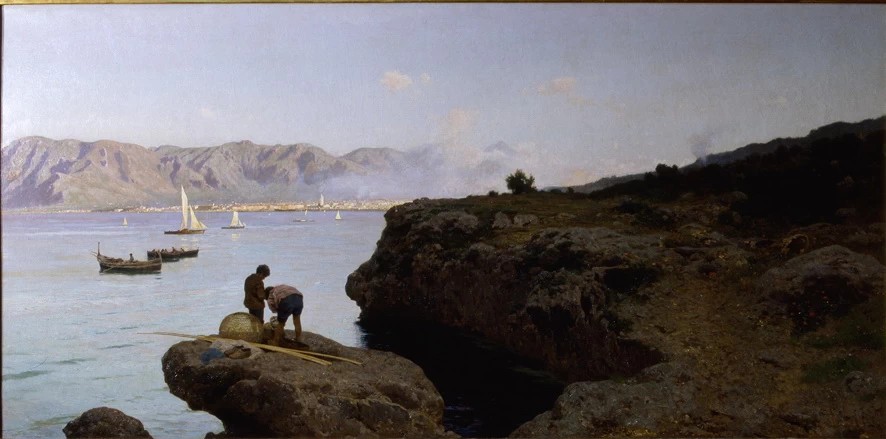
(Credit: Solo Arte).
Dall’Ospizio marino revisits a motif that appears elsewhere in Lojacono’s work: small groups of children engaged in simple activities along the shoreline. In this instance they are shown gathering crustaceans, an anecdotal episode set within a coastal landscape. The scene is located on the northern shore of Palermo near the children’s hospital founded by the surgeon Enrico Albanese and known as the Ospizio Marino. As in other works of the period, the narrative element remains secondary to the landscape itself, which unfolds in broad and tranquil tonalities, the distant horizon dissolving into a soft, vaporous violet.
Exhibited at the Esposizione nazionale di Palermo of 1891–92, the painting formed part of a notably successful moment in Lojacono’s career. At the same exhibition L’estate in Sicilia was purchased by King Umberto I for the royal villa at Monza, while Dall’Ospizio marino was acquired by the Giunta permanente di belle arti of the Ministry of Public Instruction, presided over by Domenico Morelli, for the Galleria nazionale d’arte moderna in Rome at the price of 7,000 lire.
L’estate in Sicilia (Palermo, via Romagnolo), 1891 — Palermo, Esposizione nazionale di Palermo, 1891–92.
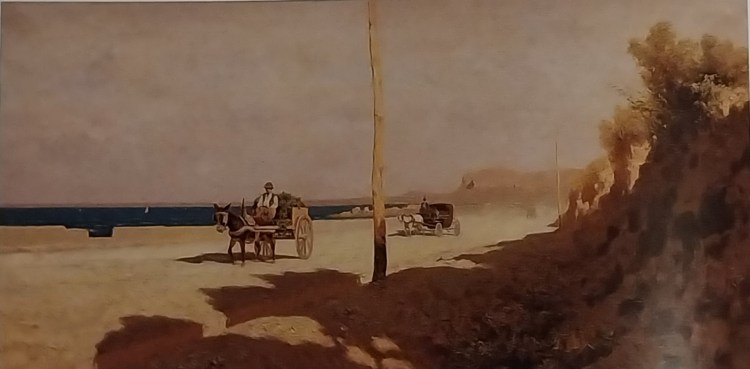
L’estate in Sicilia (Palermo, via Romagnolo), exhibited in the Fine Arts section of the Esposizione nazionale di Palermo of 1891–92, was one of the most admired works in Lojacono’s display and was purchased by King Umberto I and Queen Margherita for the royal villa at Monza. The painting was long thought to have been lost, known only through an engraving made from a photograph by Giuseppe Incorpora and reproduced in the Treves exhibition publications, before unexpectedly reappearing on the art market in recent years.
The composition centres on the motif of the sun-struck road, a subject that had acquired a particular prominence within landscape painting of the period and that invites comparison with works by Giuseppe De Nittis (1846–1884). In Lojacono’s painting, however, the scene is organised through a particularly concise structure of broad horizontal bands, animated by a long diagonal recession that carries the eye from foreground to distance. The vertical trunks that cut across the surface reinforce the sense of spatial extension from a notably low vantage point, a device characteristic of Lojacono’s work of these years.
Equally striking is the artist’s deliberate departure from the conventional iconography of the Gulf of Palermo. Instead of the celebrated prospect dominated by Monte Pellegrino—repeated for more than a century in the views of vedutisti and Grand Tour painters—Lojacono turns towards a less familiar stretch of coastline near Romagnolo. The result is a landscape both luminous and austere, where the blazing Sicilian summer is conveyed through a crystalline sky and the stark textures of rock and shadow.
[Producing these essays requires care, time, research, and resources. Contributions to help sustain this exploration would be greatly appreciated.]
https://donorbox.org/inner-surfaces-resonances-in-art-and-literature-837503
Acknowledgements
The author is indebted to the catalogue entries in Francesco Lojacono (1838–1915) (Milano, 2005), particularly those by Fabio Speranza, Anna Villari, Pierfrancesco Palazzotto, Luigi Giacobbe, and Maria Viveros, and to internet sources posted by Sergio Alcamo concerning the activity of Luigi Lojacono in Trapani. I am equally indebted to Davide Lacagnina’s book Francesco Lojacono. Le ragioni del paesaggio (Palermo, 2005) which provides an excellent introduction to the painter. The book is accessible and affordable, yet richly detailed and well supplied with references and illustrations. For a fuller treatment, the exhibition catalogue Francesco Lojacono (1838–1915) (Milano, 2005) contains a number of excellent essays as well as an extensive catalogue and critical apparatus.
Any errors or infelicities are mine alone.
Bibliography
Accascina, Maria, Ottocento siciliano. Pittura, Roma, 1939.
Barbera, Gioacchino, “Lojacono, Francesco,” in La pittura in Italia. L’Ottocento, Milano, 1991.
Barbera, Gioacchino, Luisa Martorelli, Fernando Mazzocca, Antonella Purpora, and Carlo Sisi (eds.), Francesco Lojacono (1838–1915), Milano, 2005.
De Gubernatis, Angelo, Dizionario degli artisti italiani viventi, Firenze, 1889.
Grasso, Diana, “Monte Catalfano,” in Dal vero. Il paesaggismo napoletano da Gigante a De Nittis, Torino, 2002, cat. no. 87.
Grasso, Franco, Ottocento e Novecento in Sicilia, Palermo, 1981.
Grasso, Franco, Pittori siciliani dell’Ottocento e del primo Novecento, Palermo, 1986.
Lacagnina, Davide, Francesco Lojacono. Le ragioni del paesaggio, Palermo, 2005.
Panzetta, Alfonso, Nuovo dizionario degli artisti italiani dell’Ottocento, Torino, 2003.
Vitella, Maurizio, “Una traccia per Luigi Lojacono,” in Francesco Lojacono (1838–1915), Milano, 2005.
 Inner Surfaces