Naples at the Turn of the Seventeenth Century
At the beginning of the seventeenth century, Naples possessed a flourishing and diverse artistic culture, supported by numerous churches, religious foundations and private patrons. Its connections with Rome, other Italian artistic centres and the territories of the Spanish monarchy encouraged the circulation of artists and artistic ideas. The arrival of Caravaggio in 1606 introduced a powerful new influence into an environment already shaped by several decades of artistic development. Although his innovations profoundly affected Neapolitan painting, they did not immediately displace the established artistic traditions or the painters associated with them. The subsequent prominence of Caravaggio and his followers in art-historical accounts has nevertheless tended to overshadow the achievements of those already active in the city.
Among the principal figures of the preceding generation were Belisario Corenzio and Fabrizio Santafede, whose different approaches to religious painting reflected the diversity of late-sixteenth-century artistic practice. Corenzio was associated above all with extensive decorative programmes, while Santafede had developed a restrained language of devotional painting, informed by Roman examples and the religious priorities of the Catholic Reformation. His compositions sought clarity of narrative and expression, avoiding the more elaborate artifices of late Mannerism without relinquishing the resources of the Renaissance pictorial tradition.
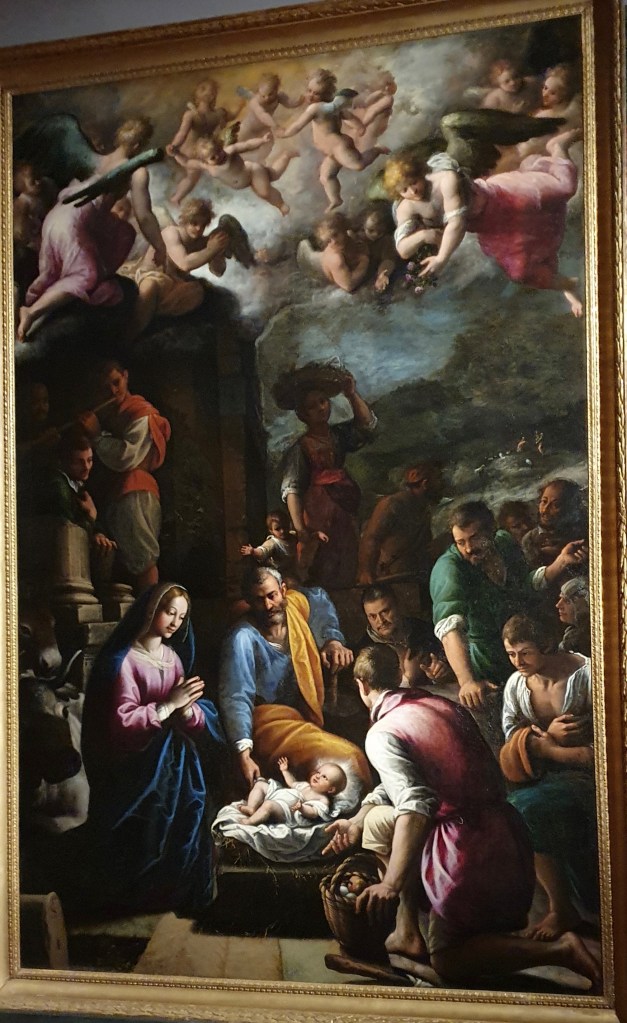
Pierluigi Leone de Castris has placed particular emphasis on the development and persistence of this reformed devotional painting. Emerging during the closing decades of the Cinquecento, it owed much to artists such as Scipione Pulzone, whose measured and accessible religious imagery offered a model for painters seeking to reconcile artistic accomplishment with the demands of devotion. In Naples, Santafede became one of its principal exponents. The tradition nevertheless remained open to different interpretations, and its continuation into the seventeenth century cannot be understood simply as an increasingly anachronistic survival. Leone de Castris identifies Ippolito Borghese and Giovan Bernardino Azzolino, both established in Naples during the 1590s, as important representatives of its subsequent development.
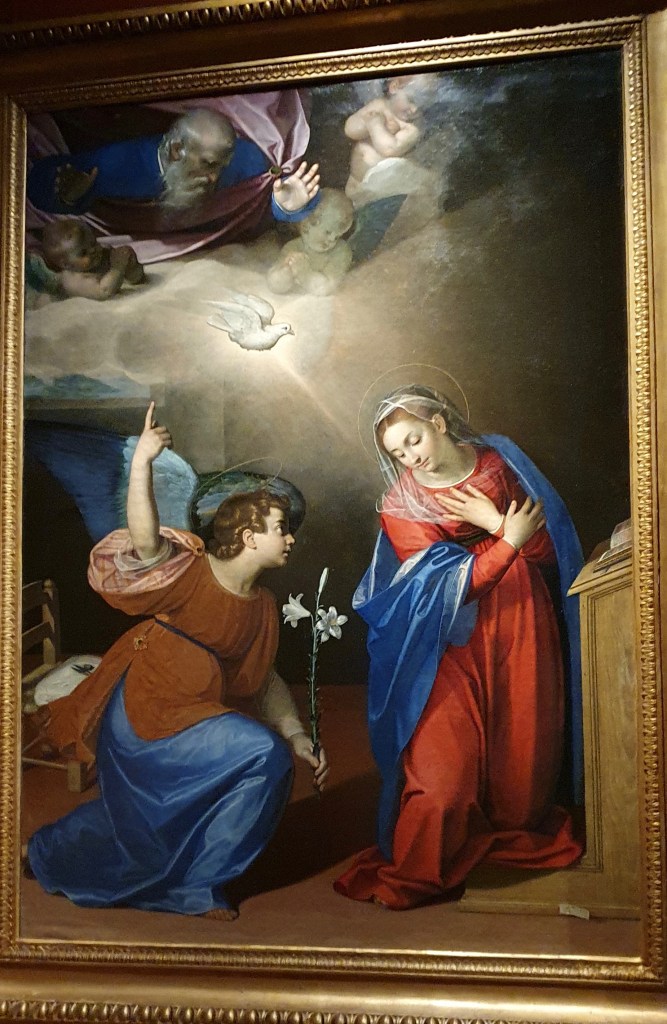
The distinction between a supposedly exhausted late Mannerism and an ascendant naturalism consequently becomes difficult to sustain. Artists formed before Caravaggio’s arrival did not necessarily reject his innovations, any more than their willingness to adopt particular effects implied a wholesale abandonment of their previous convictions. The varied expectations of patrons, religious institutions and private collectors allowed several pictorial languages to flourish simultaneously. As Giovanni Previtali had recognised, the social and cultural complexity of Naples provided a setting in which artistic traditions could coexist, responding to different requirements without conforming to a single sequence of stylistic development.
Stefano Causa has reconsidered this history from a complementary perspective, questioning the critical assumptions that have so often relegated painters such as Azzolino to the margins of Neapolitan art. The exceptional attention devoted to Caravaggio and his immediate followers has tended to obscure the continuing vitality of alternative traditions, encouraging later historians to interpret their persistence as evidence of artistic conservatism or imperfect assimilation. He instead proposes a more discriminating understanding of the relationship between innovation and continuity. Drawing upon the literary critic Leo Spitzer’s discussion of classical restraint in the language of Racine, he introduces the concept of smorzatura, a moderation or attenuation of expressive intensity that does not necessarily diminish its effectiveness. Applied to painting, the term describes the capacity to accommodate new pictorial resources while preserving established principles of composition, emotional expression and devotional clarity. Azzolino emerges as a significant representative of this tendency, whose artistic legacy may also be discerned in the later achievements of Andrea Vaccaro.
Such an interpretation does not require us to overlook the limitations of Azzolino’s painting, or to regard every instance of stylistic restraint as a conscious aesthetic decision. It does, however, invite a closer examination of works that have too readily been judged according to their distance from Caravaggio. Azzolino’s career is particularly revealing in this respect. Born in Cefalù, Sicily, around 1572 and established in Naples by the early 1590s, he was already an accomplished painter before the emergence of Caravaggesque naturalism. Over the following decades he undertook substantial religious commissions, developed enduring relationships with patrons in Naples and Genoa, and extended his activity beyond painting to sculpture and modelling in wax. His career, which continued until his death in 1645, intersected with some of the most consequential artistic developments of the early Baroque without losing its essential continuity.
Azzolino’s formation and early commissions offer a starting point for examining the character of that continuity.
Formation and Early Commissions
Azzolino’s arrival in Naples, probably around 1592, brought him into contact with an artistic culture in which Roman influences were already firmly established. His early formation remains imperfectly documented, but Pierluigi Leone de Castris has emphasised the importance of the Cavalier d’Arpino, Giuseppe Cesari, whose work at the Certosa di San Martino provided a significant point of reference for painters active in the city. Cesari’s example offered a language of animated figures, graceful movement and accomplished decorative invention, qualities that Azzolino would reconcile with the more measured devotional tradition represented by Fabrizio Santafede. His development also took place in proximity to Belisario Corenzio and Luigi Rodriguez, painters whose extensive fresco decorations were among the most conspicuous achievements of Neapolitan art at the close of the sixteenth century.
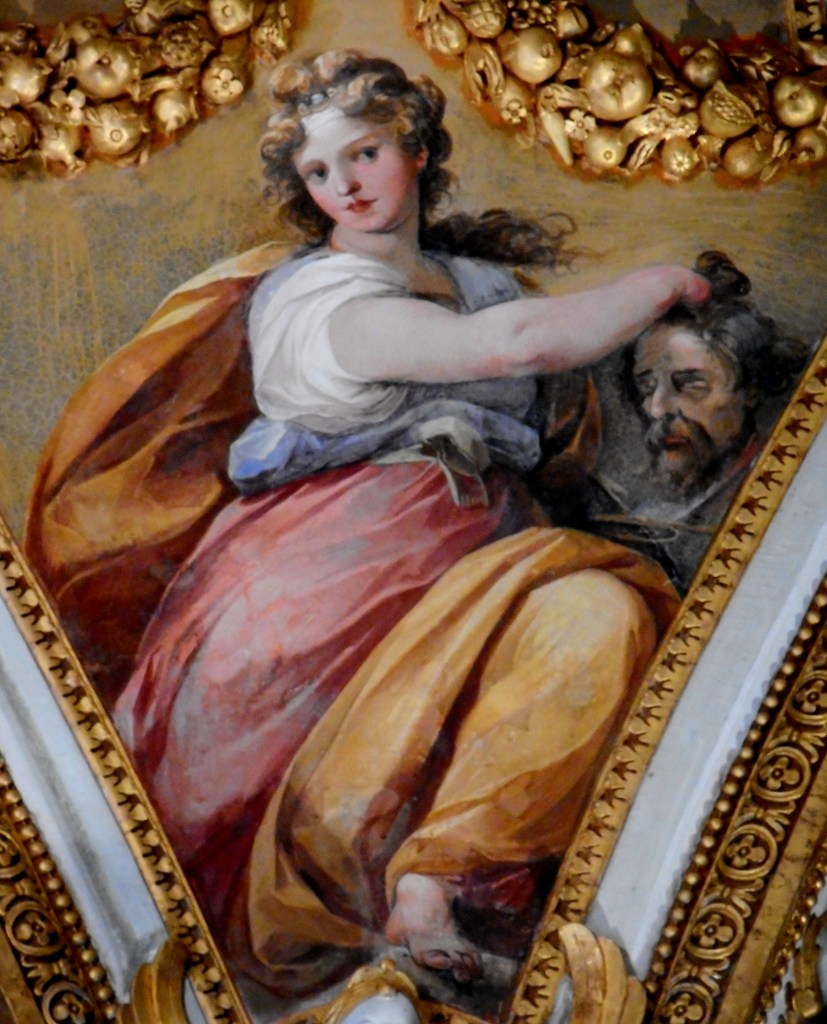
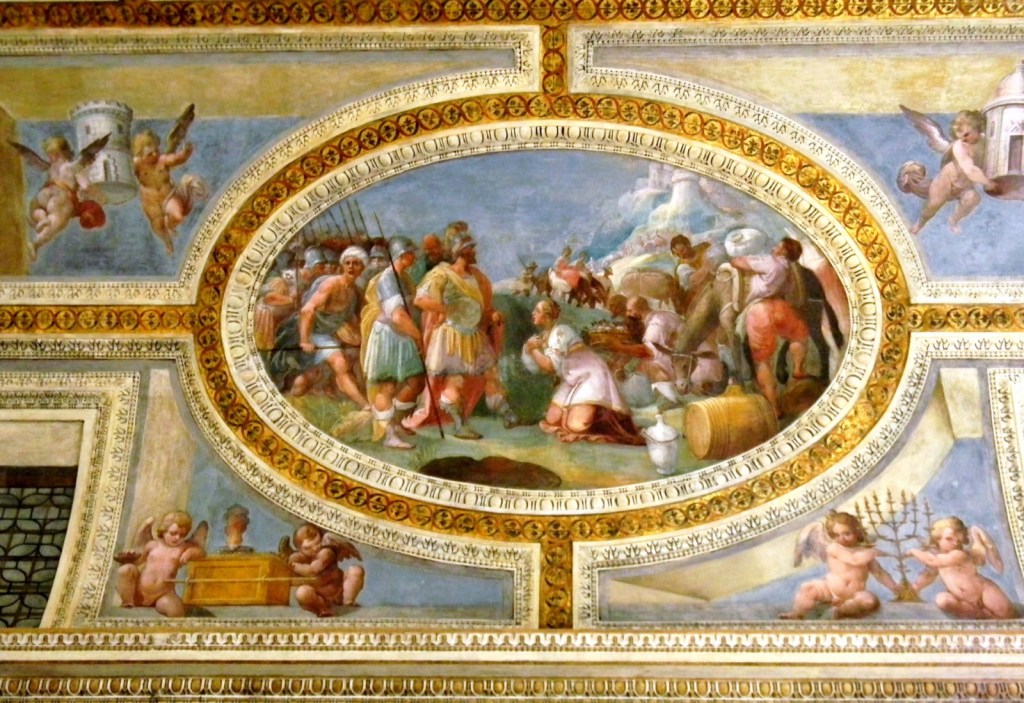
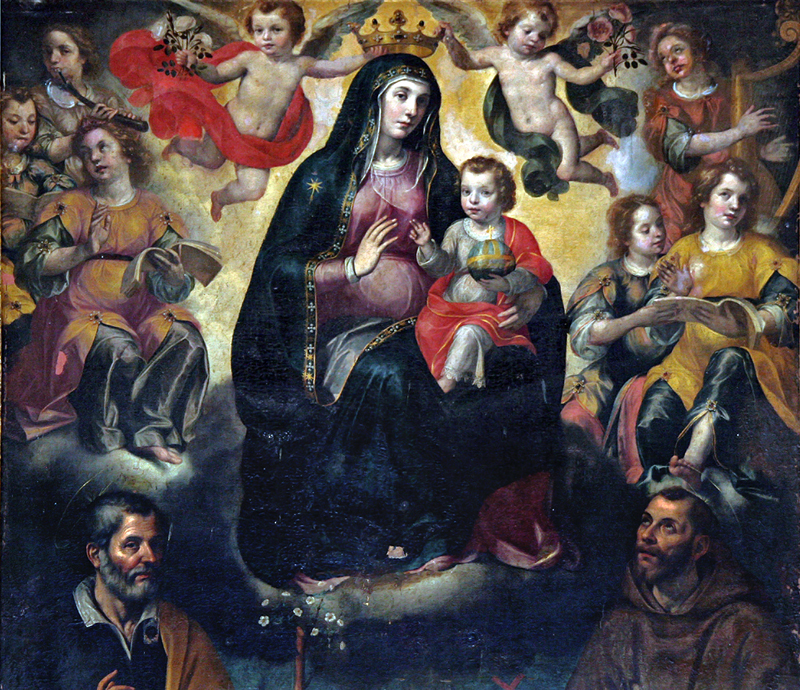
The surviving documents suggest that Azzolino established himself professionally with considerable speed. By January 1597 he had completed a Madonna del Rosario for Santa Maria delle Grazie at Caponapoli, a commission valued at seventy-five ducats. Two years later, in April 1599, he contracted with the governors of the church of Santo Spirito to undertake, in collaboration with Giulio dell’Oca, an extensive programme of fresco decoration encompassing the cupola, pendentives, architectural surrounds and scenes from the Passion. The agreement, valued at 160 ducats, indicates that he was already trusted with work of considerable scale and technical complexity. Santafede was appointed to judge its completion, a circumstance that gives documentary substance to the artistic relationship between the two painters. Their personal acquaintance is independently confirmed by Santafede’s appearance as godfather to Azzolino’s son Gabriele in March of the same year.
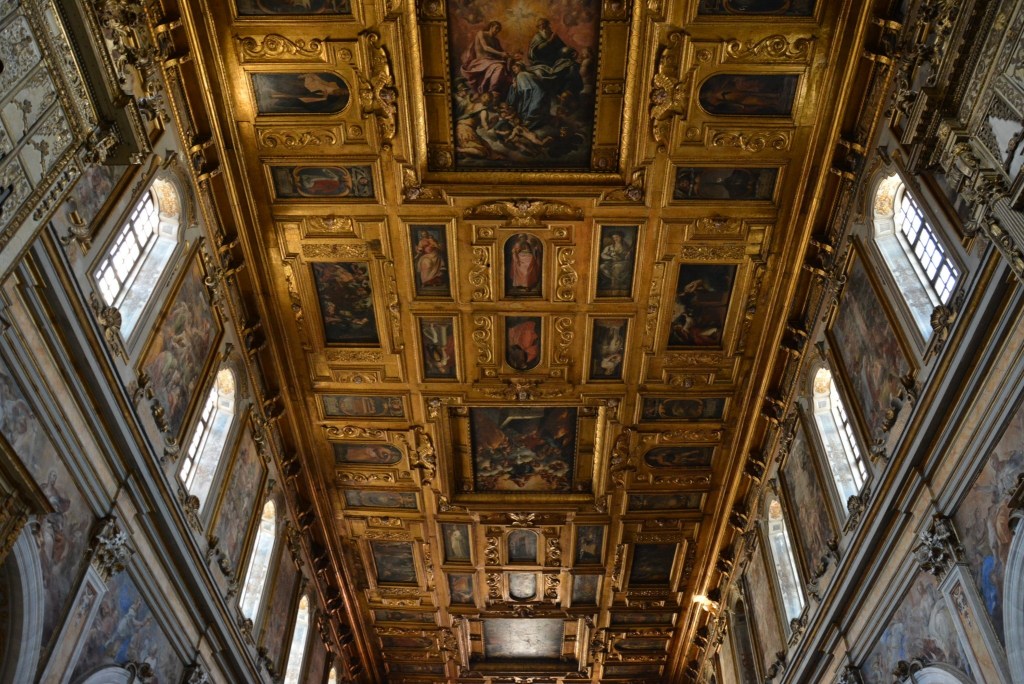
A further payment, recorded in July 1599, concerns paintings for the coffered ceiling of Santa Maria la Nova, among them the Presentation of Christ in the Temple. The composition is particularly valuable for understanding Azzolino’s artistic practice because a preparatory drawing survives in the National Gallery of Canada, Ottawa. The relationship between the drawing and the finished painting provides evidence of the attention he devoted to the organisation of his compositions, while also revealing a graphic language informed by the Roman traditions of the late Cinquecento. Viviana Farina’s subsequent research has considerably enlarged the body of drawings associated with Azzolino, making it possible to consider his activity as a draftsman as an integral part of his achievement rather than merely an adjunct to his painting.
His growing reputation is further illustrated by the decoration of the Ambrosino Chapel in the church of Gesù e Maria. Commissioned by Giovan Battista Ambrosino in 1605, the programme included a Madonna and Child with Saints Thomas Aquinas and Catherine of Alexandria and a Crowning with Thorns. Payments continued into 1606, providing a relatively secure chronology for an undertaking completed around the time of Caravaggio’s arrival in Naples. The chapel is important both for its evidence of Azzolino’s proficiency in fresco and for the coexistence of different artistic tendencies within his early work. Leone de Castris relates its devotional imagery to Santafede’s example, while recognising the continuing importance of Cesari’s more animated pictorial language.
The distinction between these sources of inspiration should not be made too rigid. Azzolino’s early painting developed through the accommodation of artistic traditions that were themselves undergoing change. The devotional clarity associated with Santafede did not exclude decorative invention, any more than the example of Cesari necessarily implied an attachment to the more extravagant conventions of Mannerism. Azzolino’s ability to work across these different registers was already apparent before the emergence of Caravaggesque naturalism, and it helps explain the durability of his subsequent career.
By 1606 Azzolino had established relationships with religious institutions and private patrons, undertaken demanding fresco commissions and acquired a professional standing founded on a recognisable artistic formation. His encounter with Caravaggio’s innovations would therefore introduce new possibilities into an already developed practice.
Encountering Caravaggio
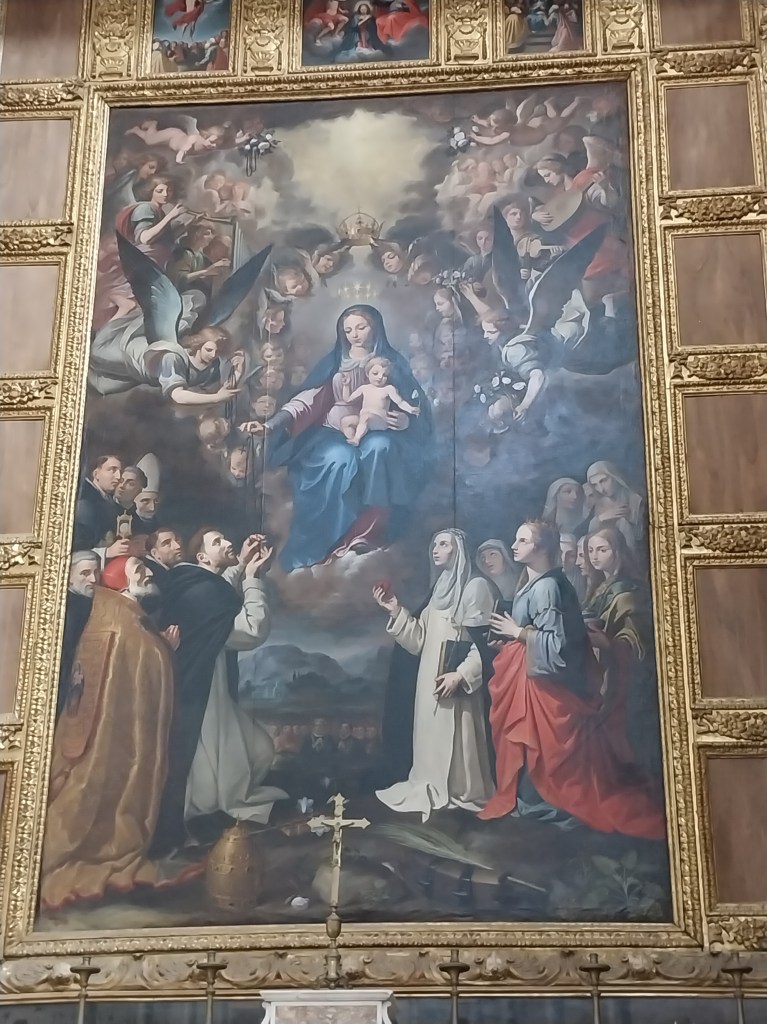
An early indication of Azzolino’s engagement with Caravaggio appears in the now-lost Madonna del Rosario, commissioned by the wealthy merchant Marco Romano for his chapel in the church of Gesù e Maria, for which the painter received a final payment in November 1609. Azzolino also executed frescoes of the Mysteries of the Rosary around the altarpiece in 1610. The composition, preserved in a photographic reproduction, had already been compared with Caravaggio’s celebrated treatment of the subject, now in Vienna, by Raffaello Causa in 1970. More recently, Stefano De Mieri has drawn attention to Azzolino’s removal of the prominent barefoot supplicants and the reduced importance accorded to the donor, interpreting these changes as an accommodation of Caravaggio’s invention to more conventional Dominican devotional expectations.
The much larger Madonna del Rosario at Santa Maria della Sanità, commissioned in 1612, reveals the continuing importance of the devotional tradition. Leone de Castris regards it as one of Azzolino’s most substantial achievements in this field, a monumental religious composition whose elaborate organisation remained closely allied to the expectations of ecclesiastical patronage. Its ambitions illustrate the range of pictorial possibilities available to Azzolino during a period in which he was responding to Caravaggio without relinquishing the resources of his earlier formation.
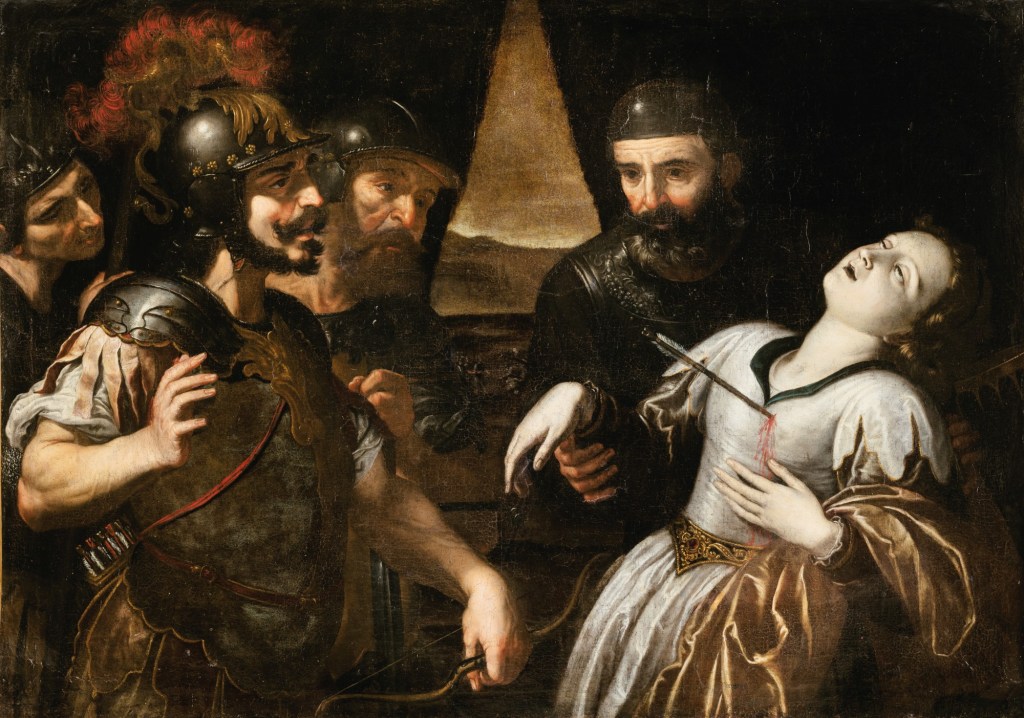
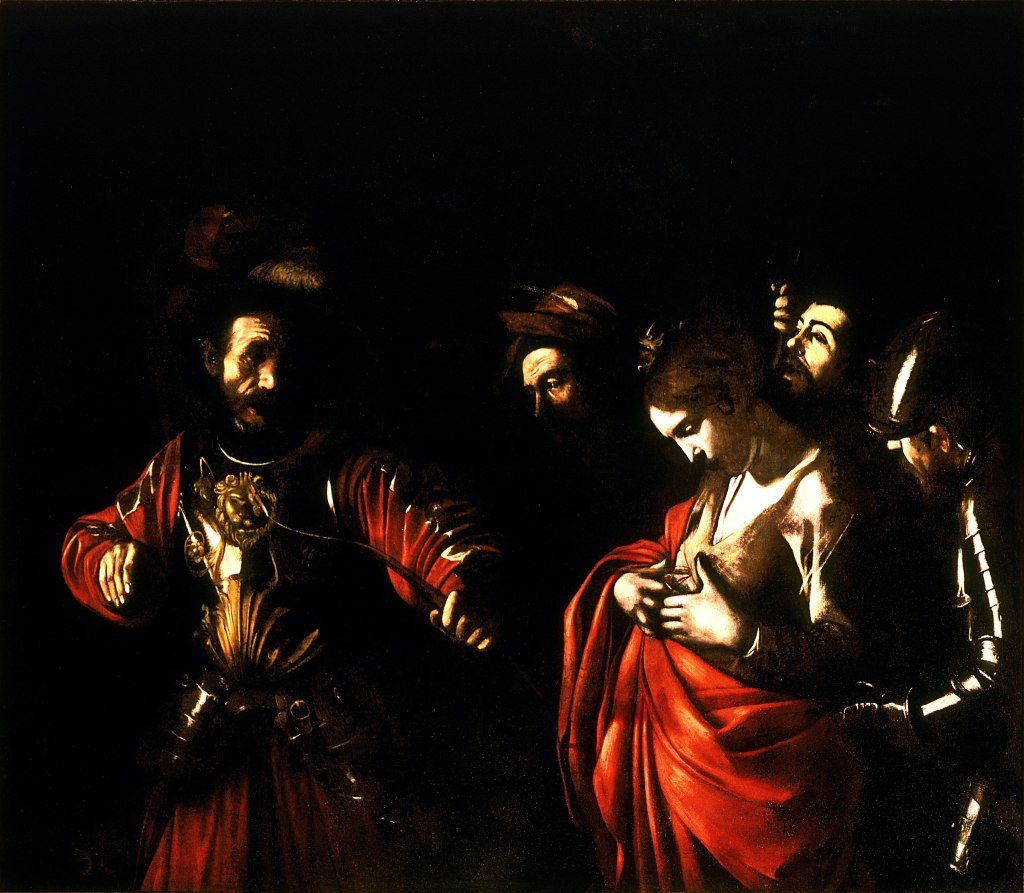
A more concentrated encounter with Caravaggio’s inventions emerges in Azzolino’s treatments of the Martyrdom of Saint Ursula. The subject had acquired particular significance in Naples following Caravaggio’s own painting of 1610, commissioned by the Genoese nobleman Marcantonio Doria. Azzolino had already established a substantial relationship with Doria and his associates, and Viviana Farina has suggested that he could have examined Caravaggio’s canvas while it remained in Naples in the possession of Doria’s agent, Lanfranco Massa, before its dispatch to Genoa. The possibility offers a persuasive explanation for his knowledge of the composition without requiring the journey to Genoa once proposed in the literature.
The existence of several paintings of the Martyrdom of Saint Ursula associated with Azzolino complicates the reconstruction of his response. Farina distinguishes an early version, formerly in a private collection and subsequently offered for sale at Dorotheum in Vienna in 2018, from the better-known painting in the Pinacoteca Nazionale, Siena.
She proposes a date around 1610–12 for the former, placing it relatively close to Caravaggio’s original. Her examination also introduces the possibility of an encounter with the painting of Louis Finson, the Flemish artist active in Naples during the period. In Farina’s interpretation, affinities with Finson’s vigorous and still partly Mannerist naturalism suggest that Azzolino’s response to Caravaggio may have been mediated by the work of other painters already experimenting with the new language.
The Siena Martyrdom, attributed to Azzolino by Stefano Causa in 1991 and subsequently identified by Farina as a representation of Saint Ursula rather than Saint Christina, presents a somewhat different chronological problem. Antonio Iommelli, writing in the catalogue of the 2019 Caravaggio Napoli exhibition, dates the painting to around 1616. Farina argues for a somewhat later chronology, placing it after Ribera’s arrival in Naples that year and drawing comparisons with Azzolino’s documented Madonna d’Ognissanti of 1617 and paintings of the following decade. Her interpretation therefore allows for a more extended development of Azzolino’s naturalism than Iommelli’s relatively early dating suggests. Farina also identifies affinities with Ribera’s Saint Sebastian Tended by the Holy Women in Bilbao, particularly in the forceful characterisation of the two faces at the upper right of the Siena composition, lending stylistic support to her proposed later dating.
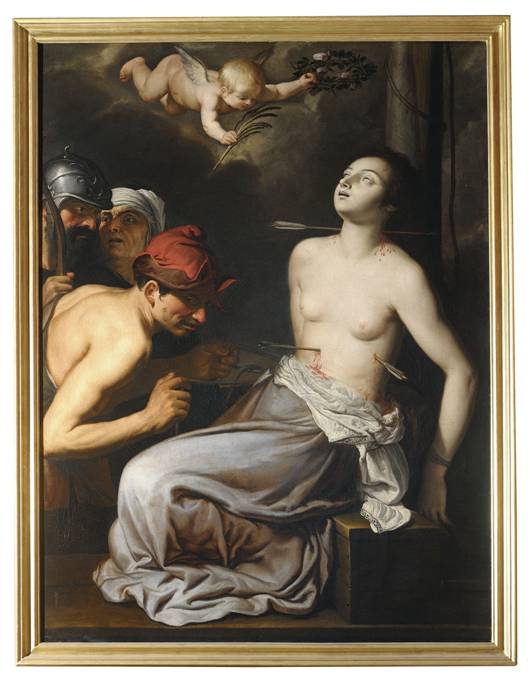
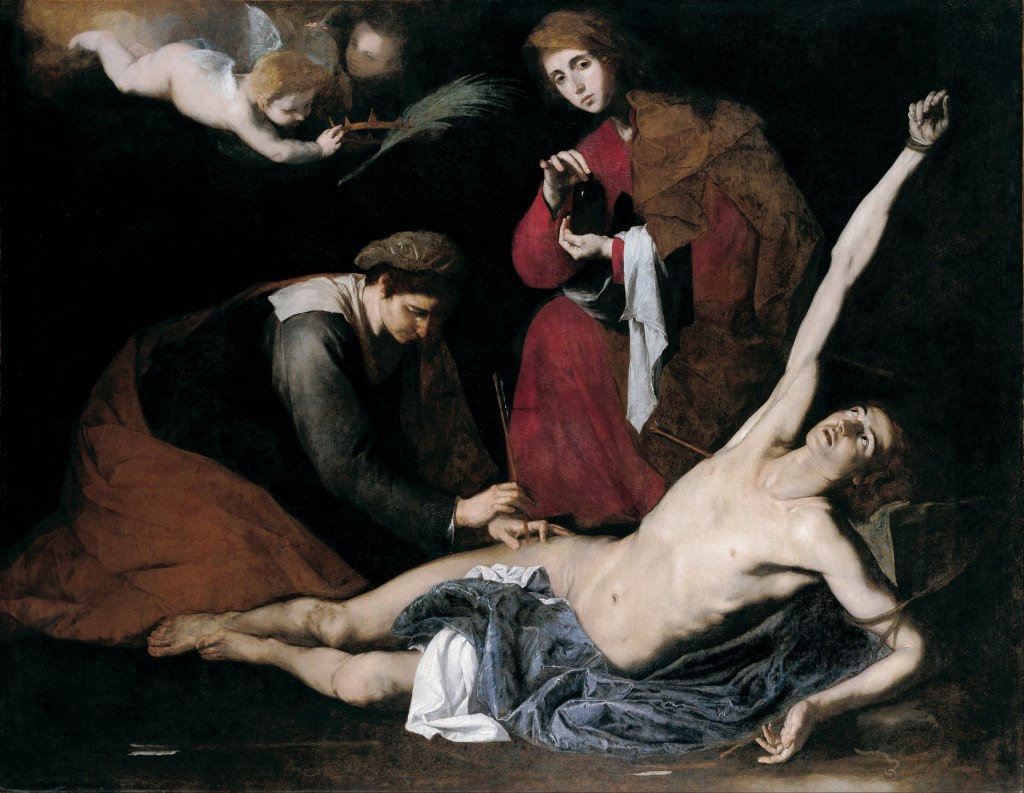
The relationship with Caravaggio’s painting is central to the interpretation of the Siena Martyrdom. As Iommelli observes, Azzolino adopts the concentrated treatment of the subject, dispensing with Ursula’s traditional companions to focus attention upon the encounter between the saint and her executioner. Yet the adaptation also reveals the continuing importance of Azzolino’s earlier artistic formation. The emotional intensity of Caravaggio’s invention is brought within a more measured conception of religious narrative, in which the representation of martyrdom remains closely associated with the conventions of devotional painting. The comparison is consequently revealing not only of Caravaggio’s influence but of the different artistic purposes to which elements of his pictorial language could be put.
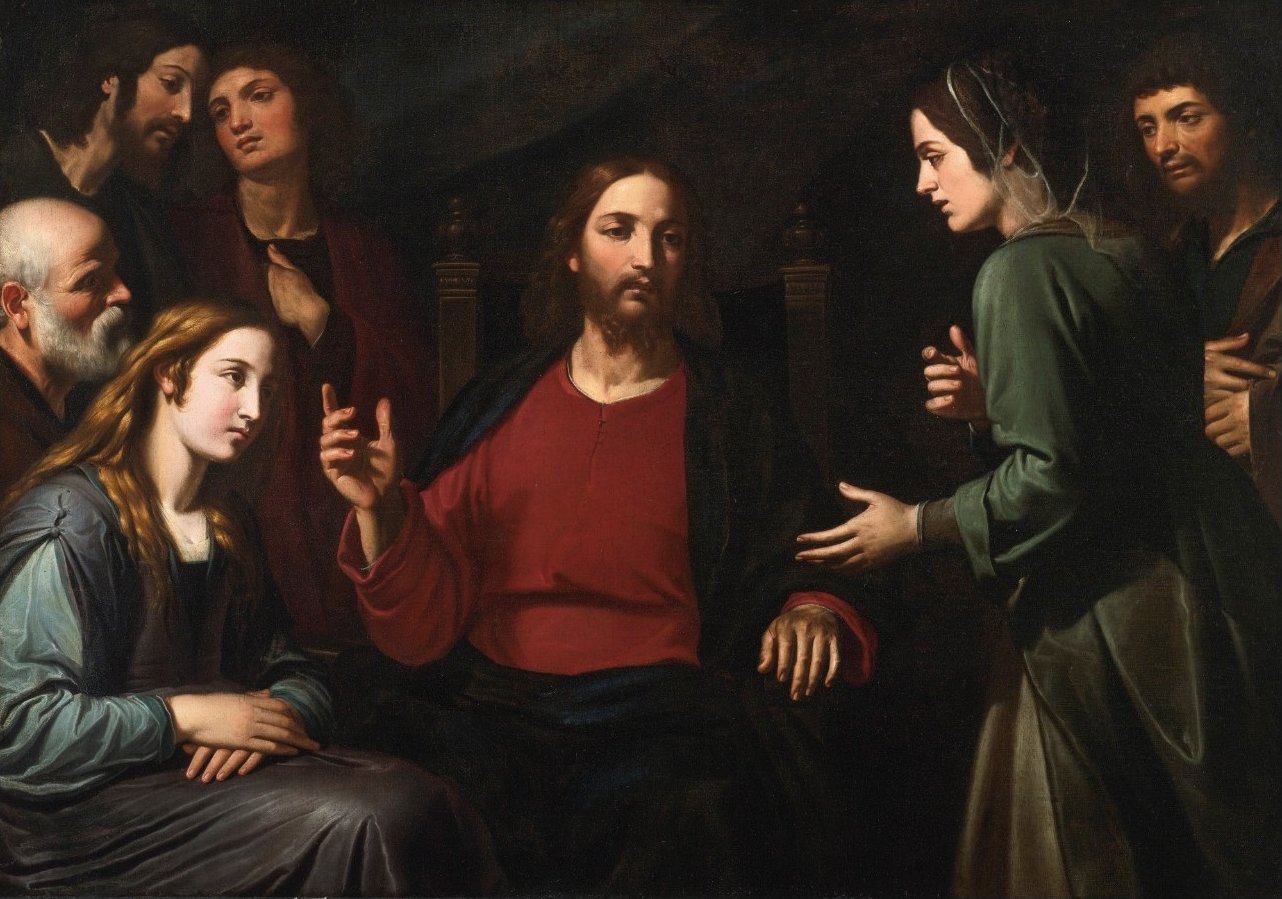
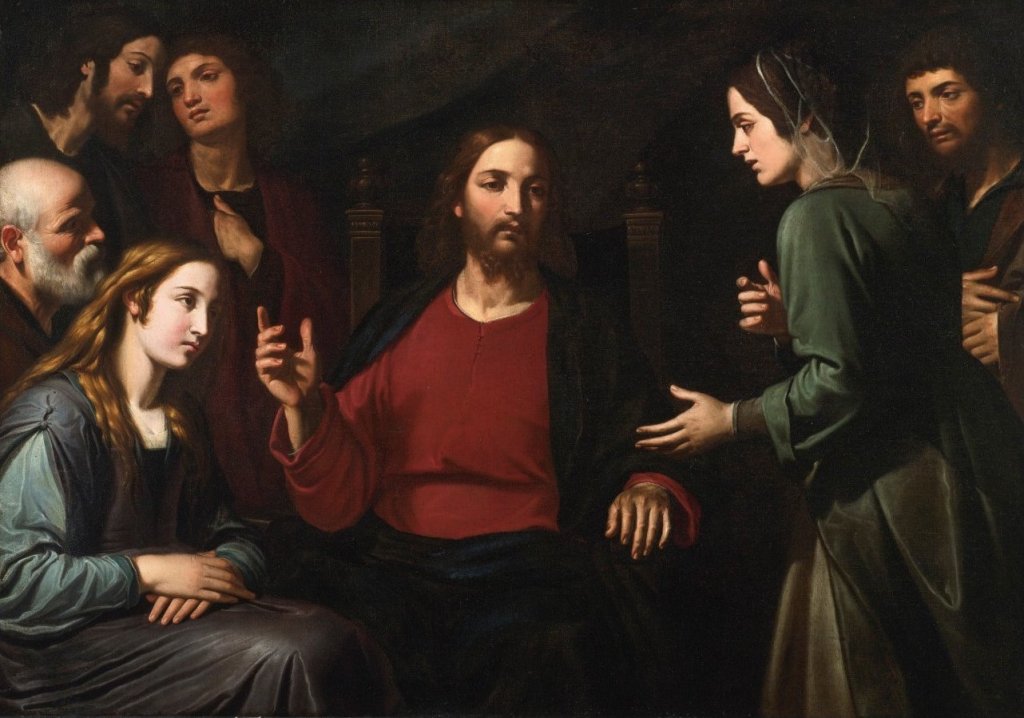
A different aspect of Azzolino’s engagement with naturalism emerges in Christ in the House of Martha and Mary, a painting that appeared at Sotheby’s in New York in January 1996 under an attribution to Pietro Novelli. Causa subsequently reassigned it to Azzolino, supporting his proposal through comparisons with the painter’s Saint Dominic Distributing Rosaries in San Pietro Martire, Naples. Ferdinando Bologna and Stefano De Mieri agreed with the attribution, although its precise chronology remains unsettled. Leone de Castris considered a date within the second decade of the century, while the later dating, around 1620 or somewhat beyond, was proposed by Causa.
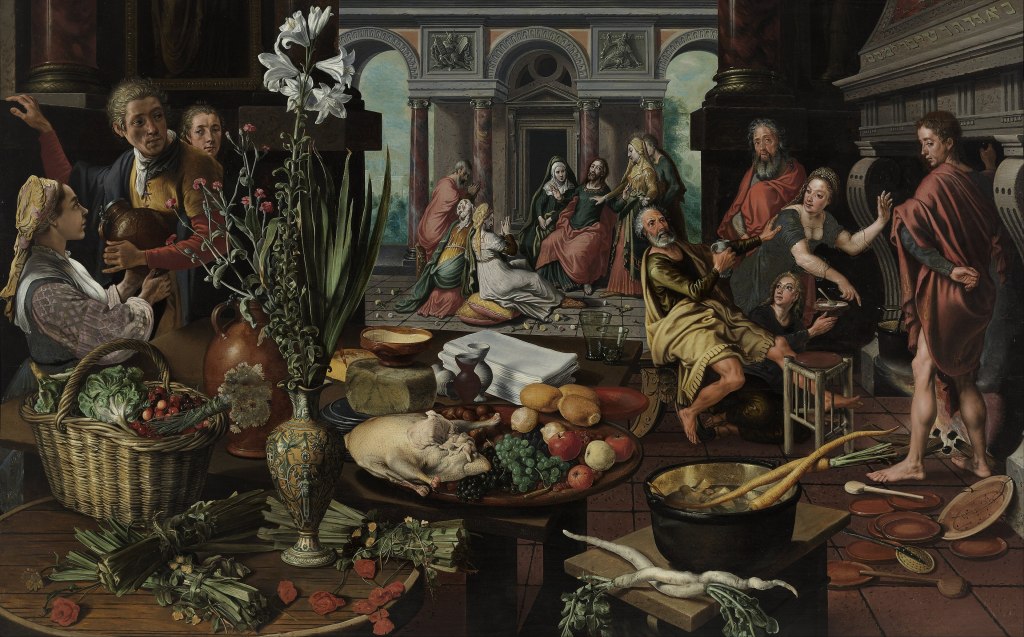
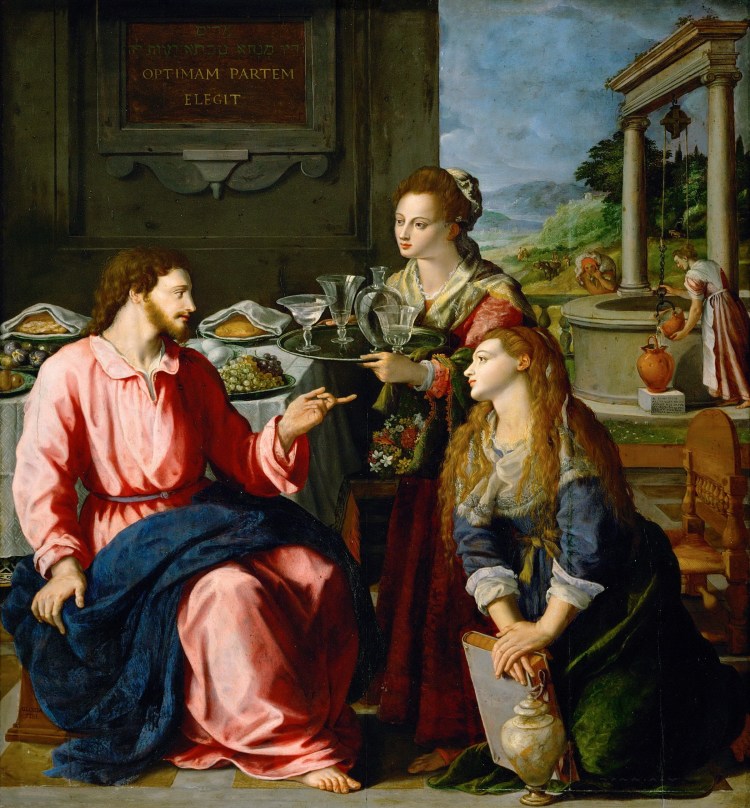
The painting also belongs to a wider European iconographic tradition, explored in the same study, in which the relationship between the biblical narrative and its domestic setting assumes remarkably different forms. In Pieter Aertsen’s treatment, Christ’s visit is relegated to the background of an elaborate kitchen still life; Santi di Tito, by contrast, places Christ and the two sisters at the centre of a composition enlivened by incidental details of domestic life. Gregorio Pagani gives the episode a more animated character, with Martha hurrying forward to interrupt her sister, while Alessandro Allori accords renewed prominence to still-life elements associated with Flemish and northern Italian painting. The subject appears to have enjoyed less popularity among Neapolitan painters, although Santafede treated the moment of Christ’s invitation by the sisters in a painting delivered to the Pio Monte della Misericordia in 1612, while Ippolito Borghese represented the subsequent episode of his visit to their house. The discussion draws particular attention to the elaborate, swelling folds of Christ’s cloak and Mary’s garments in Borghese’s composition, whose brilliant decorative surfaces contrast with the comparative austerity of Azzolino’s treatment.
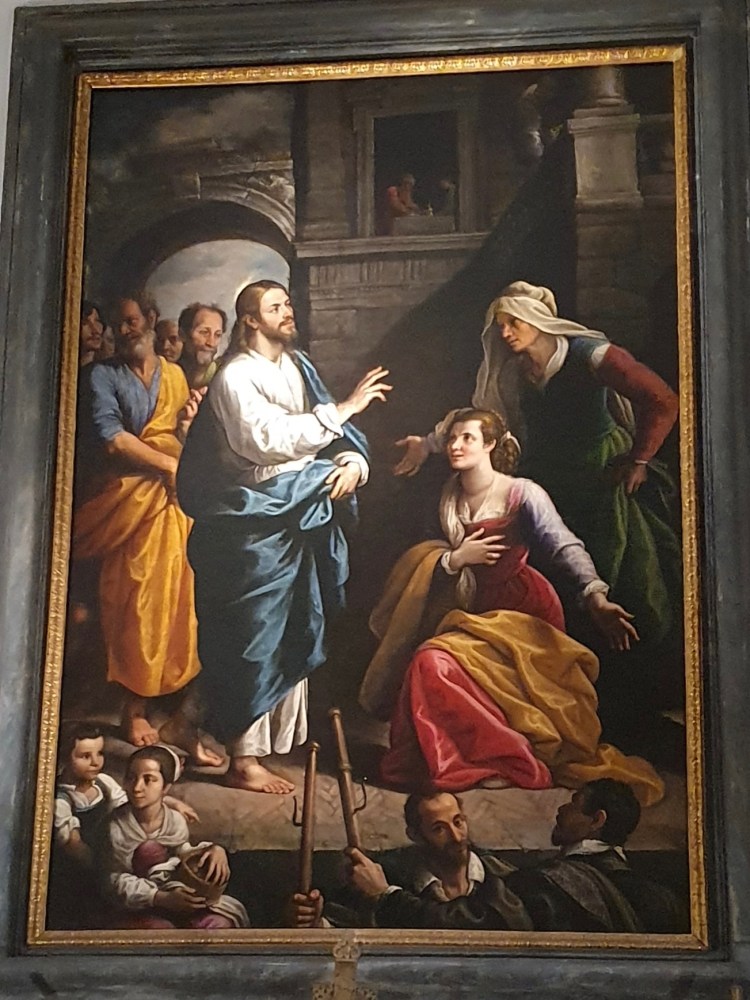
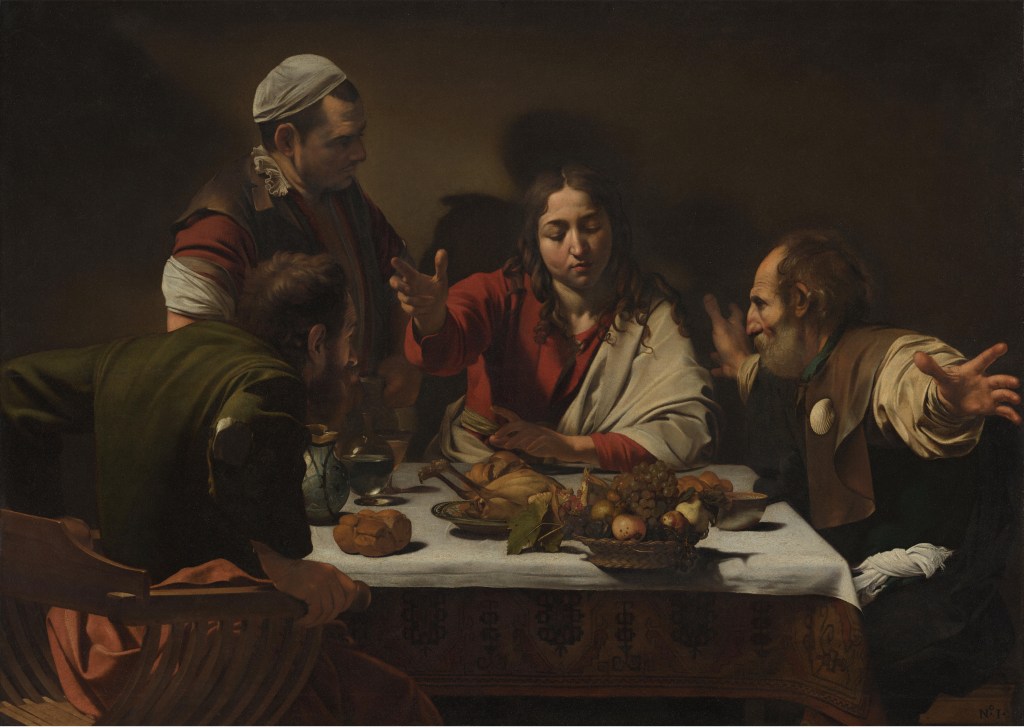
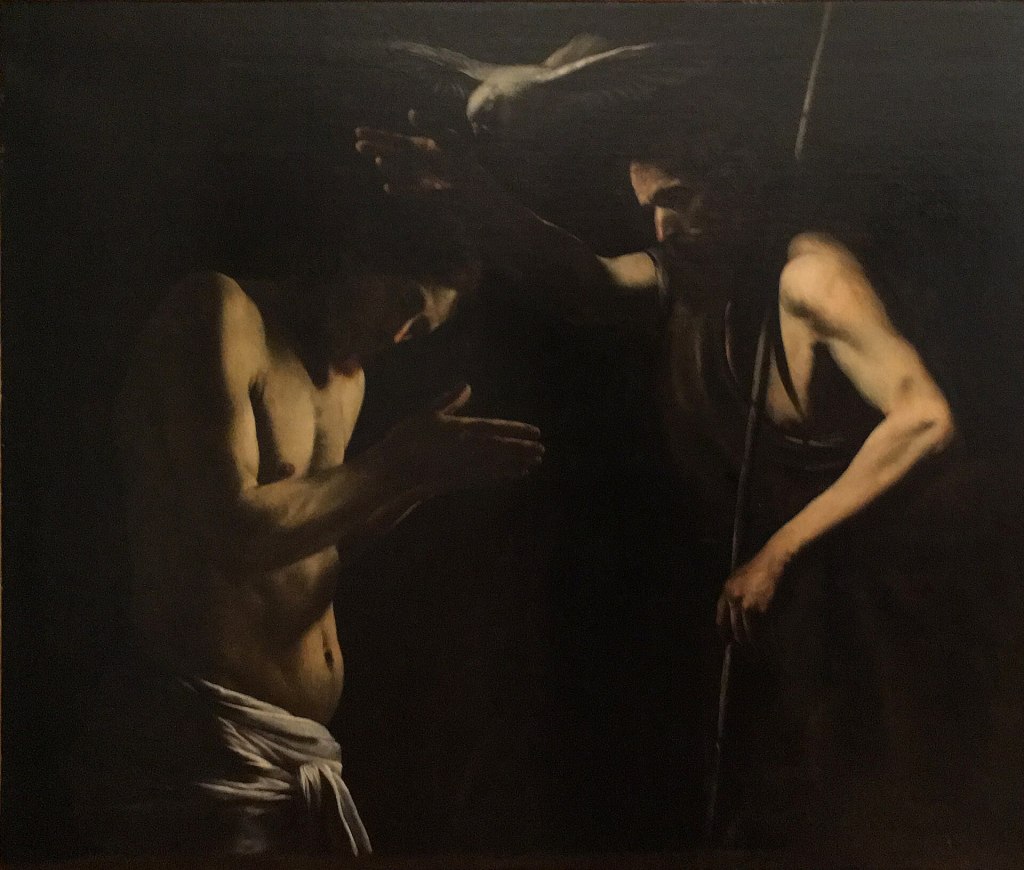
Causa identifies affinities with Caravaggio’s treatments of the Supper at Emmaus, particularly in the conception of Christ, but finds Azzolino’s organisation of the figures and their relationship to the surrounding space markedly different from the more radical naturalism of Battistello Caracciolo. In Christ in the House of Martha and Mary, the participants remain distributed across a relatively populous composition, their dramatic presence subdued as their forms emerge almost as silhouettes against the background. This attenuation of expressive effect exemplifies his concept of smorzatura. The contrast with Battistello’s Baptism of Christ is instructive: there, a radically economical composition concentrates its expressive force in the gestures of just two figures. He describes it as a masterpiece of sottrazione, or subtraction, distinguishing the intensity achieved through such pictorial reduction from Azzolino’s more measured modulation of an established narrative form.
The painting’s stylistic affiliations are nevertheless difficult to disentangle. In this reading, the physiognomy of the young bearded man at the left recalls the work of the Florentine painter Francesco Curradi, while the older figure, seen in three-quarter profile, with his pronounced baldness and strongly illuminated head, suggests a subdued version of a Riberesque type. Elsewhere, the rounded folds of Martha’s and Mary’s garments coexist somewhat uneasily with abrupt shadows across the faces and Christ’s gesture suspended in mid-air. The softening of Christ’s expression also suggests something that seems to anticipate the early work of Andrea Vaccaro. He acknowledges the difficulty of reconciling these disparate characteristics within a convincing chronology, tentatively suggesting a date around 1620 or somewhat later. He is equally uncertain about where the painting was executed, considering Naples, Rome and, with particular interest, Genoa, although he offers no firm conclusion.
The affinities with Ribera are particularly suggestive, since the Spanish painter’s establishment in Naples in 1616 introduced another powerful presence into Azzolino’s immediate artistic environment. Their subsequent family relationship, together with Azzolino’s extensive connections among Genoese patrons, would provide further opportunities for artistic exchange during the following decades.
Genoese Patronage and the Relationship with Ribera
The extent of Azzolino’s connections with Genoa provides an indication of the reputation he enjoyed during his lifetime. His patrons included members of the Doria and Spinola families, whose commercial and financial interests linked Genoa with Naples and the wider territories of the Spanish monarchy. Particularly important was Marcantonio Doria, whose association with Azzolino developed into a sustained relationship encompassing paintings, devotional sculpture and commissions for religious institutions. An inventory of May 1620 records fifty works associated with Azzolino in Doria’s collection, including three copies. Some entries may refer to waxworks rather than paintings, but the total nevertheless testifies to an extraordinary concentration of work by a single artist.
Viviana Farina has reconstructed this relationship in considerable detail, revealing the importance of the merchants and agents through whom commissions were negotiated and works dispatched. Among them was Lanfranco Massa, Doria’s representative in Naples, whose connections with Azzolino extended beyond ordinary commercial dealings. Massa’s uncle, Francesco, had been godfather to Azzolino’s daughter Stefania Caterina in 1600, while a letter of 1608 describes Marcantonio Doria as the painter’s compare. Farina explains that the designation could indicate a form of spiritual kinship, generally established through the participation of a person of higher social standing in a baptism or comparable family ceremony involving someone of lower rank. Such relationships created obligations of mutual assistance while reinforcing the personal ties through which patronage operated.
The surviving financial records give some measure of the activity sustained by these connections. In 1608, correspondence concerning a payment for a Martyrdom of Saint Lawrence already places Azzolino within Doria’s network. Further payments made through Massa in 1610 concerned a Flagellation of Christ and a painting of Martha and Mary Magdalene. Such transactions demonstrate the range of religious subjects supplied to Genoese patrons and the extent to which Azzolino could participate in an artistic market extending well beyond Naples. The large number of paintings associated with Doria also suggests a patronage relationship that was both commercially productive and remarkably enduring.
Giovan Carlo Doria, Marcantonio’s brother, provides another important connection. A letter written by Azzolino from Naples on 21 March 1616 concerns a Martyrdom of Saint Apollonia intended for the Conservatorio delle Monache di San Giuseppe in Genoa. The correspondence is particularly valuable because it establishes the artist’s presence in Naples while he was engaged upon a commission for a Genoese institution. Farina has consequently challenged the earlier belief that Azzolino spent a period working in Genoa. The documentary evidence supports the circulation of his paintings between the two cities, but not the journey formerly assumed to explain their presence there.
Azzolino’s professional standing in Naples acquired an additional significance in 1616 through the marriage of his daughter Caterina to Jusepe de Ribera. An agreement dated 15 November provided for a dowry of six hundred ducats, establishing a family relationship between the established Sicilian painter and the younger Spaniard, whose arrival in Naples that year would have considerable consequences for its artistic development. The association brought Ribera into Azzolino’s immediate family and professional circle. Farina’s research indicates that father-in-law and son-in-law shared a house and workshop during the later 1610s, providing a more substantial basis for considering their artistic relationship than the marriage alone.
Farina has examined the stylistic consequences of this proximity, identifying works in which Azzolino appears to have responded to Ribera’s more forceful naturalism. Her discussion of the Martyrdom of Saint Ursula in Siena is one example. Another connection emerges from Azzolino’s Compianto in the presbytery of the Girolamini in Naples, an invention related to Ribera’s Pietà now in the National Gallery, London. A workshop version of Azzolino’s composition survives in the Chapel of the Crucifix at Vallo della Lucania. The relationship, discussed by Farina and subsequently by Gianluca Forgione, offers a further instance of artistic exchange between the two painters.
An especially intriguing proposal emerges from Farina’s examination of a Salome Receiving the Head of Saint John the Baptist, formerly attributed to Ribera alone. She suggests that the painting, probably executed around 1617–20, represents a collaboration between Ribera and Azzolino. Her argument rests upon distinctions in the handling of individual figures and their relationship to Caravaggio’s two versions of the subject. The executioner seen from behind recalls Caravaggio’s Salome in Madrid, while the treatment of the severed head derives more closely from the London composition, already adapted by Azzolino in an earlier painting of about 1608.
Carlo Sellitto’s treatment of the subject, painted around 1613, provides a further point of reference. Sellitto had reworked Caravaggio’s London composition by confronting the principal figures in profile, developing a more elaborate exchange of glances and introducing additional faces at the margin of the scene. The severed head, too, is presented in profile. Farina argues that this interpretation was known to Azzolino and Ribera and contributed to the development of their proposed collaborative painting. Their response to Caravaggio consequently emerges from an exchange of pictorial inventions among Neapolitan artists rather than from the imitation of a single prototype.
Farina finds further evidence of Azzolino’s participation in the treatment of Salome herself. Comparing Salome with Ribera’s Penitent Magdalene, Farina observes that her face lacks the Spaniard’s assured modelling of volume and sensitivity to the textures of living skin, exhibiting instead the smooth, polished finish characteristic of Azzolino’s painting. The red mantle similarly lacks the richness and subtle variation of colour found in Ribera’s work, while the meticulous rendering of small decorative details, notably the red bows of Salome’s costume, offers further evidence of Azzolino’s hand. The comparison with his documented Madonna d’Ognissanti of 1617 lends further support to this attribution. Other passages, notably the hands holding the basin, retain qualities that Farina associates with Ribera, inviting comparison with his Christ Mocked in the Girolamini. Farina’s proposal for a collaboration between Azzolino and Ribera, while highly plausible on stylistic grounds, remains without documentary confirmation.
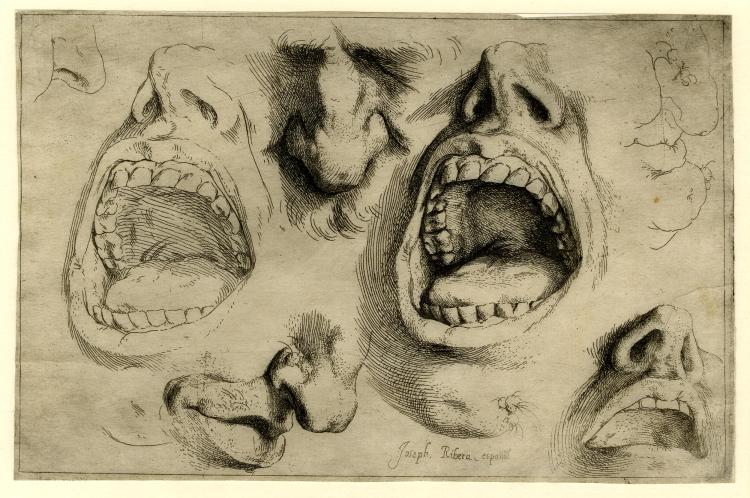
A further indication of the possible exchange between the two artists emerges from Farina’s study of Ribera’s drawings and prints. She identifies a striking relationship between a wax head of a Damned Soul, attributed to Azzolino and formerly in a private collection in Milan (Farina 2014, p. 139, fig. 169; also illustrated on p. 244), and the studies of a screaming mouth in Ribera’s etching Studies of a Nose and Mouth, produced around 1622. The comparison suggests how Ribera may have transformed the smoother modelling of the wax into a more sharply individualised study of physiognomy. If the attribution of the wax head is accepted, the relationship offers a possible instance of influence passing from Azzolino to Ribera, rather than exclusively in the opposite direction.
Azzolino’s activity was sustained by a family workshop in which his sons Gabriele and Andrea also participated. Andrea’s signed and dated Judith and Holofernes of 1641, now in the deposits of Palazzo Abatellis in Palermo, provides a rare secure point of reference for distinguishing his production from that of his father. The evidence for the family’s artistic activity complicates the attribution of works associated with Azzolino’s later career, although the surviving documentation does not always permit the responsibilities of individual members to be established.
The Doria connection continued into Azzolino’s later years. Correspondence from 1641 concerning a statue of Saint Francis Xavier for Genoa reveals the detailed negotiations through which the patron sought to determine the sculpture’s appearance and devotional expression. Questions concerning the saint’s gestures, clothing, crucifix and emotional character were discussed with the artist, who responded to the patron’s wishes even when these entailed alterations to work already substantially completed. Farina’s examination of the correspondence also makes clear that Azzolino supplied the sculpted and painted components of the work, while other craftsmen could contribute to its final presentation. The letters offer a revealing glimpse of the practical relationship between artistic execution and religious patronage, extending across considerable geographical distances and maintained through a continuing exchange of instructions, designs and finished objects.
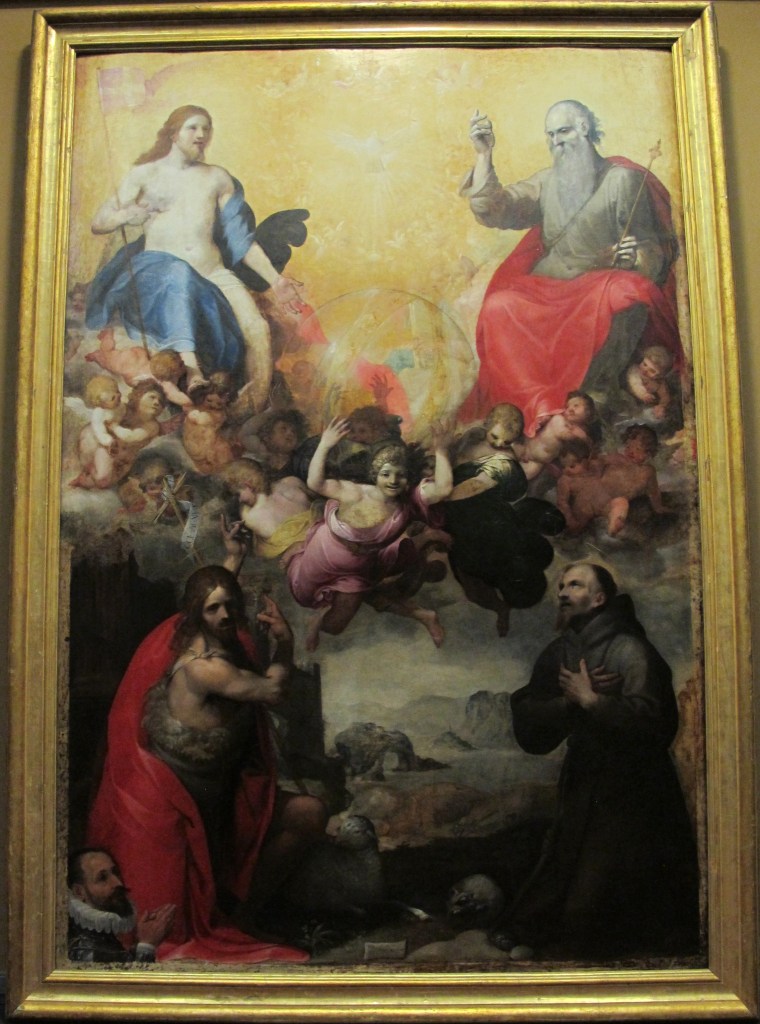
The wider range of religious paintings associated with Azzolino offers a further perspective on the character and development of his art. As Forgione has observed, the influence of Santafede’s restrained devotional language remained evident in his altarpieces, even as he assimilated elements of Caravaggio’s naturalism and, subsequently, Ribera’s more forceful pictorial manner. These tendencies did not necessarily succeed one another in a straightforward chronological progression. From the early Trinity, Madonna and Child with Souls in Purgatory to the later Saint Paulinus Freeing a Slave, commissioned for the Pio Monte della Misericordia in 1626, his religious compositions suggest a sustained accommodation of inherited pictorial conventions to changing artistic circumstances. The works illustrated here, including the Ascension and the Last Judgement, offer a broader view of a painter whose stylistic development cannot be reduced to a simple passage from Mannerism to Caravaggism.
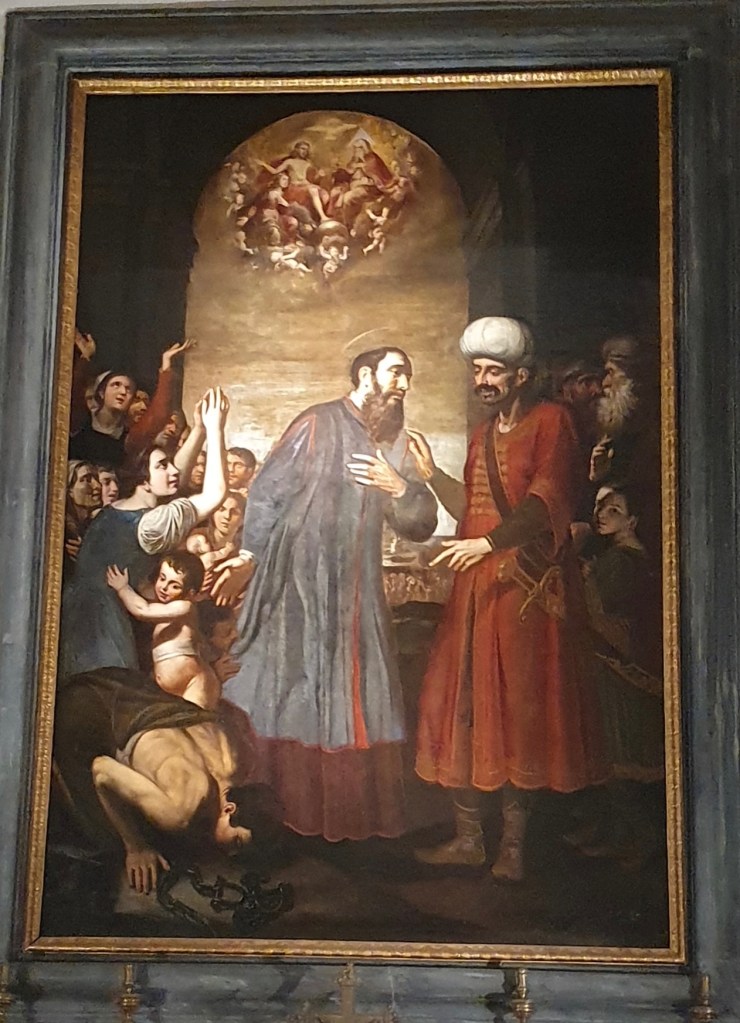
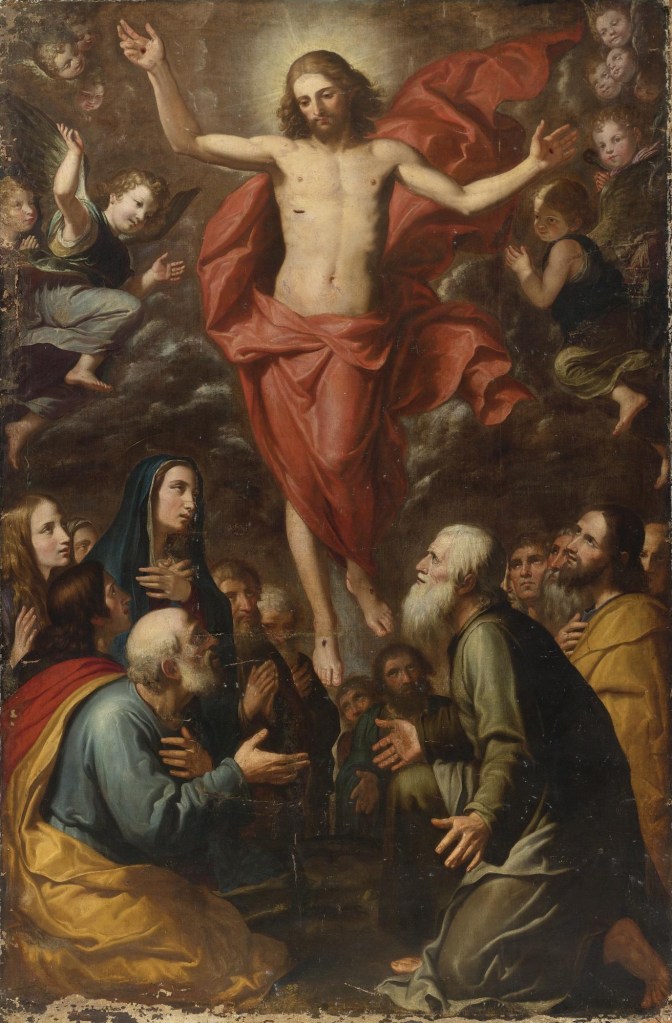
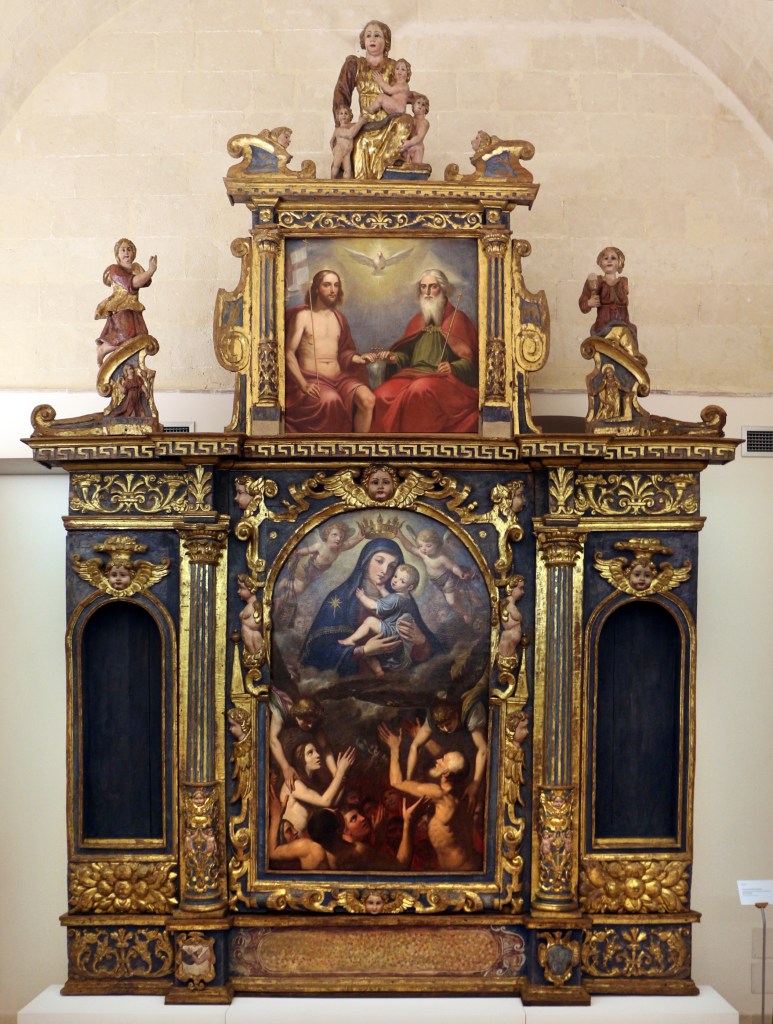
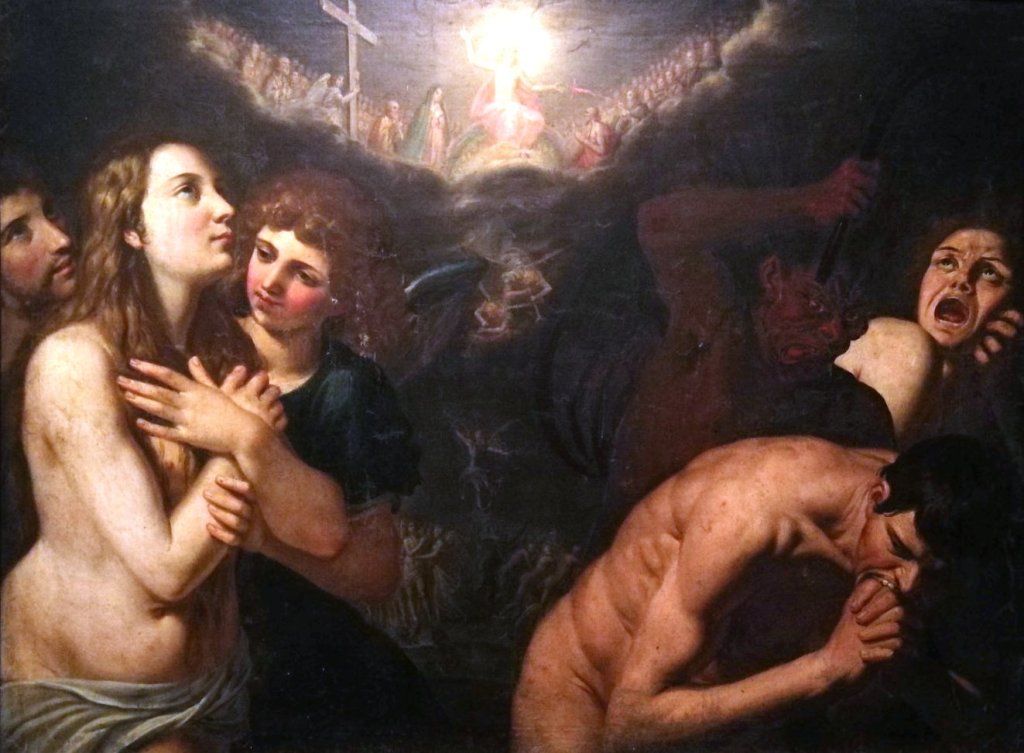
Wax Sculpture and Devotional Expression
Azzolino’s reputation was not confined to painting. Giambattista Basile celebrated him in 1609 as a painter and sculptor of exceptional gifts, while surviving documents establish his activity as a modeller in wax, a medium particularly well suited to the expression of religious emotion. In 1608, the Countess of Lemos commissioned ten wax heads and several wax pictures from him. His production extended to the small devotional images known as the Novissimi, a term derived from the Catholic doctrine of the Four Last Things: Death, Judgement, Heaven and Hell. These wax representations concentrated instead upon the contrasting states of the soul, giving tangible form to experiences that could otherwise be conveyed only through religious teaching and imaginative contemplation.
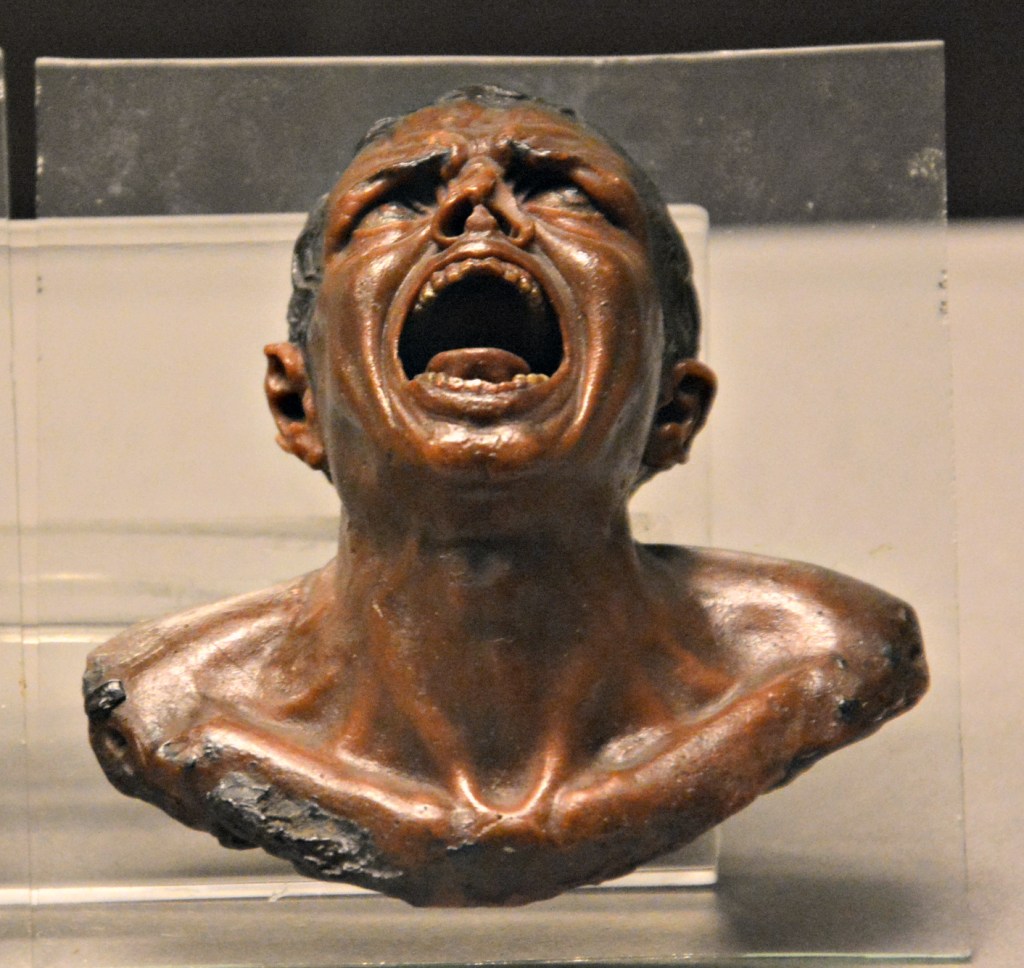
Among the most accomplished surviving examples associated with Azzolino are three polychrome wax reliefs in the Pinacoteca Ambrosiana, Milan, representing an Anima dannata, an Anima in Purgatorio and an Anima beata. Their expressive purpose is inseparable from the materials of their construction. The wax figures incorporate gold and silver leaf, glass and reflective surfaces, while coloured beads and gilded blue glass contribute to the representation of the blessed soul. As Andrea Daninos observes in the catalogue Cera una volta (2026), these works belong to a tradition for which exceptionally early documentation survives. A codicil to Cardinal Federico Borromeo’s will, dated 1 April 1611, describes three wax heads representing souls in Hell, Purgatory and Paradise. Borromeo returned to the subject in his De Pictura Sacra of 1624, praising the capacity of such images to convey despair, tears and celestial joy through contrasting expressions.
A related group of four wax reliefs in the Museo di Casa Praz, Rome, introduces a further state of the soul, Anima al Limbo, alongside those condemned, suffering in Purgatory and enjoying Paradise. These small compositions employ polychrome wax upon glass, enriched with materials including mica, metal foil and coloured stones. The combination of translucent and reflective materials with carefully differentiated facial expressions allowed the modeller to explore the states of the soul through effects that painting alone could not reproduce in quite the same way.
The devotional requirements of the Counter-Reformation imposed constraints that may seem remote from modern artistic expectations, yet they also presented artists with demanding problems of representation. In these small wax reliefs, the need to make the invisible states of the soul immediately apprehensible encouraged an inventive use of materials, colour and facial expression.
The attribution of these surviving groups to Azzolino remains a matter of scholarly discussion. Viviana Farina has argued for his authorship, drawing upon his documented activity in wax and the historical circulation of the Novissimi. Earlier catalogues, however, classified the Ambrosiana reliefs as Lombard or Milanese works, while Daninos observes that Azzolino’s production cannot yet be securely distinguished from that of Giulio de Grazia and other contemporary modellers. Similar difficulties surround the Casa Praz reliefs, whose relationship to other surviving versions raises questions about workshop production and the authorship of the original models. These reservations qualify the attribution of individual objects without diminishing their importance as evidence of the artistic possibilities of devotional wax sculpture in the early seventeenth century.
Nor was Azzolino’s sculptural activity restricted to these small objects. The correspondence concerning the statue of Saint Francis Xavier commissioned for Genoa in 1641, discussed by Farina, reveals his continued involvement in religious sculpture and the exacting attention of patrons to contemporary conceptions of devotion. His practice extended across painting, modelling and sculpture, with the expressive requirements of religious imagery providing a continuing point of contact among them.
Azzolino’s Place in Neapolitan Painting
The place of Giovan Bernardino Azzolino in the history of Neapolitan painting remains difficult to define within a narrative dominated by Caravaggio and the artists most directly transformed by his example. His work followed a different course, retaining the conventions of late Cinquecento religious painting while responding selectively to the naturalistic innovations of the following decades. The distinction is important, for an artistic language founded upon continuity need not be understood simply as a failure to embrace more radical developments.
The affinities with Andrea Vaccaro’s painting identified earlier offer one indication of Azzolino’s continuing relevance. Rather than representing an exhausted tradition overtaken by Caravaggism, Azzolino’s work belonged to an enduring current within Neapolitan art, capable of absorbing new influences without relinquishing its established principles. The scholarship of Causa, Leone de Castris and Farina has helped to recover the complexity of that position, making possible a fuller understanding of an artist whose historical significance has not always been reflected in his critical reputation.
Donate to Inner Surfaces here.
Bibliography
These are the sources. Any errors are mine.
Causa, Raffaello, Opere d’arte nel Pio Monte della Misericordia, Naples, 1970.
Causa, Stefano, ‘Due schede per Giovan Bernardino Azzolino’, Paragone, 42, no. 497 (1991), pp. 77–80.
Causa, Stefano, La strategia dell’attenzione. Pittori a Napoli nel primo Seicento, Naples, Libreria Dante & Descartes, 2007, especially ‘Il “pedale smorzatore” di Giovan Bernardo Azzolino’, pp. 31–58.
Conticelli, Valentina (ed.), Cera una volta. I Medici e le arti della ceroplastica, exhibition catalogue, Gallerie degli Uffizi, Florence, Dario Cimorelli Editore, 2026, especially Andrea Daninos, catalogue entries 56–57, pp. 246–249.
De Mieri, Stefano, ‘Spigolature caravaggesche: intorno alla pala Radulovich e alla Madonna del Rosario’, in Rosanna Cioffi and Giulio Brevetti (eds), I ‘momenti traenti’ della Storia dell’arte. Studi in memoria di Ferdinando Bologna, Quaderni di Polygraphia, 7 (2023), pp. 155–170.
Farina, Viviana, ‘Giovan Bernardino Azzolino: il mancato soggiorno genovese e l’interesse per Ribera’, Prospettiva, 93–94 (1999), pp. 158–164.
Farina, Viviana, ‘Fortuna italiana e straniera dei “Novissimi” di Giovan Bernardino Azzolino’, Dialoghi di Storia dell’Arte, 8–9 (1999), pp. 126–139.
Farina, Viviana, ‘“Unica spes mea Iesus post Iesum Virgo Maria”. Affinità elettive tra un mecenate ed un pittore, Marcantonio Doria e Giovan Bernardino Azzolino’, Aprosiana, new series, 9 (2001), pp. 211–230.
Farina, Viviana, Giovan Carlo Doria. Promotore delle arti a Genova nel primo Seicento, Florence, Edifir, 2002.
Farina, Viviana, Al sole e all’ombra di Ribera. Questioni di pittura e disegno a Napoli nella prima metà del Seicento, vol. I, Castellammare di Stabia, Nicola Longobardi Editore, 2014, especially pp. 139, 143–144.
Farina, Viviana, ‘El arte en Nápoles en la época del gobierno del III duque de Osuna (1616–1621)’, in Italia en Osuna, exhibition catalogue, Osuna, 2018, pp. 45–81.
Farina, Viviana, ‘(S)Punti di vista: pensieri in margine alla mostra “Caravaggio Napoli”’, About Art Online, 2019.
Farina, Viviana, ‘Echi della Salomé di Caravaggio in Azzolino, Sellitto e Ribera’, in Maria Cristina Terzaghi (ed.), Caravaggio a Napoli. Nuovi dati, nuove idee, Studi di Storia dell’Arte. Speciali, Todi, 2021, pp. 165–175.
Forgione, Gianluca, ‘Ragano (Azzolino), Giovanni Bernardino’, Dizionario Biografico degli Italiani, vol. 86, Rome, Istituto della Enciclopedia Italiana, 2016.
Iommelli, Antonio, catalogue entry 22, Giovan Bernardino Azzolino, Martyrdom of Saint Ursula, in Caravaggio Napoli, exhibition catalogue, Naples, Museo e Real Bosco di Capodimonte, 2019, pp. 196–197.
Leone de Castris, Pierluigi, Pittura del Cinquecento a Napoli, 1573–1606. L’ultima maniera, Naples, Electa Napoli, 1991, especially ‘Oltre Caravaggio. Borghese, Azzolino e la prosecuzione della tendenza “riformata” nei primi decenni del Seicento’, pp. 284–287 and 310–312.

