Adriaen Coorte: Historical and Critical Context
Adriaen Coorte (c. 1660 – after 1707) occupies a distinctive position in Dutch still-life painting around 1700. His mature works generally contain no more than a handful of fruits, vegetables, nuts or shells, arranged on a narrow stone ledge against a dark background. Their restricted subjects and modest dimensions contrast with the elaborate displays of abundance favoured by many of his contemporaries. Yet remarkably little is known about the artist himself. Neither his place and date of birth nor the circumstances of his death have been established. His earliest surviving dated paintings belong to 1683, while the last securely dated works are from 1705. A painting recorded with the date 1707 has been missing since the nineteenth century.
Coorte is generally associated with Middelburg, the principal city of Zeeland, which had developed into a prosperous commercial and artistic centre during the seventeenth century. The influx of merchants and artists following the fall of Antwerp in 1585 contributed to its growth, while maritime trade supported a market for luxury goods and paintings. Ambrosius Bosschaert the Elder and Balthasar van der Ast had established a distinguished local tradition of still-life painting. By the time Coorte began his career, however, Middelburg’s economy was declining and its artistic community had contracted. The principal evidence for his presence in the region comes from the provenance of his paintings, many of which belonged to collectors in Middelburg and its surroundings. An entry in the accounts of the local Guild of St Luke for 1695–96 records a fine imposed upon a painter named Coorde for selling pictures without guild membership. The identification with Coorte is plausible, although not certain, and the circumstances of his apparent exclusion from the guild remain unexplained.
Coorte’s reputation was largely confined to a limited circle of collectors for much of the eighteenth and nineteenth centuries. His name first appeared in art-historical literature in 1881, when Henry Havard, who owned one of his paintings, mentioned him. The Middelburg architect and collector Jan Adriaan Frederiks published a further account in 1889. It was Laurens J. Bol, director of the Dordrechts Museum, who did most to restore Coorte’s reputation during the twentieth century. His article, completed in 1949 and published in 1952–53, was followed by the first exhibition devoted to the artist, held at Dordrecht in 1958. Bol’s catalogue raisonné of 1977 provided the foundation for subsequent research.
Interest in Coorte has since grown considerably, accompanied by the rediscovery of paintings and their acquisition by major museums. The Mauritshuis received two works through a bequest in 1995 and organised a substantial exhibition in 2008, curated by Quentin Buvelot, which brought together more than half of the artist’s surviving paintings. Buvelot’s accompanying catalogue revised the earlier scholarship and established a firmer basis for studying Coorte’s artistic development, working methods and relationship to the Dutch still-life tradition.
Artistic Formation and Development
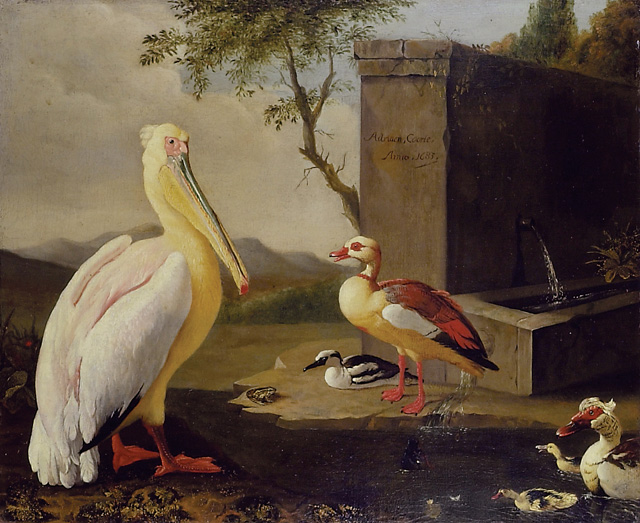
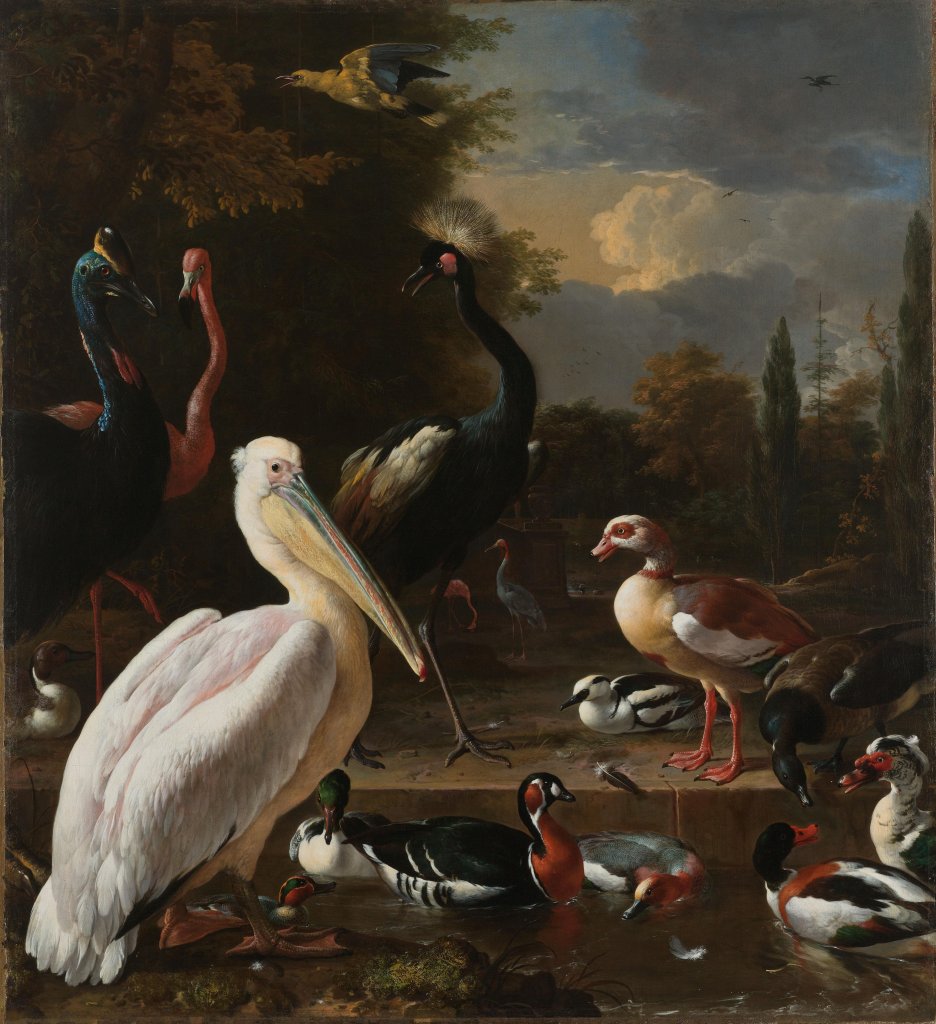
Coorte’s two earliest signed and dated paintings, both executed in 1683, differ considerably from the still lifes for which he is now known. Both depict waterbirds in landscapes and are closely related to the work of Melchior d’Hondecoeter, the Amsterdam painter celebrated for his decorative compositions of birds. In Coorte’s Pelican and Ducks in a Mountain Landscape (1683), now in the Ashmolean Museum, Oxford, Quentin Buvelot identifies the pelican, Nile goose and reclining duck as derived from d’Hondecoeter’s A Pelican and Other Birds near a Pool, known as The Floating Feather (c. 1680), in the Rijksmuseum, Amsterdam, or a variant of that painting. These correspondences suggest that Coorte received his early training in d’Hondecoeter’s studio, although no documentary evidence of an apprenticeship has survived.
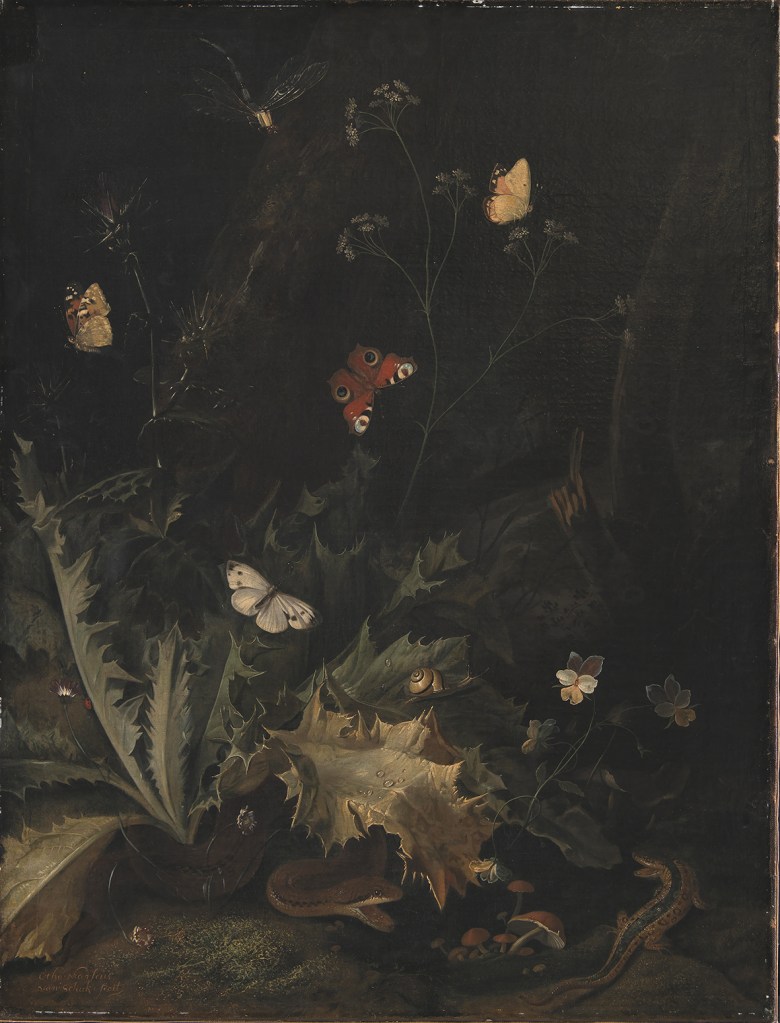
Other details in Coorte’s Mountainous Landscape with Ducks (1683), now in the Kremer Collection, recall the work of Otto Marseus van Schrieck, whose sottobosco paintings concentrated on the vegetation and small creatures of the woodland floor. Buvelot draws attention to a thistle growing beside a tree trunk and the stippled treatment of moss, both characteristic of Van Schrieck’s work. A representative example of the latter’s approach is A Forest Floor with a Thistle, a Snake, a Lizard and Butterflies, now in the Statens Museum for Kunst, Copenhagen. Since Van Schrieck had died in 1678, Coorte’s acquaintance with his methods must have come through existing paintings or practices transmitted within artistic workshops. The connection is also suggested by Coorte’s early representations of butterflies and other insects, motifs that became less frequent as his compositions developed.
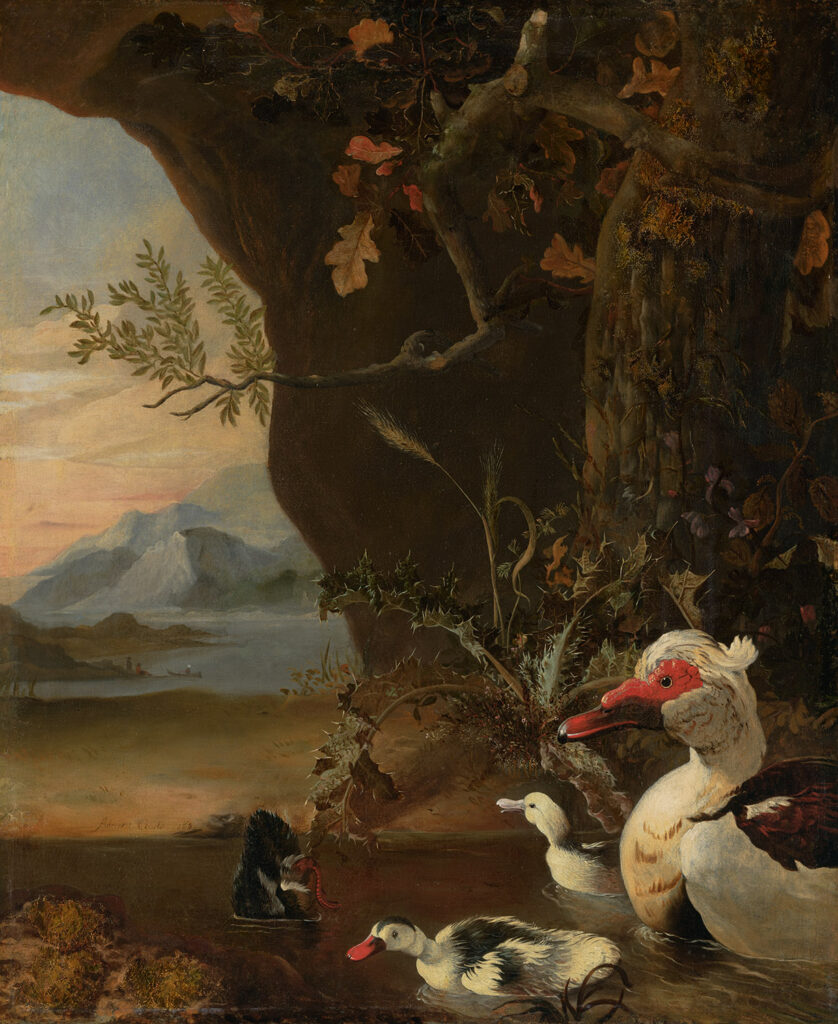
Adriaen Coorte: Mountainous landscape with ducks
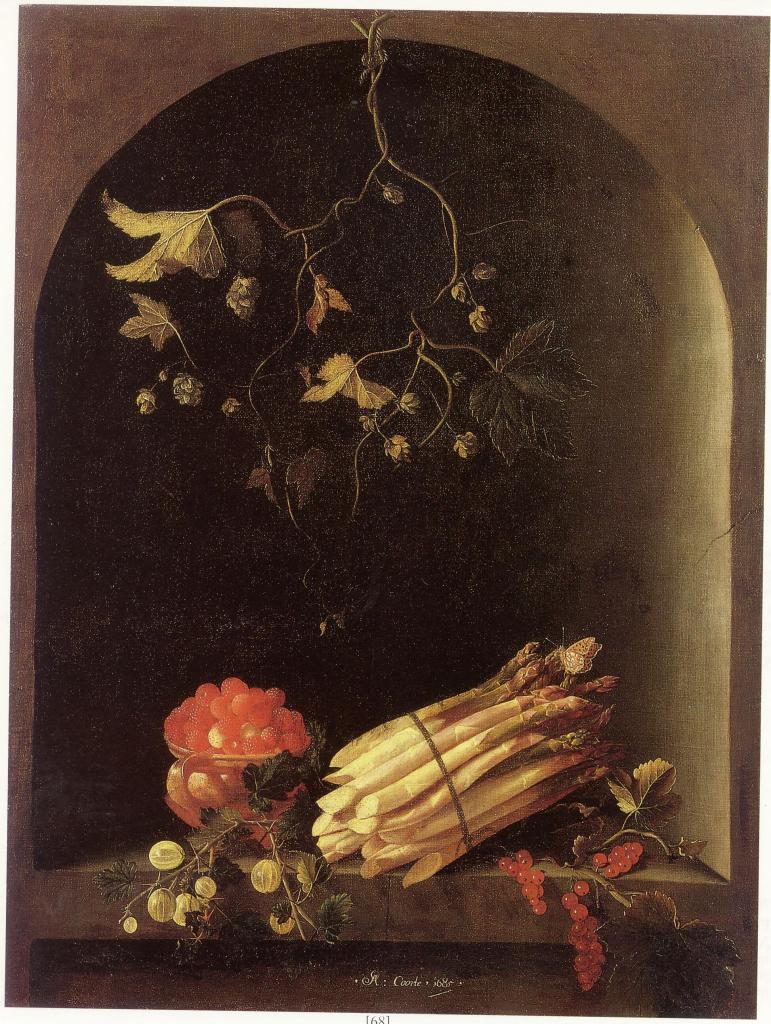
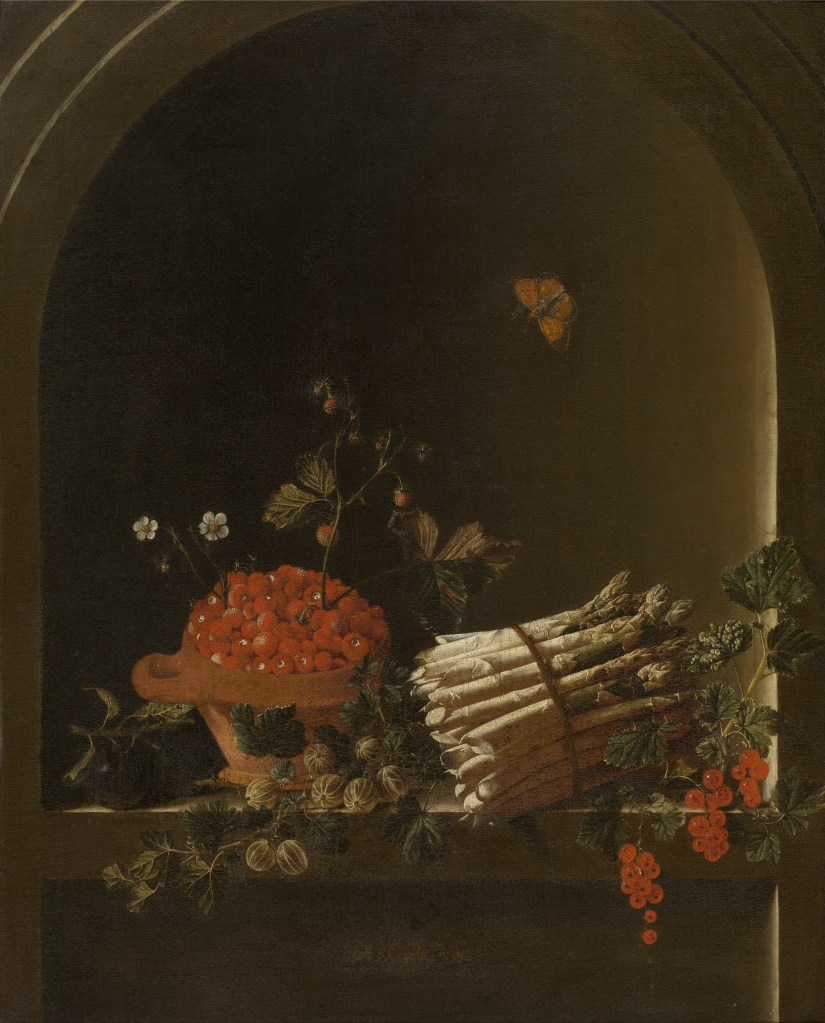
From 1684 onwards Coorte increasingly concentrated on still life, initially producing arrangements more varied than those of his maturity. In Still Life with Fruit and Asparagus in a Niche (1685), now in the Tessa Heinz Collection, he brought together different kinds of produce within a single composition. He also explored the established tradition of vanitas painting, in which objects conveyed moral reflections on mortality and the transience of earthly pleasures. His Vanitas Still Life (1688), in the Zeeuws Museum, Middelburg, includes a skull, watch, oil lamp, playing cards, dominoes and other objects associated with the passage of time and human folly. These explicit reminders of mortality largely disappear from his later paintings, although their absence does not necessarily exclude symbolic associations from his choice of subjects.
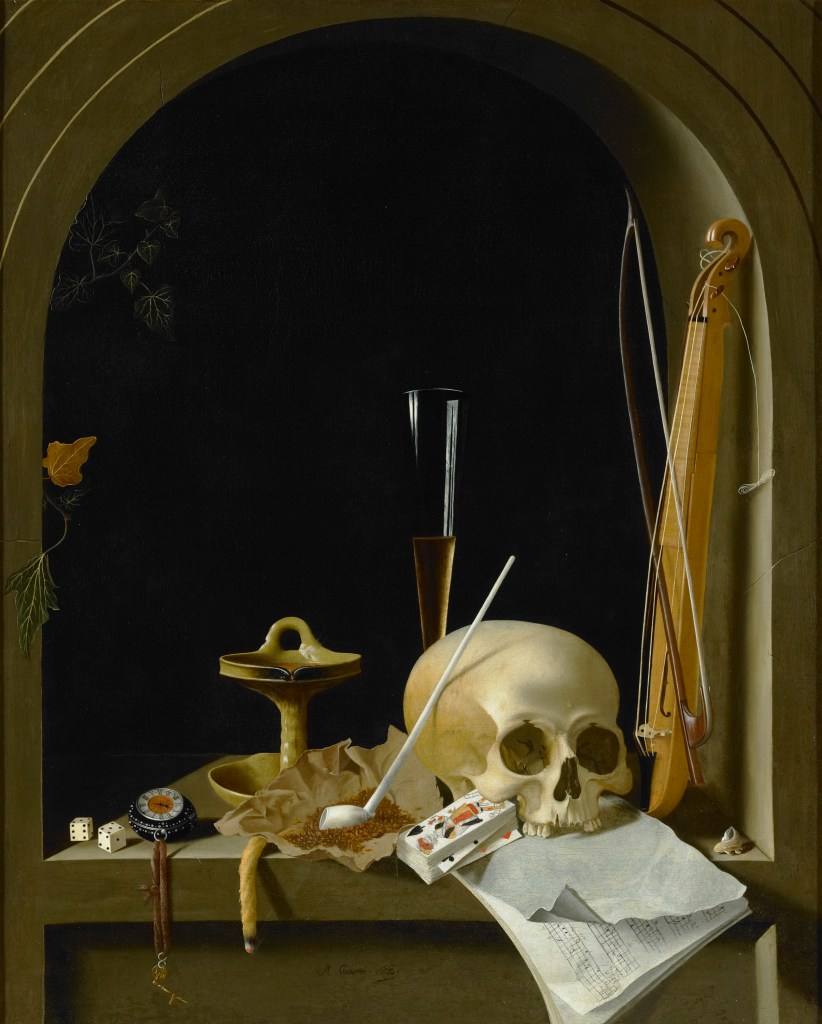
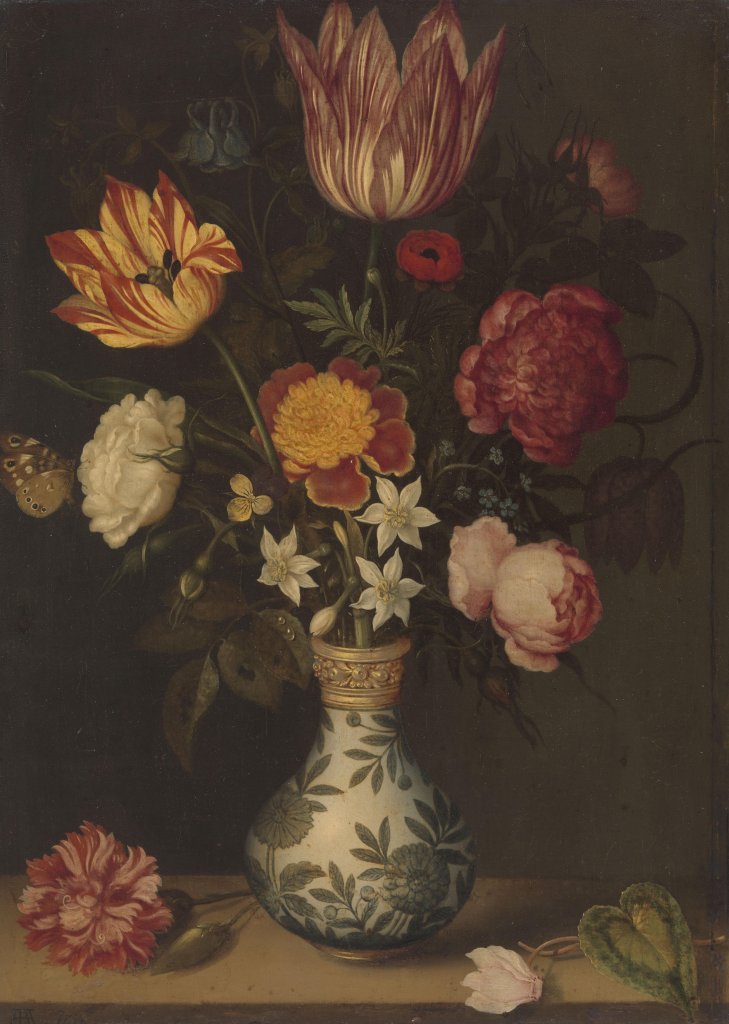
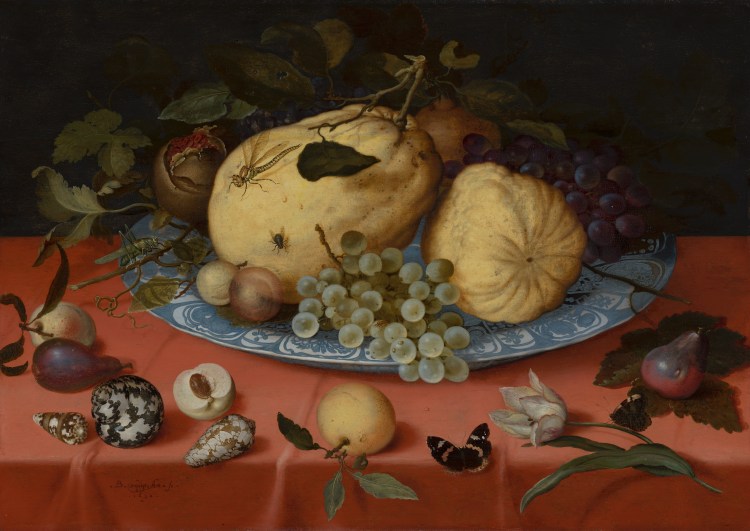
His mature approach developed from precedents in both Haarlem and Amsterdam. Pieter Claesz and Willem Claesz Heda had established the tradition of the ontbijtje, or breakfast piece, in which tableware, food and other objects were arranged upon a supporting surface. Their more restrained compositions, together with the work of Jan Jansz Uyl, Jan Jansz Treck and Jan Jansz van de Velde, provided examples of still lifes containing relatively few objects. Buvelot also identifies affinities with the paintings of Ambrosius Bosschaert and Balthasar van der Ast, whose arrangements of fruit, flowers and shells sometimes employed stone ledges or niches.
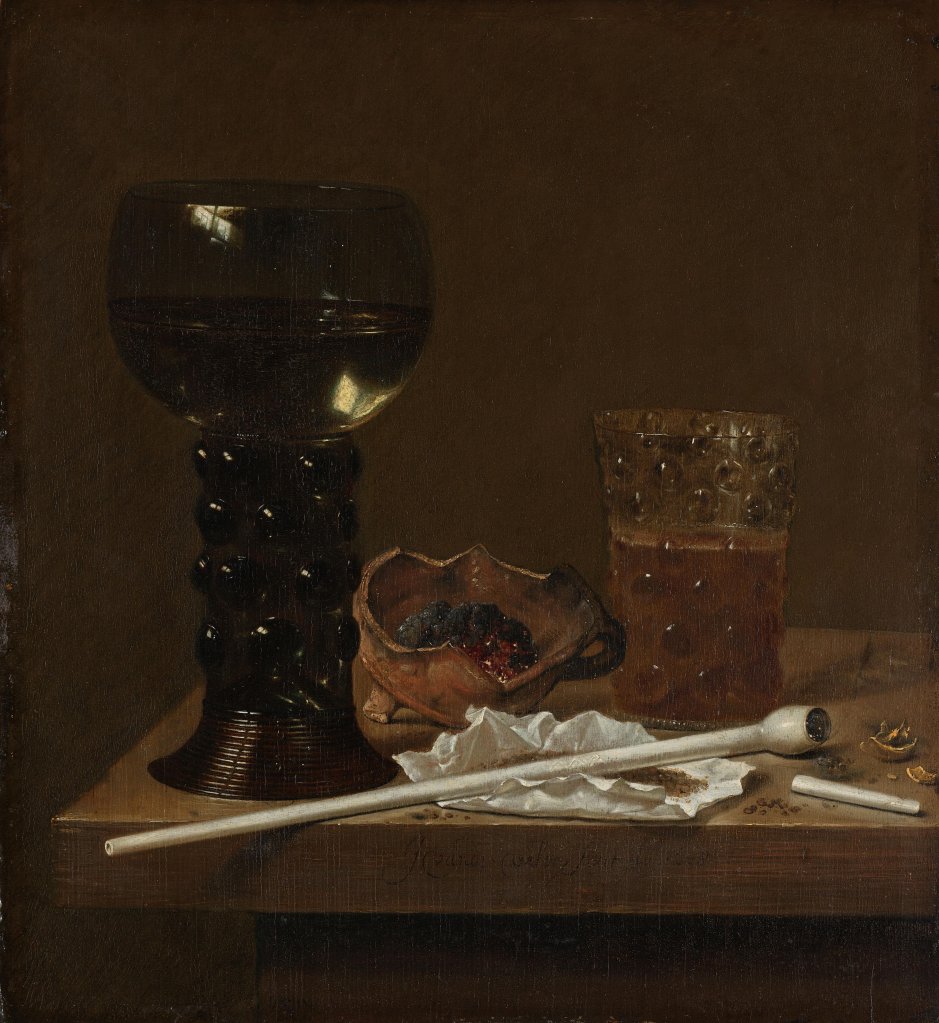
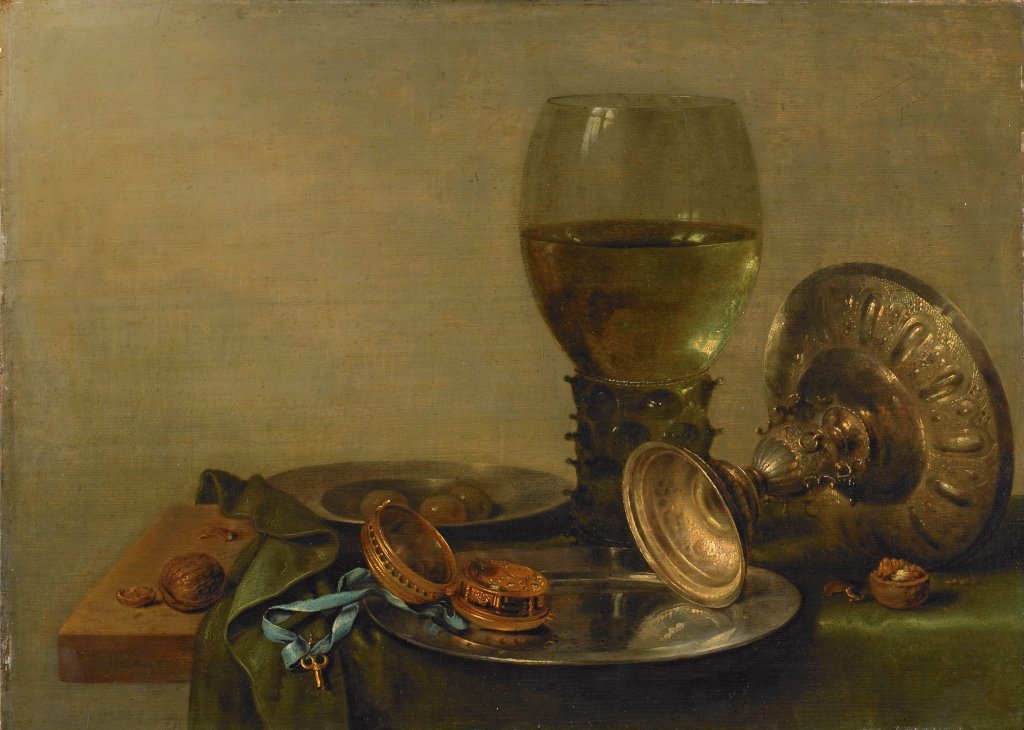
From approximately 1693, Coorte increasingly favoured arrangements of a few fruits, vegetables, nuts or shells upon a narrow stone ledge, generally isolated against a dark background. His range of subjects became more restricted, and his paintings were often executed on small supports. However, this development was not entirely linear. In Still Life with Fruit and Asparagus (1703), now in the Royal Museum of Fine Arts Antwerp, he returned to a larger and more elaborate composition, combining several varieties of fruit and vegetables with foliage and a butterfly.
The Mature Still Lifes
Coorte’s mature paintings are characterised by a restricted repertoire of subjects and a recurring compositional formula. Strawberries, gooseberries, asparagus, apricots, peaches, nuts and shells occupy narrow stone ledges, generally set against dark backgrounds. The objects are carefully distinguished by directed illumination, which establishes their volume and brings out differences in colour and texture. Although the arrangements frequently resemble one another, Coorte varied the selection, number and disposition of objects. Buvelot observes that this repetition was accompanied by renewed attention to the individual characteristics of the things represented, rather than the mechanical reproduction of established designs.
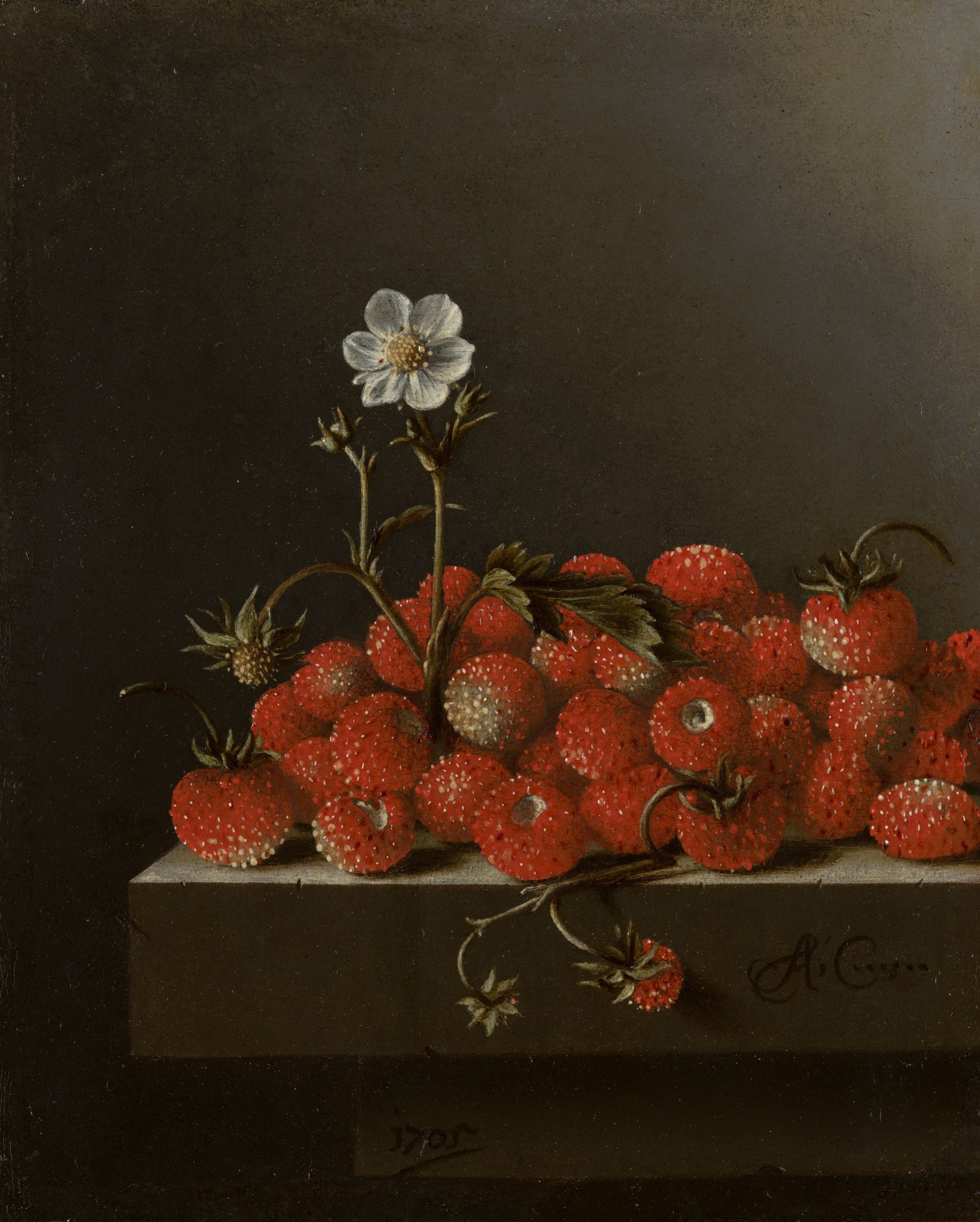
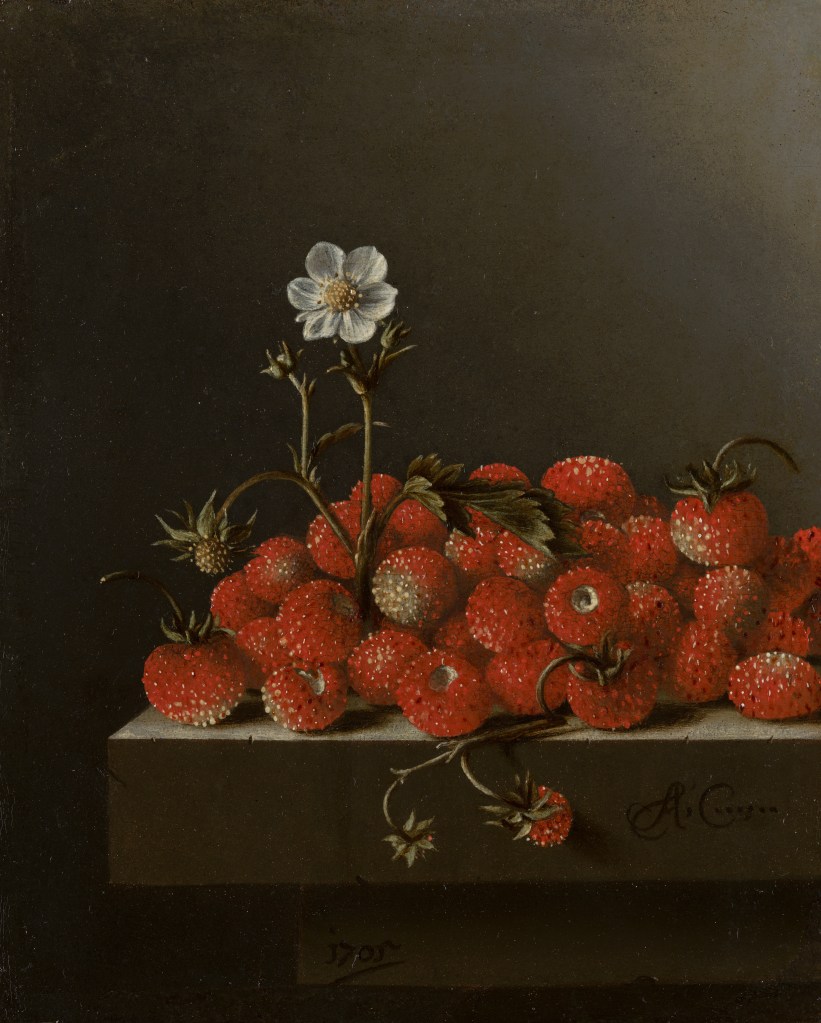
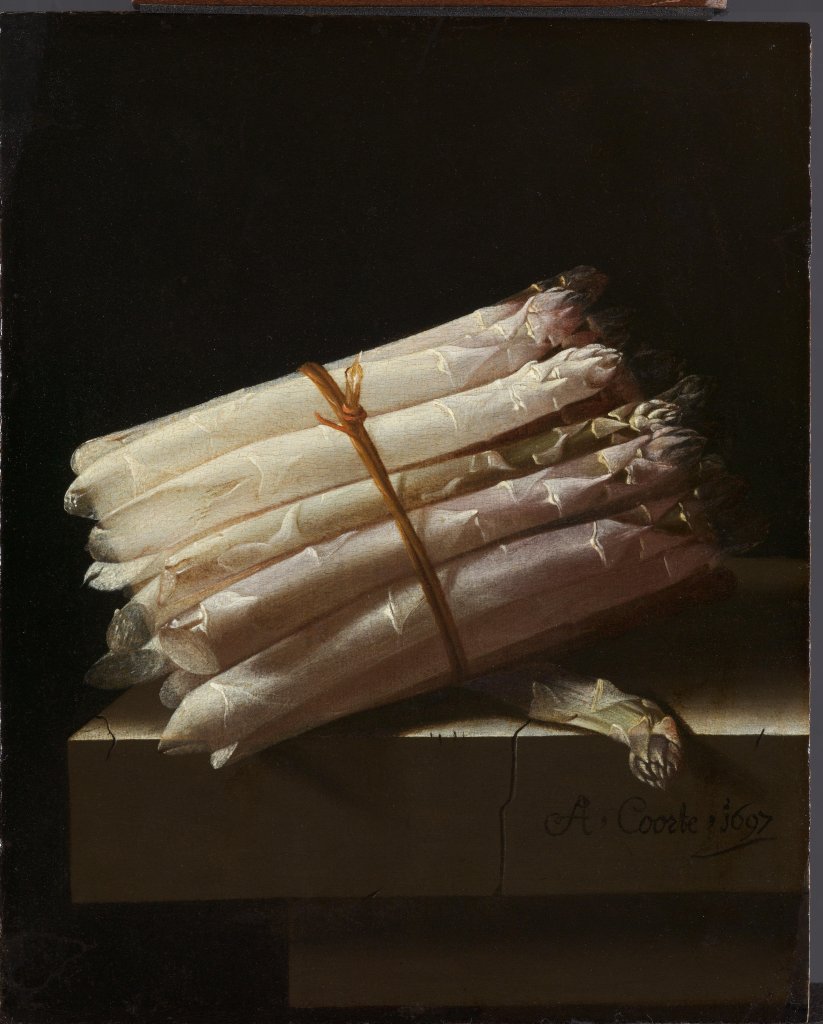
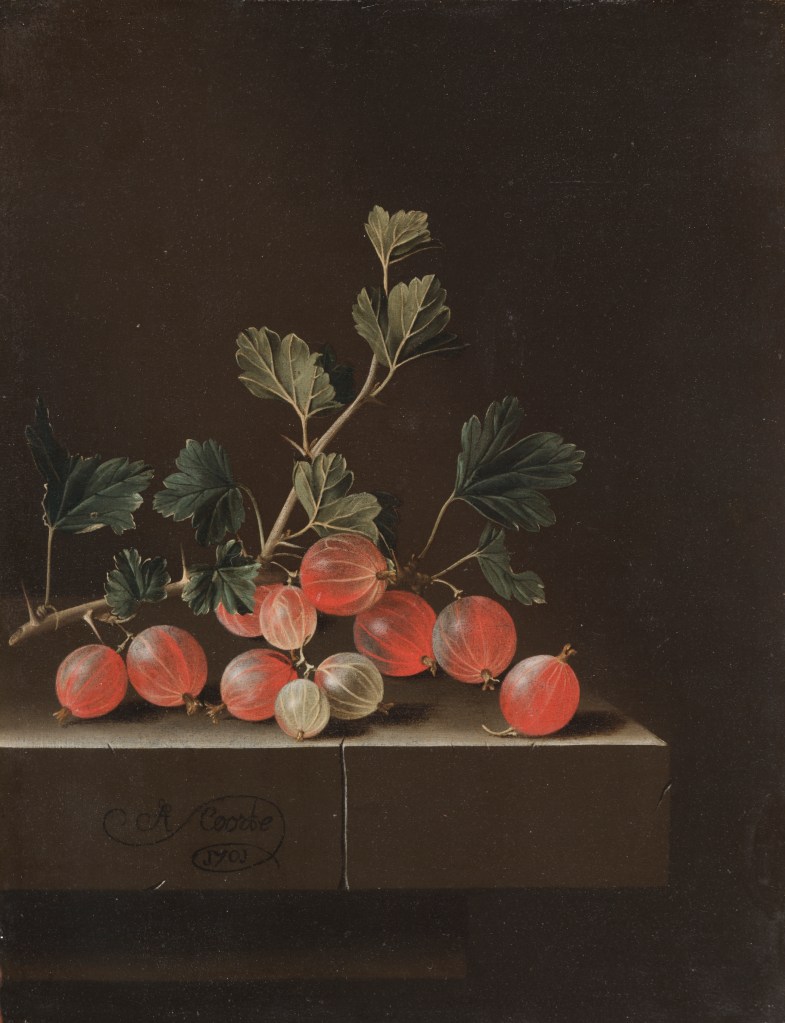
Strawberries, gooseberries and asparagus were among his most persistent subjects. In Still Life with Wild Strawberries (1705), in the Mauritshuis, The Hague, the fruit is accompanied by stems, leaves and small white blossoms, its colour brought into relief against the surrounding darkness. Coorte’s treatment of gooseberries required a different kind of precision. Buvelot draws attention to their translucent skins, delicate veins and fine hairs, features carefully rendered in Gooseberries on a Table (1701; discussed later), in the Cleveland Museum of Art. Asparagus provided another opportunity to explore variations of form and surface. Its cultivation was widespread in Zeeland, and although other still-life painters occasionally included it in larger arrangements, Coorte repeatedly made it the principal subject of independent compositions. In Still Life with Asparagus (1697), in the Rijksmuseum, Amsterdam, the individual spears are distinguished by their varying lengths, thicknesses and colouring.
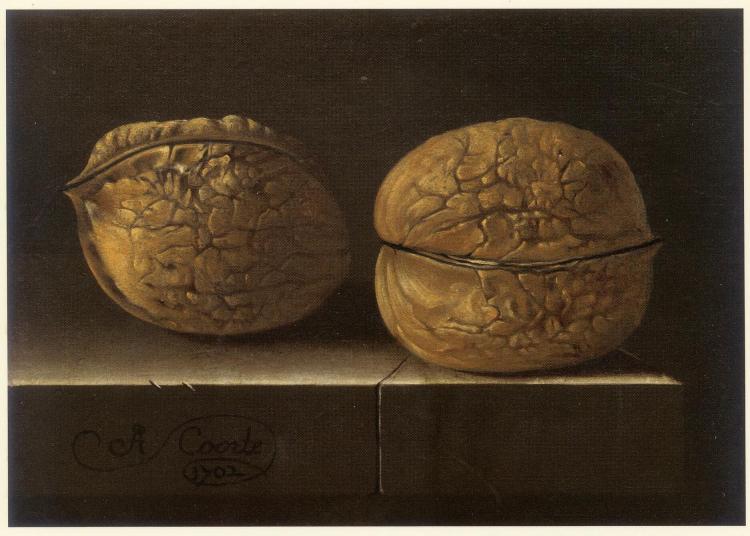
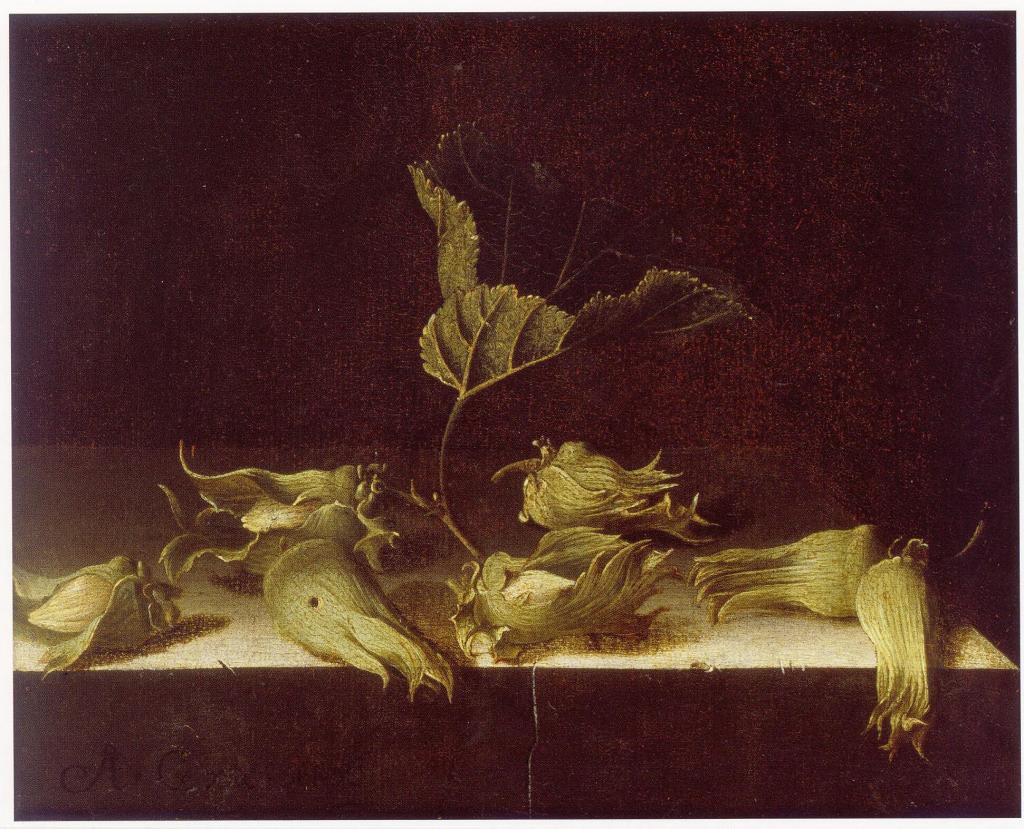
Coorte’s interest in the properties of natural objects extended to nuts and shells. The Still Life with Hazelnuts (1696; discussed later), in the Ashmolean Museum, Oxford, and Still Life with Two Walnuts (1702), in the Museum of Fine Arts, Budapest, belong to a group of exceptionally small paintings in which nuts form the entire subject. The Budapest picture is the smallest surviving work recorded by Buvelot.
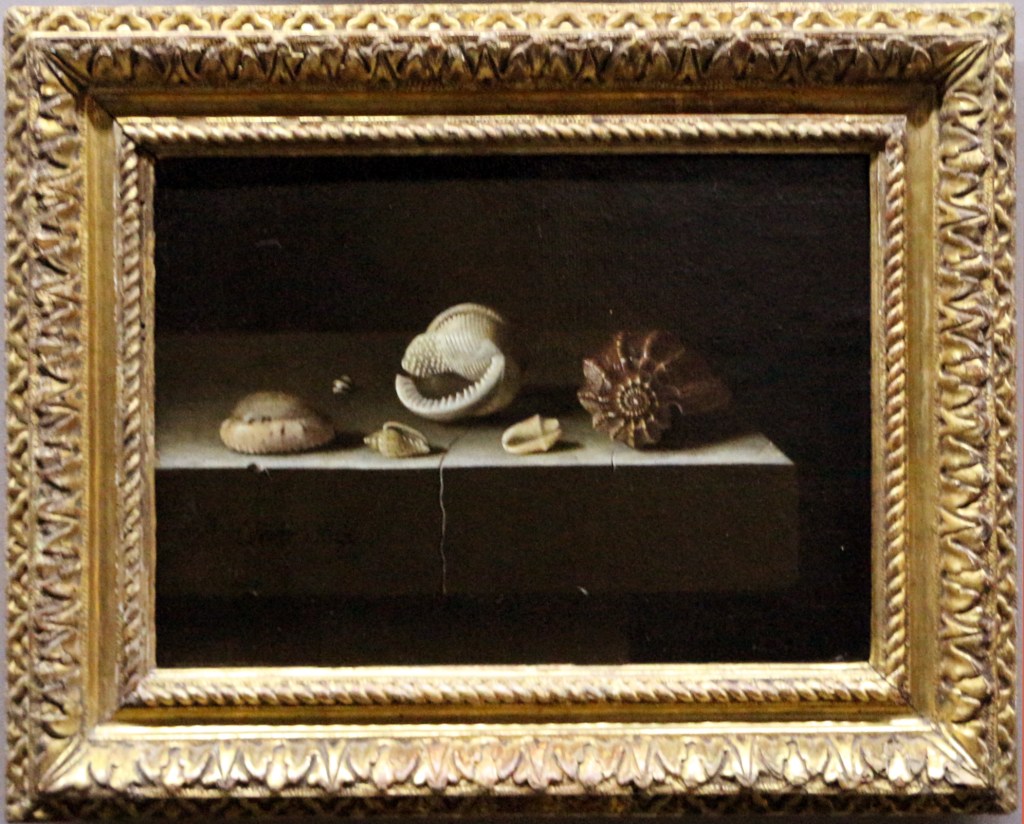
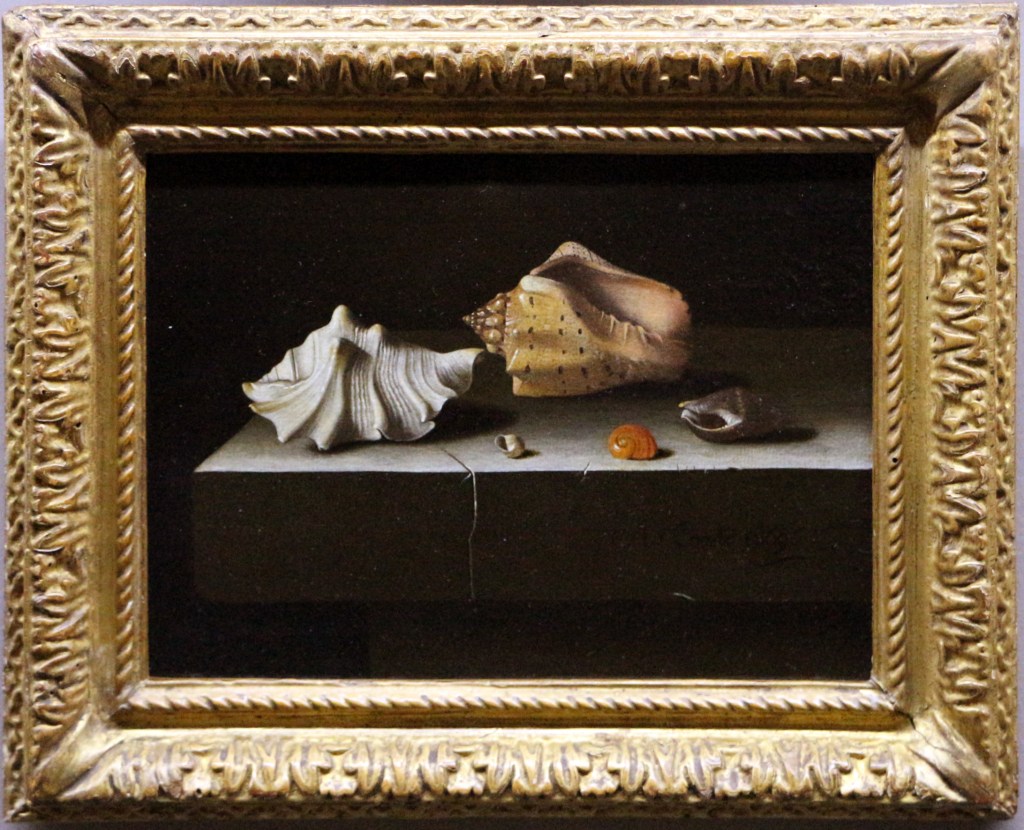
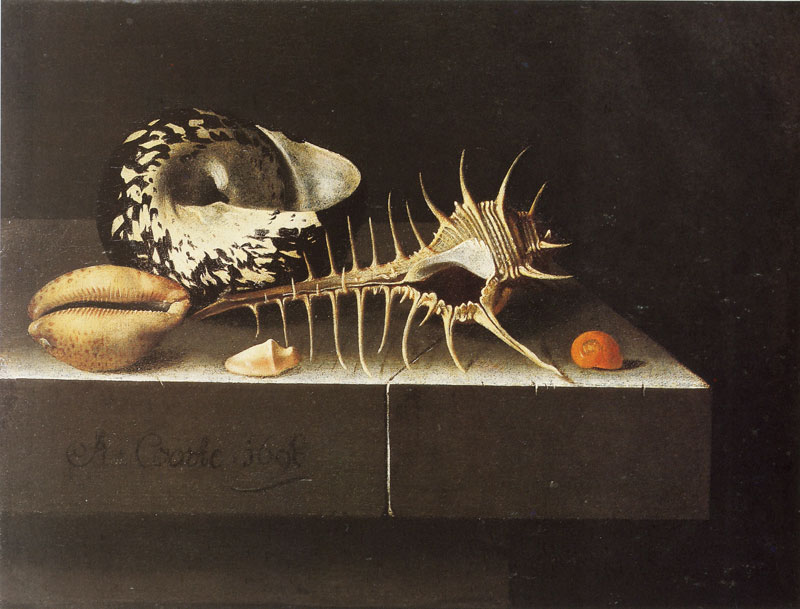
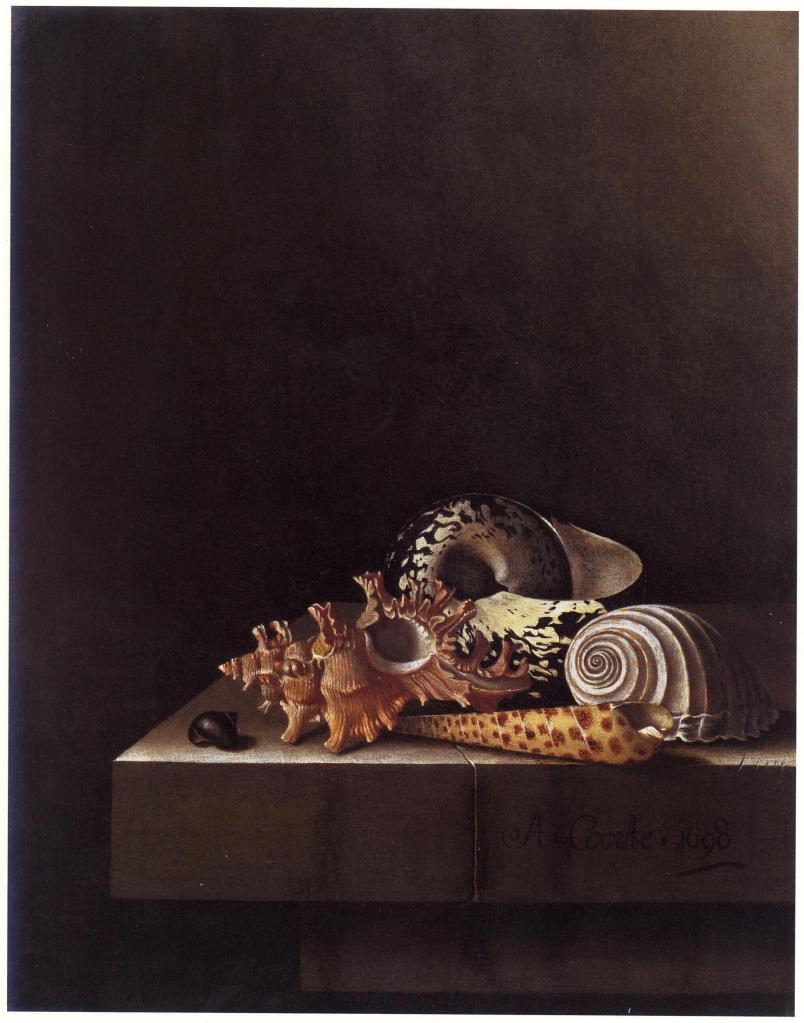
Between 1696 and 1698 Coorte produced six still lifes devoted to shells, selecting a variety of exotic specimens that differed in shape, colour, size and surface texture. Two paintings of 1696 in the Louvre, Paris, form a pair, their arrangements broadly mirroring one another. Quentin Buvelot identifies them as original pendants, noting their corresponding illumination and shared provenance, which can be traced back to 1806. The painting with six shells was intended to hang on the left, with its companion containing five shells on the right. In both compositions the shells are presented without overlapping, allowing their individual characteristics to remain distinct.
These specimens belonged to a wider culture of natural-history collecting. Many exotic shells reached the Netherlands through the maritime trade of the Dutch East and West India Companies, arriving from regions including the Caribbean, West Africa and the Indo-Pacific. Their elaborate shapes, colouring and surface textures made them prized possessions among collectors of natural curiosities. Buvelot suggests that Coorte’s paintings of such specimens may themselves have been intended for display in collectors’ cabinets or rooms. Their careful differentiation recalls natural-history illustration, although Coorte’s dark backgrounds and narrow stone ledges give them a different pictorial character.
The shells also offered opportunities to explore qualities extending beyond their visible appearance. Their varied surfaces suggest the hardness and brittleness of their substance, while their openings reveal dark cavities whose depths are difficult to determine. In her discussion of two shell paintings of 1698, Hanneke Grootenboer considers the contrast between their sharply defined external forms and interiors that seem to spiral beyond the limits of vision. She develops an imaginative response to the specimens, comparing them to a miniature choir in which the individual shells appear to take different vocal parts. For Grootenboer, the shells’ intricate surfaces and concealed interiors evoke sensations that painting cannot directly convey, bringing questions of touch, sound and inaccessible space into the experience of looking.
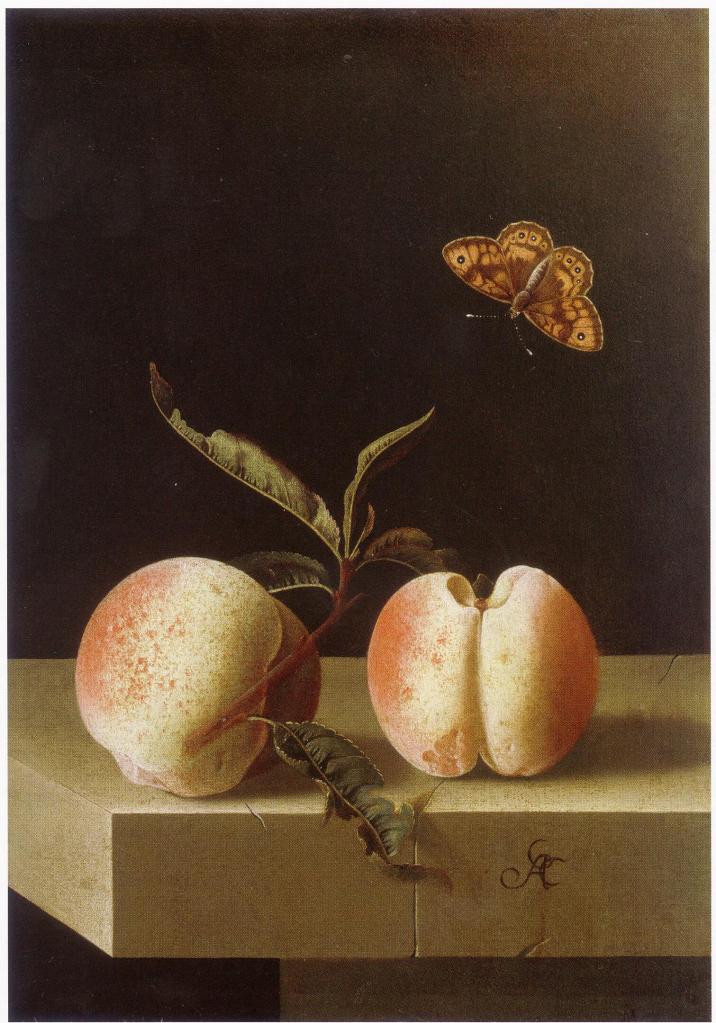
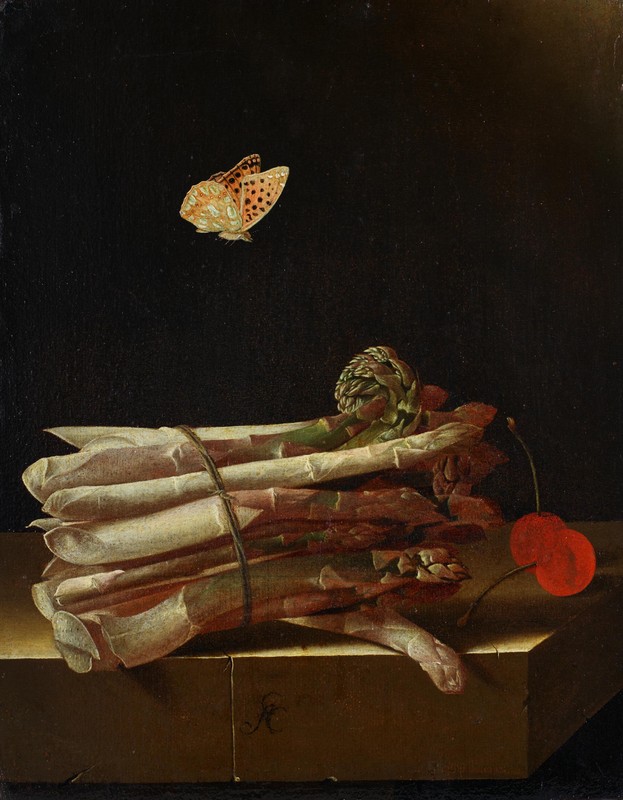
One of the more striking features of Coorte’s working practice was his extensive use of paper as a support for oil painting. According to Buvelot, nearly two-thirds of the surviving compositions were executed on paper subsequently mounted on panel or canvas, although the date of mounting cannot always be established. Technical examination has revealed that Coorte sometimes reused sheets carrying earlier writing. During the restoration of Still Life with Two Peaches and a Butterfly (c. 1693–95), conservators discovered that the painting had been executed on a leaf from an account book containing records of commercial transactions in Danzig. Traces of writing have also been identified beneath Still Life with Asparagus, Cherries and a Butterfly, from approximately the same period. The reasons for this practice remain unknown. Buvelot considers the possibility that Coorte initially worked on paper before attaching his compositions to more substantial supports, but the evidence does not establish a consistent procedure.
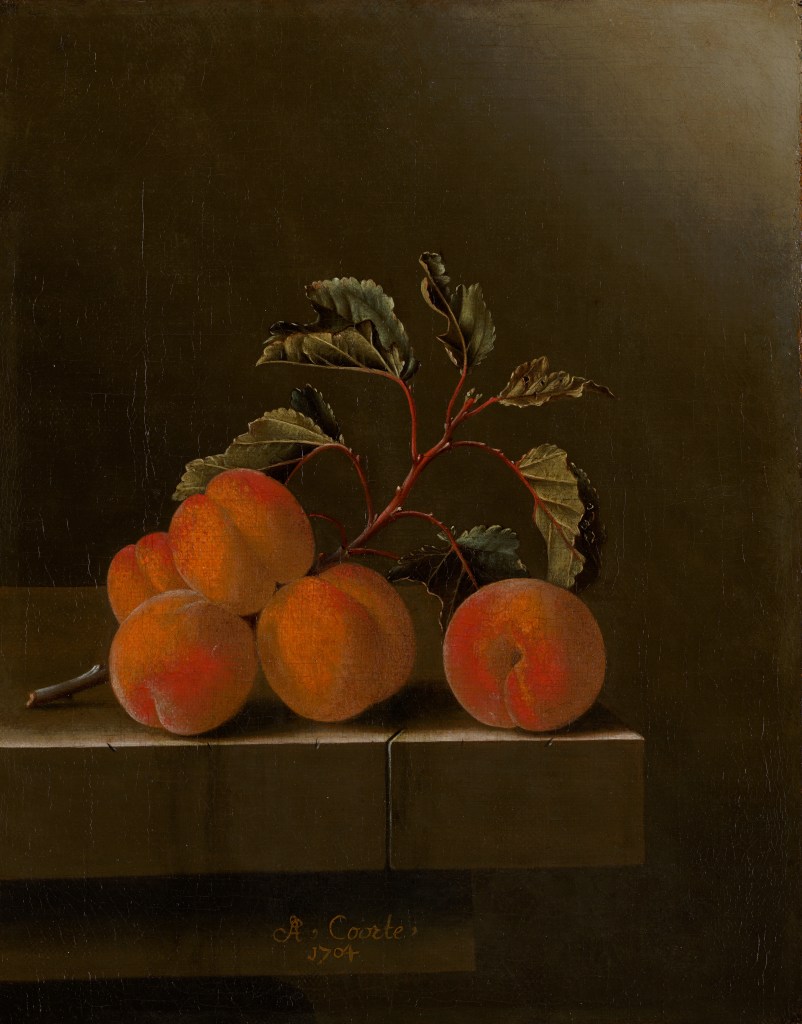
Technical investigations have also clarified aspects of his painting methods. Examination of Still Life with Five Apricots (1704), in the Mauritshuis, revealed a preparatory drawing beneath the paint and allowed conservators to reconstruct successive stages of execution. Coorte began with the fruit, subsequently adding shadows, the stone ledge and background before completing the smaller details and highlights.
In the Rijksmuseum’s Still Life with Asparagus (1697; illustrated earlier), however, he followed a different sequence, reserving spaces for the principal objects while painting the background. His procedures were therefore not uniform. Buvelot relates Coorte’s attention to surface detail to contemporary technical literature, including Wilhelmus Beurs’s De groote waereld in ‘t kleen geschildert (The Great World Painted in Miniature, 1692), which gives instructions for painting many of the fruits and vegetables found in Coorte’s work. Although there is no evidence that Coorte consulted the treatise, it provides a contemporary context for his methods of representing light, colour and texture.
Stillness and Animation
The restraint of Coorte’s mature paintings invites a form of attention different from that encouraged by the elaborate still lifes of Jan Davidsz de Heem and Jan van Huysum. Their abundance of objects, colours and textures offers the spectator an extensive field of visual incident. Coorte, by contrast, concentrates attention upon a handful of objects whose relationships become more apparent through prolonged observation. The narrow stone ledge, controlled illumination and absence of an identifiable domestic setting contribute to an experience in which familiar subjects appear increasingly detached from their ordinary surroundings.
Coorte’s Still Life with Hazelnuts (1696), in the Ashmolean Museum, Oxford, offers an example of the vitality that still-life painting can convey without depicting movement. Buvelot draws attention to the curling, pale-green husks surrounding the nuts, each carefully differentiated in form. Hanneke Grootenboer finds a kind of animation in their relationships, extending her interpretation into an imaginative personification of the objects. More compelling is the distinction between the stillness of the individual objects and the dynamism of their arrangement, which can engage the spectator’s attention without implying either a narrative or an imminent physical event.
Grootenboer recalls the nineteenth-century critic Théophile Thoré-Bürger, who questioned the adequacy of the French expression nature morte for Dutch still life. The objects represented in these paintings seemed to him to retain a living presence rather than becoming inert through their removal from the world of action. Paul Claudel, writing about Dutch still life in the twentieth century, was similarly attentive to the precarious equilibrium of objects whose arrangements seem to contain the possibility of movement. Although the painting holds them motionless, their relationships suggest a world still subject to gravity and the passage of time. These responses distinguish the physical stillness of a painting from the sensations of vitality or movement that it may generate.
A related quality emerges from comparisons with other Dutch still-life painters. Grootenboer discusses Jan Jansz van de Velde III’s Still Life with Strawberries and Cherries (1658), in which the precarious positioning of fruit suggests the possibility of an imminent fall. Coorte also frequently places objects near the edge of their supporting ledge. In Gooseberries on a Table (1701) in the Cleveland Museum of Art, Grootenboer identifies a comparable sense of precarious balance. Yet in Coorte the suggestion of instability is more oblique, less pronounced, less contrived.
Scale, Space and Contemplation
The spatial character of Coorte’s paintings is central to Grootenboer’s interpretation of their appeal. Her discussion of Three Medlars with a Butterfly (c. 1693–95), in a private collection, begins with the relationship between three fruits, a butterfly, a narrow stone ledge and the darkness surrounding them. The painting measures only 26.9 × 20.4 cm, yet its modest dimensions belie the apparent vastness of the space it evokes. Grootenboer describes the butterfly as suspended within a shaft of light, while a crack running through the stone ledge introduces a suggestion of instability into an otherwise carefully ordered arrangement. Although the medlars are precisely delineated, their setting remains difficult to identify. The darkness supplies neither a recognisable interior nor a landscape against which their position might be securely understood.
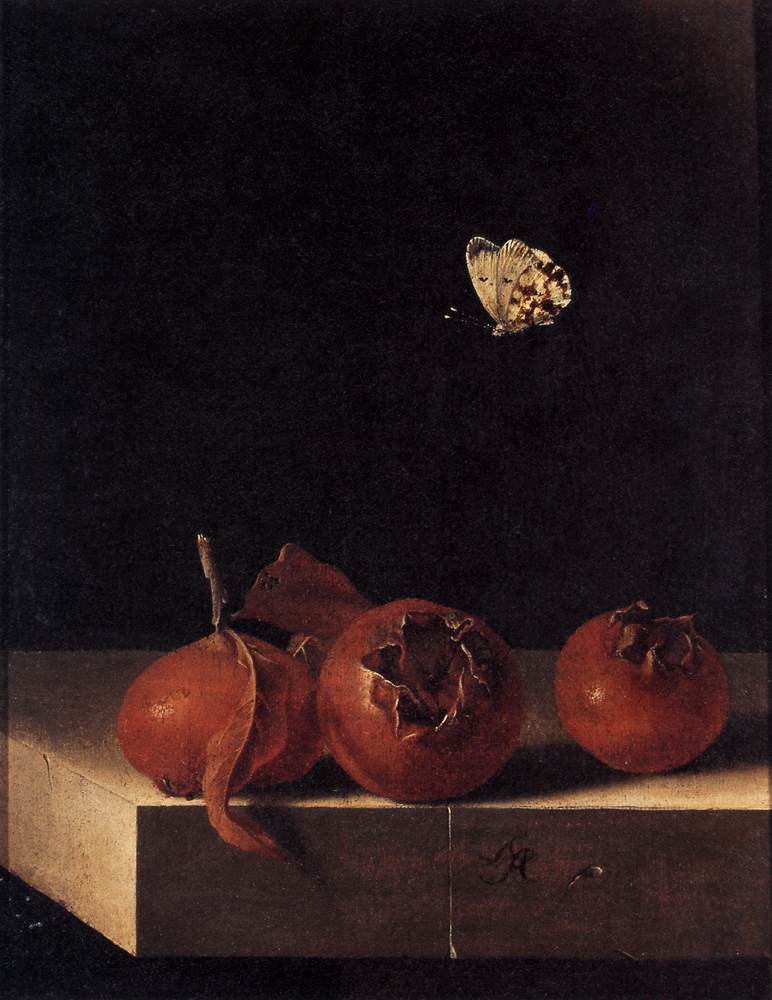
For Grootenboer, the painting becomes more disconcerting through close examination. The medlars seem precariously balanced, while the cracked ledge itself begins to appear less substantial than its initial solidity suggests. The darkness beyond it offers no indication of distance or depth. What first appears to be a simple arrangement of familiar objects consequently raises questions about the nature of the space they occupy and the spectator’s position in relation to them. Grootenboer interprets the ledge almost as a fragment suspended at the edge of an immeasurable void. Her reading helps explain why Coorte’s restricted compositions can resist the spatial certainty ordinarily associated with meticulous naturalistic painting.
The butterfly introduces another dimension to this uncertainty. Its suspended position contrasts with the apparent solidity of the medlars, while the light that briefly seems to disclose the objects gives the composition the character of a passing moment. The crack in the stone ledge, the butterfly’s fleeting presence and the apparent transience of the illumination establish a subtle correspondence. Although everything remains motionless, the arrangement seems poised at the edge of change. Its stillness is not quite the same as permanence.
Questions of scale become equally important in Grootenboer’s discussion of Still Life with Two Walnuts (1702; illustrated earlier), in the Museum of Fine Arts, Budapest. Measuring only 10.9 × 15.6 cm, it is the smallest surviving painting recorded by Buvelot. Grootenboer describes the walnuts as apparently too large for the confined pictorial space allotted to them, their proximity to the picture’s edges intensifying the effect. The spectator’s experience becomes paradoxical: the work is minute, yet its objects can seem to expand under scrutiny. Grootenboer associates this apparent enlargement with the altered perceptions made possible by microscopes and telescopes, instruments that had transformed contemporary understanding of the relationship between the minute and the immense.
Grootenboer develops these observations through a comparison with Blaise Pascal’s Pensées, particularly his meditation on humanity’s position between two infinities. Pascal considers the incomprehensible vastness of the universe and the equally inaccessible minuteness of matter, placing human perception between extremes that it cannot fully encompass. There is an analogy in Coorte’s small paintings, where carefully bounded objects appear against a darkness whose extent cannot be determined. She also relates this experience to the paradox of pictorial perspective, through which a flat, finite surface can suggest spatial recession extending beyond its physical limits. Her comparison provides a means of thinking about the disproportion between the paintings’ modest dimensions and the seemingly immeasurable space they evoke.
Such an interpretation also places limits upon conventional symbolic readings of still life. The butterfly in Three Medlars with a Butterfly might invite an association with resurrection, while the fruit could conceivably be understood within a Christian conception of nature and creation. Grootenboer does not deny that such associations were available to contemporary viewers, but questions whether they adequately account for the painting’s effect. Her conception of the pensive image goes further than the suggestion that painting can stimulate philosophical reflection. She argues that painting may constitute a form of thought in its own right, operating through sensation and pictorial relationships rather than through propositions that can be expressed in words. In Coorte’s painting, the relationship between the illuminated objects and the surrounding darkness generates an experience of spatial uncertainty that cannot be reduced to a symbolic meaning. The painting does not so much present a philosophical problem for the spectator to solve as make that problem perceptible through the act of looking.
The Appeal of Coorte
Coorte’s paintings have become familiar to modern audiences, but their appeal remains difficult to define. Their modest subjects, restricted compositions and small dimensions distinguish them from the more conspicuous achievements of Dutch still-life painting. Laurens J. Bol found in Coorte’s work a lyrical realism that he associated with the revelation of ordinary things through light. His comparison with Spanish painters such as Francisco de Zurbarán and Juan Sánchez Cotán suggests something of the contemplative quality he recognised in these works. Grootenboer’s interpretations, by contrast, explore their capacity to disturb habitual perceptions of scale, space and stillness.
These approaches need not be mutually exclusive. Coorte’s careful observation of natural objects is inseparable from the pictorial circumstances in which he presents them. His strawberries, asparagus, medlars and nuts are rendered with precision, but the paintings offer little of the surrounding world that would ordinarily establish their place within it. Their modesty is therefore deceptive. The narrow range of subjects and repeated compositional arrangements provide opportunities for variations that are sometimes scarcely apparent at first glance, yet can alter the spectator’s experience of an entire painting.
The renewed attention given to Coorte since the twentieth century has allowed these small works to emerge from relative obscurity. Their attraction does not depend upon the recovery of a lost biography or the discovery of elaborate symbolic programmes. Much remains unknown about the painter and his circumstances, but the paintings themselves reward the kind of attention that their limited dimensions seem to invite. Their stillness accommodates vitality, their precision coexists with uncertainty, and the ordinary things they represent retain something that eludes complete explanation.
Coda: Two Further Studies
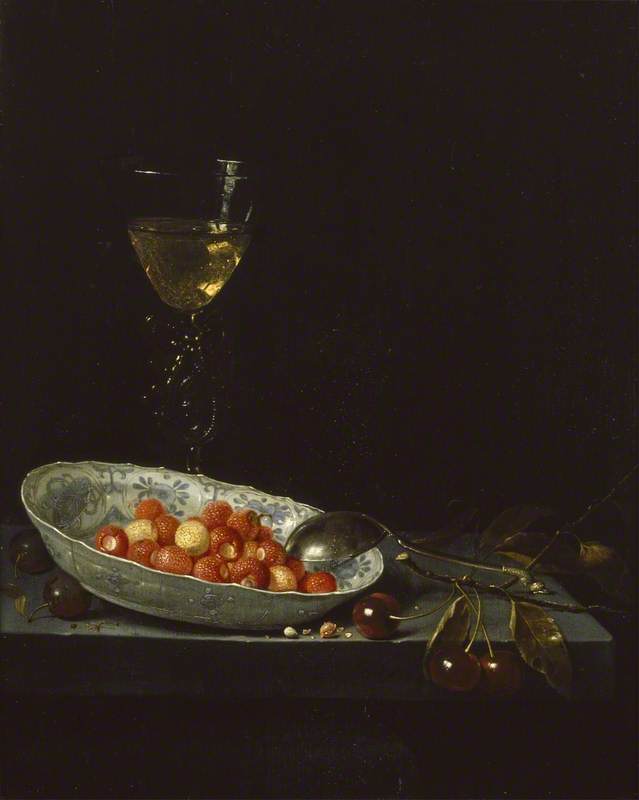
Still Life with a Bowl of Strawberries, a Spray of Gooseberries, Asparagus and a Plum (1703), National Gallery, London
The National Gallery’s painting of 1703 is among Coorte’s more elaborate mature compositions, bringing together asparagus, wild strawberries, gooseberries and a plum upon a stone ledge. The arrangement offers a succession of contrasts in colour, form and surface texture, from the pale, elongated asparagus to the red strawberries, translucent gooseberries and smooth skin of the plum. Coorte’s meticulous treatment of these differences gives each variety a distinct presence, while their juxtaposition establishes relationships that would be less apparent if they were represented separately.
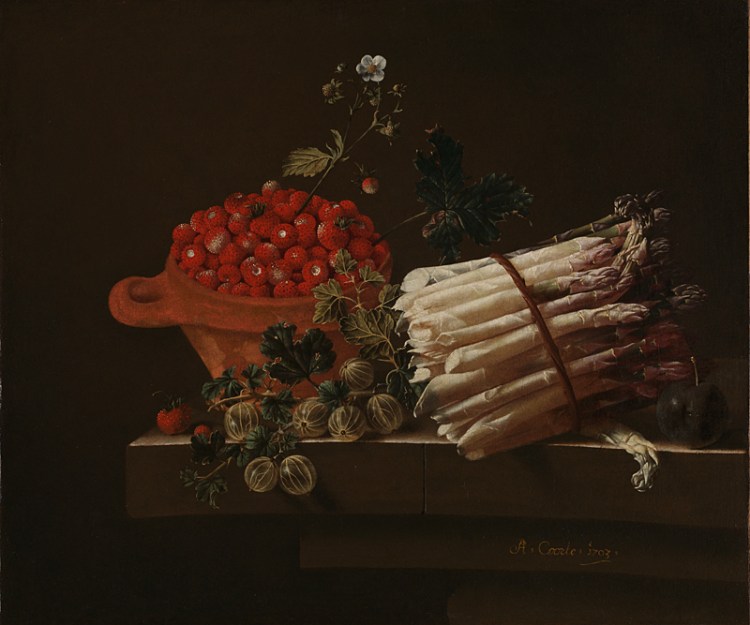
Still Life with Strawberries, Gooseberries and Asparagus
1703
Oil on paper on canvas, 35.7 × 42.8 cm
Gift from the collection of Willem Baron van Dedem, 2017
NG6664
NG6664 Still Life with Strawberries
The objects also belong to different moments in the growing year. As the National Gallery observes, asparagus is harvested in May, strawberries ripen in June, gooseberries in July and plums in August. Their combination within a single painting is consistent with a familiar convention of Dutch still life, in which artists assembled produce that would not ordinarily have been available simultaneously. Here the convention adds a temporal dimension to the contrasts already established through colour and texture. The composition brings together the successive products of a growing season, allowing them to be contemplated within a single moment.
The Gallery also suggests that the arrangement may reflect the different heights at which the plants grow: asparagus emerging from the soil, strawberries growing close to the ground, gooseberries borne upon bushes and plums upon trees. This possible progression adds another relationship to an already varied group of objects. Coorte’s painting offers both the precise observation of individual forms and the imaginative ordering of things that nature ordinarily separates in space and time.
Still Life with a Hanging Bunch of Grapes, Two Medlars, and a Butterfly (1687), National Gallery of Art, Washington
This painting of 1687 belongs to an earlier phase of Coorte’s career, when his compositions were generally more varied than the restricted arrangements of his maturity. A bunch of grapes hangs above two medlars resting upon a ledge, accompanied by a butterfly and a ladybird. Now in the National Gallery of Art, Washington, which acquired it in 2020, the picture retains something of the decorative richness associated with earlier Netherlandish traditions of fruit painting.
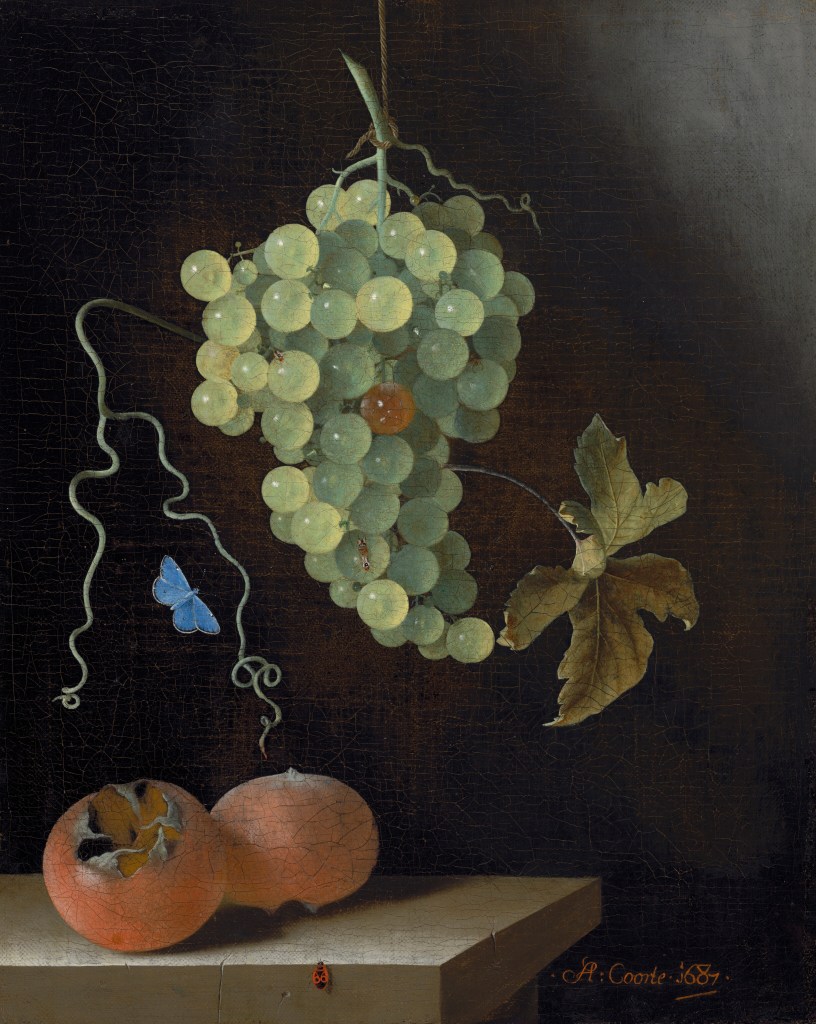
Buvelot discusses the work in relation to Coorte’s developing interest in natural objects, particularly the arrangements of fruit and insects that succeeded his earliest paintings of birds. The suspended grapes establish a relationship with the medlars beneath them, while the insects introduce further distinctions of scale and position. The painting also demonstrates that medlars, subsequently the subject of one of Coorte’s most concentrated compositions, had entered his repertoire well before the development of his mature style.
The comparison with Three Medlars with a Butterfly (c. 1693–95), discussed earlier, is instructive. That later painting dispenses with the hanging fruit and substantially reduces the number of objects, leaving the medlars, butterfly and stone support in a more restricted setting. Yet the earlier composition already reveals Coorte’s interest in the relationships between suspended and stationary forms. Seen alongside the later work, it suggests that his development involved not merely the elimination of incidental detail, but the increasingly concentrated exploration of pictorial possibilities that had engaged him from an early stage.
Donate to Inner Surfaces here.
Bibliography
These are the sources. Any errors are mine.
Buvelot, Quentin. De stillevens van Adriaen Coorte (werkzaam c. 1683–1707): Met oeuvrecatalogus. The Hague: Mauritshuis; Zwolle: Waanders, 2008. Exhibition catalogue. English edition: The Still Lifes of Adriaen Coorte (Active c. 1683–1707): With Oeuvre Catalogue.
Grootenboer, Hanneke. The Pensive Image: Art as a Form of Thinking. Chicago and London: University of Chicago Press, 2020.
Grootenboer, Hanneke. “Sublime Still Life: On Adriaen Coorte, Elias van den Broeck, and the Je ne sais quoi of Painting.” Journal of Historians of Netherlandish Art 8, no. 2 (Summer 2016).
Museum Collection Catalogues
Musée du Louvre, Paris
Adriaen Coorte, Six coquillages sur une tablette de pierre (Six Shells on a Stone Ledge), 1696. Inventory no. RF 1970 54.
Adriaen Coorte, Cinq coquillages sur une tablette de pierre (Five Shells on a Stone Ledge), 1696. Inventory no. RF 1970 53.
National Gallery, London
Adriaen Coorte, Still Life with a Bowl of Strawberries, a Spray of Gooseberries, Asparagus and a Plum, 1703. Inventory no. NG6664.
National Gallery of Art, Washington
Adriaen Coorte, Still Life with a Hanging Bunch of Grapes, Two Medlars, and a Butterfly, 1687. Accession no. 2020.16.1.

